A Cop In Every Car

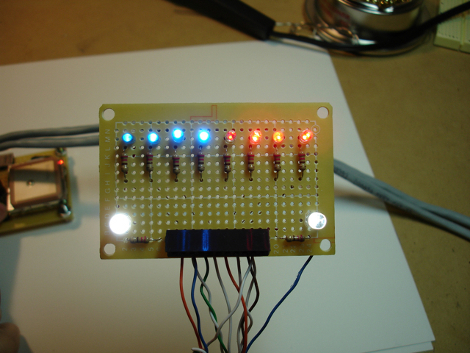
[Michael] designed this display board to mimic the appearance of a police car pulling you over. It resides in the rear window of his car (facing forward) as the controller board measures the speed of the vehicle. An Arduino grabs NMEA data from a GPS module and compares it with a table of speed limits. If you are speeding, based on your current location, the reds and blues flash as if you’re getting pulled over. The thrill of getting busted for a lead foot doesn’t sound like much fun to us but to each his own.

Incidentally, [Michael] is using the EM406 GPS module, the same one as the Frustromantic Box used.

Beginner Concepts: Electronic Jack-in-the-box

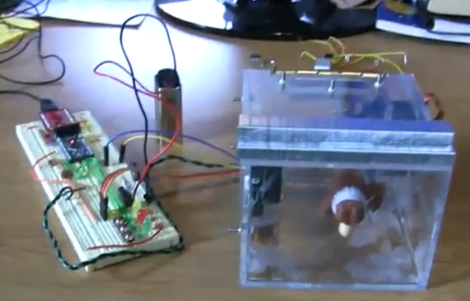
Behold the electronic Jack-in-the-box. Open the lid or enter the wrong combination and you’ll set off an alarm.  But if you get the right 6 combination code entered using the three buttons you’ll be rewarded with a little ditty and the appearance of the Jack (who lives in the box). [Jeremy Blum] designed this as part of his introduction to rapid prototyping class at Cornell University. See his description of the project after the break.

When he shared the link with us he mentioned that this might be a fun project for beginners and we couldn’t agree more. The design is easy to wrap your mind around using the provided schematic. The source code package includes PDF files that contain well commented code segments along with their descriptions. You can use this to get comfortable with driving a speaker and servo motor using an Arduino, as well as to read from two different types of inputs. We are especially interested in the hardware debounce implemented for the switch that detects if the lid is closed. Software debouncing is pretty much the standard these days but because an external interrupt is used to read the switch that method won’t work here.

If you’ve got an Arduino and few of these components why not give this a try?

Continue reading “Beginner Concepts: Electronic Jack-in-the-box”

Internet Radio Player Wins Propeller Design Contest

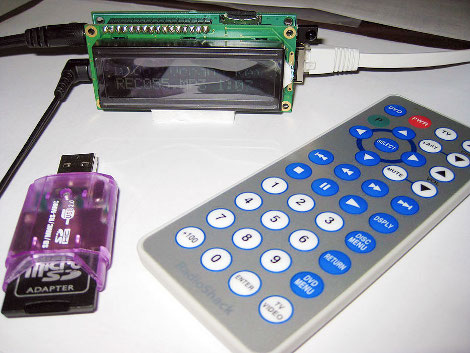
It’s got a NIC, a remote, a character display, and can record and play back streaming audio. Thumper is [Harrison Pham’s] contest-winning Internet radio player.His finished board is roughly the same size as the 16×2 character display and piggy-backs the device for a small form-factor. It can be controlled via an infrared remote control, or through a remote web interface. Source files are available from the link at the top, but the really juicy details are included in the shockingly comprehensive PDF writeup.

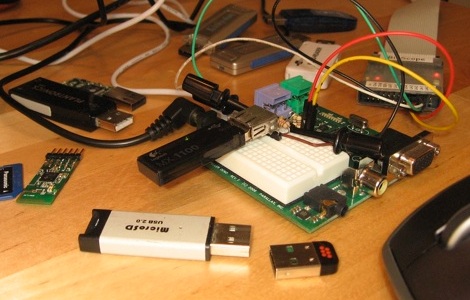
The photo above is a bit misleading. The board has a micro SD slot on the back even though a USB card reader is shown. This project would need USB host control for Propeller chips in order to use that reader. Don’t forget to check out some of the other submissions to the the contest once you’ve had your fill of this one.

[Thanks Drone]

Program Your Own Mayhem-causing USB Dongle

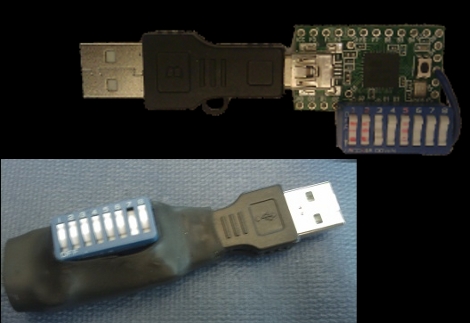
[Adrian Crenshaw] is up to no good with this programmable USB device. [Adrian’s] creation identifies itself as a USB keyboard and can be programmed to do whatever you want. That’s because it’s based around the Teensy board which sports an ATmega32 that will cost you only $18. He’s added a set of DIP switches for easy in-field changes to the firmware. There’s also a light sensor that can be used to activate a command once an unknowing victim has shut off the lights in the office and left for the day. Check out his talk after the break to see his proposed uses for such a device.

Continue reading “Program Your Own Mayhem-causing USB Dongle”

USB Host For Propeller Micros

[Micah Dowty] has implemented full speed USB host control on a Propeller microcontroller. He’s motivated by the thought of using USB based WiFi and Bluetooth dongles in his projects as ready-made solutions.We’ve seen USB host control with the Arduino and it really opens up the flood gates for advancing your projects through storage, wireless connectivity, and user interface.

So far his work is fairly preliminary but the results seen from other participants in the Parallax forums are very positive. Check out his code from the subversion repository and lend a hand with the development.

[Thanks Stefan via Adafruit]

Photographing Splashing Droplets

[youtube=http://www.youtube.com/watch?v=oyL9R4-h5cQ&w=470]

When doing those cool liquid droplet splash pictures, you need to time not only the camera, but the droplets themselves. This project takes you through how to build the system to time the droplets and work with camera axe to get the right pictures. PCB files and schematics are available. As you can see, the results are quite nice.

JooJoo Turns Out To Be Legit, Gets Torn Down.

The JooJoo exists. With all of the recent media coverage of the iPad, we’ve had a chance to hear some interesting discussion and heated debates. Usually the more tech savy and the hackers are most upset about the “closedness” of the hardware and software. We have heard of many alternatives, but usually they’ve been pretty clunky. The JooJoo(originally “crunch pad”) by Fusion Garage gets mentioned, but we’ve been avoiding it since the company had been having so many set backs, we doubted it would actually exist. Well, it does. The shipped the first ones at the same time as the iPad.

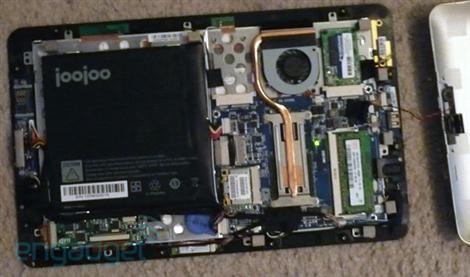
What is so special about it? well, heres what you’ll find when you open it up (yeah, with screws).

  • a RAM slot, 1 GB provided
  • 2x mini pcie slots
  • 1x ssd slot
  • a 3g sim slot
  • Nvidia’s new ion graphics chip
  • An atom n270 processor

With 4 Gb of storage, bluetooth, wifi, a camera, external USB ports, a screen boasting 1366×768 resolution, and a slick interface which supports flash, we can’t help but get excited. It costs $499. We think this could be a fantastic hacking platform. We aren’t going to just run out and buy one yet, but if it takes off, we expect to see people hacking these like crazy. Too bad they couldn’t have gotten a little more press to compete with the iPad.