Hackaday Prize: 20 Projects That Are The Height Of Automation

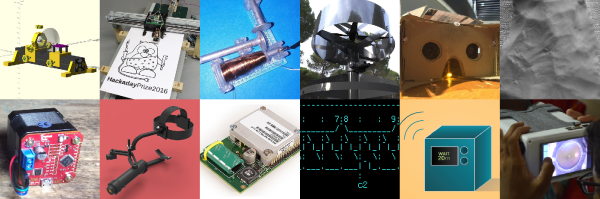
Automation makes the world go around. Whether it’s replacing elevator attendants with buttons, replacing songwriters with computer algorithms, or giving rovers on Mars the same sense and avoid capability as a Tesla, Automation makes our lives easier and better. Today we’re excited to announce the twenty projects that best demonstrate the possibilities of Automation in the running for the 2016 Hackaday Prize. These projects tackled problems ranging from improving the common stepper motor to flying Lidar around a neighborhood on a gigantic ducted fan.

The winners of the Hackaday Prize automation challenge are, in no particular order:

If your project is on the list, congrats. You just won $1000 for your hardware project, and are now moving up to the Hackaday Prize finals where you’ll have a chance to win $150,000 and a residency at the Supplyframe DesignLab in Pasadena.

Assistive TechnologiesIf your project didn’t make the cut, there’s still an oppurtunity for you to build the next great piece of hardware for The Hackaday Prize. The Assistive Technologies Challenge is currently under way challenging you to build a project that helps others move better, see better, or live better.

We’re looking for exoskeletons, a real-life Iron Man, a better wheelchair, a digital braille display, or the best educational software you can imagine.

Like the Design Your ConceptAnything GoesCitizen Science, and Automation rounds of the the Hackaday Prize, the top twenty projects will each win $1000 and move on to the Hackaday Prize finals for a chance to win $150,000 and a residency at the Supplyframe DesignLab in Pasadena

If you don’t have a project up on Hackaday.io, you can start one right now and submit it to the Hackaday Prize. If you’re already working on the next great idea in assistive technologies, add it to the Assistive Technologies challenge using the dropdown menu on the sidebar of your project page.

The Hackaday Prize is the greatest hardware competition on Earth. We want to see the next great Open Hardware project benefit everyone. We’re working toward that by recognizing people who build, make, and design the coolest and most useful devices around.


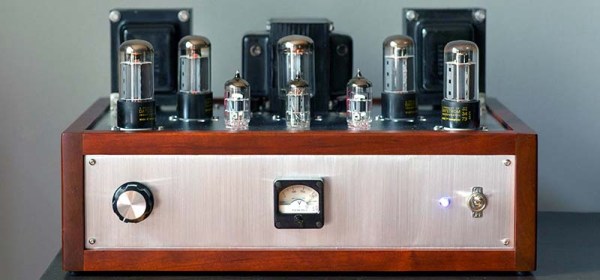
Building Better Tube Amps With Heathkit Parts

[Justin] had been trying to find a good tube amp for years, but all the best examples were either expensive or a complete basket case. Instead of buying a vintage stereo tube amp, he decided to build his own using the guts of a Heathkit AA-100, a popular tube amp from the 60s and 70s that doesn’t have a great reputation for sound quality.

This project was based on an earlier project from a decade ago that replicated the very popular Dynaco ST-70 tube amp from parts taken from the Heathkit AA-100. The schematic for this conversion was readily available on the usual tube head message boards, and a few PCBs were available for the input stage.

With the schematic in hand, the next thing for [Justin] to do was get a nice enclosure. High quality tube amps are valued as much for their appearance as they are for their sound quality, and after giving his father-in-law a few sketches, a cherry hardwood chassis stained in a beautiful golden brown appeared on [Justin]’s workbench.

The big iron for this new tube amp was taken directly from the old Heathkit, and a few hours in front of a mill netted [Justin] a chassis panel drilled out for the transformers and tube sockets. The rest of the project was a bit of assembly, point-to-point wiring, and wire management giving [Justin] a fantastic amplifier that will last for another fifty years until someone decides to reuse the transformers.

Hyperuniformity — A Hidden Order Found In The Greatest Set Of Eyes

Of all the things evolution has stumbled across, the eye is one of the most remarkable. Acting as sort of a ‘biological electromagnetic transducer’, the eye converts incoming photons into electrical and chemical spikes, known as action potentials. These spikes then drive the brain of the host life form. Billions of years of natural selection has produced several types of eyes, with some better than others. It would be an honest mistake to think that the human eye is at the top of the food chain, as this is not the case. Mammals underwent a long stint scurrying around in dark caves and crevasses, causing our eyes to take a back seat to other more important functions, such as the development of a cortex.

There are color sensitive cones in all eyes. Mammals have three types of cones, which are…wait for it…Red, Blue and Green. Our red and green cones are relatively recent on the evolutionary timescale – appearing about 30 million years ago.

The way these cones are distributed around our eyes is not perfect. They’re scattered around in lumpy, uneven patterns, and thus give us an uneven light sampling of our world. Evolution simply has not had enough time to optimize our eyes.

There is another animal on this planet, however, that never went through “the dark ages” as mammals did. This animal has been soaring high above its predators for over 60 million years, allowing its eyes to reach the pinnacle of the natural selection process. A bald eagle can spot a mouse from over a mile away. Birds eyes have 5 types of light sensitive cones – red, blue and green like our own. But add in violet and a type of cone that can detect no light, or black. But it is the way these cones are distributed around the bird’s eye that is most fascinating, and the subject of today’s article.

Continue reading “Hyperuniformity — A Hidden Order Found In The Greatest Set Of Eyes”

Let’s Put A Hackerspace In Prison

The Hack42 Hackerspace in Arnhem, Netherlands is one of the best hackerspaces we’ve ever seen. After taking over a decommissioned military base, the Hack42 crew has filled a compound rimmed with razor wire with eclectic gizmos, tools, and a community that keeps growing the space. At this year’s EMF camp, Hack42 member [jos] laid out his plan to found the ultimate Hackerspace. He’s going to put a hackerspace in prison to create the ultimate hacker village, a monument to technomancy, and an anti-panopticon panopticon.

[jos] recently noticed a very large, very old prison — currently used to house refugees — went up for sale. This prison, located in downtown Arnhem, Netherlands is a panopticon, a concept for prisons popularized in the 1800s, with most designs based on a circular structure with prison cells along the diameter around the circumference and a guard house in the center. This gigantic building is 55 meters (180 feet) in diameter, and 46 meters (150 feet) tall at its highest point. This gigantic prison dome could contain the White House inside its walls, a few blue whales, and could almost fit a space shuttle stack under the dome (the orbiter itself would fit just fine if there were a door).

The ambitious vision for this prison-come-hackerspace is a permanent venue not unlike other hackercamps where hackers can stay for weeks or months to build a project, a venue for like-minded people to meet up, and a place for students to do graduation projects under the wings of academic leadership. A community is one thing, but this former prison would also be the largest hackerspace by enclosed volume, opening it up to some very cool, very large builds. Inter-office quadcopter mail was mentioned in the talk.

[jos] is looking for comments, ideas, and remarks via this Google form to, “convince the money-people to fork over the funds.” If you’ve ever wanted to contribute to something big, this is your chance.

Raspberry Pi Hive Mind

Setting up a cluster of computers used to be a high-end trick used in big data centers and labs. After all, buying a bunch of, say, VAX computers runs into money pretty quickly (not even counting the operating expense). Today, though, most of us have a slew of Raspberry Pi computers.

Because the Pi runs Linux (or, at least, can run Linux), there are a wealth of tools out there for doing just about anything. The trick is figuring out how to install it. Clustering several Linux boxes isn’t necessarily difficult, but it does take a lot of work unless you use a special tool. One of those tools is Docker, particularly Docker Swarm Mode. [Alex Ellis] has a good video (see below) showing the details of a 28 CPU cluster.

Continue reading “Raspberry Pi Hive Mind”

Hackaday Prize Entry: Automated Hydroponics

This team project for the Hackaday Prize is a solution to a rather important problem. Imagine growing plants for use as biomarkers for pollution. It’s a great idea, but how do you grow the plants in the first place? This team is building a space-saving hydroponic system that packs the most green into the least amount of space. It’s simple, and can be built almost entirely with parts from the local home supply store.

The design of this hydroponic system is based on a few PVC pipes, arranged vertically, joined together with a few 90 degree bends. In each course of pipe, a few holes are drilled to accept a plastic cup. This cup is filled with some sort of growing medium, and the Genuino-based controller takes care of everything else. Watering the plants, turning the lights on and off, and recording the nutrient concentration of the water is all possible with a simple microcontroller.

Right now the team has a huge stack of perforated PVC pipe and a Genuino-based brain box that takes care of everything plants need. It’s going to take a bit of time for the plants to grow, but this is still one of the most compact hydroponic systems we’ve seen.

You can check out a video of the entire setup below.

Continue reading “Hackaday Prize Entry: Automated Hydroponics”

The Most Traveled Security Screwdriver, A Hacker’s Tale

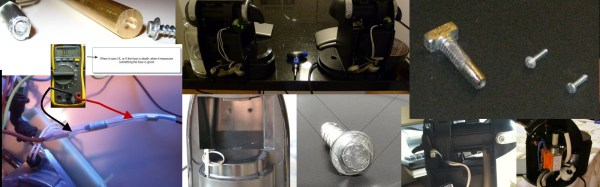
Nespresso is a variant of disposable single serve coffee pods with an extensive, expensive, and proprietary accessory line. After selling inconvenient bits of his soul for convenience and, admittedly, fairly tasty shots of coffee, [Chriss Lott] was predictably betrayed by his Nespresso Jura coffee machine. 

Rather than simply exchange more local currency for a replacement revenue guarantee for the Nestle conglomerate, he did what any self-respecting hacker would do and tried to fix it himself. Unfortunately he quickly found their cunningly oval shaped security screws to be more trouble than his time was worth. He listed his remaining coffee pods for free on craigslist and decided to toss the machine in the planned obsolescence receptacle which comes standard in any civilized home.

This is where our story would end were it not for the kindness of a fellow hacker. [Dave H] was browsing through craigslist when he spotted the sad tale. However, possessing a different skillset from [Chris], [Dave] had solved the particular oval shaped conundrum with a security screwdriver hand made from an old bolt. He answered his fellow hacker’s vaguely ardent plea and mailed the converted bolt over to [Chris]’s house.

With the proper tool in hand, [Chris] quickly discovered that all that was standing between him and his convenient coffee was a bit of schmoo between the cost cutting membrane switch and its mating pad on the circuit board. With the practically free repair complete, the machine happily vibrated back to life and produced coffee as if its planned obsolescence wasn’t for another few years. We assume a Nestle engineer was thrown into the pit on principle for this loss (they, of course, are evil enough to have a pit).

We’re not sure how the story proliferated through the internet, but we do know that it was inspirational to many convenient caffeine deprived hackers with similar problems. [Chris] found himself the hub in a network of circumnavigating security screw circumventing hackers.

[Dave]’s hacked bolt was the first to go on an adventure resulting in the repair of many machines before the postmen lost it under a cart, standard procedure. A replacement was purchased from an eBay seller for a hefty $40 american dollars and took up the journey where it left off. Others sent in guides on making the tool for those unwilling to wait for one to be shipped. In fact, even the maker of the $40 dollar tool weighed in on the issue. Apparently he was unaware that the consumer and commercial Nespresso machines used the same tools. A hacker himself, he ran a listing of the custom tool at a quarter of the price for the home repairman and another for the commercial appliance at the higher price.

The whole page is an entertaining read, for a certain kind of person, about appliance repair, reverse engineering, and camaraderie. Happily, the hub is still alive. If you find yourself with an oval screw which needs turning, get in touch with [Chris] and a strange community’s kindness will have a nomadic security bit crossing nations your way soon.