Despite Penalties, Lawyers Can’t Stop Using AI

Despite a few high-profile cases in recent years with lawyers getting caught using LLM-generated documents and facing disciplinary action due to this, it would seem that this is not deterring many other lawyers from following them off this particular cliff, per reporting from NPR.

We reported back in the innocent days of 2023 about the amusing case of Robert Mata v. Avianca, Inc. In this case, the plaintiff’s lawyer decided to have ChatGPT ‘assist’ with the legal filing, which ended up being filled with non-existent cases being cited, despite the chatbot’s assurance that these were all real cases. Now it would seem that this blind trust in cases cited by LLM chatbots is becoming the rule, rather than the exception.

Last year a record number of lawyers fell into the same trap, with many lawyers getting fined thousands of dollars for confabulated case citations. According to a researcher at the business school HEC Paris, who is keeping a worldwide tally, the count so far is 1,200, of which 800 originate from US courts.

Unsurprisingly, penalties are also increasing in severity, with monetary penalties passing the $100,000 and some courts demanding that any use of ‘AI’ be declared up-front. Whether or not the popularity of LLM chatbots among US lawyers is simply due to the massive caseload that digging through cases in Common Law legal systems entails has not yet been addressed, but that undesirable shortcuts are being taken is undeniable.

Remember that it’s easy to point and laugh, but the next case could involve the lawyer handling your delicate situation.

Re-Learning How To Run

As I write this, four astronauts are on their way around the moon for the first time in 50 years. A lot us have asked ourselves just exactly why you’d send people out that far when the environment is so hostile and we have increasingly competent robots that could do the jobs in their place. If anything, that’s even more true now than it was back in the day of the Apollo program, when the remote operations capability was a lot more constrained. But having people, potentially in the near future, on the lunar surface remains qualitatively different.

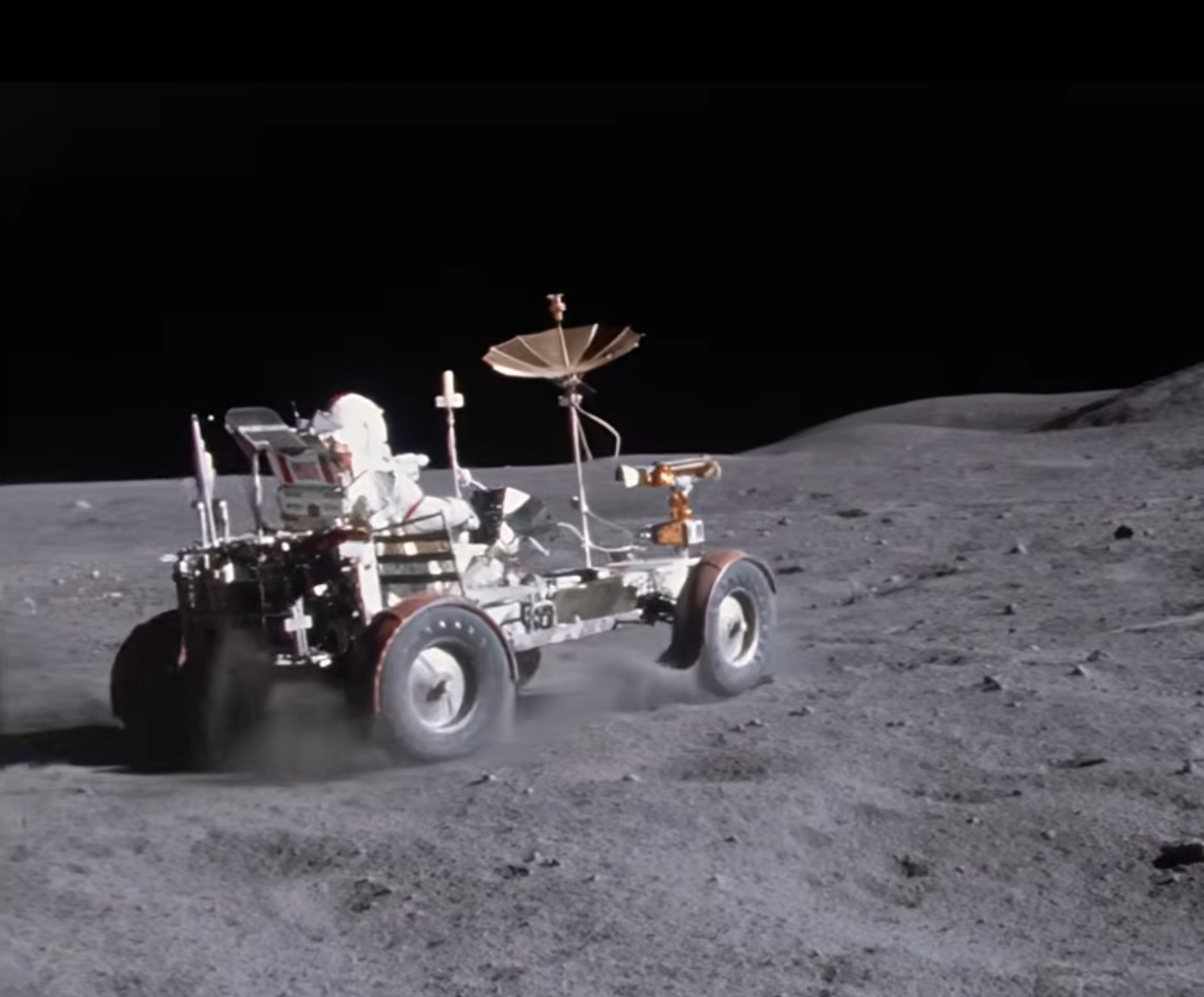
I was recently re-watching some of the footage from Apollo 16 when the astronauts were driving around in the Lunar Roving Vehicle, and the discussions that they’re having about the lunar geology that they can see for the first time with their own eyes is very convincing. Having people in situ tightens the loop of “hey, that’s interesting”, “let’s take a closer look”, and “I wonder what that means” in a way that minutes or hours of transmission time, and sterile observation of photos on a computer monitor just break. In comparison, our Mars rovers move excruciatingly slowly, the data comes back through a very thin pipe, and it takes months or years to analyze.

Of course, there is danger to human life; it’s a lot more expensive to get people safely to, and importantly back from, the moon than it would be with a disposable robot. Comparison with the Mars rovers is also unfair because travel to Mars is another scale entirely. Even if it does make sense to send humans for exploration on the moon, it may not make sense to do the same on the red planet, in the near future or ever. Given all that, I’m stoked that we can see through the robots eyes, but if all else were equal, I’m sure that we’d learn more from human explorers.

While in a lot of ways the Artemis I and now the Artemis II missions are underwhelming in comparison to the many “firsts” of Apollo, I absolutely appreciate them for what they are: a shakedown trial of a set of technologies and practices that we used to grasp, but which have atrophied over the last five decades. If a new generation of scientists is to put feet onto regolith, we need to learn to walk before they can run, or rover. In that spirit, I’ll be crossing my fingers for the future of manned spaceflight over the next week and a half.

Turning A Bluetooth Caliper Into A FreeCAD Input Device

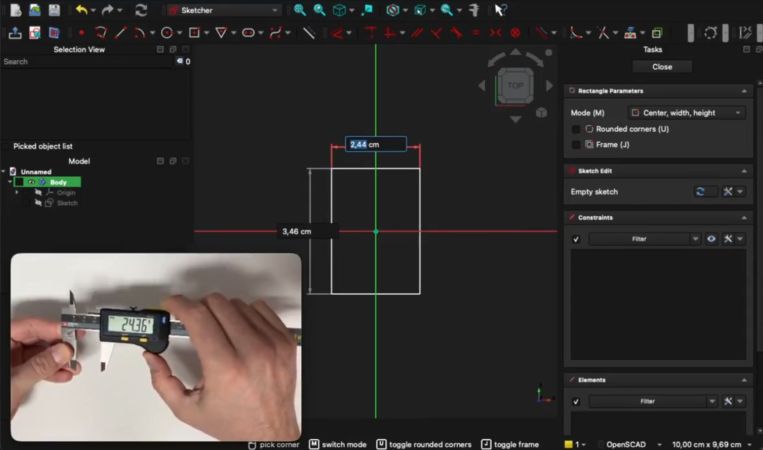
It’s a common ritual: whipping out those calipers or similar measuring devices to measure part of a physical object that we’re trying to transfer into a digital model in an application like FreeCAD. Wouldn’t it be nice if said measurements were to be transferred instantaneously into the model’s sketch, including appropriate units of measurement? That’s essentially what [stv0g] has done by merging a Sylvac Bluetooth-enabled caliper and FreeCAD using a plugin.

Key to the whole operation is a Bluetooth-enabled caliper like the Sylvac S_Cal EVO that [stv0g] managed to score on EBay for a mere €90 when it normally goes for multiple times that amount. This has BLE built in, using BLE’s standard GATT profiles for device communications specifications. Along with the provided Sylvac developer tools, this made it relatively easy to develop the InstrumentInput addon for FreeCAD.

Continue reading “Turning A Bluetooth Caliper Into A FreeCAD Input Device”

Cleaning An IBM 5150, And The Perfect Period PCB Soldermask

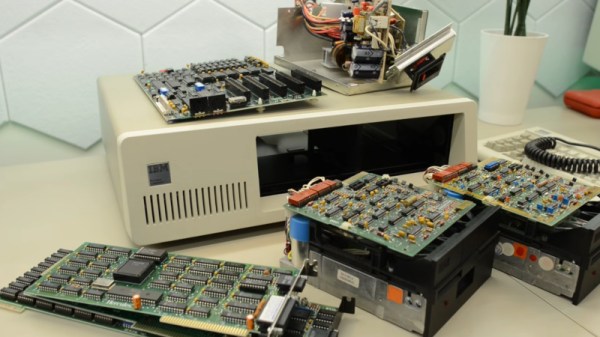
Now that early PCs have moved firmly from the realm of e-waste into being collector’s items, it’s worth putting in some effort to restore them if you find one. [Epictronics] has an early IBM 5150, the ancestor of all today’s PCs, and is bringing it back to life. Along the way, he’s building a replica AdLib sound card, making a useful discovery about how to make new parts look authentic.

The video below the break is a gentle journey through an early PC teardown, followed by the construction of the replica sound card. Here’s the interesting nugget of information: these new cards are careful recreations of the originals, but they just don’t look right. It seems modern soldermask is too shiny, and as luck would have it, there’s another option that is much more period-authentic. We hadn’t noticed matte green was available, but it certainly captures the look of those days much better.

As you might expect, such an old machine has a range of dead capacitors and a few chips. There’s a lucky escape with a Varta battery on an expansion card, having very little leakage, and part of one of the floppy drives needs some surgery. It’s gentle hacking that’s engaging to watch, and of course, at the end, we’re rewarded with the thing booting properly.

You might think reproducing a sound card is unusual, but we’ve seen it a number of times.

Continue reading “Cleaning An IBM 5150, And The Perfect Period PCB Soldermask”