Launching Rockets Is Hard, Bring Them Back Is Harder

Since the first V2 rocket sailed above the Kármán line back in 1944 and right up until the modern era, the trajectory of most space-bound rockets was more or less the same: after expending their propellants they would either crash into some desolate steppe or plunge into the ocean. In either event, the rocket was disposable. The important bit up top might go on to explore the stars or send a human crew off on their mission, but the booster rocket that lifted the spacecraft out of the atmosphere was always going to be sacrificed for the cause.
But in the 1970s NASA had a wild idea: what if we didn’t smash a brand-new rocket valued at millions of dollars into the ocean every time we wanted to put something in orbit? Instead, they would build a hybrid space vehicle that blended the vertical takeoff and raw power of a rocket with the capabilities of an airplane, allowing it and whatever it was carrying to make a gentle runway landing at the end of its mission. As such, the Space Shuttle was born.

With the benefit of hindsight, we now know the Shuttle wasn’t quite the spaceflight revolution that NASA had hoped for. The age of reusable rockets didn’t truly begin until 2015, when SpaceX landed the first stage of their Falcon 9. To date they’ve repeated the feat nearly 600 times, all the while increasing the reliability and speed of their operations. Today the Falcon 9 is the most prolific launch vehicle in history, and nearly every other rocket in active development is being designed to include some element of reusability.

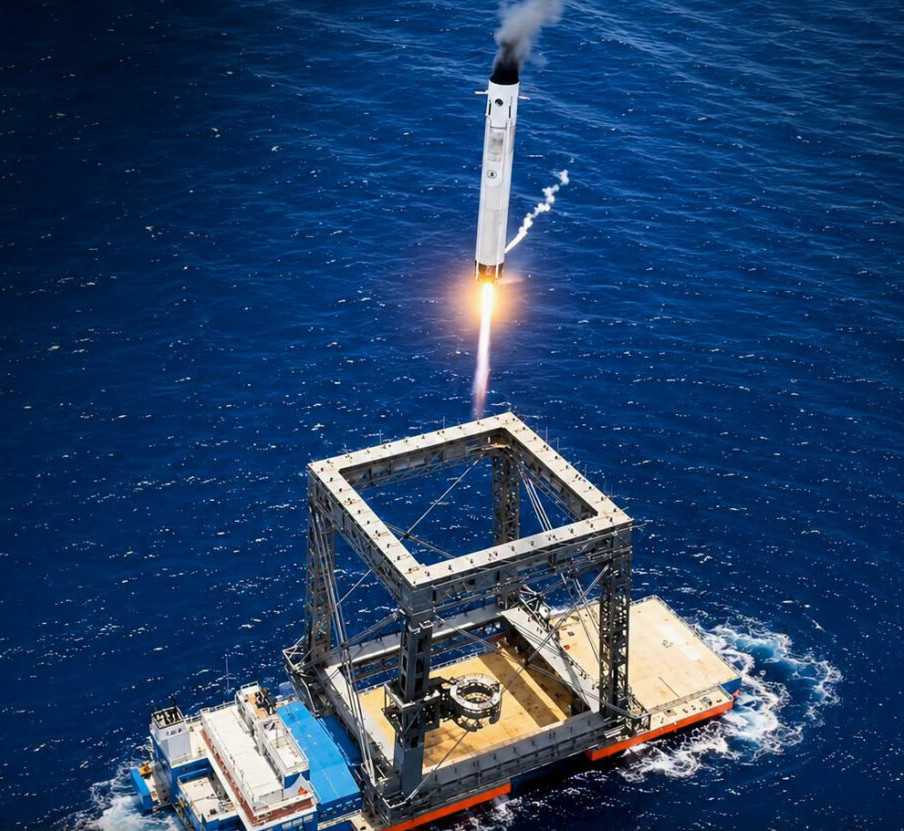
Most recently, China demonstrated that they could recover their Long March 10B rocket by gently bringing it down into what amounts to a giant butterfly net. While it might seem a bit quaint compared to rockets that land on their tails like something out of a 1950s sci-fi movie, the idea offers considerable promise.

Continue reading “Launching Rockets Is Hard, Bring Them Back Is Harder”

Earth-like LHS 1140b May Feature The First Atmosphere Found On Exoplanet

Finding another planet outside of our solar system that can comfortably be called ‘Earth-like’ is one of those discoveries that — if confirmed — would be a major event. The complication here is that with every exoplanet that we discover through observations, determining the type of planet is hard enough, never mind figuring out whether it has an atmosphere, much less what’s in that atmosphere. This makes a recent report on LHS 1140 b rather exciting, as it strongly suggests that this super-Earth may have something close to an Earth-like atmosphere.

In the paper by [Collin Cherubim] and others in Science, the findings of helium occasionally escaping from its atmosphere have led to considerable excitement, as this time-variable atmospheric escape of helium suggests a helium-rich upper atmosphere that’s further depleted in hydrogen.

It should be noted, of course, that these assumptions are based on observations from roughly 49 light-years away, so there’s always some room for later adjustments. Even if confirmed, the star that LHS 1140b orbits is a red dwarf, with a nearly 25-day orbital period and light levels less than half of what Earth receives from the Sun. This would make the surface of LHS 1140b with its proposed oceans rather dim, even if it’s conceivably at temperatures well within the comfort range of us Earth-based mammals.

At 49 light-years distance, it’s also not close enough that — barring an FTL drive — we could do direct observations or visitations, but if these results hold, it’d be on the short list along with a number of other plausibly habitable exoplanets to check out once we build that first warp drive-powered starship.

Could Reticulum Power A Post-Internet Network?

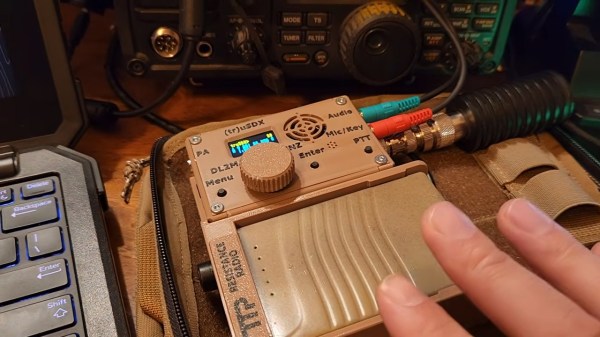
These days, it is easy to think you always have access to the Internet. But some wonder if — in spite of its ARPANET, nuclear-war-planning heritage — you can actually count on it to be there when things go pear-shaped. [The Tech Prepper], as you might imagine, is quite concerned with that last question, and is flogging Reticulum over high-frequency radio as a post-internet network in a video embedded below.

Reticulum is a cryptographic network stack, fully decentralized and amazing from a cyberpunk/hacker/survivalist perspective. Unfortunately for [The Tech Prepper], until the you-know-what hits the ventilation unit and the FCC and its counterparts in other countries are too busy to be concerned with such trifles, encrypted signals are banned on ham radio bands just about everywhere. That’s why his demo is using a dummy load on the Mercury HF modem instead of an antenna: the feds don’t care if the signal doesn’t leave the building. The video shows how to replicate the setup using his EmComm Tools suite on Ubuntu.

Perhaps more interesting is his vision of a Post-Internet network, be it in a disaster scenario, as he envisions, or simply because we get sick of what the internet has become. The idea of easily hooking an open-source radio modem to a PC running modem73, open-source SDR software, has a certain appeal. Reticulum isn’t your only option there: modem73 will let you run a BBS in the clear — that is, unencrypted and legal to transmit — and let’s face it, wasn’t life online more fun in BBS days?

This isn’t the first time we’ve seen the Reticulum network stack, but last time it was operating at considerably shorter ranges over LoRA. 

Continue reading “Could Reticulum Power A Post-Internet Network?”