Visible Kitteh Project Keeps Mice Out Of The House

[Aaron] and his wife have a wonderful cat that likes to contribute to the household by bringing field mice, shrews, and voles into the house as a ‘present.’ Obviously, this leads blood, fur, and viscera staining the carpet, and chasing around mortally wounded rodents isn’t [Aaron]’s idea of fun. To stop the cat from bringing small mammals into the house, [Aaron] is now preventing the cat from entering the house when it has an animal in its mouth.

[Aaron]’s project is inspired by this facial recognition cat door that refuses entry of all cats holding a small rodent in their mouth. To get his system working, [Aaron] started researching object recognition and built an Android app using the OpenCV libraries. To detect if his cat has a rodent in his mouth, [Aaron] is using Harr cascades – a proven object detection system that will detect and differentiate between a cat and a cat plus mouse.

Right now, the project is only about half done. [Aaron] is currently training his object recognition system, a process that can take days. Still, anything that keeps mouse guts out of the carpet is an awesome project in our books.

Science And Engineering Festival Comes To DC

If you’re around the Washington, DC metro area next weekend, here’s something for you. It’s the USA Science and Engineering festival, and if you’ve ever wanted to talk to [Adam] and [Jamie] from Mythbusters, [Bill Nye], and several astronauts, this is where you should be next weekend.

This is the second USA Science and Engineering festival. The first festival, brought to bear because of an act of congress. The last festival was highly successful (and fun), so we can’t wait to see the reports from next weekend roll in. This time around, there will be scale models of the Orion Service Module, an F-22 cockpit Demonstrator, and a demonstion of an F-35 taking off vertically. Yep, Lockheed Martin is hosting this festival, but it’s still cool.

Even though the website makes it seem this festival is geared towards children, we’re sure we’d have a blast visiting. Here’s a solution: borrow a niece or nephew and show them what engineering can do.

We have to note you can also visit the NASA Goddard Space Flight Center while you’re in DC. It’s just a short Metro ride (with a bus transfer) from the convention center where the festival will be taking place. We highly recommend the tour of the facility. If anyone knows if you can see the space shuttles Discovery and Enterprise at the Udvar-Hazy center next weekend, drop us a line. We’ll amend our DC ‘look at cool stuff’ recommendations.

Tip ‘o the hat to [Paul] for sending this one in.

Using A Touch Sensor As A Telegraph Key

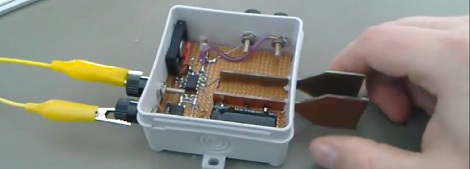
[Sebastian] is learning Morse code and CW radio, and of course he needed a telegraph key. Instead of using the terribly unergonomic paddle style key, he built a capacitive touch iambic key over the course of a few evenings.

An iambic key usually has two switches. When one switch is closed, it will transmit a ‘dit’. When the other switch is closed, it will transmit a ‘dah’. Instead of using mechanical paddles, [Sebastian] brought his iambic key into the 21st century by using a touch sensor. An ATtiny45 measures the time it takes for a single metal plate to fully charge. It’s the same idea behind the wonderful Arduino CapSense library.

This isn’t the first capacitive-touch iambic key we’ve seen; this little guy is just a pair of metal contacts and resistors that plug right into an Arduino. With an ATtiny45, [Sebastian]’s build is a full-blown iambic telegraph key that plugs right into his CW rig. You can check out the walk through of the project along with [Sebastian] trying out his iambic key after the break.

Continue reading “Using A Touch Sensor As A Telegraph Key”

A Flight Simulator Made Out Of A Real 737 Cockpit

[Trent] sent in an awesome story about a single man who bought the nose of a 737, put it in his garage, and built a flight simulator inside the cockpit. His name is [James Price], and right now the only thing we’re wondering is when we can have a visit.

The cockpit came from an aircraft boneyard in Oklahoma. After [James] plunked down $1500 for the shell of a cockpit, he moved his new toy to a Livermore, California aircraft hangar and eventually into his garage. While the plane is meant to be a simulator, [James] is a tinkerer at heart: he says the best part of building his 737 is building the systems, programming the computers, and making everything work together. We’ve got to admire that.

Of course this isn’t the first cockpit-in-a-garage build we’ve seen. Years ago we featured an Avro Lancaster, and just a few months ago we saw a strikingly similar replica 737 flight deck (it’s made out of wood, and not a real 737). [James]’ build is one of the very few home-built simulators made out of a real airplane. Someone get this guy an F15 cockpit stat.

Hackaday Links: April 20, 2012

Introducing Hackaday: how it’s made edition

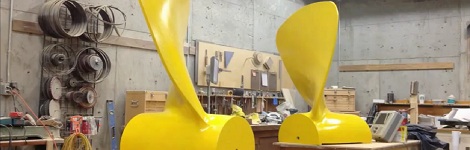
Ever wonder how the make the forms for marine propellers? Now you have. It turns out they use a bunch of plywood, Bondo, and sandpaper. Awesome viewing for a coffee break.

Finally a new way to hurt yourself!

[Darrell]’s solder flux pen was filled and capped at sea level. When this pen made it to his work bench high in the mountains of Colorado there was a significant amount of pressure in that pen. The flux squirted out right into [Darrell]’s eye. Better get some Visine on that, man.

The most accurate television portrayal of hacking ever

[Russell] was watching TV last night and saw an interesting commercial. It’s a bunch of electronic components, then a nook color showing the front page of Make: Projects, an Arduino schematic, and finally a happy robot. Two observations: firstly, someone in media and advertising doesn’t think ‘hacking’ is WarGames stealing bank accounts. Secondly, an ad exec looked into current users.

Here’s the official YouTube video of the commercial.

In a world… where components aren’t soldered… one man… uses a soldering station.

Adafruit linked to the most outrageous promo video ever. This Weller soldering station provides 240 watts, battles alongside Agamemnon at Troy,  has rework tweezers, and travels to Italy to wage war against the Latins.

An IDE for the 21st century

[Chris] is currently developing a new paradigm for programming. He calls it Light Table, and it’s designed to be an improvement over a simple text editor and project manager. All the documentation is at your fingertips, you can make changes on the fly. It reminds us of the zzstructure emulator we saw last year. It’s something to keep an eye on at least.

Tearing Down A Colonoscopy Pill Camera

Normally, colonoscopies are rather invasive affairs. Swallowing a small pill with a camera is much more amenable to a patient’s dignity and are seeing increasing usage in colon cancer screening. [Mike] acquired a pillcam from a relative who underwent the procedure and did a teardown to figure out how it works.

To get the video signal out of the body, the pillcam has two contacts that conduct the video signal through the body to stick-on contacts; It’s a more power efficient way of doing things versus a radio transmitter. After opening the plastic and metal capsule, [Mike] found three batteries and an impressively small circuit that contained an array of LEDs, a camera, and what might be a small MCU.

Taking a scope to the electronics in the pill, [Mike] found an impressively complex waveform that sends uncompressed image data to the receiver every few seconds. Although the camera was somewhat destroyed in the teardown, we’re pretty confident [Mike] could decode the image data if he had another… ‘sample.’

[Mike] says if you can ‘retrieve’ another one of these pill cameras, he’ll gladly accept any donations and look into the differences between different makes and models. Just make sure you sanitize it first. After the break you can see [Mike]’s teardown and the inevitable poop jokes in the comments. One last thing – if you’re over 50, doctors should be looking at your colon every 5 or 10 years. Get screened.

Continue reading “Tearing Down A Colonoscopy Pill Camera”

Spend Your Weekend Contributing To The Exploration Of Space

Earlier today we posted a link to a tournament NASA is holding. NASA is trying to crowdsource the organization of terabytes of data collected from missions all over the solar system. A few Hackaday readers wrote in (thanks [grbgout] and all the others) to tell us there is an International Space Apps Challenge going on this weekend to crowdsourse solutions to the problems of space flight.

The challenge is the product of a partnership between NASA, the National Science Foundation, the UK  and Japanese Space Agencies and a host of other organizations like GitHub, Yahoo Developer Network, and even a few hackerspaces. The idea behind the challenge is simple: spend a weekend solving software, hardware, and science challenges to improve the state of space sciences.

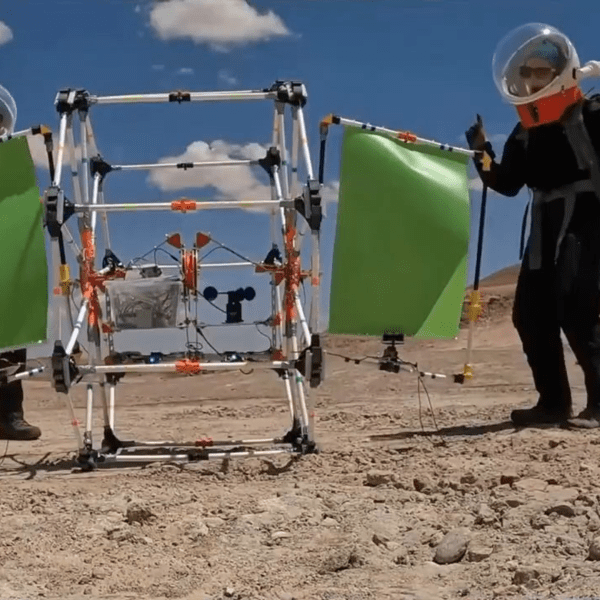
There are a lot of interesting projects like programming an interface to a NASA mission simulator, figure out how to print 3D objects in space, and even develop the hardware and software for an underwater ROV.

Aside from the fancy software and hardware challenges, there are also some very interesting data visualization problems, like clearly explaining the fact that space is mostly empty. If you can figure out how to tell people they aren’t the center of the Universe, take a shot at it – there’s probably a Nobel in Literature in it for you.

Right now there are dozens of locations on all seven continents and in Low Earth Orbit (McMurdo Station in Antartica and the ISS) that will have people contributing to these projects. Of course you’re free to work out of the home and help scientists, engineers, and researchers reach to the stars.