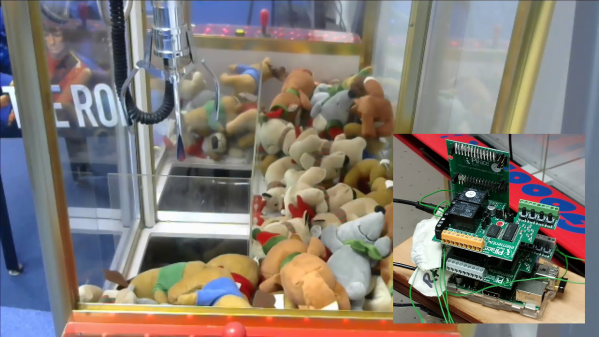
Want to do a bit of good this holiday season without leaving your couch or battle station? Well step right up and try your hand at Santa Claws, the charitable claw machine created by UK-based firm Liberty Games. For every toy you can maneuver to the chute, Liberty Games will donate money to Crisis, a national charity devoted to ending homelessness.
The machine is filled with special Christmas-themed stuffed animals that represent different cash values from £1 to £5. And these toys are doing double duty — after the holiday, they’ll all be donated to a good cause. In order to make this playable worldwide, Liberty used a Raspberry Pi, two Pi Face boards to interface the claw machine’s controls, and a Pi Face rack to everything together. They have the machine set on ‘generous’, so go have fun.
Can you imagine a near future where your family doctor can effectively prick your finger and test you for a dozen or so types of cancer? Currently, cancer detection is a time-consuming and expensive process. Existing methods of screening for cancer usually involve taking a whole lot of blood and running tests that cost thousands of dollars. But Toshiba has created a cancer-detecting machine that sounds like something straight out of science fiction.
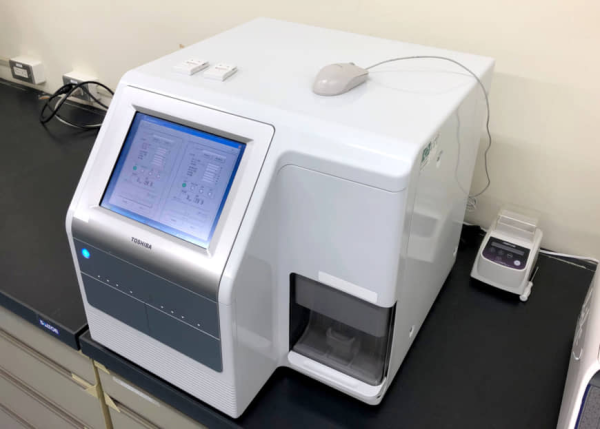
The machine is about the size of a small office copier, and it looks like one, too. But this small machine can do some powerful tricks. Toshiba claims that the machine can detect 13 types of cancer from a single drop of blood with 99% accuracy. What’s more impressive is that it can do this under two hours, as opposed to days or weeks depending on laboratory backlog. Most importantly, they are aiming to do this entire battery of tests for about $180. Ideally, this machine will do everything that current blood cancer detection equipment does, just better, faster, and with fewer resources.
Some of the cancers the machine can test for have been previously difficult to detect, like ovarian, pancreatic, and esophageal cancer. But this machine can screen for all three of these — great news for early detection of these ravaging cancers — as well as breast, prostate, gastric, colon, liver, biliary tract, bladder, lung, brain, and sarcoma. The only catch is that the machine can’t pinpoint which cancer exactly, it only knows if microRNA one or more of the 13 came up.
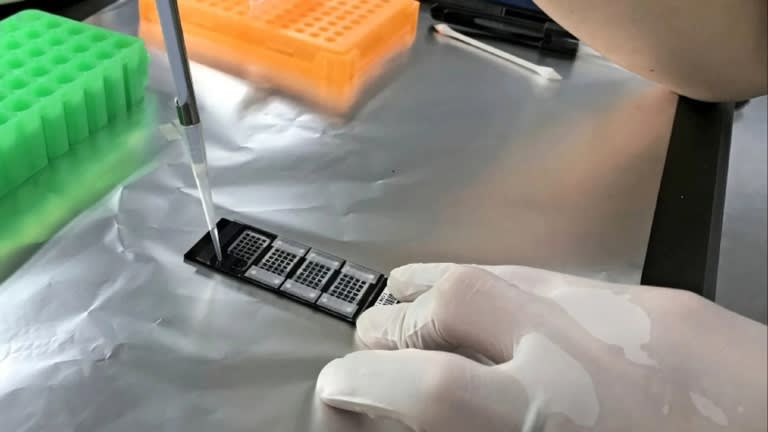
So, how does it work? Cancer cells secrete certain types of microRNA into the bloodstream that healthy cells don’t. The machine works by assessing the different types of microRNA that show up in the sample drop, and studying their concentrations. Their work builds on that of Toray Industries, who announced earlier this year that they had made a cancer-detection chip based on microRNA accumulation that is 95% accurate. Development of this chip follows on the heels of research that finds testing for microRNA in bloodwork has the potential to detect cancers in earlier stages, and in some cases like for bowel cancer, with a much less invasive testing procedure.
Toshiba, in partnership with the National Cancer Center Research Institute and Tokyo Medical University will conduct a trial of the machine next year. If the trial is successful, they hope to commercialize it soon after.
We would love to be a fly on the wall Christmas morning to see [Wilksyonreddit]’s kid tear the paper off of this adult-level busy box. Can you imagine the unbridled glee? It should certainly make the arduous six-month build worth the trouble. Here’s hoping the walls are sturdy, because we predict they will be bounced off of.
This gift that keeps on giving has an Arduino MEGA clone inside and a couple of shift registers to deal with all those buttons and switches. In addition to all the buttons, switches, and the number pad, there are two 3D-printed touch sensor pads that can detect little fingers up to four inches away. Although he’s already built a few games and activities for it, [Wilksy] posted this in r/duino looking for more ideas. There’s a lot to work with here on baby’s first nuclear missile launch console, both input- and output-wise. We humbly suggest 4D Simon, though we must admit to fantasizing about MIDI controllers.
Hidden inside this Christmas present is an Easter egg we think you’ll appreciate. Enter the right code, and the box becomes a treasure trove of Back to the Future sound effects and audio clips. Video’s after the break, McFly.
This box would make a great Kerbal Space Program controller, too, like this one.
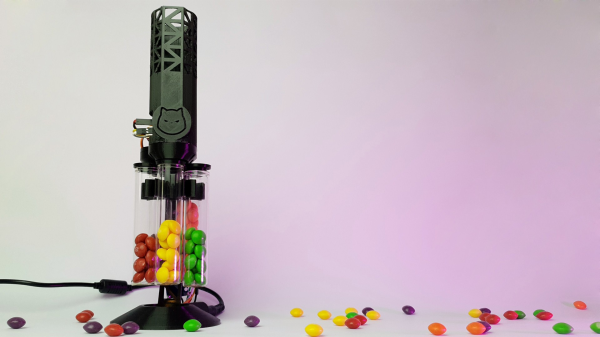
Sorting candy by color is a classic problem that has its roots in the contract riders of rock stars who were just trying to make sure that more important contractual obligations were not being overlooked by concert venues. Through the years, candy sorting has become a classic problem for hobbyists to solve in various ways. After a false start a few years back, [little french kev] was compelled to dust off those plans and make the most compact sorter possible.
This minimalist beauty uses an Arduino Nano and RGB sensor to assess the color. At the top, a small servo rotates an arm inside the hopper that both shakes the Skittles and sets them up single file before the sensor. Another small servo spins the tube rack around to catch the rainbow. There’s an RGB LED in the base that bathes the tube from below in light that matches the Skittles. Check out the series of gifs on [little french kev]’s personal project site that show how each part works, and then watch the build video after the break.
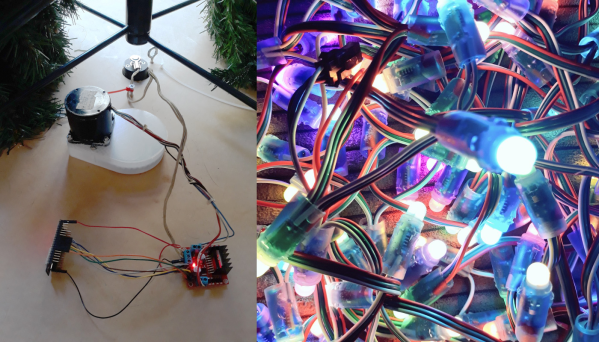
A couple of Christmases ago, [Nick] got tired of trying to evenly decorate his giant fake tree and built an MDF lazy Susan to make it easy as eggnog. But what’s the point of balanced decorations if one side of the tree will always face the wall? This year, [Nick] is giving himself the gift of a new project and motorizing the lazy Susan so the tree slowly rotates.
The saintly [Nick] decided to do this completely out of the junk box, except for all the WS2811 RGB LEDs on order that he hopes to synchronize with the tree’s movement. He started by designing a gear in OpenSCAD to fit the OD of the bearing, a task made much simpler thanks to the open-source gear libraries spinning around out there.
It was hard to get slow, smooth movement from the NEMA-23 he had on hand, but instead of giving up and buying a different motor, he designed a gear system to make it work. Our favorite part has to be the DIY slip ring [Nick] made from a phono connector to get around the problem of powering a rotating thing. This is a work in progress, so there are no videos just yet. You can watch [Nick]’s Twitter for updates.
[Nick] didn’t specify why he chose to use WS2811s, but they have gotten pretty cheap. Did you know you can drive them with VGA?
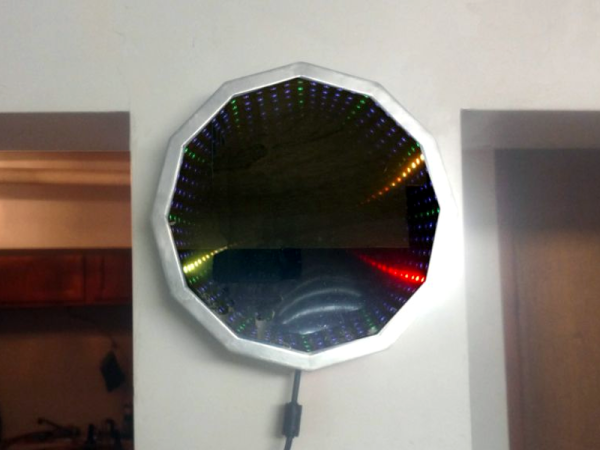
Have you made an infinity mirror yet? They’re pretty much a rite of passage project at this point. But unlike that DIY power supply, most of them serve no function beyond looking cool (not that there’s anything wrong with that). Might as well make it do something, right?
[How Do You – DIY] has a built a few mirrors because he likes experimenting with the effects of different reflective surfaces in various positions. This time, he’s built a clock from the ground up. Basic infinity mirror rules apply here, though he used semi-transparent reflective film on both sides for greater effect and put an adjustable warping bar in the back so the trail curves toward the center. The actual timekeeping is done by an Arduino Nano.
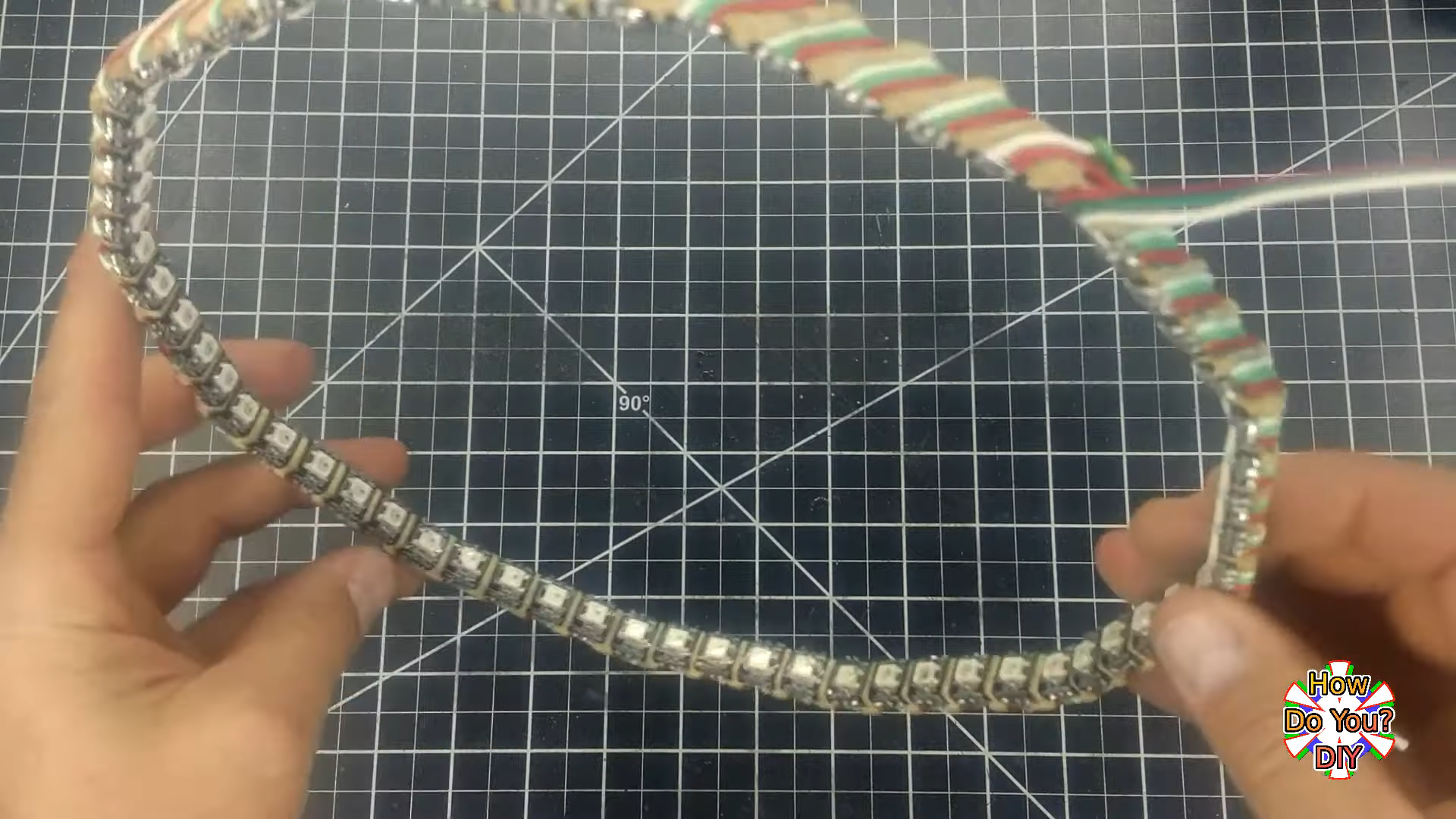
The RGB LEDs on his strip were a few millimeters too far apart for his liking, so he added a few dozen hours to the build by cutting it apart and painstakingly placing them all around the wood frame. Then he Dremeled a groove for each set of three wires that link the LEDs so that they sit flush. The final product is beautiful, and it’s a shame that this LED-holding frame is hidden away inside the equally well-crafted aluminium frame.
Don’t waste another minute — sweep past the break to check out the build video. If it’s a portable and functional conversation piece you want, make a set of infinity mirror coasters.
Oh, and did we mention that we’re running a clock contest? Hint, hint.
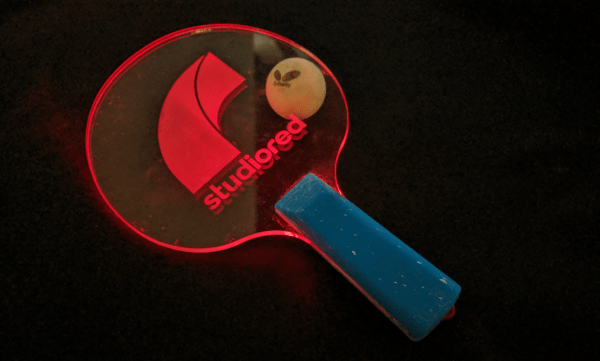
[George] and his coworkers like to blow off a little lunchtime steam on the company ping pong table. We might do the same, except it’d just be us versus the wall, and most of the exercise would consist of bending over to pick the ball up off the floor. When he found a scrap piece of acrylic out in their shop, [George] got the bright idea to make an edge-lit paddle featuring the company’s logo.
Not only does the paddle look cool, it works pretty well, too, even though it’s heavier and has smooth surfaces compared to a standard paddle. To begin, [George] found a regulation-size paddle outline and imported it into SolidWorks, then designed all the necessary cuts for the LEDs and other electronics. He also designed and printed ergonomic grips to protect the goods.
Continuing the stuff-on-hand theme, [George] used through-hole LEDs and dug into the abundance of battery clips and springs they have lying around for designing prototypes, instead of making it all fancy with SMT LEDs and a rechargeable battery pack. Slip on those sweatbands, because we’re serving up the build video after the break.
We see more ping pong balls than paddles around here, and that’s probably because they make great LED diffusers.