Illustrated Kristina with an IBM Model M keyboard floating between her hands.

Keebin’ With Kristina: The One With The Foot Keyboard

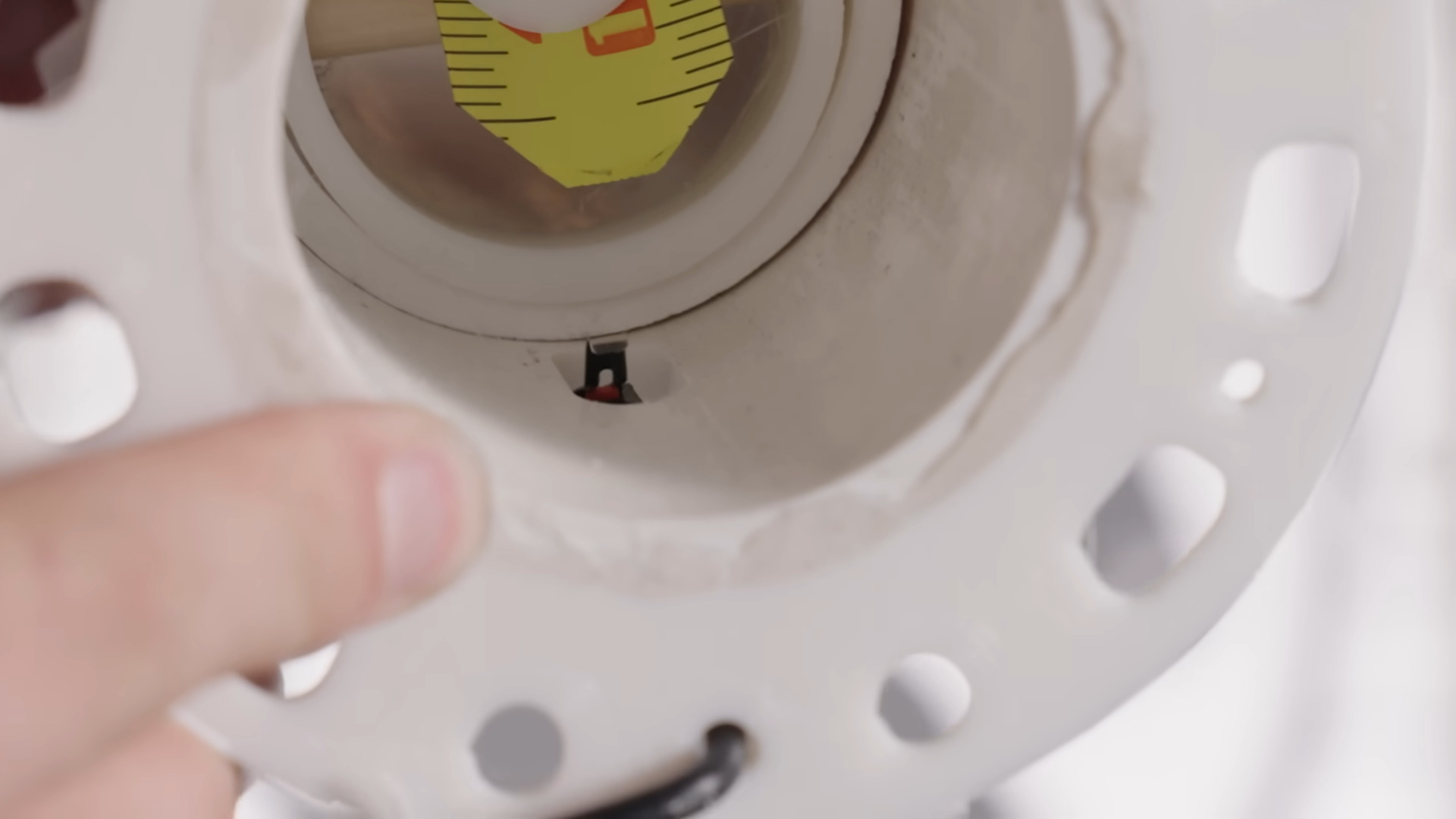
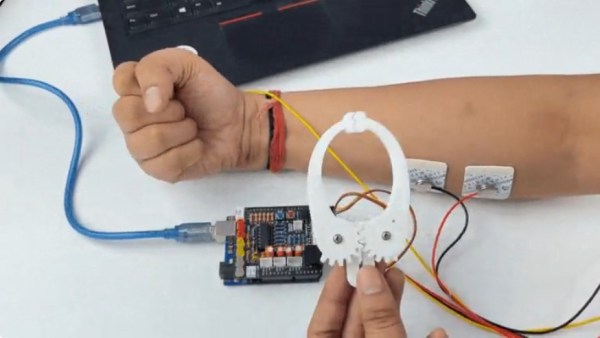
[crispernaki]’s opening comments to this VCR head scroll wheel project lament that overall technical details aren’t “complex, ground-breaking, or even exciting.” Since when does that matter? The point is that not only did the thing finally, eventually get built, it gets daily use and it sparks joy in its owner.

This feel-good story is one of procrastination, laziness, and one aha! moment, and it’s roughly twelve years in the making. Inspired by an Instructable from long ago, [crispernaki] ran straight to the thrift store to get a VCR and take it apart.

The original plan was to just reuse the VCR head’s PCB and hide it in an enclosure, and then figure out way to block and unblock the path between an IR emitter/receiver pair. After many disemboweled mice and fruitless attempt, the project was once again shelved.

But then, [crispernaki] remembered the magnetic rotary encoder demo board that was just sitting around, along with various microcontrollers and Altoids tins. And it all quickly came together with a Teensy 2.0 and some bits and bobs, including a magnet glued on the shaft of the VCR head. A chip on the demo board does all the heavy lifting, and of course, the Teensy does the work of emulating an HID.

Continue reading “Keebin’ With Kristina: The One With The Foot Keyboard”

KaboomBox Is A Firecracker Of A Music Player

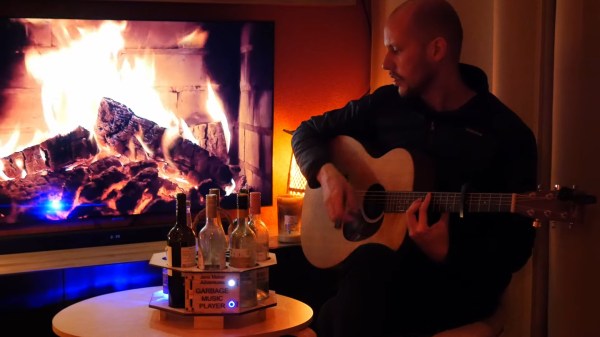
Ka-chunk. Let’s face it, 8-tracks were not that great. But the players, that’s another story. The Panasonic RQ-830S, aka the dynamite or TNT player is just one of many lovely designs that used to grace the shelves of electronics stores. Hackaday alum [Cameron Coward] came across a non-working model and used it to create the KaboomBox.

Just like before, all [Cameron] has to do is stick a tape in, and music starts playing. But now, instead of using rust on tape, the music is accessed via RFID and lives on an SD card inside the 8-track player.

Power it on, and a tiny LCD screen showing through the track number window first displays the KaboomBox logo, then shows a timer whenever it’s waiting for a tape. And just like before, pushing down on the plunger skips to the next track.

The new guts include a Raspberry Pi Pico and an RFID reader, plus a DF Player Mini to handle the digital-to-analog conversion and amplify the signal, and an SD card to store the music. Now, [Cameron] is only limited by the size of the SD card. Check out the demo video after the break.

We’ve seen all kinds of boomboxen around here, from the lit to the Bluetooth to the payphone variety.

Continue reading “KaboomBox Is A Firecracker Of A Music Player”

Spinning Up A New Laundry Monitor

For all that modern washers and dryers do, they don’t let you know when they’re finished. Or they do, but it’s only a short victory song that plays once and can be easy to miss. What most of us need is a gentle reminder that there’s damp laundry festering in the washer, or fresh laundry in the dryer getting wrinkly.

This laundry monitor from [Sparks and Code] is version 2.0. The first version was working fine, but it was based on vibration (or lack thereof). Fast forward a few years, and [Sparks and Code] got a modern pair that’s so finely tuned, it doesn’t produce enough vibration to register. Back to the drawing board [Sparks and Code] went, and eventually came up with version 2.0.

Now, [Sparks and Code] is detecting whether the machines are on using a pair of split-core transformers to monitor power at the breaker box. With these, you just run the wire through the hole, and it gives the relative mV value going through the wire on a 3.5mm cable. Those cables are connected to an ESP32 inside the 3D-printed box, which is mounted above the cabinet door. Since [Sparks and Code] already has home assistants all over the house, it was easy to integrate and have them all play the message ‘please flip the laundry’.

Once this project was all buttoned up, they thought of one issue — the self-cleaning cycle. Since it takes about four hours, they like to run it overnight. You can see the problem here — no one wants to hear Alexa at 3AM. Fortunately, [Sparks and Code] was able to adjust the Python script to ignore these events. Be sure to check out the build video after the break.

If only the dryer could empty itself and fold the clothes. Oh wait, there’s a robot for that.

Continue reading “Spinning Up A New Laundry Monitor”

2023 Halloween Hackfest: Haunted Keyboard Is Free From Ghosting

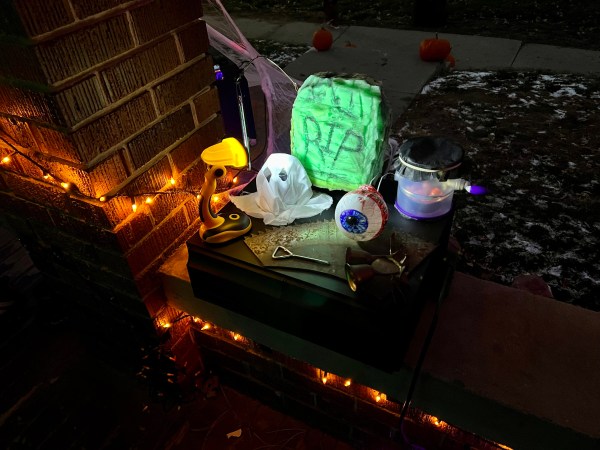
This may look like another DIY mechanical keyboard, but it’s hiding a secret. [Mx. Jack Nelson] has combined Halloween and keyboards in glorious, haunted fashion. Type a line, any line into this bad boy and you get a spooky, sort of cryptic response generated by AI.

Essentially, a Raspberry Pi Pico W does all the work, it handles the keyboard matrix, connects to Wi-Fi, sends the input to ChatGPT, and spits the response out on the screen wherever the cursor happens to be. Incidentally, it turns out [Mx. Jack Nelson] used ChatGPT to generate much of the CircuitPython code.

The layout is a custom 40% that is heavily influenced by the Akko 40%, with the Ctrl, Alt, and Win keys replaced by Ctrl, Cmd, and Opt. This was [Mx. Jack Nelson]’s first PCB, and you never forget your first. You don’t want to miss the demo video after the break.

Are keyboards just not spooky enough for you? Here’s a creepy baby doll that does basically the same thing.

Continue reading “2023 Halloween Hackfest: Haunted Keyboard Is Free From Ghosting”

Commodore Datassette Does Barbershop Quartet

Okay, now this is just plain fun. [Linus Ã…kesson] modified a Commodore Datassette player to move its “mouth” and, when quadrupled, sing a clever barbershop tune called “Sweet End of Line” that’s a play on “Sweet Adeline“, a top hit from the summer of 1903.

What? Let us explain. Those with Commodore 64s who lacked disk drives often had the Datassette — a magnetic storage tape device, or cassette player used to load and save files. But they couldn’t open the doors themselves with a keypress, and they certainly couldn’t sing barbershop.

First off, [Linus] redirected the current that drives the magnetizing tape head through a speaker coil instead. Then he replaced the motor with a servo that opens the lid from the inside. A simple rubber band pulls the lid back shut. Software-wise, [Linus] is using a timer interrupt to run code that toggles the output signal, the rate of which determines the pitch.

Don’t worry — all of these modifications are reversible, so no Datassettes were truly harmed in the making. Don’t forget to check out the brief build/demo video after the break.

We’ve seen our share of tape players, but we’d never seen one with a crank until recently.

Continue reading “Commodore Datassette Does Barbershop Quartet”

You’ve Got Mail: Grilled, Scrambled, And Other Delicious Stamps

Well, we’re just zipping right through this series, no? So far we’ve looked at various postal machines and how they work to flip mail around, cancel the postage, and sort it, all in a matter of seconds. We explored the first automated post office and found out why it was a failure, and we learned why it all depends on ZIP code. Now, it’s finally time for some really fun stuff: the stamp trivia.

Now I’m no philatelist by any standard, though I do have a few hundred stamps strewn about the house. The danger in philately is that you learn all sorts of cool things about stamps and their history, and you just want to buy more and more of them. So let’s go!

Continue reading “You’ve Got Mail: Grilled, Scrambled, And Other Delicious Stamps”

The Birdy44 Keyboard Is Something To Crow About

The funny thing about keyboard end game is that it usually involves more than one keyboard. Rare is the board that is great for both home and away. Having finished their dactyl build, [RalphCoder13] was looking to build something slimmer and more portable, and the Birdy44 was born.

This hand-wired beauty uses a pair of Waveshare RP2040 Zeros and features a pair of 40mm Cirque track pads that were salvaged from a Steam controller.

As you may have guessed, there are 44 Kailh Chocs that sit underneath a combination of MBK and 3D-printed keycaps. Our favorite part might be the tenting legs, which are optional and connect magnetically.

Part of portability is how you decide to carry the thing. You probably don’t want it naked and loose in your backpack if you can avoid it, right? To that end, he designed a nice little case for the halves. The original plan was to use magnets to hold them in place inside the topless case, but that didn’t work out so well, so he added wide elastic bands to stretch around the case.

Is this still not portable enough for you? Check out this folding split keyboard.

Via KBD