Thanks For Hacking

Hope you’re all having a great Thanksgiving weekend, and are getting your fill of family, food, and maybe even a little bit of fun. Aside from the cranberries, Thanksgiving is probably one of my favorite holidays because of the spirit behind it – thinking about what’s gone well, how you lucked out, and who has done you right over the year.

One of the most poignant expressions of thanks I’ve heard in a while came from Hackaday superfriend [Sprite_tm] in his Supercon talk this year, which he closed by thanking “you all” for pushing him on to keep making crazy projects. “I would never finish these projects without people who would be entertained by seeing all this. This is is effectively art – something that doesn’t make sense. The only way it makes sense is because I want it to exist, and because I know that you all love hearing and reading about stuff like this existing. So thank you very much for that.”

That same sentiment goes for all of us here at Hackaday: Thank you all very much for reading! Without this global community of crazy hackers to write for, we wouldn’t be able to keep doing what we do – it just wouldn’t make sense. And without your hacks, of course, we’d have nothing to write about.

Thanks for sharing, thanks for following along, thanks for inspiring us and for being inspired. Thanks for hacking.

How The WS2812 Is Made

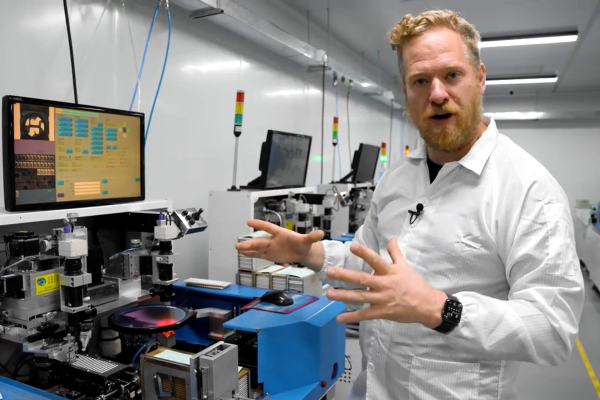
[Scotty Allen] of Strange Parts is no stranger to Chinese factory tours, but this one is now our favorite. He visits the font of all WS2812s, World Semi, and takes a good look at the machines that make two million LEDs per day.

The big deal with the WS2812s, and all of the similar addressable LEDs that have followed them, is that they have a logic chip inside the LED that enables all the magic. And that means die-bonding bare-die ICs into each blinky. Watching all of the machines pick, place, glue, and melt bond wire is pretty awesome. Don’t miss the demo of the tape-and-frame. And would you believe that they test each smart LED before they kick it out the door? There’s a machine that clocks some data in and reads it back out the other side.

Do we take the addressable LED for granted today? Probably. But if you watch this video, maybe you’ll at least know what goes into making one, and the next time you’re blinking all over the place, you’ll spill a little for the epoxy-squirting machine. After all, the WS2812 is the LED that prompted us to ask, three years ago, if we could live without one.
Continue reading “How The WS2812 Is Made”

Procrastineering And Simulated Annealing

The software for the Supercon badge went down to the wire this year, with user-facing features being coded up as late as Thursday morning. This left “plenty of time” to flash the badges on Thursday afternoon, but they were admittedly still warm as the first attendees filed in on Friday morning. While I’ve always noted that the last minute is the best minute, this was a little close, and frankly there was an uncaught bug that we would have noticed if we had a few more hours to just play with it before showtime.

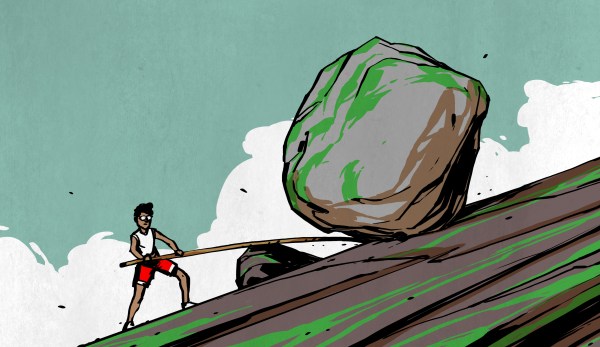
But we were by no means slacking. On the contrary, a few of us were putting in nights and full weekend days for six or eight weeks beforehand. The problem was hard, and the path to a solution was never clear, and changed depending on the immovability of the roadblocks hit along the way. This is, honestly, a pretty normal hacker development pattern.

What was interesting to me was how similar the process was to simulated annealing. This is an optimization method where you explore more of the solution space in the beginning, when the metaphorical “temperature” is hot. Later, as you’re getting closer to a good solution, you want to refine in smaller and smaller steps – it cools down. This rate of “cooling” is a tremendously important parameter in practice.

And this is exactly the way the badge development felt. We were searching in a very big solution space in the beginning, and many aspects of the firmware infrastructure were in flux. As it got closer and closer to a working solution, more and more of the code settled down, and the changes got smaller. In retrospect, this happened naturally, and you can’t always control or plan for the eureka moments, but I wonder if it’s worth thinking of a project this way. Instead of milestones, temperatures? Instead of a deadline, a freeze date.

Supercon And Soylent Green

The 2023 Hackaday Supercon is all done and dusted, and we’re still catching up on our sleep. I couldn’t ask everyone, but a great time was had by everyone I talked to. It’s honestly a very special crowd that shows up in Pasadena every November, and it’s really the attendees who make it what it is. We just provide the platform to watch you shine. Thank you all!

It all started out on Friday with an open day of chilling out and badge experimentation. Well, chill for those of you who didn’t have a bug in their badge code, anyway. But thanks to some very keen observation and fantastic bug reports by attendees, Al and I figured out what we’d done and pushed a fix out to all 300 of the badges that were given out on the first day. And thanks to the remaining 200 folks who walked in the next day, who fixed their own badges at Tom’s Flashing Station.

From then on, it was one great talk after another, punctuated by badge hacks and all the other crazy stuff that people brought along with them to show off. For me, one of the highlights was on Sunday morning, as the Lightning Talks gave people who were there a chance to get up and talk about whatever for seven minutes. And subjects ranged from a mad explosive propane balloon party, to Scotty Allen’s experience with a bad concussion and how he recovered, to a deep dive into the world of LED strands and soft sculptures from our go-to guru of blinkiness, Debra [Geek Mom] Ansell.

Supercon first-timer Katie [Smalls] Connell gave a phenomenal talk about her wearable LED art things, Spritelights. These are far from simple art pieces, being a combination of medical adhesive, home-mixed Galinstan – a metal alloy that stays flexible at human body temperature, and soon even flexible printed batteries. That this whole project hit us without warning from out of the audience just made it more impressive.

And these were just the folks who stepped up on stage. The true story of Supercon also belongs to all the smaller conversations and personal demos taking place in the alley or by the coffee stand. Who knows how many great ideas were hatched, or at least seeds planted?

So as always, thank you all for coming and bringing your passions along with. Just like Soylent Green, Supercon is made of people, and it wouldn’t be half as yummy without you. See you all next year. And if you’re thinking of joining us, get your tickets early and/or submit a talk proposal when the time comes around. You won’t meet a more warm and welcoming bunch of nerds anywhere.

Supercon 2023 Is On: Live

Supercon is in full swing! If you weren’t able to join us in person, we’re streaming the main stage and you should absolutely check out the talks as they happen.

The full schedule is here, and you’ll find all the streams over on our YouTube channel. Come join in the fun.

For those of you are here with us in Pasadena, we’ve got a signup form for anyone who wants to submit a Lightening Talk for Sunday.

Hint: absolutely don’t miss Cory Doctorow’s keynote speech, taking place at 10:00 AM Pacific.

Impostor Syndrome: It’s Not Your Fault!

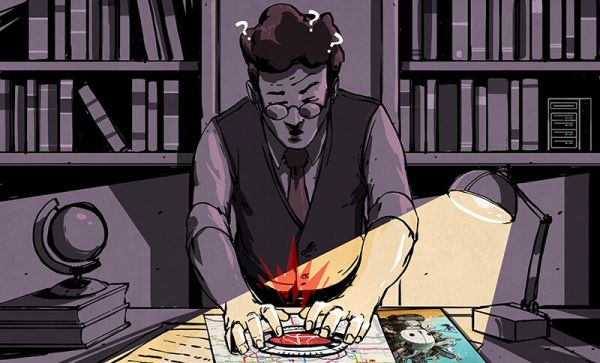
[Crispernaki] and I have something in common. We both saw this awesome project that made a scroll wheel out of a VHS head back in 2010, and wanted to make one. We both wanted to put our own spin on the gadget, (tee-hee), discovered that it was harder than either of us wanted to commit to, and gave up.

Flash forward about a million Internet years, and [crispernaki] finally made his and wrote it up. The only problem is that it was too easy. In 2010, making USB gadgets was a lot more involved than it is today. (Back then, we had to chisel device descriptors on stone tablets.) Nowadays, the firmware is just a matter of importing the right library, and the hardware is a magnetic rotation sensor breakout board, a magnet, and super glue. Cheap, and easy.

All of this led our hero to feeling insecure. After all, a hack that beat him a dozen years ago turned out to be dead easy today. Maybe it was too easy? Maybe he wasn’t a “real” hacker? These are the signs of impostor syndrome – that feeling that just because you aren’t the world’s best, or climbing the highest mountain, or hacking the hardest project, you’re not worthy.

Well, listen up. Impostors don’t finish projects, and impostors don’t write them up to share with all the rest of us. By actually doing the thing – hacking the hack – all chances of being a fake are ruled out. The proof is sitting there on your desk, in all its Altoids-tin glory.

And it’s not your fault that it was too easy this time around. You can’t do anything to turn back the hands of time, to make the project any harder these days, or to undo the decade of hacker technical progress on the software side, much less change the global economy to make a magnetic sensor unobtainable again. The world improved, you got your hack done, and that’s that. Congratulations! (Now where do I buy some of those on-axis magnets?)

The Eternal Dilemma

It’s two weeks until Supercon! We can almost smell the solder from here. If you’re coming, and especially if it’s your first time, you’re soon to be faced with the eternal dilemma of hacker cons, only at Supercon it’s maybe a trilemma or even a quadralemma: hang out with folks, work on the badge, go to talks, or show off all the cool stuff you’ve been working on the past year?

Why not all four? That’s exactly why we start off with a chill-out day on Friday, when we don’t have much formally planned. Sure, there’s a party Friday night, and maybe a badge talk or some workshops, but honestly you’ll have most of the day free. Ease into it. Have a look at the badge and start brainstorming. Meet some new people and start up a team. Or just bathe in the tremendous geekery of it all. This is also a great time to show off a small project that you brought along. Having the widget that you poured brain, sweat, and tears into sitting on the table next to you is the perfect hacker icebreaker.

On Saturday and Sunday, there will definitely be talks that you’ll want to attend, so scope that out ahead of time and plan those in. But don’t feel like you have to go to all of them, either. Most of the talks will be online, either right away or eventually, so you won’t miss out forever. But since our speakers are putting their own work out there, if you’re interested in the subject, having questions or insight about their talk is a surefire way to strike up a good conversation later on, and that’s something you can’t do online. So plan in a few talks, too.

You’ll find that the time flies by, but don’t feel like you have to do it all either. Ask others what the coolest thing they’ve seen is. Sample as much as you can, but it’s not Pokemon – you can’t catch it all.

See you in two weeks!

(PS: The art is recycled from a Supercon long, long ago. I thought it was too nice to never see it again.)