The Akademik Lomonosov floating nuclear power plant, moored at Pevek, Russia. It provides power and heat to the isolated community.

Cogeneration And District Heating For Comfortable Homes And Happy Factories

Most of modern society’s energy usage is spent on heating in some form, whether it is to heat water, raise the temperature in a room, or for use in industrial processes. This makes it an excellent target for improvements in efficiency and resilience, as well as in the effort to decarbonize the world’s energy production. Here district heating and similar solutions are likely to play a major role in the near future.

Over the past decades, a number of nations have either already built out extensive district heating grids, or are in the process of doing so. The main advantage of these heating grids is that they not only allow for more efficient, centralized generating of heat, but also allow for e.g. industrial waste heat to be used productively rather than wasted, even if most of the heat will come from either dedicated or cogeneration thermal plants.

Recently, district heating has received a big push in e.g. China in the form of nuclear cogeneration, while the potential of using thermal storage to buffer heat for later use along with the concept of tying data centers into heating grids are also being explored. Although district heating is hardly new, it may help to ease humanity into a low-carbon future, without losing a bit of comfort.

Continue reading “Cogeneration And District Heating For Comfortable Homes And Happy Factories”
MH-Z19-like NDIR CO2 Sensor HC8 Found And Explored

While on the search for an alternative to directly buying the fairly expensive MH-Z19 CO2 sensor, [spezifisch] came across a ‘BreeRainz’ branded gadget (also found under other brands) that claimed to use an NDIR (Non-Dispersive Infrared) sensor for measuring CO2 levels, while costing only €25. This type of sensor allows for CO2 levels to be measured directly, rather than inferred, making them significantly more precise.

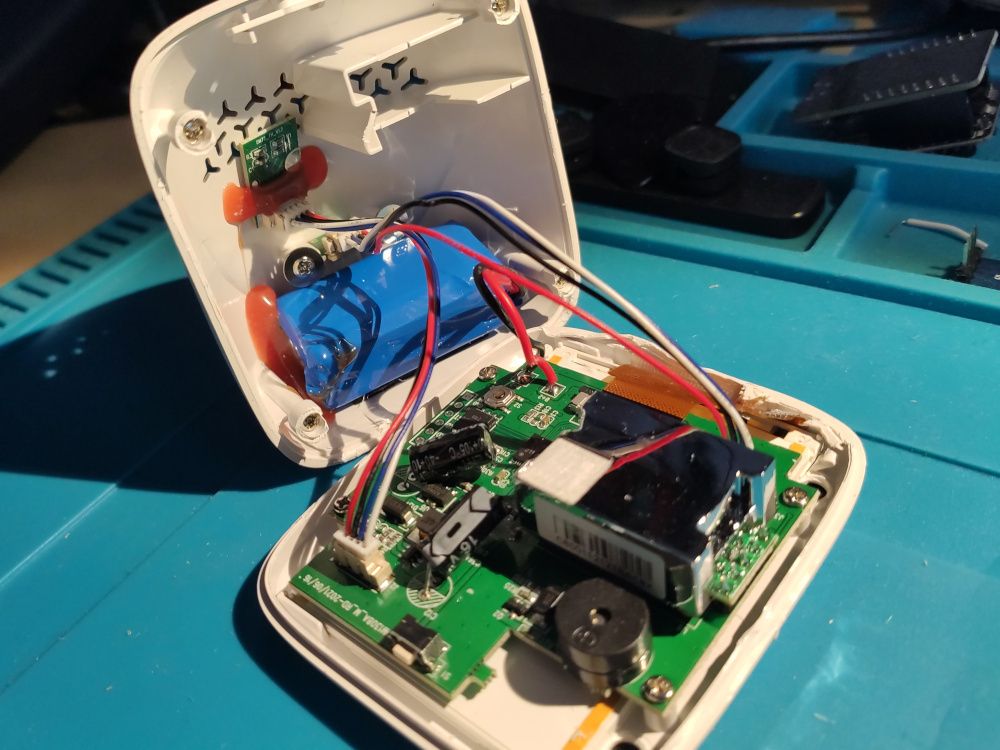
The BreeRainz DM1308A device cracked open.

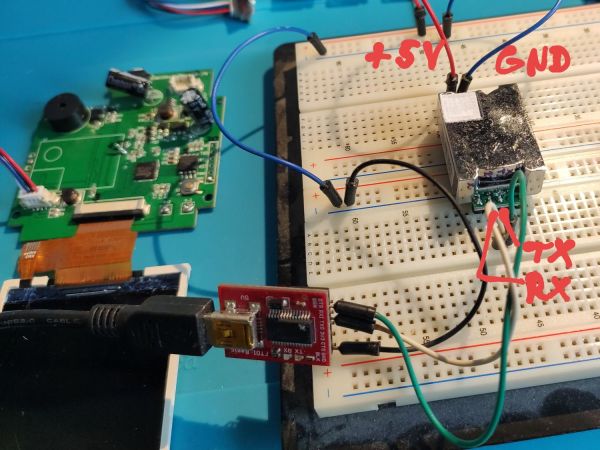
After cracking the gadget open (literally, due to the hidden screws), the CO2 sensor is clearly visible. While superficially identical to an MH-Z19, the NDIR sensor is actually called ‘HC8’, is produced by 广州海谷电子科技有限公司 (Guangzhou Haigu Electronic Technology Co., Ltd.). While being pin-compatible with the MH-Z19, its UART protocol is not the same. Fortunately there is a datasheet to help with implementing it, which is what [spezifisch] did.

This raises the question of whether harvesting NDIR CO2 sensors like this is worth it to save a few Euros. A quick look on German Amazon shows that the device in question currently costs €35, while a genuine MH-Z19 can be bought for €25 or less. There are also many MH-Z19 models (B, C and D), which cover an even wider price range. All of which points to finding an NDIR sensor-containing device can be interesting when it’s on sale, but if all you care about is the sensor itself, it’s probably best to just buy them directly.

Space-Based Solar Power: Folly Or Stroke Of Genius?

The Sun always shines in space, unless a pesky planet gets in the way. That’s more or less the essential thought behind space-based solar power (SBSP) as newly pitched by ESA’s director general, Josef Aschbacher on Twitter. Rather than putting photovoltatic solar panels on the Earth’s surface which has this annoying property of constantly rotating said panels away from the Sun during what is commonly referred to as ‘night’, the panels would be put stationary in space, unaffected by the Earth’s rotation and weather.

Although a simple idea, it necessitates the solving of a number of problems. The obvious first question is how to get these panels up in space, hundreds of kilometers from the Earth’s surface, to create a structure many times larger than the International Space Station. The next question is how to get the power back to Earth, followed by questions about safety, maintenance, transfer losses and the inevitable economics.

With organizations ranging from NASA to China’s Academy for Space Technology (CAST), to US institutions and others involved in SBSP projects, it would seem that these problems are at the very least deemed to be solvable. This raises the question of how ESA’s most recent proposal fits into this picture. Will Europe soon be powered from orbital solar panel arrays?

Continue reading “Space-Based Solar Power: Folly Or Stroke Of Genius?”

Optimizing The Mining Of Uranium From Coal Ash And Seawater

Of all the elements that make up the Earth’s crust, uranium is reasonably abundant, coming in at 49th place, ahead of elements such as tin, tungsten and silver. Ever since humankind began to exploit uranium for its fissile properties in energy production, this abundance has also translated into widespread availability for mining. As of 2019, Kazakhstan, Canada and Australia formed the world’s main producers, accounting for about 68% of output.

Considering the enormous energy density of uranium when used as fuel in a nuclear fission reactor, the demand for uranium is relatively low, especially combined with the long (two years on average) refueling cycles of commercial reactors. The effect is that even with the very inefficient once-through fuel cycle – which only uses a fraction of the uranium fuel’s potential energy – uranium market prices have remained relatively low and stable even amidst geopolitical crises.

Despite this, the gradual rise in uranium market prices ($10/lb in 2003, $49/lb in 2022), as well as the rapid construction of new reactors is driving new exploration. Here recent innovations may make uranium fuel even more accessible to all nations, by unlocking the billions of tons of uranium found in plain seawater as well as the many tons of fly ash produced by coal plants every single day.

Continue reading “Optimizing The Mining Of Uranium From Coal Ash And Seawater”

Ask Hackaday: How Can You Store Energy At Home?

Amidst the discussions about grid-level energy storage solutions, it is often easy to forget that energy storage can be done on the level of a single house or building as well. The advantages here are that no grid management is needed, with the storage (electrical, thermal, etc.) absorbing the energy as it becomes available, and discharging it when requested. This simplifies the scale of the problem and thus the associated costs significantly.

Perhaps the most common examples of such systems are solar thermal collectors with an associated hot water storage tank, and of course batteries. More recently, the idea of using a battery electric vehicle (BEV, ‘electric car’) as part of a home storage solution is also gaining traction, especially for emergencies where the grid connection has failed due to a storm or similar emergencies. But all-in-all, we don’t see many options for home-level energy storage.

Continue reading “Ask Hackaday: How Can You Store Energy At Home?”

Fusion 360 Logo

Local Simulation Feature To Be Removed From All Autodesk Fusion 360 Versions

The removal of features from Autodesk products would appear to be turning into something of a routine at this point, with the announced removal of local simulations the latest in this series. Previously Autodesk had severely cut down the features available with a Personal Use license, but these latest changes (effective September 6) affect even paying customers, no matter which tier.

While previously executed local simulations on designs will remain accessible, any updates to these simulations, as well as any new simulations will have to use Autodesk’s cloud-based solver. This includes the linear stress, modal frequencies, thermal, and thermal stress simulation types, with each type of simulation study costing a number of Cloud Tokens.

Solving a linear simulation should initially cost 0 tokens, but the other types between 3 – 6 tokens, with the exact cost per token likely to vary per region. This means that instead of solving simulations for free on one’s own hardware, the only option in a matter of weeks will be solely through Autodesk’s cloud-based offerings.

Naturally, we can see this change going over exceedingly well with Fusion 360 users and we’re looking forward to seeing how Autodesk will spin the inevitable backlash.

(Thanks, [Jeremy Herbert] for the tip)

Remove A Speaker’s Voice From A Recording Using Ultrasound

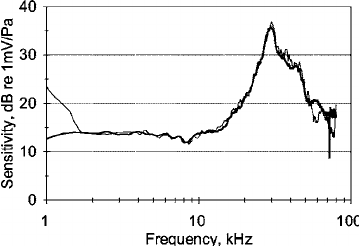
What if you could effectively prevent someone from recording your voice? This is the focus of a study by Guo et al. (2022) at Michigan State University, in which they use a dynamically calculated audio signal that effectively cancels out one’s voice in a recording device. This relies on an interesting aspect of certain micro-electro-mechanical system (MEMS) microphones, which are commonly used in smartphones and other recording devices.

Pressure sensitivity of a MEMS microphone. (credit: Brian R. Elbing)

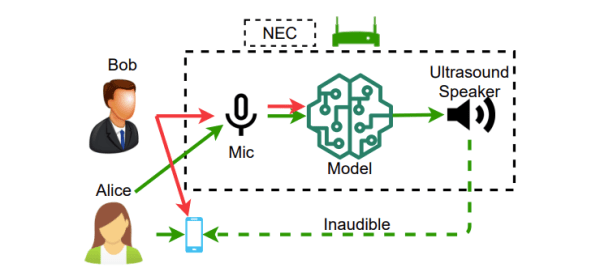
A specially crafted ultrasound signal sent to the same microphone which is recording one’s voice can result in the voice audio signal being gone on the final recording. The approach taken by the authors involves using a neural network that is trained on voice samples of the person (“Bob”) whose voice has to be cancelled. After recording Bob’s voice during a conversation, the creatively named Neurally Enhanced Cancellation (NEC) system determines the ultrasound signal to be sent to the target recording device. Meanwhile the person holding the recording device (“Alice”) will still perceive Bob’s voice normally.

As ultrasound is highly directional, the system can only jam a specific microphone and wouldn’t affect hidden microphones in a room. As noted by the authors, it is possible to do general microphone jamming using other systems, but this is legally problematic, which should not be an issue with their NEC system.

Thanks to [JohnU] for the tip!