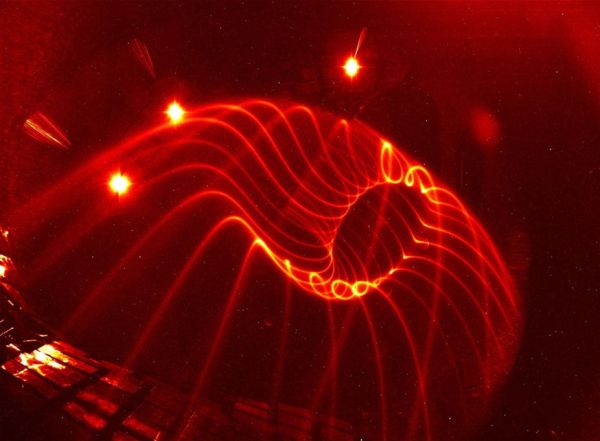
Where Do You Get Your Neutrons? Neutron Sources For Nuclear Fusion, Science, Medicine, And Industry

All of us probably know what neutrons are, or have at least heard of them back in physics class. Yet these little bundles of quarks are much more than just filler inside an atom’s nucleus. In addition to being an essential part of making matter as stable as it (usually) is, free neutrons can be used in a variety of manners.

From breaking atoms apart (nuclear fission), to changing the composition of atoms by adding neutrons (transmutation), to the use of neutrons in detecting water and inspecting materials, neutrons are an essential tool in the sciences, as well as in medicine and industrial applications. This has meant a lot of development toward the goal of better neutron sources. While nuclear fission is an efficient way to get lots of neutrons, for most applications a more compact and less complicated approach is used, some of which use nuclear fusion instead.

In this article we’ll be taking a look at the many applications of neutron sources, and these neutron sources themselves.

Continue reading “Where Do You Get Your Neutrons? Neutron Sources For Nuclear Fusion, Science, Medicine, And Industry”

The Legacy Of One Of Science’s Brightest Stars: Freeman Dyson

Of the many well-known names in science, few have been as reluctant to stick to one particular field as Freeman John Dyson. Born in the UK in 1923, he showed a great interest in mathematics and related fields even as a child. By the time he was 15 he had won a scholarship at Trinity College, in Cambridge, where he studied mathematics. Though the war forced him to work at the Air Force’s Operational Research Section (ORS), afterwards he would return to Trinity to get his BA in mathematics.

His subsequent career saw him teaching at universities in the UK and US, before eventually ending up at Cornell University, where he joined the Institute for Advanced Study at the invitation of its head, J. Robert Oppenheimer. Here he would meet up with such people as Richard Feynman with whom he would work on quantum electrodynamics.

Beyond mathematics and physics, Dyson would also express great interest in space exploration — with Dyson spheres being well-known — and genetics, both in the context of the first formation of life and in genetic manipulation to improve plants to deal with issues today. He also worked on the famous Project Orion, which used nuclear bombs for propulsion.

In this article we’ll take a look at these and other parts of Mr. Dyson’s legacy, as well as the influence of his works today.

Continue reading “The Legacy Of One Of Science’s Brightest Stars: Freeman Dyson”

Write Once, Run Everywhere: Cross-Platform Programming Done Right

One of the goals of programming languages back in the 1950s was to create a way to write assembly language concepts in an abstract, high-level manner. This would allow the same code to be used across the wildly different system architectures of that era and subsequent decades, requiring only a translator unit (compiler) that would transform the source code into the machine instructions for the target architecture.

Other languages, like BASIC, would use a runtime that provided an even more abstract view of the underlying hardware, yet at the cost of a lot of performance. Although the era of 8-bit home computers is long behind us, the topic of cross-platform development is still highly relevant today, whether one talks about desktop, embedded or server development. Or all of them at the same time.

Let’s take a look at the cross-platform landscape today, shall we?

Continue reading “Write Once, Run Everywhere: Cross-Platform Programming Done Right”

Recording Video In The Era Of CRTs: The Video Camera Tube

We have all watched videos of concerts and events dating back to the 1950s, but probably never really wondered how this was done. After all, recording moving images on film had been done since the late 19th century. Surely this is how it continued to be done until the invention of CCD image sensors in the 1980s? Nope.

Although film was still commonly used into the 1980s, with movies and even entire television series such as Star Trek: The Next Generation being recorded on film, the main weakness of film is the need to move the physical film around. Imagine the live video feed from the Moon in 1969 if only film-based video recorders had been a thing.

Let’s look at the video camera tube: the almost forgotten technology that enabled the broadcasting industry. Continue reading “Recording Video In The Era Of CRTs: The Video Camera Tube”

Be Wary Of Radioactive Bracelets And Similar

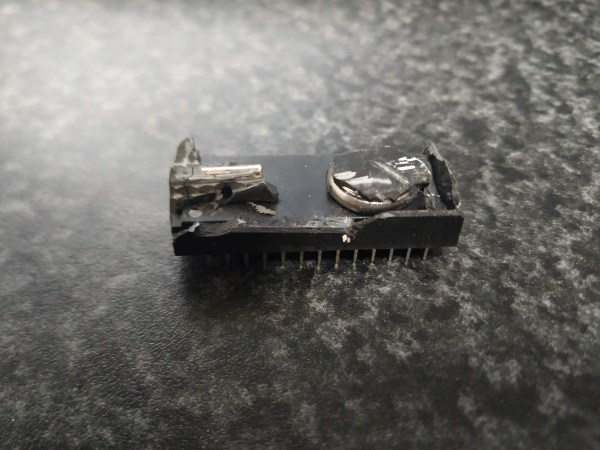
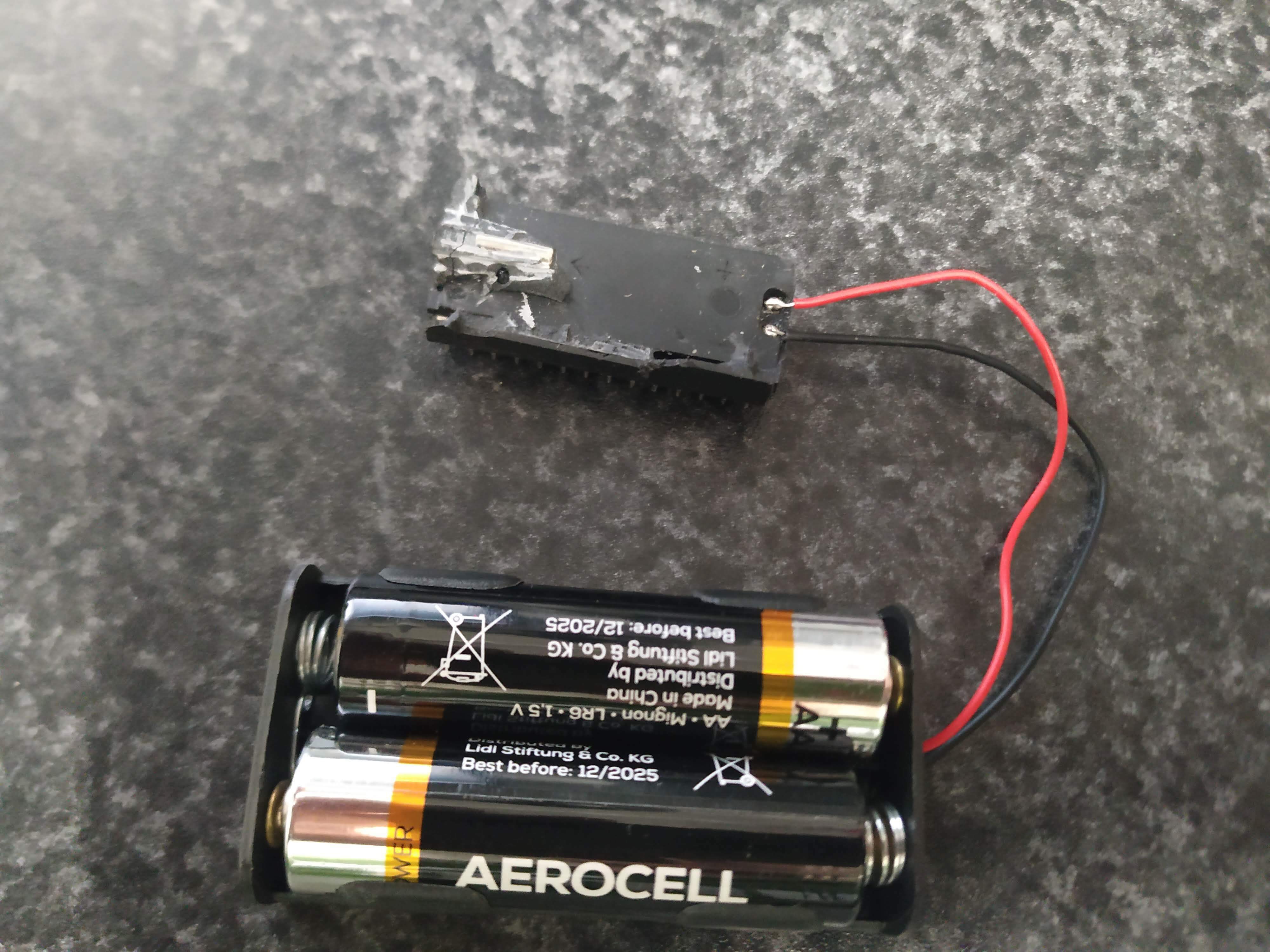
Before you start cutting up that ‘negative ion’ health bracelet or personal massager, be aware that these are highly likely to contain thorium oxide or similar radioactive powder, as this research video by [Justin Atkin] (also embedded after the break) over at The Thought Emporium YouTube channel shows. Even ignoring the irony that thorium oxide is primarily an alpha (He+) emitter and thus not a ‘negative ion’ source (which would be beta decay, with e), thorium oxide isn’t something you want on your skin, or inside your lungs.

These bracelets and similar items appear to embed grains of thorium oxide into the usual silicon-polymer-based bracelet material, without any measures to prevent grains from falling out over time. More dangerous are the items such as the massage wand, which is essentially a metal tube that is filled with thorium oxide powder. This is not the kind of item you want to open on your kitchen table and have it spill everywhere.

Considering that these items are readily available for sale on Amazon, EBay and elsewhere, giving items like these a quick check with the ol’ Geiger counter before ripping them open or cutting them up for a project seems like a healthy idea. Nobody wants to cause a radiological incident in their workshop, after all.

Continue reading “Be Wary Of Radioactive Bracelets And Similar”

Introducing The XFM2: A New FM Synthesizer Board

[René Ceballos] contacted us about the new XFM2 FM synthesizer board, successor to the XFM that we covered on Hackaday last year. In addition to changing FPGAs from a Spartan 6 to an Artix-7 35, the DAC was also upgraded from 16 to 24 bits. Since the project is based around two easily available boards for the FPGA and DAC functionality, it is something that should be easy for anyone to recreate.https://images.squarespace-cdn.com/content/v1/5d2c7309e3281e0001ef5655/1580208742008-DDG6FHLVST9DTOU5YDV7/ke17ZwdGBToddI8pDm48kIzPiMR3_Rs2gge4hyoameUUqsxRUqqbr1mOJYKfIPR7LoDQ9mXPOjoJoqy81S2I8N_N4V1vUb5AoIIIbLZhVYxCRW4BPu10St3TBAUQYVKc8LXFP3nIOov1DiYlxUpn2kjauiJB9jSbs9pkYnnzvQkOGqqUmgmVAUPjW85v7F78/xfm2.PNG?format=1500w

The project consists of a lower board that features the opto-isolated MIDI-input port, a 24LC1025 EEPROM, and a few passives, on top of which are mounted the Adafruit UDA1334A-based I2S decoder board and a Digilent Cmod A7-35T, containing the Xilinx XC7A35T-1CPG236C Artix-7 FPGA. [René] has made a schematic and BOM available on the XFM2 page. Total part cost should be about $99.

A user manual, installation guide, and the binaries that have to be loaded into the FPGA – using the provided instructions – are all made available. Unfortunately no HDL source is provided, but that shouldn’t take away from the fun of assembling an FM synthesizer board like this.

[René ] said that based on the feedback to the XFM project, he is now working on a visual user interface for the board. Once this is all working and depending on the feedback from XFM2 users, he may decide to start a crowdfunding campaign.

Nuclear Fusion Power Without Regular Tokamaks Or Stellarators

When it comes to nuclear fusion, the most well-known reactor type today is no doubt the tokamak, due to its relatively straight-forward concept of plasma containment. That’s not to say that there aren’t other ways to accomplish nuclear fusion in a way that could conceivably be used in a commercial power plant in the near future.

As we covered previously, another fairly well-known type of fusion reactor is the stellarator, which much like the tokamak, has been around since the 1950s. There are other reactor types from that era, like the Z-pinch, but they seem to have all fallen into obscurity. That is not to say that research on Z-pinch reactors has ceased, or that other reactor concepts — some involving massive lasers — haven’t been investigated or even built since then.

In this article we’ll take a look at a range of nuclear fusion reactor types that definitely deserve a bit more time in the limelight.

Continue reading “Nuclear Fusion Power Without Regular Tokamaks Or Stellarators”