PLA With PETG Core Filament Put To The Test

The Stronghero 3D hybrid PLA PETG filament, with visible PETG core. (Credit: My Tech Fun, YouTube)

Sometimes you see an FDM filament pop up that makes you do a triple-take because it doesn’t seem to make a lot of sense. This is the case with a hybrid PLA/PETG filament by Stronghero 3D  that features a PETG core. This filament also intrigued [Dr. Igor Gaspar] who imported a spool from the US to have a poke at it to see why you’d want to combine these two filament materials.

According to the manufacturer, the PLA outside makes up 60% of the filament, with the rest being the PETG core. The PLA is supposed to shield the PETG from moisture, while adding more strength and weather resistance to the PLA after printing. Another interesting aspect is the multi-color look that this creates, and which [Igor]’s prints totally show. Finding the right temperatures for the bed and extruder was a challenge and took multiple tries with the Bambu Lab P1P including bed adhesion troubles.

As for the actual properties of this filament, the layer adhesion test showed it to be significantly worse than plain PLA or PETG when printed at extruder temperatures from 225 °C to 245 °C. When the shear stress is put on the material instead of the layer adhesion, the results are much better, while torque resistance is better than plain PETG. This is a pattern that repeats across impact and other tests, with PETG more brittle. Thermal deformation  temperature is, unsurprisingly, between both materials, making this filament mostly a curiosity unless its properties work much better for your use case than a non-hybrid filament.

Continue reading “PLA With PETG Core Filament Put To The Test”

Why Trijets Lost Against Twinjets

If you’re designing a new jet-powered airplane, one of the design considerations is the number of jet engines you will put on it. Over the course of history we have seen everywhere from a single engine, all the way up to four and beyond, with today airliners usually having two engines aside from the Boeing 747 and Airbus A380 has been largely phased out. Yet for a long time airliners featured three engines, which raises the question of why this configuration has mostly vanished now. This is the topic of a recent YouTube video by [Plane Curious], embedded below.

The Boeing 727, DC-10 and L-1011 TriStar are probably among the most well-known trijets, all being unveiled around the same time. The main reason for this was actually regulatory, as twin-engine designs were thought to be too unsafe for long flights across oceans, while quad-jet designs were too fuel-hungry. This remained the situation until newer jet engine designs that were more reliable and powerful, leading to new safety standards  (ETOPS) that allowed twinjets to fly these longer routes as well. Consequently, the last passenger trijet – an MD-11 KLM flight – touched down in 2014.

Along with the engineering and maintenance challenges that come with having a tail-mounted jet engine, the era of trijets seem to have firmly come to an end, at least for commercial airliners.

Continue reading “Why Trijets Lost Against Twinjets”

Building A Custom Paper Tape Punch Machine

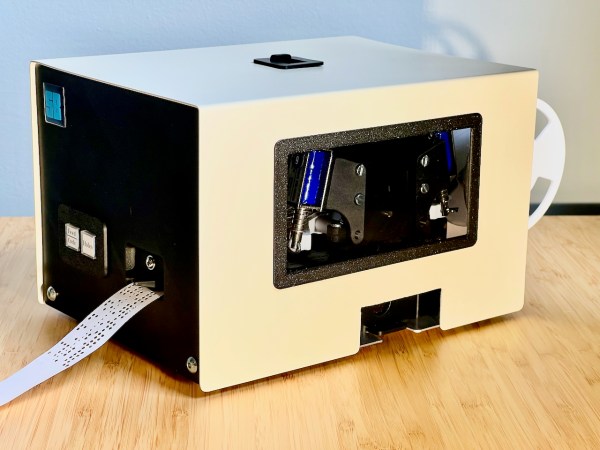
The solenoid and punch side of the machine. {Credit: Simon Boak)

Although [Simon Boak] had no use for an automatic paper tape punch, this was one of those intrusive project thoughts that had to be put to rest. With not a lot of DIY projects to look at, the first step was to prototype a punch mechanism that would work reliably. This involved the machining of a block of aluminium with holes at the right locations for the punch (HSS rods) to push through and create holes into the paper without distortions. Next was to automate this process.

To drive the punches, 12V solenoids were selected, but using leverage to not require the solenoids to provide all the force directly. On the electronics side this then left designing a PCB with the solenoid drivers and an Arduino Nano-style board as the brains, all of which including the Arduino source can be found on GitHub. Much like with commercial tape punch machines, this unit receives the data stream via the serial port (and optional parallel port), with the pattern punched into the 1″ paper tape.

One issue was finding blank paper tape, for which [Simon] cut up rolls of thermal paper using a 3D-printed rig with appropriately installed sharp blades. This paper tape seems to work quite well so far, albeit with the compromise that due to the current drawn by each solenoid (~1.7A) only one solenoid gets activated at any time. This makes it slower than commercial punch machines.

Thanks to [Tim] for the tip.

Earth’s Oxygen Levels And Magnetic Field Strength Show Strong Correlation

Time series of O2 (blue) and VGADM (red). (Credit: Weijia Kuang, Science Advances, 2025)

In an Earth-sized take on the age-old ‘correlation or causality’ question, researchers have come across a fascinating match between Earth’s magnetic field and its oxygen levels since the Cambrian explosion, about 500 million years ago. The full results by [Weijia Kuang] et al. were published in Science Advances, where the authors speculate that this high correlation between the geomagnetic dipole and oxygen levels as recorded in the Earth’s geological mineral record may be indicative of the Earth’s geological processes affecting the evolution of lifeforms in its biosphere.

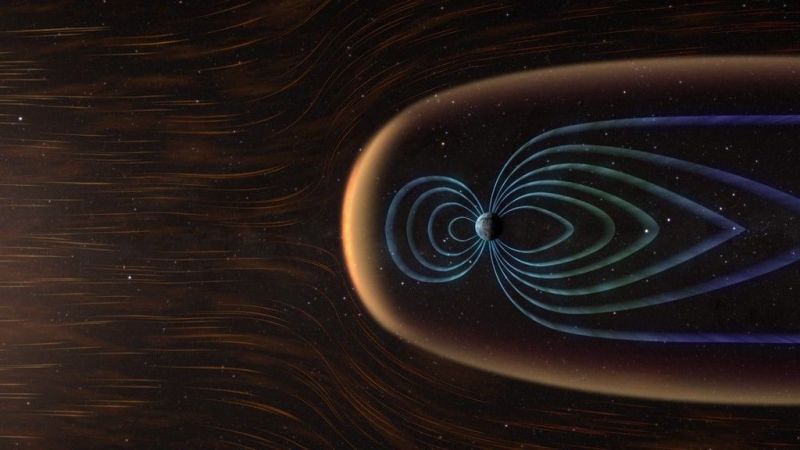
As with any such correlation, one has to entertain the notion that said correlation might be spurious or indirectly related before assuming a strong causal link. Here it is for example known already that the solar winds affect the Earth’s atmosphere and with it the geomagnetic field, as more intense solar winds increase the loss of oxygen into space, but this does not affect the strength of the geomagnetic field, just its shape. The question is thus whether there is a mechanism that would affect this field strength and consequently cause the loss of oxygen to the solar winds to spike.

Here the authors suggest that the Earth’s core dynamics – critical to the geomagnetic field – may play a major role, with conceivably the core-mantle interactions over the course of millions of years affecting it. As supercontinents like Pangea formed, broke up and partially reformed again, the impact of this material solidifying and melting could have been the underlying cause of these fluctuations in oxygen and magnetic field strength levels.

Although hard to say at this point in time, it may very well be that this correlation is causal, albeit as symptoms of activity of the Earth’s core and liquid mantle.

Replacing Crude Oil Fractional Distillation With Microporous Polyimine Membranes

Currently the typical way that crude oil is processed involves a fractional distillation column, in which heated crude oil is separated into the various hydrocarbon compounds using distinct boiling points. This requires the addition of significant thermal energy and is thus fairly energy intensive. A possible alternative has been proposed by [Tae Hoon Lee] et al. with a research article in Science. They adapted membranes used with reverse-osmosis filtration to instead filter crude oil into its constituents, which could enable skipping the heating step and thus save a lot of energy.

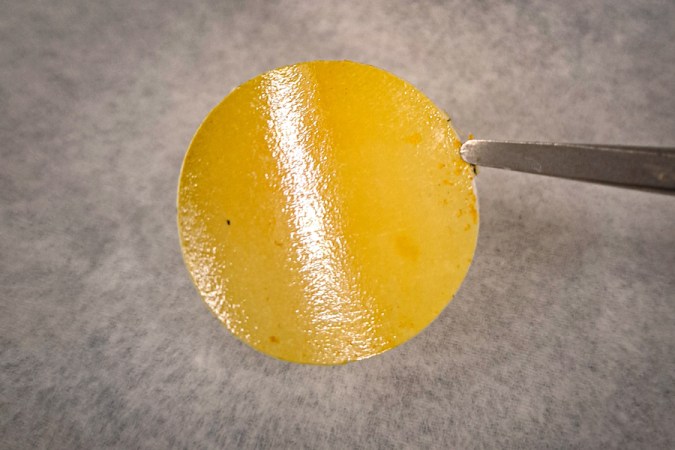
The main change that had to be made was to replace the typical polyamide films with polyimine ones, as the former have the tendency to swell up – and thus becomes less effective – when exposed to organic solvents, which includes hydrocarbons. During testing, including with a mixture of naphtha, kerosene and diesel, the polyimine membrane was able to separate these by their molecular size.

It should be noted of course that this is still just small scale lab-testing and the real proof will be in whether it can scale up to the flow rates and endurance required from a replacement for a distillation column. Since this research is funded in part by the fossil fuel industry, one can at least expect that some trial installations will be set up before long, with hopefully positive results.

EU Ecodesign For Smartphones Including Right To Repair Now In Effect

Starting June 20th, any cordless phone, smartphone, or feature phone, as well as tablets (7 – 17.4″ screens) have to meet Ecodesign requirements. In addition there is now mandatory registration with the European Product Registry for Energy Labelling (EPREL). The only exception are phones and tablets with a flexible (rollable) main display, and tablets that do not use a mobile OS, i.e. not Android, iPadOS, etc. These requirements include resistance to drops, scratches and water, as well as batteries that last at least 800 cycles.

What is perhaps most exciting are the requirements that operating system updates must be made available for at least five years from when the product is last on the market, along with spare parts being made available within 5-10 working days for seven years after the product stops being sold. The only big niggle here is that this access only applies to ‘professional repairers’, but at least this should provide independent repair shops with full access to parts and any software tools required.

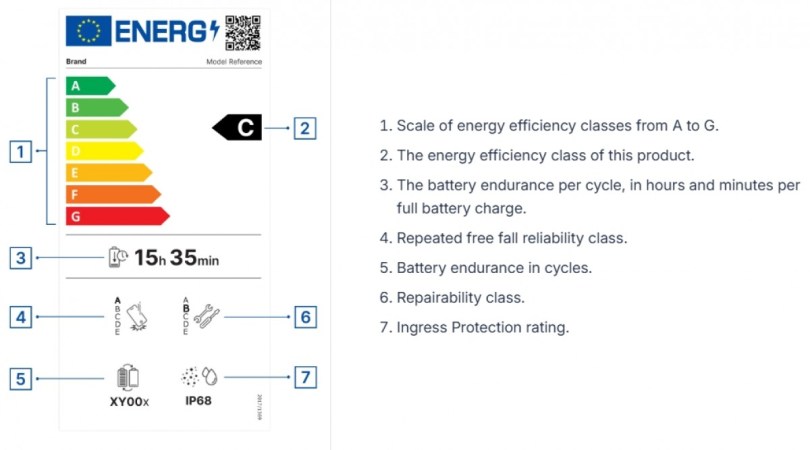
On the ENERGY label that is generated with the registration, customers can see the rating for each category, including energy efficiency, battery endurance, repairability and IP (water/dust ingress) rating, making comparing devices much easier than before. All of this comes before smartphones and many other devices sold in the EU will have to feature easily removable batteries by 2027, something which may make manufacturers unhappy, but should be a boon to us consumers and tinkerers.

PVA Filament: Not Always What It Seems

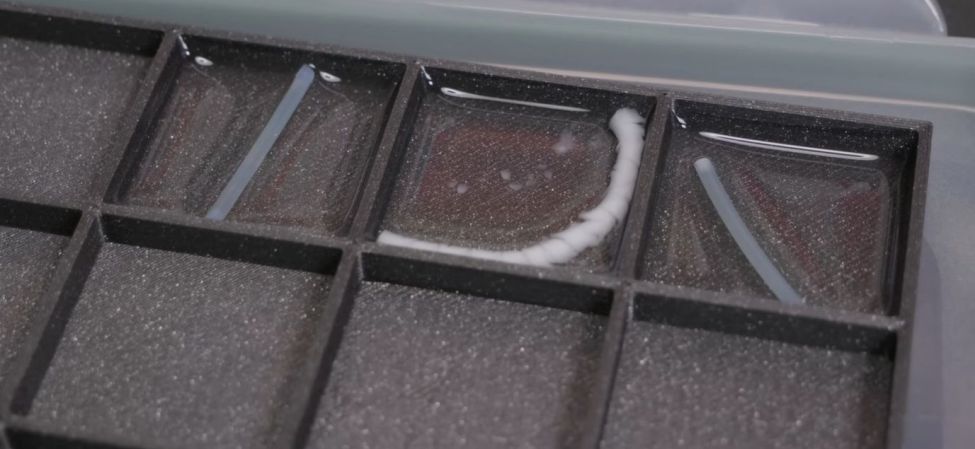
PVA filament with a core. (Credit: Lost In Tech)

PVA filament is an interesting filament type, for the reason that while it can be printed with any FDM printer, it supposedly readily dissolves in water, which is also the reason why PVA glue sticks are so popular when doing crafts and arts with young children. This property would make PVA filament ideal for printing supports if your printer can handle two different materials at the same time. So surely you can just pick any old PVA filament spool and get to printing, right? As [Lost in Tech] found out, this is not quite the case.

As an aside, watching PVA supports dissolve in water set to classical music (Bach’s Air from Orchestral Suite No. 3) is quite a pleasant vibe. After thus watching the various PVA prints dissolve for a while, we are left to analyze the results. The first interesting finding was that not every PVA filament dissolved the same way, or even fully.

The first gotcha is that PVA can stand for polyvinyl acetate (the glue stick) or polyvinyl alcohol (a thickener and stabilizer) , with the ‘PVA’ filament datasheets for each respective filament showing various combinations of both types of PVA. This results in wildly different properties per filament, both in terms of Shore hardness, their printability, as well as their ability to dissolve in water. Some of the filament types (Yousu, Reprapper) also have an outer layer and inner core for some reason.

Ultimately the message appears to be that ‘PVA’ filament requires a fair bit of research to have any chance of having a relatively trouble-free printing experience.

Continue reading “PVA Filament: Not Always What It Seems”