Reinforcing Plastic Polymers With Cellulose And Other Natural Fibers

While plastics are very useful on their own, they can be much stronger when reinforced and mixed with a range of fibers. Not surprisingly, this includes the thermoplastic polymers which are commonly used with FDM 3D printing, such as polylactic acid (PLA) and polyamide (PA, also known as nylon). Although the most well-known fibers used for this purpose are probably glass fiber (GF) and carbon fiber (CF), these come with a range of issues, including their high abrasiveness when printing and potential carcinogenic properties in the case of carbon fiber.

So what other reinforcing fiber options are there? As it turns out, cellulose is one of these, along with basalt. The former has received a lot of attention currently, as the addition of cellulose and similar elements to thermopolymers such as PLA can create so-called biocomposites that create plastics without the brittleness of PLA, while also being made fully out of plant-based materials.

Regardless of the chosen composite, the goal is to enhance the properties of the base polymer matrix with the reinforcement material. Is cellulose the best material here?

Continue reading “Reinforcing Plastic Polymers With Cellulose And Other Natural Fibers”

Printed In Space: 3D-Printed Metal Parts Shown Off After Returning From The ISS

The European Space Agency (ESA) is showing 3D-printed metal parts made onboard the International Space Station using a printer and materials the agency sent earlier this year.  While 3D printing onboard the ISS is nothing new, the printing of metal parts in space is an important advancement. The agency’s goals are to be able to produce more tools and spares in situ rather than having to rely on resupply missions. An ambitious idea being pitched is to use captured space debris as input as well, which would further decrease the ISS’s dependence on Earth and expensive cargo runs from the bottom of the gravity well.

Continue reading “Printed In Space: 3D-Printed Metal Parts Shown Off After Returning From The ISS”

Reverse Engineering The Web API Of An Akaso EK7000 Action Camera

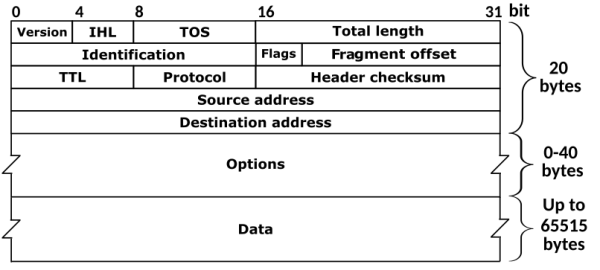
Recently, [Richard Audette] bought an Akaso EK7000 action camera for his daughter’s no-smartphones-allowed summer camp, which meant that after his daughter returned from said camp, he was free to tinker with this new toy. Although he was not interested in peeling open the camera to ogle its innards, [Richard] was very much into using the WiFi-based remote control without being forced into using the ‘Akaso Go’ smartphone app. To do this, he had to figure out the details of what the Android app does so that it could be replicated. He provided a fake camera WiFi hotspot for the app in order to learn its secrets.

Normally, the camera creates a WiFi hotspot with a specific SSID (iCam-AKASO_C_1e96) and password (1234567890) which the Android app connects to before contacting the camera’s IP address at 192.72.1.1. The app then shows a live view and allows you to copy over snapshots and videos. Initially, [Richard] tried to decompile the Android app using JADX, but the decompiled code contained so many URLs that it was hard to make heads or tails of it. In addition, the app supports many different Akaso camera models, making it harder to focus on the part for this particular camera.

Continue reading “Reverse Engineering The Web API Of An Akaso EK7000 Action Camera”

Rendering Skin Transparent Using The Food Dye Tartrazine

Although we generally assume that opacity is the normal look for animals like us humans, this factoid is only correct for as long as you maintain the dissimilar optical refraction indices of skin and the more aqueous underlying structures. What if you could change the refraction index of skin? If you could prevent the normal scattering at the interface, you could reveal the structures underneath, effectively rendering skin transparent. [Zihao Uo] and others demonstrate this in a paper published in Science.

The substance they used was the common food dye known as tartrazine, which also goes by the names of Yellow 5 and E102 when it is used in food (like Doritos), cosmetics, and drugs. By rubbing the tartrazine into the skin of mice, the researchers were able to observe underlying blood vessels and muscles. Simulations predicted that the dye would change the refraction index mismatch between lipids and water which normally causes the light scattering that creates the skin’s opaque appearance. With the dye rubbed into the skin, the effect worked to a depth of about 3 mm, which makes it useful for some research and possible medical applications, but not quite at the ‘jellyfish-transparency’ levels that some seem to have imagined at the news.

Continue reading “Rendering Skin Transparent Using The Food Dye Tartrazine”

Getting Started With Polypropylene (PP) 3D Printing

Polypropylene (PP) is a thermoplastic that has a number of properties that sets it apart from other thermoplastics which see common use with 3D printing, including PLA, ABS and nylon (PA). Much like ABS (and the similar ASA), it is a pretty touchy material to print, especially on FDM printers. Over at the [All3DP] site [Nick Loth] provides a quick start guide for those who are interested in using PP with 3D printing, whether FDM, SLS or others.

A nice aspect of printing with PP is that it requires similar temperatures for the extruder (205 – 275 °C) and print  bed (80 – 100 °C) as other common FDM filaments. As long as airflow can be controlled in the (enclosed) printer, issues with warping and cracking as the extruded filament cools should not occur. Unlike ABS and ASA which also require an enclosed, temperature-controlled printing space, PP has an advantage that printing with it does not produce carcinogenic fumes (styrene, acrylonitrile, etc.), but it does have the issue of absolutely not wanting to adhere to anything that is not PP. This is where the article provides some tips, such as the use of PP-based adhesive tape on the print bed, or the use of PP-based print plates.

As far as PP longevity and recyclability goes, it compares favorably with ABS and PA, meaning it’s quite resilient and stable, though susceptible to degradation from UV exposure without stabilizers. Recycling PP is fairly easy, though much like with polymers like PLA, the economics and logistics of recycling remain a challenge.

Bluetooth Version 6.0 Core Specification Released

The Bluetooth SIG recently released the core specification for version 6.0 of Bluetooth. Compared to 5.x, it contains a number of changes and some new features, the most interesting probably being Channel Sounding. This builds upon existing features found in Bluetooth 5.x to determine the angle to, and direction of another device using Angle of Arrival (AoA) and Angle of Departure (AoD), but uses a new approach to much more precisely determine these parameters. as defined in the Technical Overview document for this feature.

In addition to this feature, there are also new ways to filter advertising packets, to reduce the number of packets to sift through (Decision-Based Advertising Filtering) and to filter out duplicate packets (Monitoring Advertisers). On a fundamental level, the Isochronous Adaptation Layer (ISOAL) received a new framing mode to reduce latency and increase reliability, alongside frame spacing now being negotiable and additional ways to exchange link layer information between devices.

As with any Bluetooth update, it will take a while before chipsets supporting it become widely available, and for the new features to be supported, but it gives a glimpse of what we can likely expect from Bluetooth-enabled devices in the future.

Launching Model Airplanes With A Custom Linear Induction Motor

Launching things with electromagnetism is pretty fun, with linear induction motors being a popular design that finds use from everywhere in hobby designs like [Tom Stanton]’s to the electromagnetic launchers on new US and Chinese aircraft carriers. Although the exact design details differ, they use magnetic attraction and repulsion to create a linear motion on the propulsive element, like the sled in [Tom]’s design. Much like the electromagnetic catapults on a Gerald R. Ford-class carrier, electrical power is applied to rapidly move the sled through the channel, akin to a steam piston with a steam catapult.

Model airplane sparking its way through the launcher’s channel. (Credit: Tom Stanton, YouTube)

For [Tom]’s design, permanent magnets are used along both sides of the channel in an alternating north/south pole fashion, with the sled using a single wound coil that uses brushes to contact metal rails along both sides of the channel. Alternating current is then applied to this system, causing the coil to become an electromagnet and propel itself along the channel.

An important consideration here is the number of turns of wire on the sled’s coil, as this controls the current being passed, which is around 90 A for 100 turns. Even so, the fastest sled design only reached a speed of 44 mph (~71 km/h), which is 4 mph faster than [Tom]’s previous design that used coils alongside the channels and a sled featuring a permanent magnet.

One way to increase the speed is to use more coils on the sled, with a two-coil model launching a light-weight model airplane to 10.2 m/s, which is not only a pretty cool way to launch an airplane, but also gives you a sense of appreciation for the engineering challenges involved in making an electromagnetic catapult system work for life-sized airplanes as they’re yeeted off an aircraft carrier and preferably not straight into the drink.

Continue reading “Launching Model Airplanes With A Custom Linear Induction Motor”