Power Resistance Isn’t Futile

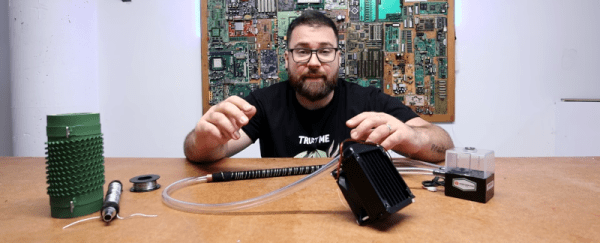
As [Electronoobs] points out, everything has resistance. So, how hard can it be to make a high-power resistor? In the video below, he examines a commercial power resistor and how to make your own using nichrome wire.

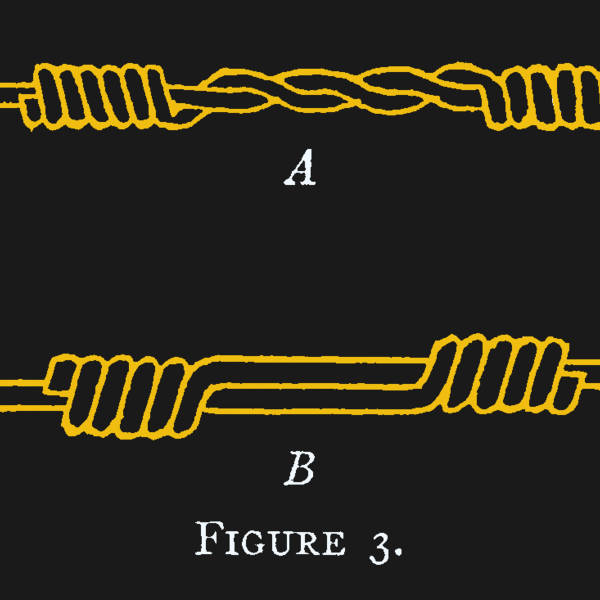
Sure, in theory, you can use a long piece of wire, but normally, you want to minimize the amount of space occupied. This leads to winding the wire around some substrate. If you just wind the wire, though, you get an inductor. This can cause nasty voltage spikes when there is a change in current through the resistor. You can get “noninductive” wire wound resistors that use either two opposing windings or alternate the turn direction on each turn. This causes the magnetic fields to tend to cancel out, reducing the overall inductance.

Nichrome wire has more resistance per millimeter and can dissipate more power. Modern digital meters can measure the resistance of a wire if you account for the test leads. To make a substrate, [Electronoobs] got creative since he anticipated generating a lot of heat. The final product even uses water cooling.

Why do you want a big resistor? Maybe you need a dummy load, or you want to drain some batteries. If you want to recycle nichrome wire, it is much more common than you might expect.
Continue reading “Power Resistance Isn’t Futile”

GitHub Hosts Ham Radio

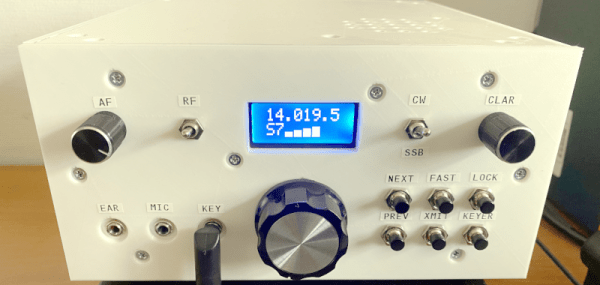
[Alex R2AUK] has been busy creating version two of a homebrew all-band ham radio transceiver. The unit has a number of features you don’t always see in homebrew radios. It covers the 80, 40, 30, 20, 17, 15, 12, and 10 meter bands. The receiver is a single-IF design with AGC. The transmitter provides up to 10W for CW and 5W for single sideband operations. There’s a built-in keyer, too. A lot of the documentation is in Russian (including the video below, which is part of a playlist). But translation tools are everywhere, so if you don’t speak Russian, you can still probably figure it out.

The VFO for both transmit and receive is an Si5351. The transmit chain is straightforward. The receiver reuses many of the same filters.

Continue reading “GitHub Hosts Ham Radio”

GPS At Any Speed

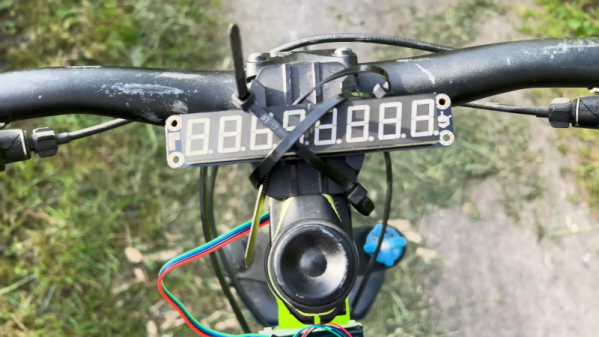
[Mellow_Labs] was asked to create a GPS speedometer. It seems simple, but of course, the devil is in the details. You can see the process and the result in the video below.

We have to admit that he does things step-by-step. The first step was to test the GPS module’s interface. Then, he tried computing the speed from it and putting the result on a display. However, testing in the field showed that the display was not suitable for outdoor use.

That prompted another version with an OLED screen. Picking the right components is critical. It struck us that you probably need a fast update rate from the GPS, too, but that doesn’t seem to be a problem. Continue reading “GPS At Any Speed”

CP/M On An Eight Line Display

How many lines do you need on a CP/M terminal? More is usually better, of course, but the MicroOffice RoadRunner managed with an 8-row, 80-column LCD screen. That may sound anemic, but in 1983, it was high-tech, as was the RoadRunner, and [Tech Time Traveller] tells us about them in a recent video you can see below.

The intro to the video shows some really strange old laptops before it gets to the RoadRunner. The machine used a Z80 work-alike CPU and a form of CP/M with some organizer functions. The machine didn’t have floppies or other disk storage, but did have four cartridge slots that could hold more memory, a spreadsheet, BASIC, or a text editor. The memory cartridges were static RAM with battery backup, so they retained data when you pulled them from the slot. Assuming the battery didn’t die.

Inside a RoadRunner cartridge.

Unfortunately, this particular machine suffered some shipping damage. In addition to the cartridges, it also had a removable battery and modem. At around the eight-minute mark, the case comes off, and inside are — surprise — more internal cartridges.

While MicroOffice isn’t a household name today, it was founded by a former Exxon executive and tapped a CEO and investor from Timex. It was funded by the likes of Olivetti. The computer rolled out in late 1983 and lived until Telxon bought MicroOffice in 1985.

Attempts to run Zork were not fruitful. There really wasn’t enough memory, and file transfer was a bit wonky. If you want a modern Z80 laptop, we know of one with 16 cores. As clunky as the RoadRunner looks, it still beats the old suitcase computers.

Continue reading “CP/M On An Eight Line Display”

Emulate A KIM-1 With A Commodore 64

When you think about virtualization, you usually think about making some CPU pretend to be another CPU. However, there are sometimes advantages to making a computer pretend to be the same computer.

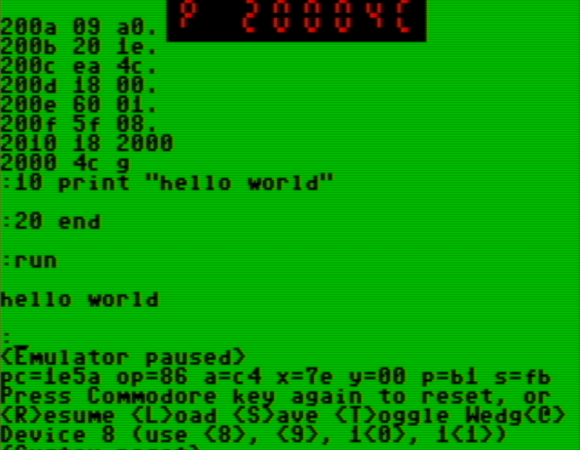
That’s the case with [oldvcr]’s KIMplement, which emulates a KIM-1 with a 6502 using a Commodore 64, which also uses a 6502.The reason this makes sense is that you have total control over an emulated CPU. If a program, for example, writes to a critical memory location or tries to take over the screen or keyboard, you can easily make the emulator do something more appropriate. Things like breakpoints and single stepping also become trivial.

The virtual machine at the heart of it is 6o6 (6502 on 6502), and it seems to perform well. By virtualizing, you can easily protect the system from programs that try to, for example, take over an interrupt vector. This is similar to how x86 protected mode can run old real-mode code in a virtual environment and intervene for certain instructions. The emulation is good enough that the emulator can run the emulator, which then runs the emulator to actually run the real target. That’s wasteful, of course, but it does speak to the completeness of the pretend CPU.

If you want a KIM-1 (and an 1802 Elf) but only have an Arduino, you can emulate a different way. At least an emulated KIM-1 doesn’t develop bad memory chips.

How We Got The Scanning Electron Microscope

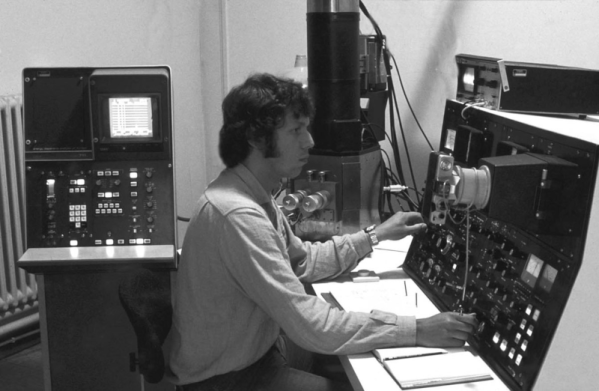
According to [Asianometry], no one believed in the scanning electron microscope. No one, that is, except [Charles Oatley].The video below tells the whole story.

The Cambridge graduate built radios during World War II and then joined Cambridge as a lecturer once the conflict was over. [Hans Busch] demonstrated using magnets to move electron beams, which suggested the possibility of creating a lens, and it was an obvious thought to make a microscope that uses electrons.

After all, electrons can have smaller wavelength than light, so a microscope using electrons could — in theory — image at a higher resolution. [Max Knoll] and [Ernst Ruska], in fact, developed the transmission electron microscope or TEM.

Continue reading “How We Got The Scanning Electron Microscope”

Mitre Wants The Feds To Play In Its Sandbox

If you haven’t worked with the US government, you might not know Mitre, a non-profit government research organization. Formed in 1958 by the U.S. Air Force as a company to guide the SAGE computer, they are often research experts who oversee government contracts or evaluate proposals. Now they are building a $20 millon “AI Sandbox” for the Federal government to build AI prototypes.

Partnered with NVidia, the sandbox will use an NVidia GDX SuperPOD system capable of an exaFLOP of 8-bit AI computation. Mitre reports this will increase their compute power for AI by two orders of magnitude.

Continue reading “Mitre Wants The Feds To Play In Its Sandbox”