
Hackaday Podcast 243: Supercon, Super Printing, And Super Gyros

With solder fumes from Supercon still in the air, Hackaday’s Elliot Williams and Al Williams met to compare notes about the conference talks, badge hacking, and more. Tom Nardi dropped by, too.

Did you miss Supercon? It isn’t quite the whole experience, but most of the talks are on our YouTube channel, with more coming in the weeks ahead. Check out the live tab for most of the ones up now. You can even watch the badge hacking celebration. We’ll be writing up more in the following weeks.

Al nailed What’s That Sound, as did many others, except Elliot. [Jacx] gets a T-shirt, and you get a chance to play again next week.

The hacks this week range from a pair of posts pertaining to poop — multi-color 3D printer poop, that is. We wondered if you could print rainbow filament instead of a purge tower. The Raspberry Pi 5 draws a lot of excess power when in standby. Turns out, thanks to the Internet, the easy fix for that is already in. Other hacks range from EMI test gear to portable antennas with excursions into AI, biomedical sensors, and retrocomputing.

In the Can’t Miss category, we discussed Maya Posch’s post, which could just as easily be titled: Everything You Ever Wanted to Know about CAT Cable (But Were Afraid to Ask). Last, but not least, you’ll hear about Lewin Day’s round up of exotic gyroscope technology, including some very cool laser pictures.

Check out the links below if you want to follow along, and as always, tell us what you think about this episode in the comments!

Download for listening or for a very long ringtone.

Continue reading “Hackaday Podcast 243: Supercon, Super Printing, And Super Gyros” →
Fastest Semiconductor May Also Be Most Expensive

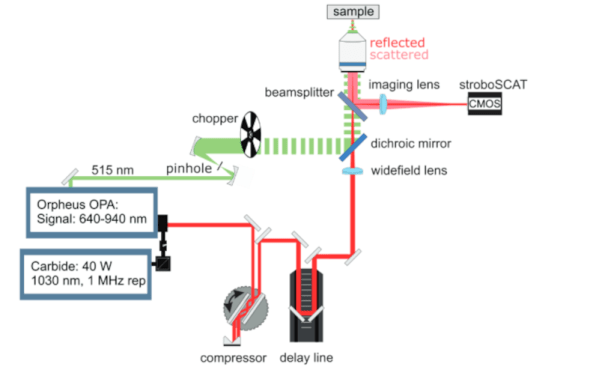
Scientists have found what they think may be the fastest known semiconductor. Sounds great, right? But it happens to made from one of the rarest elements: rhenium. That rare element combines with selenium and chlorine to form a “superatom.” Unlike conventional semiconductor material, the superatom causes phonons to bind together and resist scattering. This should allow materials that can process signals in femtoseconds,

Rhenium was the last stable element to be found in 1925. It is primarily used in combination with nickel in parts of jet engines, although it is also known as a catalyst for certain reactions. It is very rare and has a high melting point, exceeded only by tungsten and carbon. When it was discovered, scientists extracted a single gram of the material by processing 660 kg of molybdenite. Because of its rarity, it is expensive, costing anywhere from $2,800 to $10,600 per kilogram.

Continue reading “Fastest Semiconductor May Also Be Most Expensive” →

Hack A Soda Can Into Jewelry

If you’ve ever needed some aluminum for a project, you might have noticed you have easy access to aluminum cans. If you need a cylinder, fine. But what if you don’t? [ThescientistformerlyknownasNaegeli] shows how to create an attractive necklace from two soda cans, and we think the techniques might be usable for other cases where you might need aluminum. If you care more about the necklace, it looks good. You only have to add a 3D-printed clasp or, if you prefer, you can buy a clasp and use that. For the Hackaday crowd, you can also use the resulting structure as an aluminum cable shield, which might better suit you.

The post gives more details and points to other posts for even deeper dives into many of the steps. But the basic idea is you strip the ink from the outside of the can and then cut the can into a strip. The mechanism for that looks a lot like a machine to cut plastic bottles into strips, but that method isn’t feasible without special blades.

Continue reading “Hack A Soda Can Into Jewelry” →

Programming 1949 Style!

What was it like to program an early digital computer? [Woven Memories] wanted to know and wants you to know, too. [Maurice Wilkes] and his team wrote a book about their EDSAC and the 18 instructions that it used. These days, you can even run an EDSAC program on a number of emulators.

It is hard to realize how things we take entirely for granted had to be invented by [Wilkes] and his colleagues. The book, “The Preparation of Programs for an Electronic Digital Computers” has, among other things, the first recorded use of a software library and the first API. Even the subroutine needed inventing by [Wilkes’] student [David Wheeler], which was known for a while as the “Wheeler Jump.”

Like many things in old computers, the Wheeler Jump required code to modify itself. Even indexing modes were often implemented by changing an address inside the program.

While we frown on techniques like this today, you have to start somewhere. We are big fans of EDSAC and [Dr. Wilkes] had a long and distinguished career long after EDSAC, too. The original plans for EINIAC led to EDSAC, EDVAC, and a slew of other early machines. You can see a video of the machine with an introduction by [Wilkes] below.

If you want to try your hand with the EDSAC, try your browser. There’s also a very nice Windows emulator that runs fine under WINE.

Continue reading “Programming 1949 Style!” →

Tiny Forth Could Be The Smallest

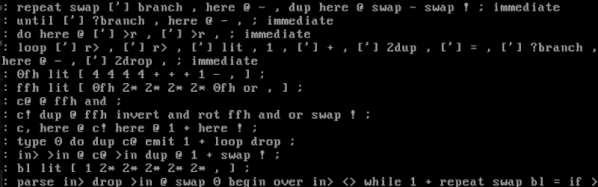
When you think of a programming language, you probably think of a hefty compiler or interpreter. Maybe its on a bunch of floppies, a CD, or even an EEPROM. But what about a language that fits in a single disk sector? A language like that would — in theory — be used to help bootstrap a computer system and that was the idea behind Sector Forth and, later, Sector Lisp. However, there’s a new game in town: milliForth, which claims to be the smallest ever at 422 380 bytes.

Why would you want such a thing? Well, first of all, why not? Even as a form of code golf, packing a functioning language into a tiny space seems interesting. However, you could also presumably use something like this to boot a small system or on a system with limited storage.

Continue reading “Tiny Forth Could Be The Smallest” →

Virginia To Get Large-Scale Wind Farm

If you go about 27 miles off the coast of Virginia, you’ll find two windmills jutting up out of the sea. Two windmills aren’t particularly interesting until you realize that these two are on the edge of a 2,100-acre lease that Dominion Energy is placing in Federal water. According to the company, those two will be joined by 176 more windmills on a nearly 113,000-acre adjacent lease. The project has been in the planning and pilot phase for a while, but it was recently given the green light by the US government. You can see a promotional video about the project below. There’s also a video of the first monopiles — the mounts for the windmills — arriving in the area.

The project will eventually have three offshore substations that feed the power to the state military reservation and, from there, to Naval Air Station Oceania, where it feeds the commercial power grid. The final project will power 660,000 homes.

Continue reading “Virginia To Get Large-Scale Wind Farm” →

Machine Teaches Morse Code

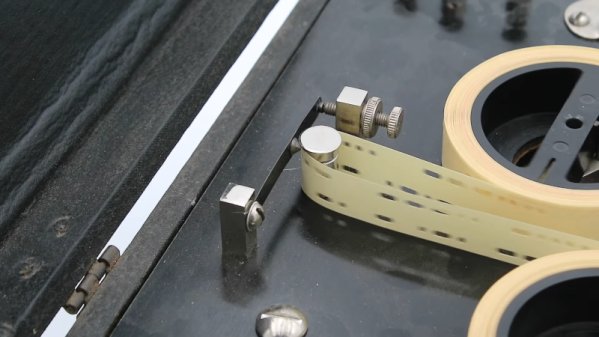
If you are a ham radio operator of a certain age, you probably remember ads for “The Instructograph,” a mechanical device for learning Morse code. [Our Own Devices] has an ancient specimen of the machine and shows us how it works in the video below. The machine is a model of simplicity. You wind up a spring-driven motor like you would for an old record player or music box. A slider sets the playback rate, and paper tape starts to spin.

The paper tape looks like computer tape, but since it only has literal long and short notches, it has two distinct sides. When you learned one set of messages, you could flip the tape over and get more practice that way. How did the machine read the paper tape? With a mechanical contact. Literally, if the paper had a hole in it, you made the circuit. If it didn’t, the circuit was broken. A buzzer and batteries or some other kind of sounder was all you needed.

The company was in business for 50 years. The newer versions had more electronics, but they always used the paper tape mechanism to store the code practice sessions. A 1962 ad noted that the machine could play back the tapes from three words a minute up to 40. You could buy or rent the machine, and we always assumed it was pretty pricey for its day. Around 1965, a new unit would cost $53 but did not include a headset or a key. So that was actually more reasonable than we expected. In 1965, a brand-name clock radio cost about $50, so it wasn’t any more than that.

Everyone has their own favorite method for learning code, especially [Ludwig Koch]. At least you don’t have to learn Alex-style.

Continue reading “Machine Teaches Morse Code” →