Old 6809 Computer Lives Again On Breadboards

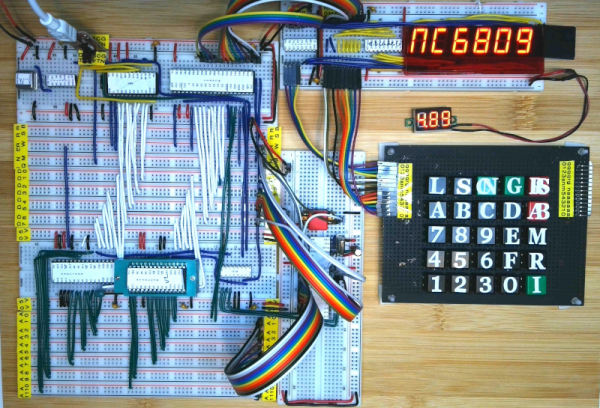
Among old CPUs, the 6809 never got as much attention as some of its cousins. The Radio Shack CoCo used it and so did a construction article in Wireless World Magazine. Now [Dave] has reconstructed that computer on breadboards and it looks great. The files are on GitHub and there is even a series of videos about the machine. You can watch the first one below.

You can even read the original articles in the January 1981 Wireless World where the board used a 6802. The upgrade to a 6809 appears in the July 1981 issue. The magazine promised you could build the system for £100. Besides the 6809 there were only a few chips. A PROM, two RAM chips, A 6821 PIA, and a 74LS138 decoder for address selection. An MC1413 transistor array also allowed for a 7-segment display and a keypad along with a 7442 BCD decoder.

Continue reading “Old 6809 Computer Lives Again On Breadboards”
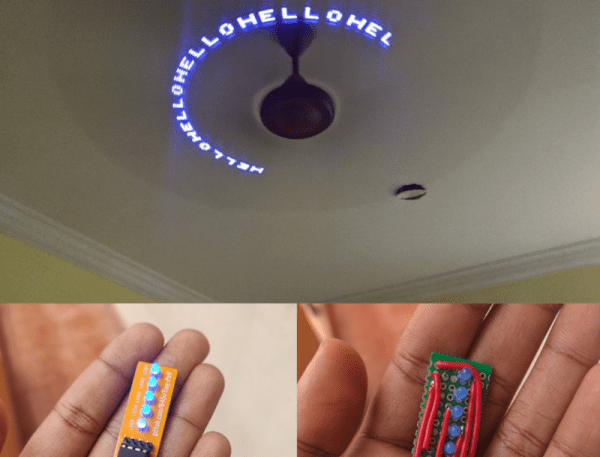
$1 POV Display Goes Round And Round

You don’t need much to do a persistence of vision display. A few LEDs and a processor is all it really takes. [B45i] made a simple PC board with five LEDs and an ATtiny CPU. There’s a battery and it connects to a fan to spin around.

While the project is pretty simple, we liked two aspects of it. First, he provides very detailed explanations about how to use an Arduino to program the Tiny using the Arduino IDE.

Continue reading “$1 POV Display Goes Round And Round”

Retrotechtacular: Programming By Card

The recent Supercon 6 badge, if you haven’t seen it, was an old-fashioned type computer with a blinky light front panel. It was reminiscent of an Altair 8800, a PDP-11, or DG Nova. However, even back in the day, only a few people really programmed a computer with switches. Typically, you might use the switches to toggle in a first-level bootloader that would then load a better bootloader from some kind of storage like magnetic or paper tape. Most people didn’t really use the switches.

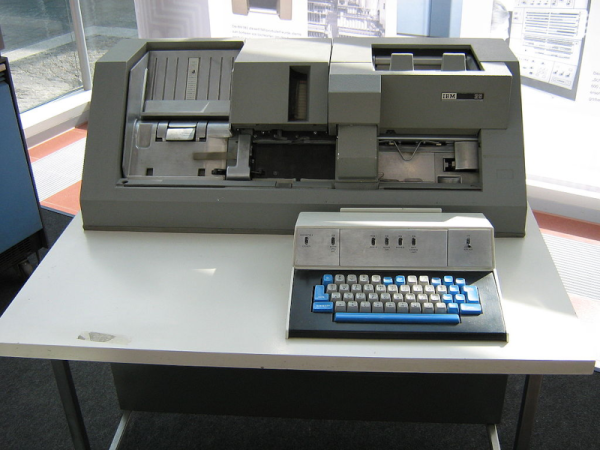
What most people did do, however, was punch cards.  Technically, Hollerith cards, although we mostly just called them cards, punched cards, or IBM cards. There were a lot of different machines you could use to punch cards, but none were as popular, I would guess, as the IBM 029. Certainly, the models in the series were overwhelmingly what people used to punch cards.

For the uninitiated, a card was about the size of an old-fashioned dollar bill — the ones in style when Herman Hollerith invented them. The card was made of material not quite as thick as a standard file folder and was divided into 80 columns and 12 rows. Later cards had more columns, but those never really caught on to the same scale as the classic 80-column card. Continue reading “Retrotechtacular: Programming By Card”

Detecting Radiation For Fun And Profit

It used to be that every well-stocked doomsday bunker had a Geiger counter. These days, you don’t have to have a big tube-based meter. You can inexpensively get a compact digital instrument to handle your radiation detection needs. [DiodeGoneWild] reviews and tears down such a unit from FNIRSI. The case looks like several other similar instruments we’ve seen lately, so presumably, someone is mass-producing these handheld meter cases. You can see the video, below. The meter reads the absolute radioactivity and can also measure cumulative exposure.

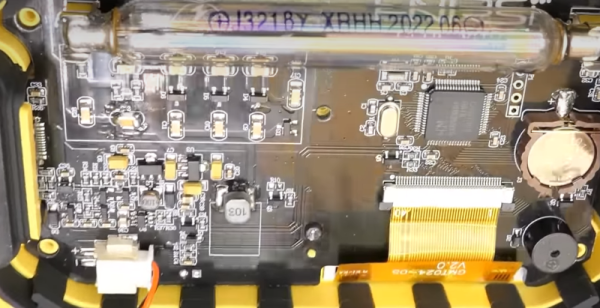
After measuring a few common radioactive items, we get to the teardown. Inside, of course, is an ordinary tube. A few screws reveal a typical rechargeable battery, a fairly simple PCB with a microcontroller and battery backup for the real-time clock. A lot of the board is involved in multiplying voltage up to the several hundred volts required for the Geiger tube.

The other side of the PCB has only buttons, a vibration motor, and, of course, the LCD. We don’t know how you might test the relative accuracy other than comparing it to a known-good meter. The bare tube was, of course, more sensitive without the plastic cover, but that could be calibrated out, too.

A Geiger counter doesn’t have to have a lot of parts. Either way, a surprising number of things will set them off.

Continue reading “Detecting Radiation For Fun And Profit”

Z80 Gets New OS

If you have a soft spot for a Z80 computer but want a new operating system experience, try Zeal. You can watch a demo of the open-source OS in the video below.

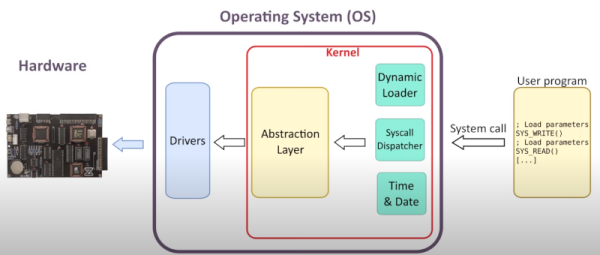
As you might expect, the whole system is written in Z80 assembly language. The features you expect are there: files, directories, device drivers, a clock, and even memory banking to support up to 16M of memory. The work isn’t totally done, nor is the initial target computer — Zeal — but it looks like a great piece of work so far and will be of interest to anyone who has a Z80.

Continue reading “Z80 Gets New OS”

Cheap Scope Troubleshoots Commodore

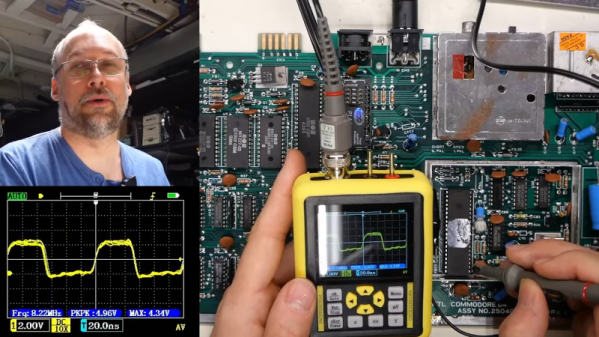
[Adrian] had a Commodore computer to fix and decided to see how his latest tiny portable scope would work. He paid $57 for the tiny little test instrument although the current price seems higher. It claims to have 120MHz bandwidth along with 500 megasamples per second. There are several versions with different claimed specs, but we did find a similar device for under $60. You can see the unboxing and how it worked in the video below.

Of course, these kinds of instruments often overstate their specs, and [Adrian] was also suspicious. One odd feature of the device is it can echo its output to an NTSC video output so you can send the screen to an external monitor.

Continue reading “Cheap Scope Troubleshoots Commodore”

Smelting Solar Style

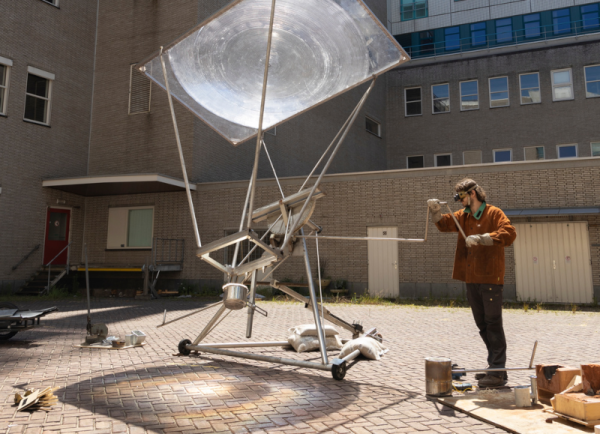
If you attended the 2022 Supercon, you might have heard the story about the SMD soldering challenge table nearly catching on fire. A magnifying lamp caught the sun just right and burned a neat trench into another lamp’s plastic base. While disaster was averted, [Jelle Seegers] does this on purpose using a huge 5-meter lens to smelt metal.

The Design Academy Eindhoven student is participating in Dutch Design Week and built the machine which is able to manually track the sun to maximize the amount of solar energy applied to the metal.

Continue reading “Smelting Solar Style”