Hacking A Brother Label Maker: Is Your CUPS Half Empty Or Half Full?

On the one hand, we were impressed that a tiny Brother label maker actually uses CUPS to support printing. Like [Sdomi], we were less than impressed at how old a copy it was using – – 1.6.1. Of course, [Sdomi] managed to gain access to the OS and set things up the right way, and we get an over-the-shoulder view.

It wasn’t just the old copy of CUPS, either. The setup page was very dated and while that’s just cosmetic, it still strikes a nerve. The Linux kernel in use was also super old. Luckily, the URLs looked like good candidates for command injection.

Continue reading “Hacking A Brother Label Maker: Is Your CUPS Half Empty Or Half Full?”

New Solar Spheres Claim To Be Better Than Solar Panels

When you think of solar energy, you probably think of flat plates on rooftops. A company called WAVJA wants you to think of spheres. The little spheres, ranging from one to four inches across, can convert light into electricity, and the company claims they have 7.5 times the output of traditional solar panels and could later produce even more. Unfortunately, the video below doesn’t have a great deal of detail to back up the claims.

Some scenes in the video are clearly forward-looking. However, the so-called photon energy system appears to be powering a variety of real devices. It’s difficult to assess some of the claims. For example, the video claims 60 times the output of a similar-sized panel. But you’d hardly expect much from a tiny 4-inch solar panel.

Continue reading “New Solar Spheres Claim To Be Better Than Solar Panels”

Dad? Where Did Printed Circuit Boards Come From?

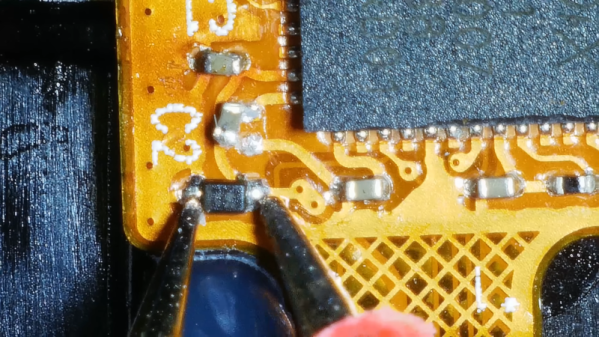
These days, it is hard to imagine electronics without printed circuit boards. They are literally in everything. While making PCBs at home used to be a chore, these days, you design on a computer, click a button, and they show up in the mail. But if you go back far enough, there were no PC boards. Where did they come from? That’s the question posed by [Steven Leibson] who did some investigating into the topic.

There were many false starts at building things like PCBs using wires glued to substrates or conductive inks.  However, it wasn’t until World War II that mass production of PC boards became common. In particular, they were the perfect solution for proximity fuzes in artillery shells.

Continue reading “Dad? Where Did Printed Circuit Boards Come From?”

A Trip Down Electronic Toy Memory Lane

Like many of us, [MIKROWAVE1] had a lot of electronic toys growing up. In a video you can watch below, he asks the question: “Did electronic toys influence your path?” Certainly, for us, the answer was yes.

The CB “base station” looked familiar although ours was marked “General Electric.” Some of us certainly had things similar to the 150-in-one kit and versions of the REMCO broadcast system. There were many versions of crystal radio kits, although a kit for that always seemed a little like cheating.

Continue reading “A Trip Down Electronic Toy Memory Lane”

VHF/UHF Antennas, The Bad, The Ugly, And The Even Worse

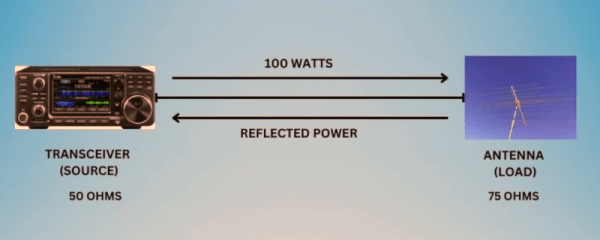
When you buy a cheap ham radio handy-talkie, you usually get a little “rubber ducky” antenna with it. You can also buy many replacement ones that are at least longer. But how good are they? [Learnelectronics] wanted to know, too, so he broke out his NanoVNA and found out that they were all bad, although some were worse than others. You can see the results in the — sometimes fuzzy — video below.

Of course, bad is in the eye of the beholder and you probably suspected that most of them weren’t super great, but they do seem especially bad. So much so, that, at first, he suspected he was doing something wrong. The SWR was high all across the bands the antennas targeted.

Continue reading “VHF/UHF Antennas, The Bad, The Ugly, And The Even Worse”

A Brief History Of Perpetual Motion

Conservation of energy isn’t just a good idea: It is the law. In particular, it is the first law of thermodynamics. But, apparently, a lot of people don’t really get that because history is replete with inventions that purport to run forever or produce more energy than they consume. Sometimes these are hoaxes, and sometimes they are frauds. We expect sometimes they are also simple misunderstandings.

We thought about this when we ran across the viral photo of an EV with a generator connected to the back wheel. Of course, EVs and hybrids do try to reclaim power through regenerative braking, but that’s recovering a fraction of the energy already spent. You can never pull more power out than you put in, and, in fact, you’ll pull out substantially less.

Not a New Problem

If you think this is a scourge of social media and modern vehicles, you’d be wrong. Leonardo da Vinci, back in 1494, said:

Oh ye seekers after perpetual motion, how many vain chimeras have you pursued? Go and take your place with the alchemists.

There was a rumor in the 8th century that someone built a “magic wheel,” but this appears to be little more than a myth. An Indian mathematician also claimed to have a wheel that would run forever, but there’s little proof of that, either. It was probably an overbalanced wheel where the wheel spins due to weight and gravity with enough force to keep the wheel spinning.

Continue reading “A Brief History Of Perpetual Motion”

Almost Google Glass In 1993

You might think Google Glass was an innovative idea, but [Allison Marsh] points out that artist [Lisa Krohn] imagined the Cyberdesk in 1993. Despite having desk in the name, the imagined prototype was really a wearable computer. Of course, in 1993, the technology wasn’t there to actually build it, but it does look like [Krohn] predicted headgear that would augment your experience.

Unlike Google Glass, the Cyberdesk was worn like a necklace. There are five disk-like parts that form a four-key keyboard and something akin to a trackpad. There were two models built, but since they were nonfunctional, they could have any imagined feature you might like. For example, the system was supposed to draw power from the sun and your body, something practical devices today don’t really do, either.

She also imagined a wrist-mounted computer with satellite navigation, a phone, and more. Then again, so did [Chester Gould] when he created Dick Tracy. The post also talks about a more modern reimagining of the Cyberdesk last year.

While this wasn’t a practical device, it is a great example of how people imagine the future. Sometimes, they miss the mark, but even then, speculative art and fiction can serve as goals for scientists and engineers who build the actual devices of the future.

We usually think about machines augmenting our intelligence and senses, but maybe we should consider more physical augmentation. We do appreciate seeing designs that are both artistic and functional.