An AVO 8 Teardown

AVO meters — literally amp, volt, ohm meters — are not very common in North America but were staples in the UK. [TheHWcave] found an AVO 8 that is probably from the 1950s or 1960s and wanted to get it working. You can see the project in the video below.

These are very different from the standard analog meters many of us grew up with. [TheHWcave] shows how the dual range knobs work together to set the measurement. There are three separate ohm settings, and each one has its own zero pot. We were surprised that the meter didn’t have a parallax-correcting mirror.

Other than dirty switch contacts, the voltage measurements still worked. After cleaning the contacts, most of the ranges worked well, although there were still some issues. Some of the resistor ranges were not working, either. Inside the case were an old D cell and a square battery, a B121 15 V battery. Replacing the 15 V battery with a bench supply made things better.

Some plugins are available to allow the meter to read low resistance or high currents. We thought using the soldering gun as a current source was clever. Once he gets it working, he opens the box around the 14:30 mark.

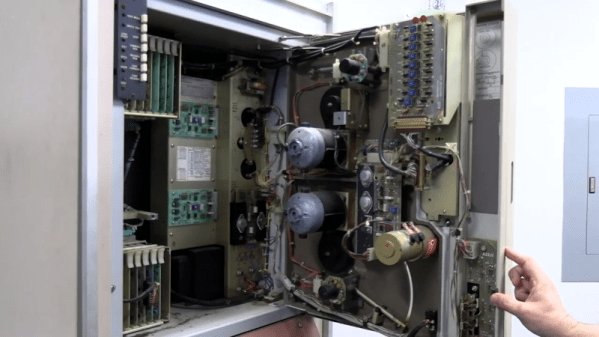
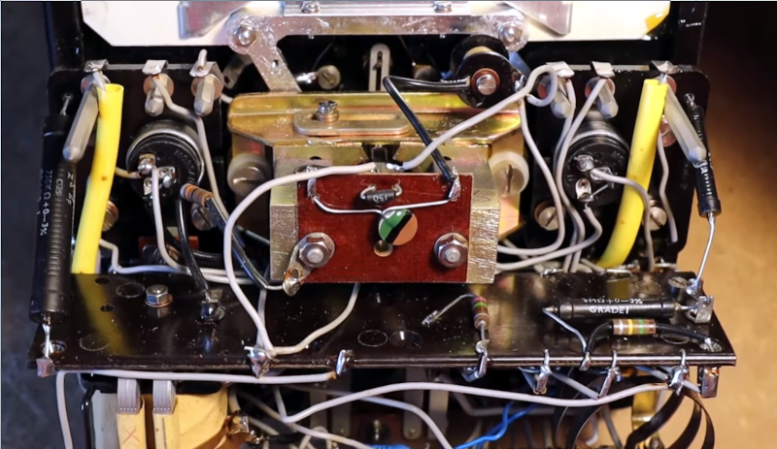
The inside was all hand-wiring and power resistors. Of course, there are also a ton of contacts for the switches. So it isn’t just an electrical design, but a mechanical one, too. The electrical design is also interesting, and an analysis of it winds the video down.

[Jenny List] has a soft spot for these meters, too. Why use an old meter? If you have to ask…

Continue reading “An AVO 8 Teardown”

Ask Hackaday: Should We Teach BASIC?

Suppose you decide you want to become a novelist. You enroll in the Hackaday Famous Novelists School where your instructor announces that since all truly great novels are written in Russian, our first task will be to learn Russian. You’d probably get up and leave. The truth is, what makes a great (or bad) novel transcends any particular language, and you could make the same argument for programming languages.

Despite the pundits, understanding the basics of how computers work is more important than knowing C, Java, or the language of the week. A recent post by [lackofimagination] proposes that we should teach programming using BASIC. And not a modern whizz-pow BASIC, but old-fashioned regular BASIC as we might have used it in the 1980s.

Certainly, a whole generation of programmers cut their teeth on BASIC. On the other hand, the programming world has changed a lot since then. While you can sort of apply functional and object-oriented techniques to any programming language, it isn’t simple and the details often get in the way of the core ideas.

Still, some things don’t change. The idea of variables, program flow, loops, and arrays all have some parallel in just about anything, so we can see some advantages to starting out simply. After all, you don’t learn to drive by trying it out in the Indy 500, right?

What do you think? If you were teaching programming today, would you start with BASIC? Or with something else? You can modernize a little bit with QB64. Or try EndBasic which just recently had a new release.

All About PNP Transistors

In the early days, PNP bipolar transistors were common, but the bulk of circuits you see today use NPN transistors. As [Aaron Danner] points out, many people think PNP transistors are “backward” but they have an important role to play in many circuits. He explains it all in a recent video you can see below.

He does explain why PNP transistors don’t perform as well as corresponding NPN transistors, but they are still necessary sometimes. Once you get used to it, they are no problem to handle at all. Common cases where you want a PNP are, for example, when you want to switch a voltage instead of a ground. There are also certain amplifier configurations that need PNP units.

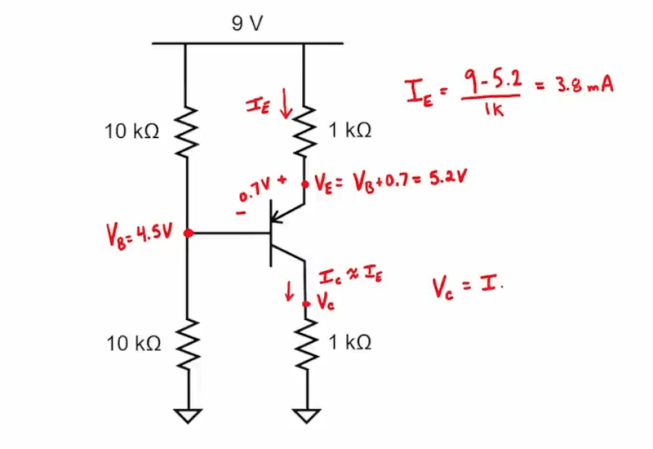
Like an NPN transistor, a PNP can operate in saturation, linear operation, reverse active, or it can be cut off. [Aaron] shows you how to bias a transistor and you’ll see it isn’t much different from an NPN except the base-emitter diode junction is reversed.

As you might expect, current has to flow through that diode junction to turn the transistor on. The arrow points in the direction of the diode junction. If you want a refresher on transistor biasing, we got you. Sure, you don’t need to do it every day now, but it still is a useful skill to have.

Continue reading “All About PNP Transistors”

Working Through The Art Of Electronics Exercises

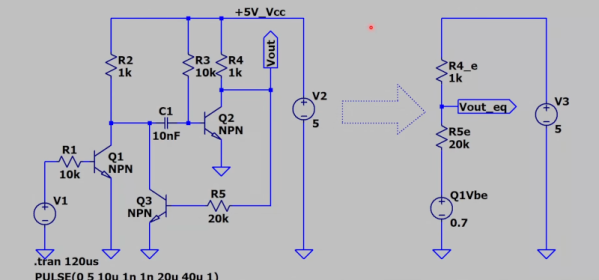
[The Engineering Experience] has an ambitious series of videos. He’s working through circuit examples from the awesome book “The Art of Electronics.” In the latest installment, he’s looking at a pulse generator that uses bipolar transistors. So far, there are 43 videos covering different exercises.

If you’ve read the book — and you should — you know the examples and exercises sometimes have little explanation. Honestly, that’s good. You should try to work through them yourself first. But once you have an idea of how it works, hearing someone give their take on it may help you out. In fact, even if you don’t have the book, we’d suggest pausing the video and looking at the circuit to see what you can figure out before playing the explanation. You’ll learn more that way.

Admittedly, some of the early videos will be cakewalks for Hackaday readers. The first few, for example, walk through parallel and series resistors. However, if you are starting out or just want a refresher, you can probably enjoy all of them. The later ones get a bit more challenging.

If you want to double-check your work, you can simulate the circuit, too. Our simulation got 4.79 V and he computed 4.8, which is certainly close enough.

We do love “The Art of Electronics.” The book’s author also enjoys listening for aliens.

Continue reading “Working Through The Art Of Electronics Exercises”

This Vintage Computing Device Is No Baby Food

Today, if you want a computer for a particular task, you go shopping. But in the early days of computing, exotic applications needed custom computers. What’s more is that with the expense of computers, you likely got one made that fit exactly what you needed and no more. That led to many oddball one-off or nearly one-off computers during that time frame. Same for peripheral devices — you built what you had to and you left the rest on the drafting table. [Vintage Geek] got his hands on what appears to be one of them: the Gerber Scientific 6200.

While Gerber Scientific is still around, we’ve never heard of the 6200. Based on the serial number, we would guess at least 62 of them were made and this one has an interesting backstory of living in someone’s home who worked at the Pentagon. We presume the tapes were erased before it was sold!

Design-wise, it is pretty standard stuff. A 19-inch rack, a standard tape drive from Kennedy, a power supply, and some cards. The box takes 240 V, so the computer didn’t get powered up, but an examination of the inside looked like this really was a one-off with handwritten labels on masking tape.

We couldn’t tell for sure if the device was a computer itself, or just a tape drive and maybe plotter interface for another computer. If you know anything about this device, we are sure [Vintage Geek] would like to hear from you.

If this does turn out to have a CPU onboard, we’d bet it is bit sliced. If you have a 9-track tape machine, you may have to make your own tapes soon.

Continue reading “This Vintage Computing Device Is No Baby Food”

How Ten Turn Pots Are Made

It is easy to think of a potentiometer as a simple device, but there are many nuances. For example, some pots are linear — a change of a few degrees at the low end will change the resistance the same amount as the same few degrees at the high end. Others are logarithmic. Changes at one end of the scale are more dramatic than at the other end of the scale. But for very precise use, you often turn to the infamous ten-turn pot. Here, one rotation of the knob is only a tenth of the entire range. [Thomas] shows us what’s inside a typical one in the video below.

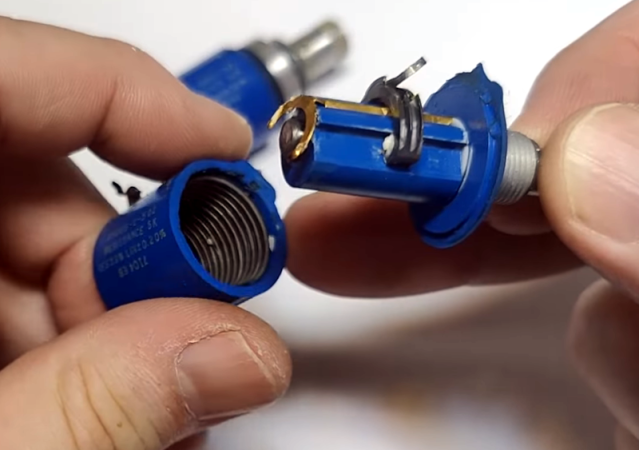
When you need a precise measurement, such as in a bridge instrument, these pots are indispensable. [Thomas] had a broken one and took that opportunity to peer inside. The resistor part is a coil of wire wound around the inside of the round body. Unsurprisingly, there are ten turns of wire that make up the coil.

The business end, of course, is in the rotating part attached to the knob. A small shuttle moves up and down the shaft, making contact with the resistance wire and a contact for the wiper. The solution is completely mechanical and dead simple.

As [Thomas] notes, these are usually expensive, but you canĀ  — of course — build your own. These are nice for doing fine adjustments with precision power supplies, too.

Continue reading “How Ten Turn Pots Are Made”

Retro Calculator Panders To Trekkies… Or Trekkers

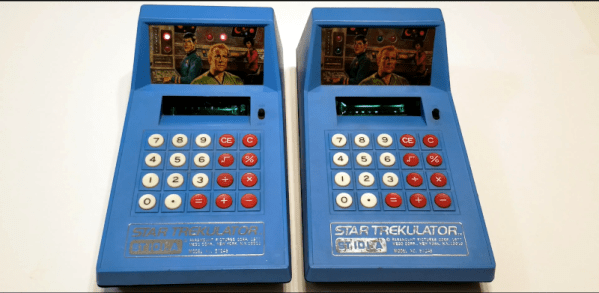
Back in 1976, when calculators were not common or cheap, a company named MEGO made the Star Trekulator: a calculator sporting a Star Trek theme. However, it was a bit odd since the calculator didn’t correspond to anything you ever saw on the TV show. It was essentially a very simple calculator with a Star Trek picture and some blinking LEDs. [Computer History Archives Project] has two examples of the rare calculator and shows them off, including the insides, in the video below. We’ve also included a vintage commercial for the device a little farther down.

Inside the 5-inch by 9.5-inch cabinet was an unremarkable printed circuit board. The main component was a TI calculator chip, but there were a surprising amount of other components, including three that [Computer History Archives Project] could not identify.

MEGO was known for making Star Trek toys, including a cassette player that (sorta) looked like a tricorder and communicator walkie-talkies. We wish they’d made the calculator look like some sort of prop from the show, although the beeping noises, we suppose, were supposed to sound like the Star Trek computers.

Honestly, we want to 3D print a case to replicate this with modern insides that can drive a display to put different Trek clips and sound effects out. Now, that would be something. Maybe [Michael Gardi] can take a look at it when he’s got a spare minute. If anything, the calculator looks too advanced to be on the original series. They should have gone VFD. Although Mr. Spock has been seen with a flight slide rule (an E6-B, if we recall). We prefer our props to look like the real ones, thank you.

Continue reading “Retro Calculator Panders To Trekkies… Or Trekkers”