Garage Door… Packet Sniffer

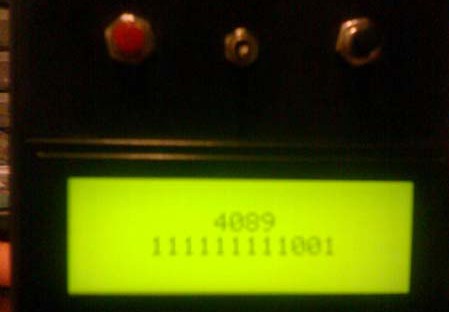
Some type of logger or sniffer exists for almost every form of electronic communication. Your keystrokes, phone conversations, and wireless networks could all be monitored. In this awesome proof-of-concept project, [James] expanded that array to include garage door openers. After receiving a piece of chain mail which stated that criminals have the technology to record any remote code and play it back, [James] wondered if he could build such a device that would work on at least his opener model. Continue reading “Garage Door… Packet Sniffer” →
Sony’s Wireless Electricity Offering

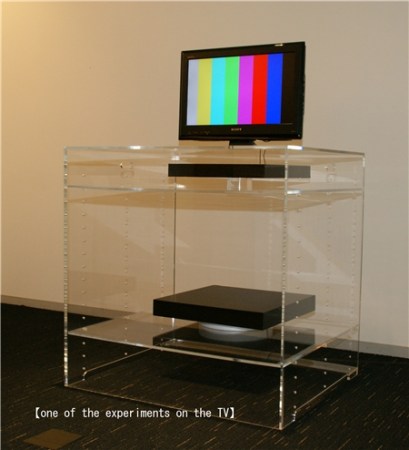
In August we covered a wireless electricity presentation from the TED conference. Now Sony has put out a press release on their wireless flat panel television prototype. The device is capable of operating without audio, video, or power cables connected to it. This is possible at distances up to 50cm at efficiencies as high as 80%.

As was talked about in the comments of the other article, the efficiency compared to that of a cable doesn’t blow our socks off. But this does show mainstream development of this technology. We hope to see advances in both efficiency and distance. We also look forward to that small black box (which we presume facilitates the energy transfer) being integrated into the TV’s body.

[via Gizmodo]

Ubuntu 9.10 Beta Now Available

ubuntu_karmic_beta

The latest version of the world’s most popular Linux distribution is now available. Ubuntu 9.10 Karmic Koala continues the six-month development cycle of this free OS. We’ve used Ubuntu since 2005 and, after a short adjustment period, never looked back at those other operating systems.

Never used Linux? This distribution is for you but we recommend waiting until the release makes it out of beta to the stable version on October 29th.

Comfortable with Linux and want to get your feet wet? The Hack a Day team is calling on all of you to test, report, and improve upon this community driven project. Get yourself a copy of the beta (we recommend using the torrents) and start reporting bugs. You can help fix them by joining the bug squad, or use your coding skills to become a developer.

Growing Algae With An Arduino

algae_grow

We’ve seen automated grow boxes of all shapes and sizes, but all were for growing plants. [Jared] over at Inventgeek wanted to do something similar for his algae. He started off with an Arduino-based solution that allows the controlled pulse of LEDs connected to his standard bioreactor as a prototype. Once he determined his proof of concept worked, he began work on a design based on the Arduino Pro Mini that has more advanced features such as temperature monitoring and algae culture density monitoring via some fancy IR voodoo. The code is open source and the hardware is easily obtainable, all that remains is the desire to grow algae.

Pickle Lighting For Fun And Profit

2oct09_mitpickle (Custom)

The fantastic people at MIT have taken it upon themselves to explain how an OLED works. Their visual aide in this explanation is an electrocuted pickle. This helps describe how OLEDs are actually constructed from organic material.  Many of you probably already know how they work, but for those who don’t this video will clear up any questions you might have. Even if you do know how OLEDs work, you may learn something too. We hadn’t realized how amazingly thin the displays are.

[via Engadget]

Halloween Prop: Portable Black Light

blacklight

[Joshua] wrote in to show us this great Halloween tip. He wanted to take his 4 foot long black light along with him on Halloween. You can buy portable versions, but he realized he had enough parts laying around to slap together a portable one himself. He pulled the inverter from a scanner light and wired it up to a couple of 9 volt batteries. Knowing he would probably need a fresh set during the night, he actually wired in some extras with a switch to control which was powering the unit. We know this isn’t the best solution, but you could probably toss this together in just a few minutes.