[Peter Edwards] at Casper Electronics built a modular synth and integrated it with the Barbie karaoke machines we saw at Notacon last April. The complete unit consists of 25 modules which are wired together using banana cables. He’s using this homebrew step sequencer to control the bent karaoke machines which then feed into the rest of the synthesizer. If you’d like to bend your own barbie karaoke machine, [Peter] was kind enough to post schematics and instructions for his bends.
Defcon 16: MIT Boston Transit Presentation Gagged
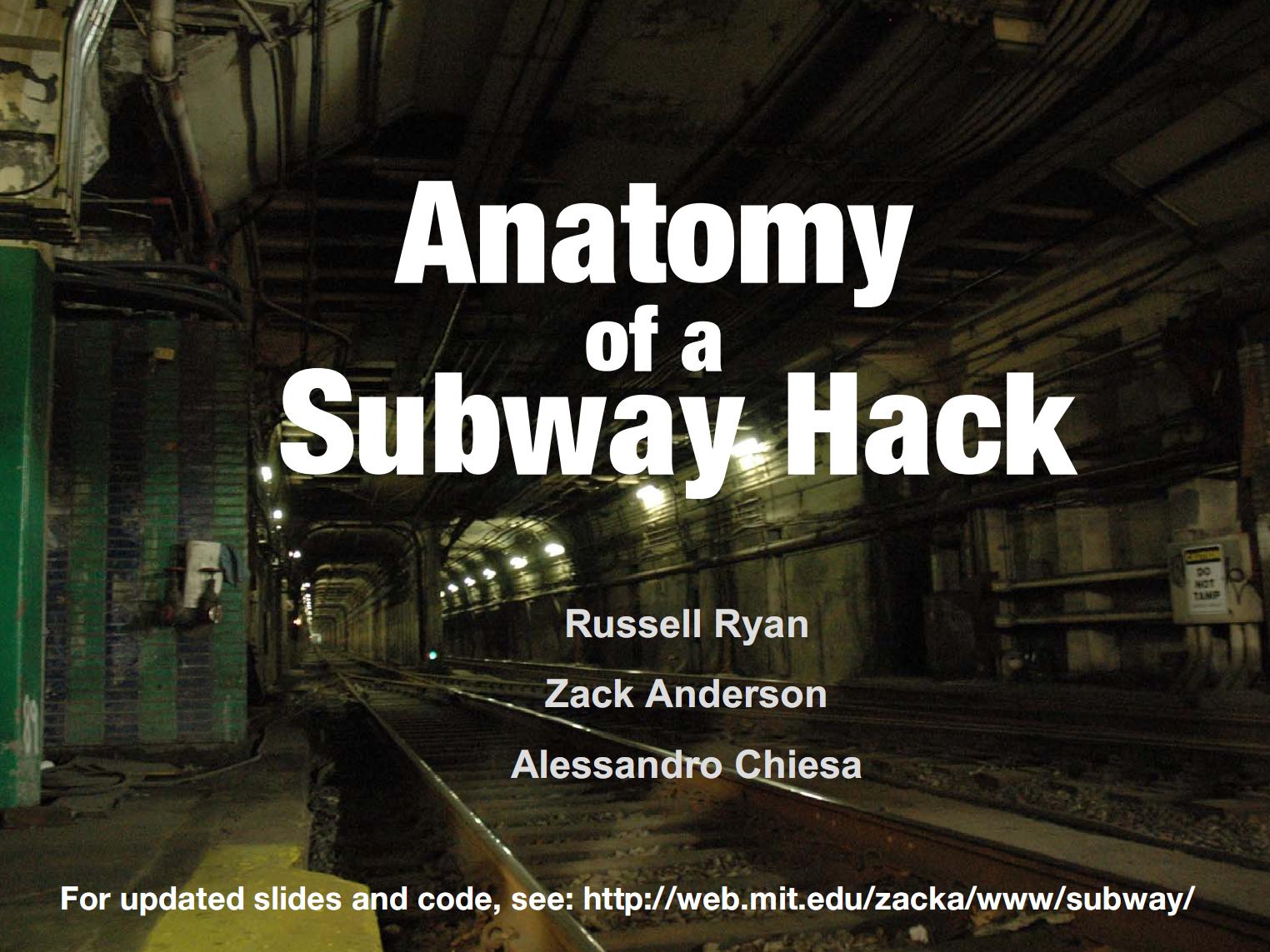
[Zack Anderson], [RJ Ryan], and [Alessandro Chiesa] were sued by the Massachusetts Bay Transit Authority for an alleged violation of the Computer Fraud and Abuse Act after copies of their presentation slides were circulated at Defcon 16. The slides give an eye widening glimpse into the massive security holes present in the Boston subway system. There are at least 4 major security flaws in the subway, which allowed them to get free subway rides by finding unlocked, back door routes into the subway, spoofing magnetic and RFID cards, and attacking the MTBA’s network. Judge Douglas P. Woodlock has issued a gag order, stopping the trio from giving the presentation at Defcon or disclosing sensitive information for ten days. However, the MIT school newspaper, The Tech, has published a PDF of the slides online. The research culminated in the trio warcarting the MTBA’s headquarters and being driven off by police.
Black Hat 2008: Google Gadgets Insecurity
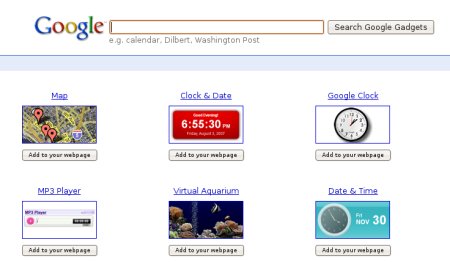
Black Hat presenters [Robert “RSnake” Hansen], CEO of SecTheory, and [Tom Stracener], security analyst at Cenzic, criticized Google in their presentation “Xploiting Google Gadgets”. [Hansen] and [Stracener] say that there’s currently no way for Google to confirm whether Google Gadget creations contain malicious content or not; this leaves the application vulnerable to a wide range of hacking ugliness such as data poisoning, worms, and theft of data. [Hansen] himself isn’t exactly on the friendliest terms with Google. He’s got a bit of a contentious history and he claims that Google has threatened legal action against him. Nevertheless, if what was presented is true and accurate, then Google has a huge security issue that needs to be addressed sooner rather than later. Google has not yet commented on the situation.
Black Hat 2008: What’s Next For Firefox Security

Mozilla security chief [Window Snyder] made some surprising announcements about Firefox Next, Mozilla’s next major browser overhaul. In her chat at the Black Hat security conference, she introduced three new initiatives that focused on threat modeling, training, and vulnerability metrics. For the threat modeling initiative, she’s hired Matasano Security consultants to review Firefox’s code for weaknesses and recommend mitigation tactics to protect the browser from hacker attacks. This isn’t inherently unusual; what is abnormal is that the information, once the work is done, will be revealed to the public. The training initiative will have IOActive trainers working with Mozilla engineers on secure computer programming practices. At the end, according to [Snyder], online versions of the classes will be released to the public, along with the class materials. The last initiative revolves around security metrics, and is already in progress. Essentially, the project will ideally take the focus off of patch-counting and provide a better assessment of security and vulnerability issues. [Snyder] says “We’re in the early phase, working on incorporating feedback from the rest of the industry.” She also reveals some more Firefox developments, including possibly incorporating NoScript into the core browser and implementing protected mode, but they’re still a long way from becoming standard features.
Black Hat 2008: French Hacking Failure
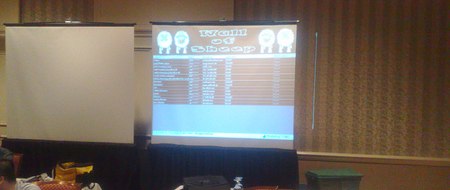
French reporters at Black Hat crossed the line when they sniffed fellow reporters’ login info on the designated “safe” wired network. Proud of their handiwork, they were nabbed when they tried to get their spoils posted on the wall of sheep, which is used to publicly post attendees credintials. It turns out that monitoring communications without informing one of the parties involved is a felony, so although it is legal to sniff convention goers’ login info with their knowledge, hacking reporters covering the event is a no-no. An FBI agent we ran into commented that in his experience, they’d probably just turn it over to the local US attorney’s office to see if they wanted to proceed with an investigation.
We’re in the Defcon press room today and there’s still a buzz about these “sleazy” French reporters. We’re tunneling through our cell connection like any sane person at a security conference.
USB Wall Charger
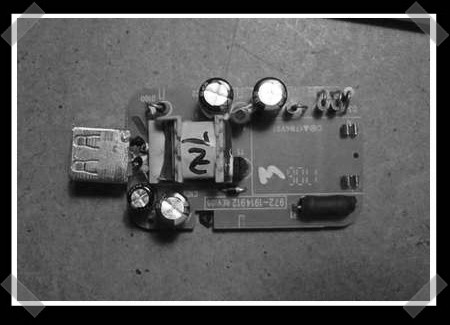
[rbhays] did this sweet little hack back in 2006. He took a Motorola cellphone wall charger and modified it into a USB wall charger. He needed to charge his iPod, but misplaced the original charger. A replacement would have cost him $30. So he did what any respectable hacker would do, he cut up something else to make it work for him.
He had one sitting around that was equipped with a mini USB end. He checked it out and it was the perfect voltage. Some commenters below the project noted that their motorola charger had a higher voltage rating than his. Those would still work, but would require some extra steps to bring the voltage down.
After some careful soldering, and a bit of super glue, he’s left with a perfectly good wall charger. He can charge most things that only use the juice from the wall. Some things refuse to charge though, such as Zunes. There was another project by [Cvesey] that claims to charge Zunes as well. While wall chargers may be available fairly cheaply now, many of us have some of these cellphone chargers just sitting around. Now we have a use for them.
New E-Passports Cloned

Within an hour, Jeron Van Beek was able to create a successful clone of Britain’s new E-Passport. All he needed was a £40 card reader, two £10 RFID chips, and a small, improvised script. Although the exact details were not specified, it looks like he read the ID on the real passport using the RFID reader, then he wrote it to the two blank chips and put them in the fake passports. There is also a flaw which may allow outright forging of the passports. Nearly all of the 45 countries using the system have not yet registered with the Public Key Directory, which was put in place to make forging impossible.
The government is claiming that this hack is a hoax, but recent reports have shown that these RFID systems were never secure. No matter what the actual truth is about these hacks, it can certainly be said that the ability to clone or forge these passports would be a devastating security issue for every country involved.
[Photo: Digital World Tokyo]
[via The Guardian]