Hacking The OLPC Now And The Future

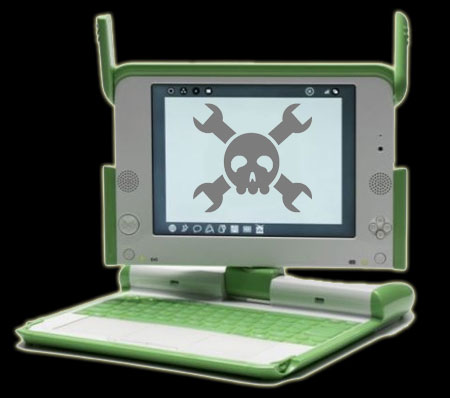
While we haven’t talked about the OLPC XO laptop much here, don’t think we haven’t had our eyes on its developments. Originally shipping last November, this unit captured the interest of many for its humanitarian goal, low cost, and potential hackability. After the break, let’s take a look at what has been done with this device and poke at the prototype for version 2.

Continue reading “Hacking The OLPC Now And The Future” →

Media Streamers: Buy Or Build?


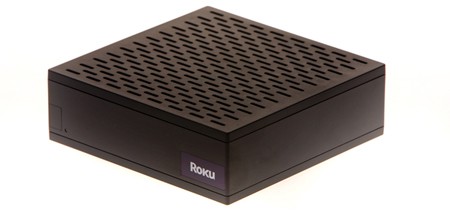
The market is flooded with new media streamers, but which one is for you? One of the cheapest and easiest options is the unambiguously titled Netflix Player. With an active account, the Netflix Player streams movies and television shows from their online library (currently around 10,000 videos). It connects to the internet via 802.11b/g WiFi or ethernet, but delivers low-quality video if your connection speed is less than 1Mbps. It costs $99 plus at least $8.95/mo for a Netflix subscription. It runs Linux so hopefully we’ll see some hacks for it soon like we did with previous Roku products. A fine device, if you want to stream movies and nothing else, but if you want to stream data from other sources, like a network, usb hard drive, or (gasp) bittorrent, you’ll have to look elsewhere.

Continue reading “Media Streamers: Buy Or Build?” →

Open Graphics Card Available For Preorder


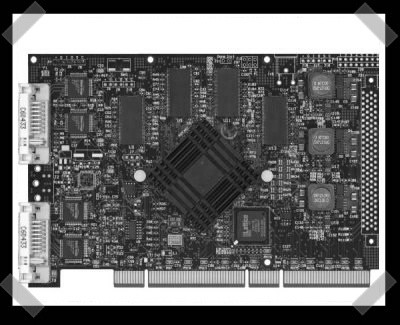
The Open Graphics Project has started accepting preorders for their OGD1, a graphics card with a completely open source design. This initial release is billed as a high-end FPGA prototyping kit specifically designed to test computer graphics architectures. The card has two DVI connectors, S-Video, 256MB RAM, and a 64bit PCI-X connector. The core of the system is a Xilinx Spartan-3 XC3S4000 FPGA. A nonvolatile Lattice XP10 FPGA is used to bootstrap the Xilinx at power up. Here’s the layout of the specific components.

An open design like this could prove very beneficial to the free software community. The open hardware makes driver development much easier; binary drivers from traditional graphics manufacturers have been very hard to work with in the past. The OGD1 could also be used with CPU architectures that wouldn’t be unsupported by normal graphics cards. An FPGA based design means that CPU intensive processes like video decoding could be offloaded to the video card without needing a dedicated chip. There is still a lot of work to be done and at $1500 we’re pretty sure most of you won’t be buying the first generation. It’s still exciting to see traditional PC hardware getting reinvented and opened up. Check out the OGD1’s FAQ for more info.

Erase An IPhone Properly


A fundamental problem with flash memory has just gone mainstream. A detective successfully recovered data from a refurbished iPhone purchased from Apple. Flash memory controllers write to blocks randomly so using standard secure erase techniques are no guarantee that all of the storage space will be written.

[Rich Mogull] has posted a method that should wipe out almost all remnants of your personal data. You start by restoring the iPhone in iTunes and turning off all the syncing options. Next you create 3 playlists large enough to consume all of the phone’s storage space. Sync each playlist in turn and your residual personal data should be obliterated. All that’s left to do is sit back and wonder when the first article about the MacBook Air SSD being impossible to securely erase will be published…

Nintendo DS Homebrew Guide


Running homebrew applications on the Nintendo DS is easier than ever these days, but if you didn’t get into the scene on the ground floor, knowing where to start can appear much more daunting than it actually is. The great thing is: you don’t need to crack open your DS and void the warranty. There are numerous peripheral options that handle this easily with no hardware mods required. DS Fanboy has served up a useful guide to the most popular peripherals and homebrew software. They explain the pros and cons of each peripheral along with the installation and uses of a few popular homebrew apps.

Already well versed in the homebrew arts? Then try some hacks we’ve featured previously, like building a serial interface or installing DSLinux and loading it with with software like this on-screen qwerty keyboard.

Multitouch Project Roundup

It seems that ever since Microsoft unveiled the Surface table the concept of multitouch has really started to snow ball. We’ve been fans ever since seeing [Jeff Han]’s original research in this area. Earlier today we looked at a multitouch rear projection TV project but what else is out there? After the break, we’ve got several multitouch projects you might be interested in.

Continue reading “Multitouch Project Roundup” →