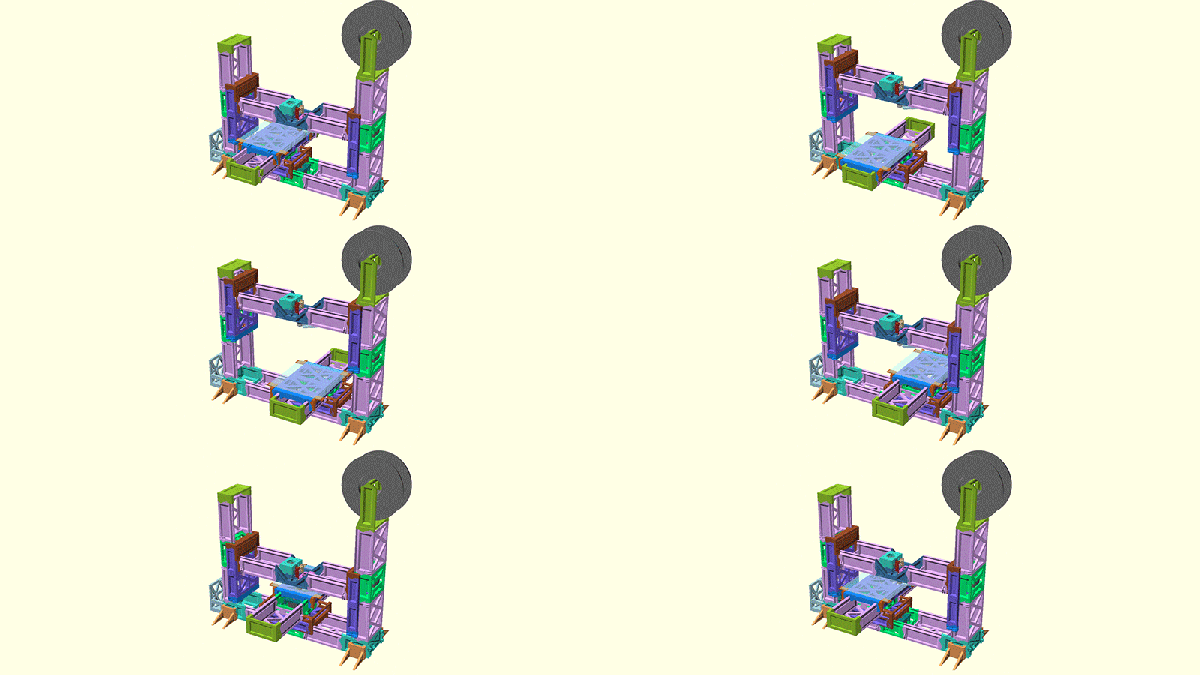
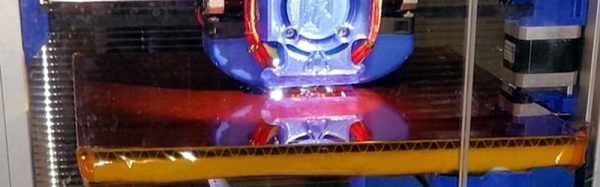
The goal of the RepRap project was always a machine that could replicate itself. The project began with the RepRap Darwin, a machine with a frame made nearly entirely of threaded rods, and progressed to the Mendel, with a slightly higher proportion of printed parts. Around 2011, the goal of self-replication fell by the wayside after some money was thrown around. The goal now, it seems, is to create the 3D printer with the best profit margins. That doesn’t mean there still isn’t a small contingent of RepRappers out there trying to improve the status quo and create a printer that can truly self-replicate. [Revar] is one of those tinkerers, and he has just released the RepRap Snappy, a snap-together 3D printer built nearly entirely out of 3D printed parts.
Other 3D printers designed around the idea of self-replication, like the RepRap Morgan and the Simpson family of printers, use strange kinematics. The reason for this is that Cartesian bots can’t print up to the limits of their frame, yet self-replication requires all parts be replicated at the same scale.
[Revar] is setting a new tack in the problem of printer self-replication and is joining parts together with snap fit connectors. The entire frame of the Snappy printer is built out of small parts that interlock to form larger units.
Another of the tricks up [Revar]’s scheme is reducing the number of ‘vitamins’ or parts that cannot be 3D printed. This includes belts, motors, screws, and electronics. You can’t really print machine screws yet, but [Revar] did manage to eliminate some belts and bearings. He’s using a rack and pinion system, all made with printed parts. It’s a technique that hasn’t been seen before, but it does seem to work rather well.
[Revar] has made all the files for the printed parts available in his repository. If you have enough filament, these files are enough to print 73% of the RepRap Snappy.
Thanks [Matt] for sending this one in. Video below.
Continue reading “The Most Self-Replicating RepRap Yet” →