MorphOS: A Modern Operating System For PowerPC

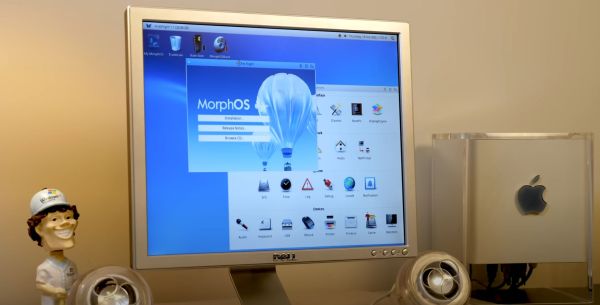
When it comes to modern operating systems for PowerPC-based systems like pre-Intel Macs, or other PowerPC-based systems like older or newer AmigaOS-compatible systems, there is an increasing lack of options. For 32-bit PPC, official Linux support has been dropped already, leaving only unofficial builds and of course AmigaOS as well as AmigaOS-like operating systems. So what do you do if you have a PPC-based Mac system lying around which you do not simply want to run the same old, unsupported copy of MacOS on? In a recent video, [Michael MJD] decided to give MorphOS 3.17 a shot on a Mac G4 Cube.

Originally created for the now-defunct Pegasos PPC-based series of computers and PPC accelerator cards for Amiga systems, MorphOS is based on the proprietary Quark microkernel, In its current release, it supports a range of G4 and G5-based Apple systems, as well as the AmigaOne 500 and X5000, with some asterisks. In addition to its own applications it supports AmigaOS applications, including those targeting the m68k architecture, via its JIT emulator.

A cursory look at the community shows that MorphOS finds use for being a fast and relatively up to date alternative OS for especially PPC-based Macs. The price tag of €79 per system (transferable to a new system) should offer some guarantee of continued development, which includes e.g. the Wayfarer browser for MorphOS, which is based on Webkit, but optimized for e.g. Altivec.

Although installing MorphOS went relatively smoothly for [Michael] (with just a monitor-related glitch), he did not try too much beyond an initial impression of the GUI and preinstalled applications. There is also a 30-minute timer on the trial version (resettable via reboot) that ended [Michael]’s look at this OS.

What do you run on your PPC-based machines, and have you used MorphOS? What are your thoughts on this OS?

Continue reading “MorphOS: A Modern Operating System For PowerPC”
Emulating All The TRS-80 Software

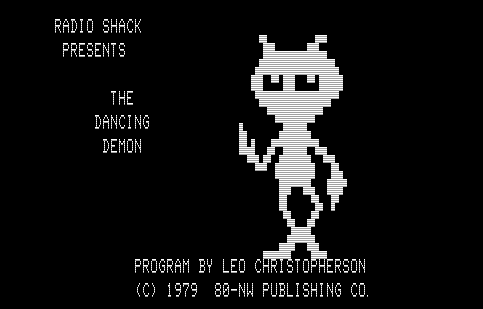
Even if you didn’t own a TRS-80, the widespread footprint of Radio Shack in malls meant that if you are old enough, it is a good bet you have seen one and maybe even played with one. The games were crude, but state-of-the-art for 1982. If you wanted business software, that was there too, just don’t expect much on any of the personal computers of the day. My old TRS-80 Model III doesn’t boot anymore and is waiting for me to find time to pull it apart. But it turns out you can run all those old programs with almost no effort. If you’ve experimented with emulators before, you know there are two major problems. First, you need to install the sometimes-fidgety emulator. Second, you need to find the software you want to run and probably convert it into some format the emulator will read. The website named The Big List of TRS-80 Software solves both problems.

You are probably thinking this doesn’t solve any problem because it is just a list of links to software. That’s a reasonable thing to think, but we think the website really needs a new name. There are 15,873 pieces of software on the site, although some of them are duplicates or multiple versions of a single program. You can download them in a format that is useful for some emulators or, in some cases, the original files. But here’s the kicker. You can also click to launch a virtual TRS-80 in your browser and start the program.

Sounds great, right? Well, for the most part, it is. However, some of the programs are finicky and don’t run well in the browser. There’s also the problem of finding the documentation, but you can’t have everything. If you want a quick run of a very common game from back in the day, try Flying Saucers. Continue reading “Emulating All The TRS-80 Software”

The Forgotten Commodore 900: A Look At A Rare Prototype

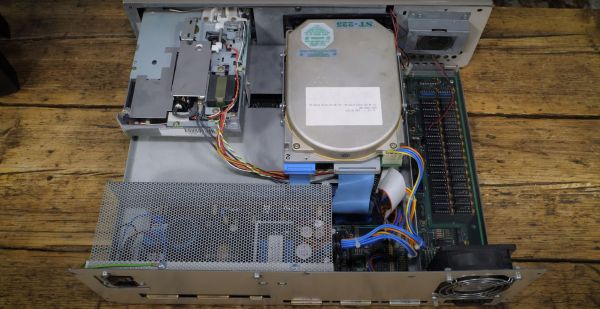
Of the computers produced and prototyped by Commodore, most people are likely well-acquainted with the PET, VIC-20, C64 and C128, as well as the never released Commodore 65. Of these systems many examples and plentiful of documentation exist, but probably among the most rare is the Commodore 900, as recently covered by [Neil] over at RMC – The Cave on YouTube. The Commodore 900, conceived in 1983, was intended to become a microcomputer based on the 16-bit Zilog Z8001 CPU that targeted businesses as a UNIX workstation.

Only fifty prototypes were ever built of the C900 and no hardware was ever sold, even though the intended UNIX-based OS (MWC’s Coherent) had already been ported to the Z8000 and the rumor mill suggested a release in 1984. Although UNIX workstations were rather popular during the 1980s — with HP and Sun featuring prominently in this market segment — Commodore was more known for its home computers, which probably played a major role in C900 development being cancelled. At the time Commodore was also in the process of acquiring Amiga, with the C900 perhaps unsurprisingly featuring similar design language as the Amiga 2000.

Perhaps ironically, the Z8000 CPU that features in the C900 had a bit of a tragic history as well. Although featuring a range of interesting features, such as the ability to use its registers as 8-, 16-, 32- or even 64-bit registers by combining them as needed. Although this and the general performance of the Z8000 made it a solid CPU, it could not compete against the Motorola 68000 and Intel 8086/8088 CPUs when those appeared on the market.

In the video, [Neil] takes us through a detailed history of the C900, its feature list and the hardware inside the C900 prototype he got his hands on. It’s a fascinating glimpse at a part of Commodore history where this company almost went toe to toe with Sun, HP and other workstation giants.

Continue reading “The Forgotten Commodore 900: A Look At A Rare Prototype”

Deep Dive Into The HP ScantJet 4C

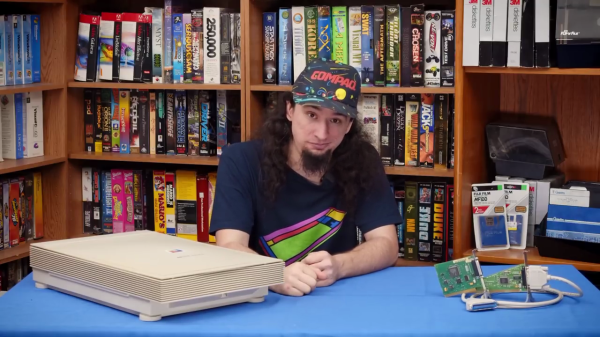
[Shelby] at Tech Tangents recently wrapped a project / obsession to obtain an old HP ScanJet 4C, get it running on a PC and put it through its paces. After after nearly five years, three scanners, and untold SCSI cards and drivers later, he finally succeeded. The first big problem was getting a working scanner. These don’t stand up well to shipping, and one arrived with broken mirrors. And when he finally got one that worked, sorting out SCSI controller and driver issues was surprisingly complicated, though ultimately successful.

The HP ScanJet 4C was introduced in 1995, and was notable for its scanning quality, its resolution ( 2400 DPI interpolated / 600 DPI optical ), and selling for under $1000. Except for replacement parts concerns, particularly the customized triphosphor fluorescent bulb assembly, it would still be a very competent scanner today. For this reason, [Shelby] will not be using it as his daily use scanner. Continue reading “Deep Dive Into The HP ScantJet 4C”

An Amiga Mouse, The Modern Way

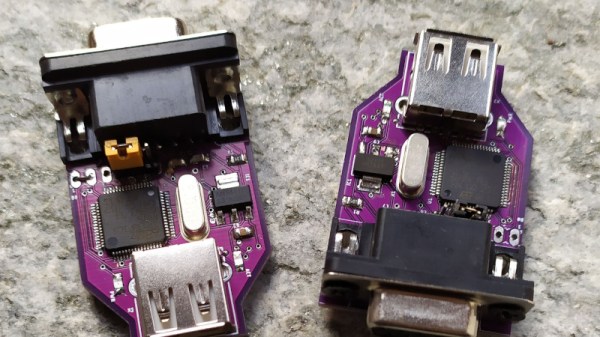
When we recently featured an Amiga upgrade project, [EmberHeavyIndustries ] was prompted to share one of their own, an adapter to allow a modern USB HID mouse to be used with the Commodore quadrature mouse port.

The first mice simply transferred the rotation of the ball through rollers to switches or optical sensors which passed pulse trains to the host computer. From the relative phase of these pulse trains the computer could work out what direction the mouse was going, as well as how far it had moved through counting the pulses. Since this was the simplest mouse interface, many of the 16-bit era machines used these signals. The PC meanwhile lacked such a port, so companies such as Microsoft had to place a microcontroller in the mouse to do the position sensing, and send the result over a serial interface. This evolved over time into the USB HID mouse interface you are probably using today.

Unfortunately for owners of quadrature mouse driven machines, real quadrature mice are a little thin on the ground these days, thus the adapter is a seriously useful device. At its heart is an STM32 microcontroller, and it’s been through a few updates and now supports mouse wheels. Your Amiga has been waiting for this!

There are quite a few other treats for Amiga enthusiasts in the EmberHeavyIndustries GitHub account, meanwhile here’s the video upgrade which caused us to receive the tip.

Travel The World Looking For Retro Tech, Virtually

For those who have a passion for vintage hardware, whether it be a classic computer or a war-surplus ham radio rig, finding the things without resorting to paying shipping fees on eBay can sometimes be tricky. Your best bet is to find a local fair or swap event, but it always seems they’re the kind of thing you find out about the weekend after they were held.

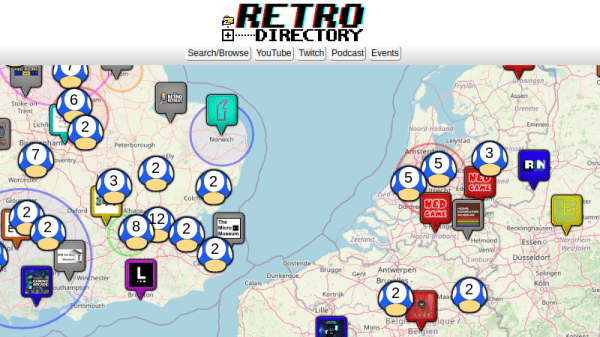
Looking to make these sort of events more visible and easier to keep track of, [RobSmithDev] has created the Retro.Directory. Scrolling your way across the globe you can see markers that indicate places of interest for the retro aficionado, such as museums, repair shops, and old school arcades, as well as upcoming events. Continue reading “Travel The World Looking For Retro Tech, Virtually”

Exploring The History Of EPROM In The Soviet Union

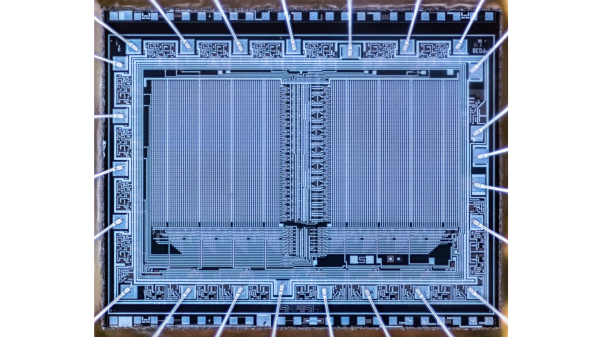
An article on the history of EPROMs in the Soviet Union by [Vladimir Yakovlev] over at The CPU Shack Museum caught our attention. It is part one of a series on the topic, and walks you through the earliest Soviet EPROMs families.

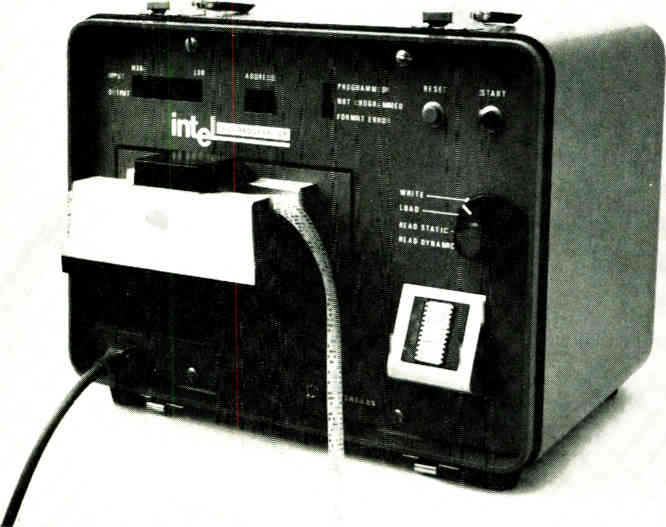
Early EPROM programmer using punched paper tape (Intel, Electronics Magazine 1971)

The first of which, from the 1970s, is the K505RR1 developed and manufactured in Kyiv, equivalent to the first-generation Intel 1702A. It could hold 2048 bits, organized as 256×8, and offered a whopping 20 reprogramming cycles and data retention of 5000 hours.

The narrative proceeds to introduce several subsequent generations, design facilities, manufacturing techniques, and representative chip examples. A few tidbits — unlike Western EPROMs, the Soviets managed to put quartz windows in plastic packages (see the KP573 family).

In addition to the common gray or white, they also used different terracotta colored ceramic packages. An odd ceramic flat-pack EPROM is shown, and also some EPROMs whose dies have been painted over and re-badged as OTP chips.

Intel began producing EPROMs in 1971 as reported by the inventor, Intel’s Dov Frohman-Bentchkowsky, in Electronics Magazine’s 10 May edition (pg 91). We learned, amongst other things, that the 1701 did not have a quartz window, but could still be erased by exposure to X-rays. A friendly word of warning — browsing electronics advertisements from 50 years ago can easily consume your entire morning.

Once the package is sealed, information can still be erased by exposing it to X radiation in excess of 5×10⁴ rads, a dose which is easily attainable with commercial X-ray generators.

To dig deeper, check out the CPU Shack’s write-up on the history of EPROMs in general, and a piece we wrote in 2014 about the history of home computers behind the Iron Curtain.