AirTag Has Hole Behind The Battery? It’s Likely Been Silenced

Apple AirTags have speakers in them, and the speaker is not entirely under the owner’s control. [Shahram] shows how the speaker of an AirTag can be disabled while keeping the device watertight. Because AirTags are not intended to be opened or tampered with, doing so boils down to making a hole in just the right place, as the video demonstrates.

By making a hole in just the right place, the speaker can be disabled while leaving water resistance intact.

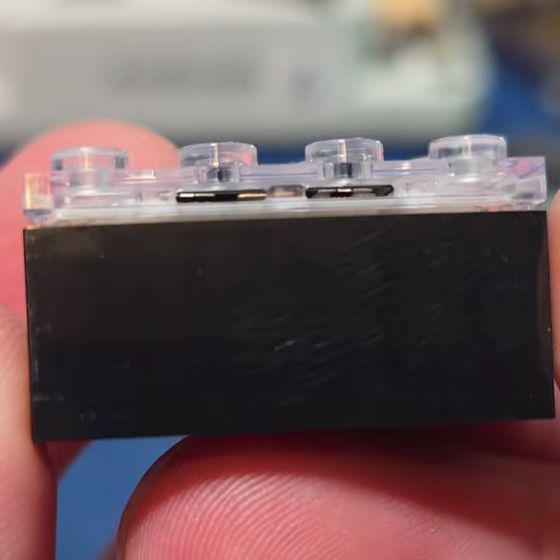
How does putting a hole in the enclosure not compromise water resistance? By ensuring the hole is made in an area that is already “inside” the seal. In an AirTag, that seal is integrated into the battery compartment.

Behind the battery, the enclosure has a small area of thinner plastic that sits right above the PCB, and in particular, right above the soldered wire of the speaker. Since this area is “inside” the watertight seal, a hole can be made here without affecting water resistance.

Disabling the speaker consists of melting through that thin plastic with a soldering iron then desoldering the (tiny) wire and using some solder wick to clean up. It’s not the prettiest operation, but there are no components nor any particularly heat-sensitive bits in that spot. The modification has no effect on water resistance, and isn’t even visible unless the battery is removed.

In the video below, [Shahram] uses a second generation AirTag to demonstrate the mod, then shows that the AirTag still works normally while now being permanently silenced.

Continue reading “AirTag Has Hole Behind The Battery? It’s Likely Been Silenced”

Performing An Autopsy On 15 Dead Battle Born LFP Batteries

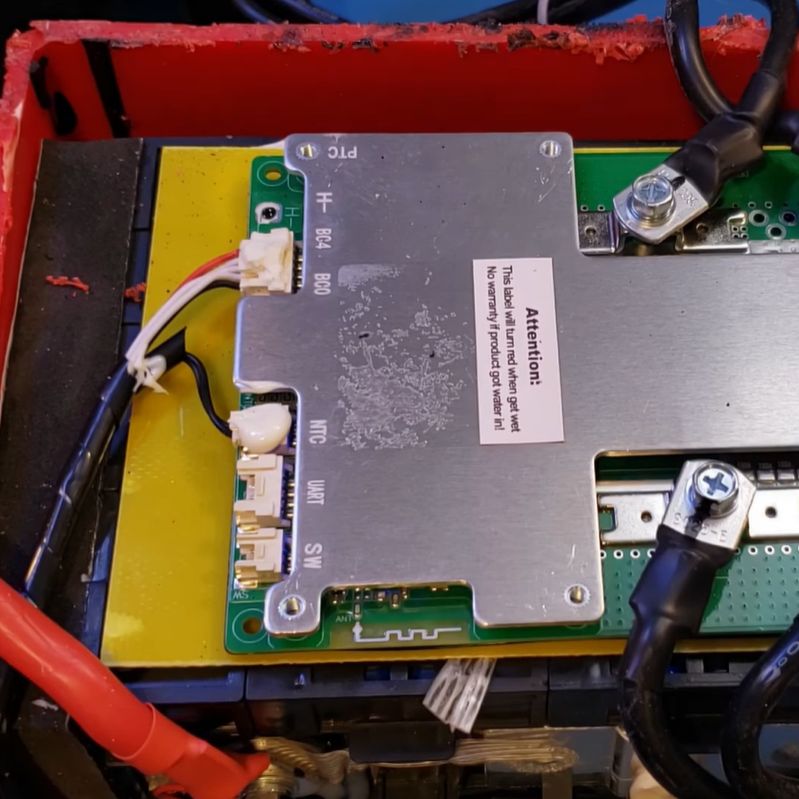
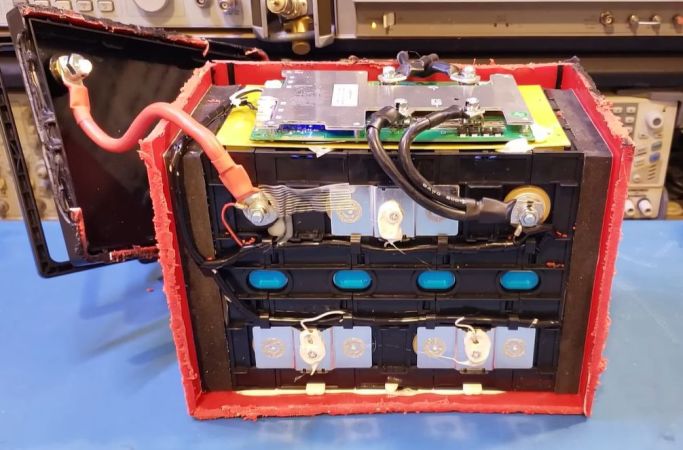
More molten plastic spacers between the bus bar and terminal. (Credit: Will Prowse)

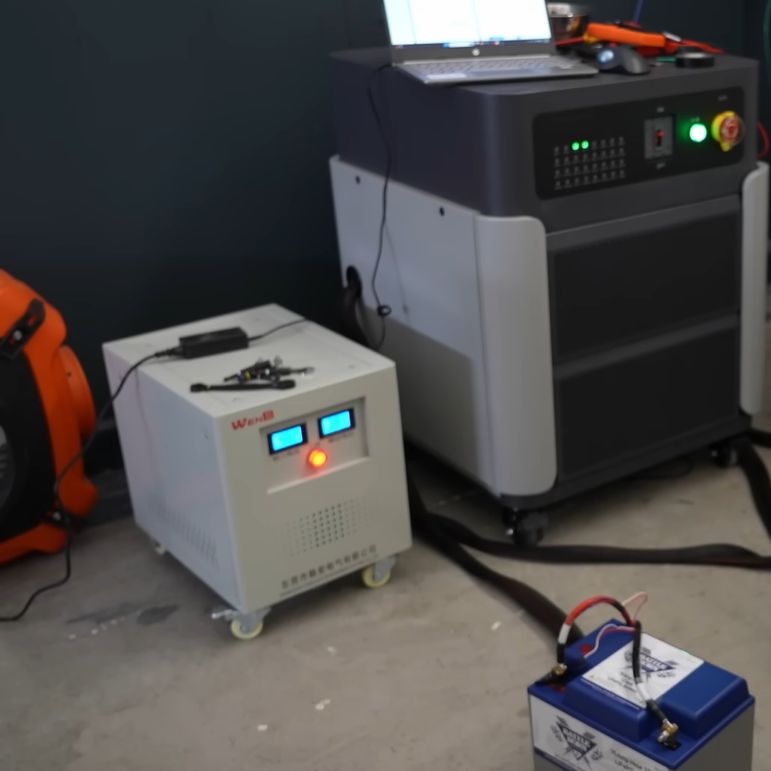
Because size matters when it comes to statistics, [Will Prowse] decided to not just bank on his handful of failed Battle Born LFP batteries when it came to documenting their failure modes. Instead he got a whole gaggle of them from a viewer who had experienced failures with their Battle Born LFP batteries for an autopsy, adding a total of 15 samples to the data set.

Interestingly, the symptoms of these dead batteries are all over the place, from a refusal to charge, some have the overheating terminal, some do not show any sign of life, others have charged cells but a non-responsive BMS, etc. As [Will] notes, it’s important to test batteries with a load and a charger to determine whether they are functional not just whether you can measure a charge.

Although some of the batteries still showed enough signs of life to be put aside for some load testing, the remaining ones were cut open to check their insides. This revealed the typical molten plastic at the terminals, but also a lot of very loose connections for the internal wiring. Another battery showed signs of corrosion inside, which could be due to either moisture intrusion or a cell having leaked its electrolyte.

While the full results will hopefully be released soon, the worrying thing about this latest batch of Battle Born LFP batteries is that they span quite a few years, with one being from 2018. Although it’s comforting that not every one of these batteries is necessarily going to catch on fire within its approximate 8-year lifespan, a lot seems to depend on exactly how you load and charge them, as [Will] is trying to figure out with the upcoming load testing. With the unit that he recently purchased for testing it turned out that lower currents actually made the melting problem much worse.

Between this video and the much awaited follow-up, [Will] actually got his hands on a troubled 300A-rated industrial Battle Born battery. During testing that one actually failed violently with a cell venting and the loose BMS rattling around in the case.

Continue reading “Performing An Autopsy On 15 Dead Battle Born LFP Batteries”

Inside A Fake Mean Well DIN-rail PSU

Looks just like the real deal in a dark cabinet. (Credit: Big Clive, YouTube)

These days, you can get fakes, bootlegs, and similar for just about anything. While a fake handbag isn’t such a big deal, in the case of a DIN-rail power supply, you’d better make sure that you got the real deal. Case in point, the fake ‘Mean Well’ DIN-rail PSU that [Big Clive] got his mitts on for a detailed analysis and teardown.

Even without taking a PSU apart there are often clear clues that you might be dealing with a fake, starting with the logo and the rest of the markings. Here it’s clear that the logo is designed to only appear to be the MW one at a quick glance, with the rest of the label being poorly copied English gibberish containing copious “unnecessary” double “quotes”.

So what do you get for £3-5 in this +12VDC, 1.25A rated PSU? Shockingly, the insides are actually quite decent and probably close to the genuine MW, with basic noise filtering, proper isolation, and apparently a real class-Y safety capacitor. Similarly, the chosen DK124 control IC is more than capable of the task, with a good circuit for the adjustable voltage control.

Continue reading “Inside A Fake Mean Well DIN-rail PSU”

Teardown Of An Apple AirTag 2 With Die Shots

There are a few possible ways to do a teardown of new electronics like the Apple AirTag 2 tracker, with [electronupdate] opting to go down to the silicon level, with die shots of the major ICs in a recent teardown video. Some high-resolution photos are also found on the separate blog page.

First we get to see the outside of the device, followed by the individual layers of the sandwiched rings of the device, starting with the small speaker, which is surrounded by the antenna for the ultrawide band (UWB) feature.

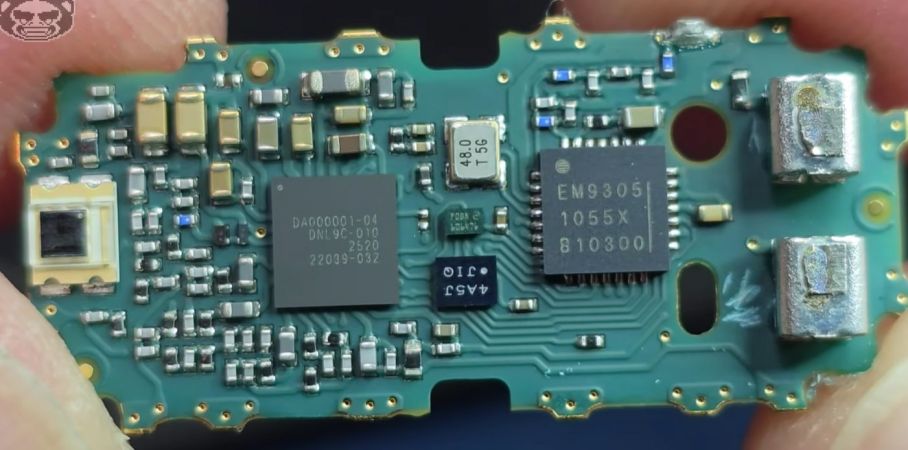
Next is the PCB layer, with a brief analysis of the main ICs, before they get lifted off and decapped for an intimate look at their insides. These include the Nordic Semiconductor nRF52840 Bluetooth chip, which also runs the firmware of the device.

The big corroded-looking grey rectangle on the PCB is the UWB chip assembly, with the die shot visible in the heading image. It provides the localization feature of the AirTag that allows you to tell where the tag is precisely. In the die analysis we get a basic explanation of what the structures visible are for. Basically it uses an array of antennae that allows the determination of time-of-flight and with it the direction of the requesting device relative to it.

In addition to die shots of the BT and UWB chips we also get the die shot of the Bosch-made accelerometer chip, as well as an SPI memory device, likely an EEPROM of some description.

As for disabling the speaker in these AirTag 2 devices, it’s nestled deep inside, well away from the battery. This is said to make disabling it much harder without a destructive disassembly, yet as iFixit demonstrated, it’s actually fairly easy to do it non-destructively.

Continue reading “Teardown Of An Apple AirTag 2 With Die Shots”

Inside A Sketchy Mains Voltage Touch Control Dimmer

In [Big Clive]’s recent grab bag of tat ordered from Chinese commerce platforms, there were two touch light control boxes that can turn any ungrounded conductive surface into a mains load dimmer control. Of course, the primary reason for the purchase was a teardown, and a teardown we got.

These unassuming little boxes are built around the Tontek TT6061A, listed as a ‘touch dimmer’, which uses a triac to control the output current. There are four levels, ranging from off to full brightness, before the next touch event turns the output off again.

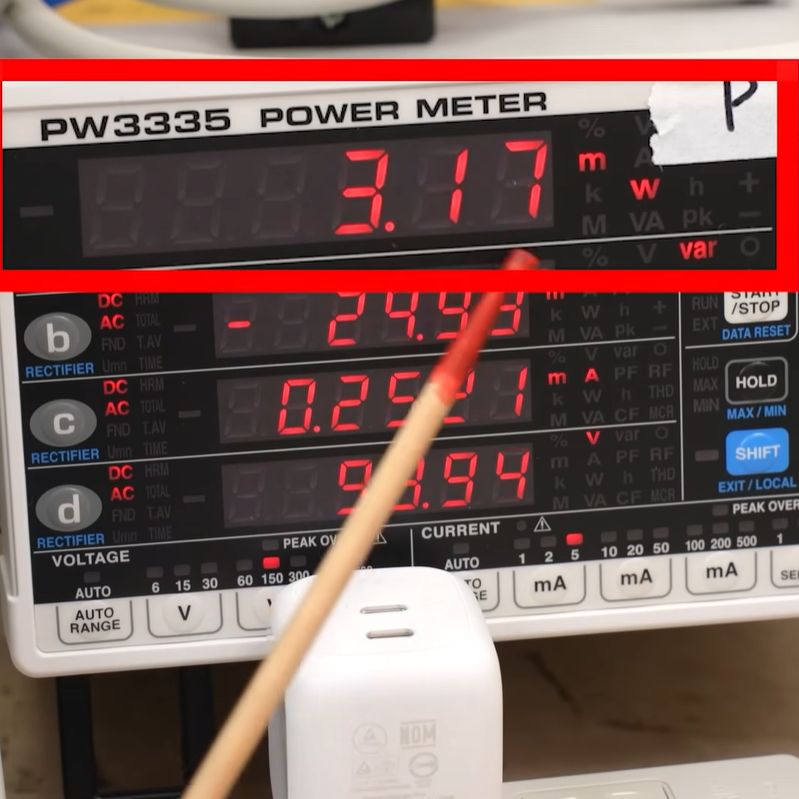
With the output off, [Clive] measured 0.7 W power usage. After popping open the plastic enclosure, the circuitry turned out to largely follow the recommended application circuit from the datasheet — as can be seen in the above screenshot — with apparently a few cost optimizations, in the form of omitted diodes and a capacitor.

The problem with these devices is that they are only really suitable for dimming low-power resistive loads like incandescent lights, with LED lights likely requiring the unpopulated capacitor spot on the PCB to be populated to tweak the chip’s triac timing, among other changes. There are also the slight issues with no real concern with them radiating EMI, and the exciting possibility of getting shocked at mains voltage without at least a class-Y capacitor installed.

Perhaps using a capacitive touch controller instead that works through plastic, for example, isn’t such a crazy alternative here, especially since they’re not really much more expensive and less likely to shock you. Want to create your own triac designs? We have just the post to get you started.

Continue reading “Inside A Sketchy Mains Voltage Touch Control Dimmer”

Vacuum Fluorescent Displays Explained

After having been sent a vacuum fluorescent display (VFD) based clock for a review, [Anthony Francis-Jones] took the opportunity to explain how these types of displays work.

Although VFDs are generally praised for their very pleasant appearance, they’re also relatively low-power compared to the similar cathode ray tubes. The tungsten wire cathode with its oxide coating produces the electrons whenever the relatively low supply voltage is applied, with a positively charged grid between it and the phosphors on the anode side inducing the accelerating force.

Although a few different digit control configurations exist, all VFDs follow this basic layout. The reason why they’re also called ‘cold cathode’ displays is because the cathode doesn’t heat up nearly as hot as those of a typical vacuum tube, at a mere 650 °C. Since this temperature is confined to the very fine cathode mesh, this is not noticeable outside of the glass envelope.

While LCDs and OLED displays have basically eradicated the VFD market, these phosphor-based displays still readily beat out LCDs when it comes to viewing angles, lack of polarization filter, brightness and low temperature performance, as LC displays become extremely sluggish in cold weather. Perhaps their biggest flaw is the need for a vacuum to work, inside very much breakable glass, as this is usually how VFDs die.

Continue reading “Vacuum Fluorescent Displays Explained”

Repair And Reverse-Engineering Of Nespresso Vertuo Next Coffee Machines

Well there’s your problem. (Credit: Mark Funeaux, YouTube)

Akin to the razor-and-blades model, capsule-based coffee machines are an endless grind of overpriced pods and cheaply made machines that you’re supposed to throw out and buy a new one of, just so that you don’t waste all the proprietary pods you still have at home. What this also means is a seemingly endless supply of free broken capsule coffee makers that might be repairable. This is roughly how [Mark Furneaux] got into the habit of obtaining various Nespresso VertuoLine machines for attempted repairs.

The VirtuoLine machines feature the capsule with a bar code printed on the bottom of the lip, requiring the capsule to be spun around so that it can be read by the optical reader. Upon successful reading, the code is passed to the MCU after which the brewing process is either commenced or cruelly halted if the code fails. Two of the Vertuo Next machines that [Mark] got had such capsule reading errors, leading to a full teardown of the first after the scanner board turned out to work fine.

Long story short and many hours of scrubbed footage later, one machine was apparently missing the lens assembly on top of the photo diode and IR LED, while the other simply had these lenses gunked up with spilled coffee. Of course, getting to this lens assembly still required a full machine teardown, making cleaning it an arduous task.

Unfortunately the machine that had the missing lens assembly turned out to have another fault which even after hours of debugging remained elusive, but at least there was one working coffee machine afterwards to make a cup of joe to make [Mark] feel slightly better about his life choices. As for why the lens assembly was missing, it’s quite possible that someone else tried to repair the original fault, didn’t find it, and reassembled the machine without the lens before passing the problem on to the next victim.

Continue reading “Repair And Reverse-Engineering Of Nespresso Vertuo Next Coffee Machines”