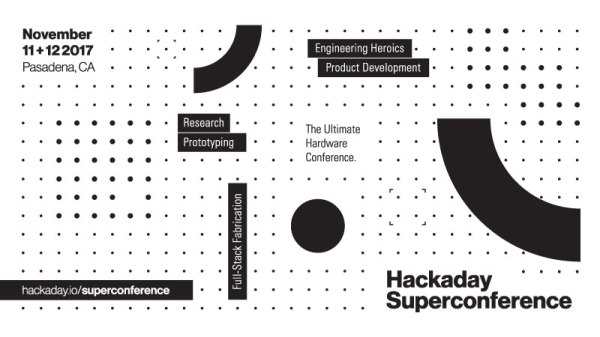
Our Call for Proposals for the Hackaday Superconference was scheduled to close yesterday. We are extending that deadline by one week so get your proposal for a talk or a workshop in now.
We want to leave no stone unturned and are intimately familiar with the procrastination habits of busy hackers like you. Now there is no excuse. Put together your pitch now and send it our way. This is the ultimate hardware conference and we’re topics covering Engineering Heroics (how you managed to pull it together to get across the finish line), Prototyping, Research (building custom rigs for University/private industry/giggles), Product Development, Full-Stack Fabrication, and anything else you think fits the vibe of Hackaday.
Accepted talks receive free admission and access to speaker events. There are travel stipends available for exemplary proposals. We also record talks for publication after the Superconference so this is a chance to be famous on Hackaday.
The Hackaday SuperConference is November 11-12, 2017 in Pasadena California. There are still tickets available but what remains will sell out quickly when the slate of speakers in announced. Don’t miss out, grab your ticket now.
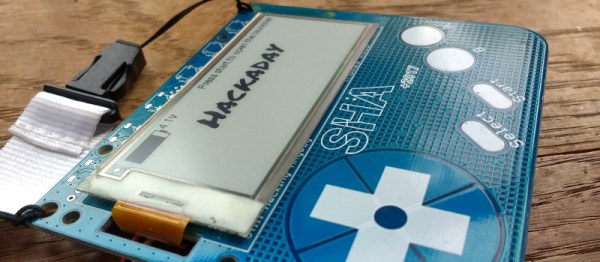
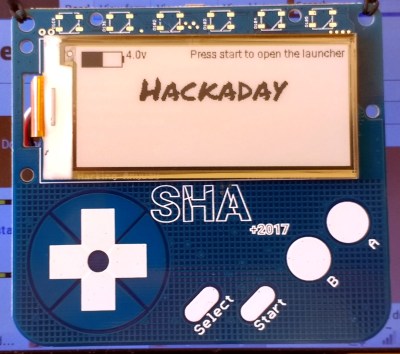
The badge has become one of the defining features of a modern hacker camp, a wearable electronic device that serves as both event computer and platform for some mild software and hardware hacking. Some events have had astoundingly sophisticated badges while others are more simple affairs, and the phenomenon has even spawned an ecosystem of unofficial badges which have nothing to do with the event in question.
The SHACamp 2017 badge is the latest to come the way of a Hackaday writer, and certainly contains enough to be taken as representative of the state of hacker camp badges in 2017. It doesn’t have a star turn like CCCCamp 2015’s software defined radio, instead it’s an extremely handy little computer in its own right.
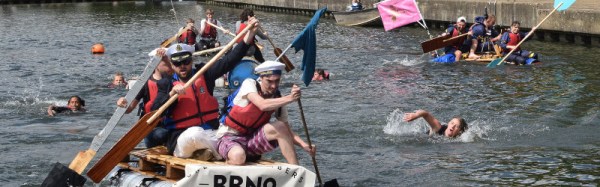
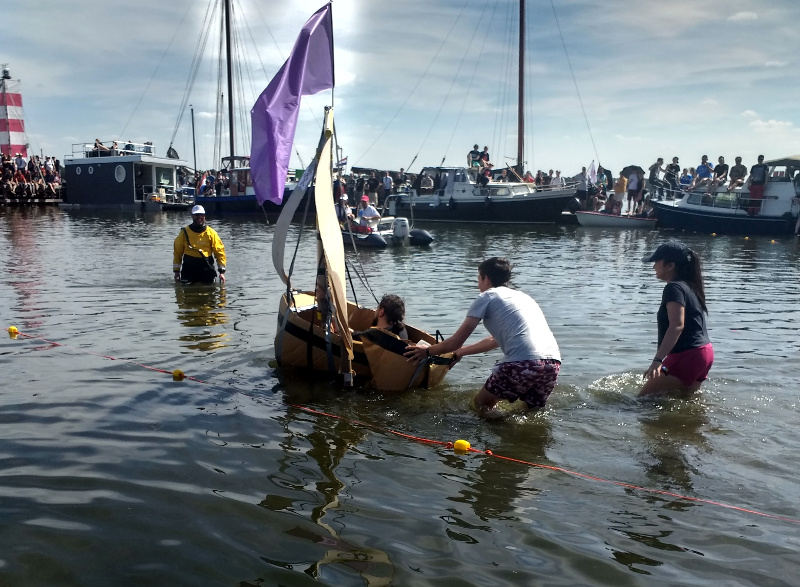
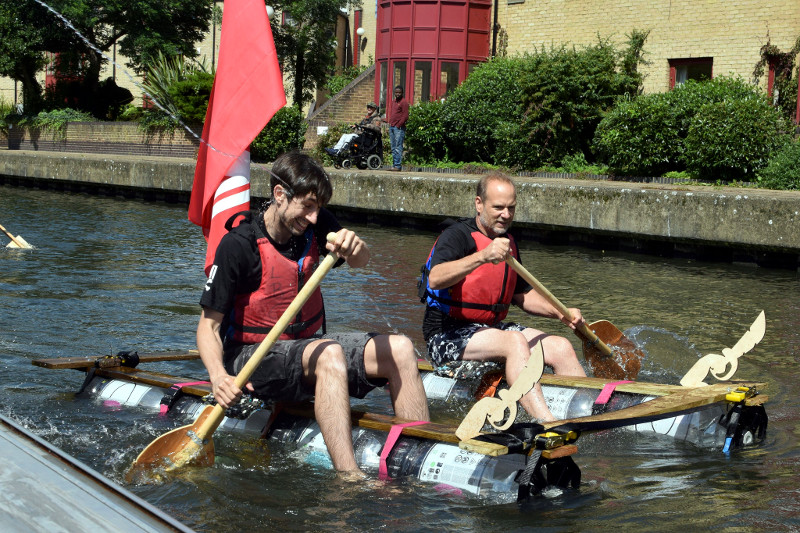
It’s the height of summer in the Northern Hemisphere, and hackers and makers everywhere are letting their hair down and enjoying the hot weather on the water. By coincidence last weekend there were two very different raft races in the European hackspace community, at the SHACamp2017 gathering in the Netherlands the villages competed in a cardboard raft race, while on the other side of the English Channel the various hackspaces in and around London came together in a raft race using more conventional materials.
Some of the SHA entries needed a little help.
The SHA race came about through the happy confluence of a surplus of disposable cardboard tents, a sunny afternoon, and the inviting waters of the Nuldemauw. The aim of the contest was for hacker camp villages to make it from the bank to the end of the boat dock, a distance of about 100m, in a boat made from cardboard there and then at the camp. Meanwhile the London spaces met at City Road Basin in London with their more robust watercraft for a series of races, the aim of which seems to have been to be the first to get their crew disembarked at the other end of the course. and sitting in a chair on the bank.
Full steam ahead for South London Makerspace. Toby *Spark (CC BY-NC-SA 2.0)
In both races the inventiveness of the entrants showed itself in a wide range of boat designs. As you might expect those craft with a wider beam fared better than the far less stable narrower ones, with capsizes a feature at each location. Clear winners in the Netherlands were a pair of German teenagers in a very stable wide raft, while in London it was South London Makerspace’s catamaran that scooped the crown. There is a video of the London race which we’ve placed below the break.
The hackspace and makerspace spirit is at its strongest when bonds are forged between members of different spaces. Skills and capabilities are shared, collaboration opportunities abound. The sight of a bunch of European makers getting wet might serve more as entertainment than edification, but behind it lies an important facet of hackspace culture. If you’ve not yet been the spaces closest to yours, do so. You never know, one day you might end up on a capsizing raft because of it.
Akiba sits at a very interesting intersection of technology and culture. He is well known for his experience with manufacturing in Shenzhen — but he has a few other unique dimension I’ll get to in a minute. His experience manufacturing in China goes far beyond the electronics you might expect and covers, well, everything that could possibly be made. His talk, Shenzhen in 30 Minutes, at last year’s Hackaday Superconference is a crash course in the area, the culture, and the business side of things.
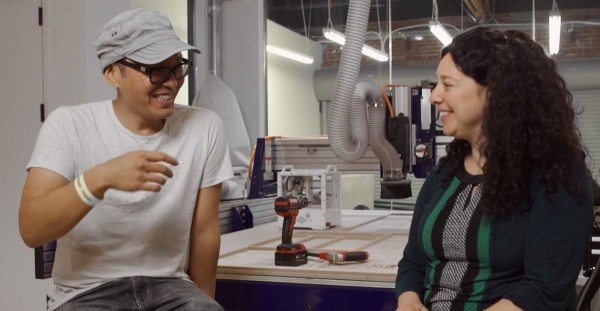
After his talk Sophi Kravtiz caught up with Akiba for an interview and it is surprising to learn that he was a bit nervous for the talk. Obviously he pulled it off without a hitch and we hope this inspires you to give a talk at the 2017 Hackaday Superconference in Pasadena on Nov 11 and 12. The call for proposals closes this Monday so spend some time this weekend and submit your proposal.
Now about those other dimensions. In the interview, Akiba and Sophi discuss two other areas where he has an incredibly unique viewpoint. The first is his founding of a hacker collective in the rural areas outside of Tokyo. Hacker Farm has been growing like crazy of the last three or four years. It seems that people come to visit and realize renting in the area is so cheap they can’t leave. This led to a culture boom around the camp; a self-feeding engine that attracts more visitors (and often visiting chefs who literally feed the group handsomely) and grows the collective.
They’re working on new applications of technology for farming in the area. One aspect of this is water level sensors for the rice farmers in the area which he wrote about at length for Hackaday. Wildlife turns out to be a huge challenge here — apparently spiders will exploit any hole or crevice to build a web which usually renders the sensor worthless. The group is also beginning experiments with the “three sisters” of gardening: corn, beans, and squash and plan to use this as a test bed for all kinds of agricultural automation.
Although touched on only briefly at the end of the interview, Akiba also works with wearable technology at an extreme level. He builds lighting and other interactivity into suits for the Wrecking Crew Orchestra. It’s always a treat to hear his experience dealing with wear and tear, communications latency, and a user interface for the dancers themselves.
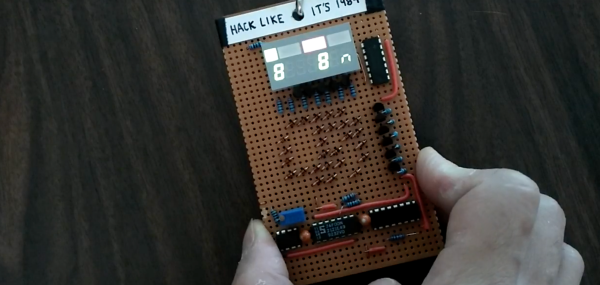
DEF CON 25’s theme was retro-tech, and [xres0nance] wasn’t kidding around in the retro badge he built for the convention. The badge was mostly built out of actual parts from the ’80s and ’90s, including the perfboard from Radio Shack—even the wire and solder. Of the whole project just the resistors and 555 were modern parts, and that’s only because [xres0nance] ran out of time.
[xres0nance] delayed working on the badge until his flight, throwing the parts in a box, and staggering to the airport in the midst of a “three-alarm hangover”. He designed the badge on the plane, downloading datasheets over in-flight WiFi and sketching out circuits in his notebook.
The display is from an old cell phone, and it uses a matrix of diodes to spell out DEFCON without the help of a microcontroller. Each letter is powered by a transistor, with specific pins blocked out to selectively power the segments. He used a shift register timed by a 555 to trigger each letter in turn, with the display scrolling the resulting message.
We publish a lot of posts about con badges. See our DEF CON 2015 badge summary for a bunch of badges that we encountered at in Vegas.
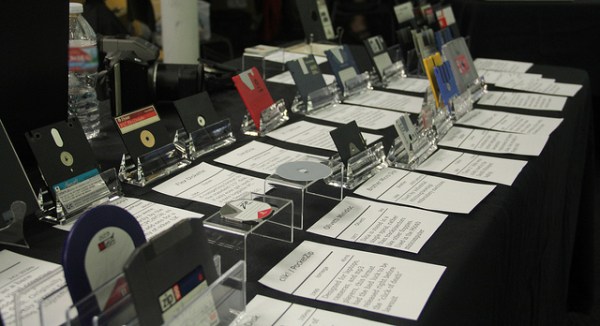
This past weekend, another smashing round of the Vintage Computer Festival was held at the Computer History Museum in Mountainview. As always, VCF West gathers the sages and lords of vintage computers onto a common ground to talk old-school hardware. It also draws in a collection of unique artifacts, many of which either still work, have been brought back to life, or have otherwise been reincarnated through a modern means. [Bil Herd] and I dropped in to join the crowd, and I snagged a few pics of some new faces and pieces that have been added to the experience since last year.
[Foone’s] Digital Media Archiving
Up first on our bucket list was [Foone], a librarian of digital media archiving. Outside of VCF, he runs a digital media backup gig to help folks backup their niche, often-failing, disk formats into something more modern. His drive for doing this backup features a special “reread” capability, where the file is actually reread dozens of time to validate that the right information was pulled from it.
At this point, it’s not really correct to describe DEF CON as a single, gigantic conference for security, tech, and other ‘hacky’ activities. DEF CON is more of a collection of groups hosting villages, get-togethers, meetups, and parties where like-minded individuals share their time, company, electronic war stories, and whiskey. One of the largest groups measured by the number of rideable, inflatable unicorns is Queercon, a ‘conference within a conference’ dedicated to LGBT causes, a rager of a party, and a killer conference badge.
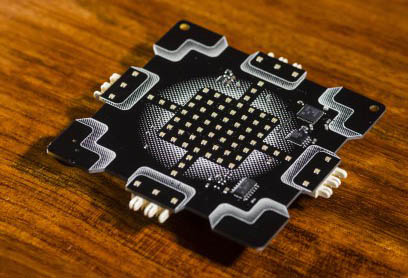
The Queercon badge is always a work of art, and this year is no exception. Last year, we took a look at an immaculate squid/cuttlefish badge, and a few years before that, the Queercon badge was a beautiful 3.5″ floppy embedded with far too many RGB LEDs. This year’s Queercon badge was equally as amazing, quite literally pushing badgecraft into another dimension. The folks behind the Queercon badge just wrote up their postmortem on the badge, and it’s an excellent example of how to push PCBs into the space of human interaction.
The development of the 2017 Queercon badge had a really tough act to follow. Last year’s Blooper squid/cuttlefish badge is a high point in the world of functional PCB art, and by January of this year, the team didn’t know where to take badgecraft next.
In the end, the QC badge team decided on a ‘failsafe’ design — it wasn’t necessarily going to be the best idea, but the design would minimize risk and development time.
A single 2017 Queercon badge
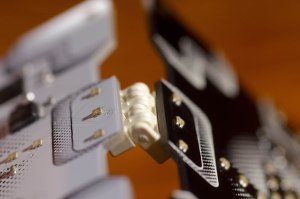
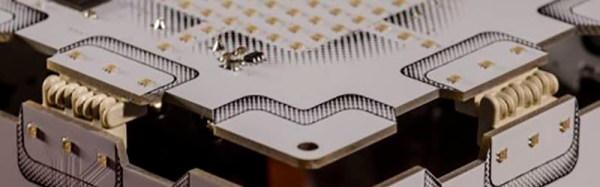
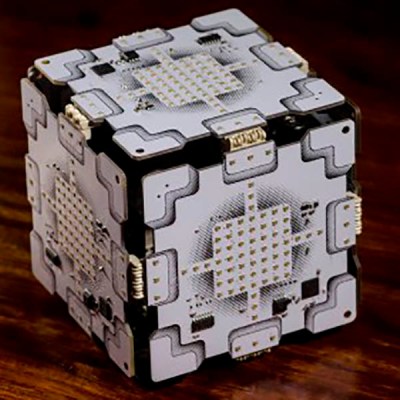
The two obvious features of this badge are an incredible number of tiny RGB LEDs, and very strange hermaphroditic edge connectors, allowing these badges to be plugged together into a panel of badges or a cube. What does this badge do? It blinks. If you have five friends, you can make something that looks like the Companion Cube from Portal.
Hardware
The killer feature for this badge is a vast array of RGB LEDs. Instead of going with WS2812s or APA101s, the Queercon badge team found simple, 0604 RGB LEDs, priced at about $0.026 a piece. There are 73 LEDs in total, all driven by the same TI LED driver used in previous years, combined with two shift registers and 15 FETs to control the LED commons. Although the LED driver is able to address all 219, and even though the badge is powered by a 32-bit ARM Cortex M3 microcontroller, this is pretty much the limit of how many LEDs can be controlled with this setup.
The Queercon badge always has a bit of interconnectedness built in, and this year is no exception. This year the badge uses a strange universal connector mounted along the four sides of the badge. When one badge is plugged into the other, they mate producing a ‘fabric’ of glowing badges. The range of motion on this connector allows for 180 degrees of rotation, but surprisingly most Queercon badge holders only assembled single planes of badges. It took a bit of cajoling from the badgemakers to get people to assemble a cube, and no other weird shapes were constructed out of multiple badges. If anyone likes this idea of interconnected badges, I would like to personally suggest equilateral triangles — this would allow for icosahedrons or hexagon-based solids.
A Game
A badge wouldn’t be complete without a game, and the Queercon badge has it in spades. The UI/UX/graphics designer [Jonathan] came up with a game loosely based on a game called ‘Alchemy’. Every badge comes loaded with a set of basic elements (air, fire, water, earth), represented as pixel art on the 7×7 RGB LED matrix. Combining these elements leads to even more elements — water plus fire equals beer, for example. Think of it as crafting in Minecraft, but with badges.
Starbucks was responsible for sponsoring a portion of Queercon this year, so ten special badges were loaded up with a fifth element: coffee. Elements derived from the coffee element required a Starbucks sponsor badge.
As we all expect from a DEF CON badge, there was a crypto challenge and contest. The full write up is available here, with the solution somewhat related to a cube of badges.
A Complete Success
When the badges came back from the fab house, the failure rate for this year’s Queercon badge was 0.7%. That’s an amazing yield for any independent hardware badge, and is honestly one of the most impressive aspects of this year’s Queercon. Failure modes during the con were probably related to spilling a drink on a badge, although there was a rash of failed CPUs. This is probably related to ESD, and during the con rework of failed badges was basically impossible because of drunk soldering in a dimly lit hotel room.
If there’s one failure of this year’s Queercon, it’s simply that it’s becoming too popular. From last year, Queercon saw 200% growth for the main party, which meant not everyone got a badge. That’s unfortunate, but plans are in the works for more inventory next year, providing DEF CON 26 isn’t cancelled, which it is. A shame, really.

 The badge has become one of the defining features of a modern hacker camp, a wearable electronic device that serves as both event computer and platform for some mild software and hardware hacking. Some events have had astoundingly sophisticated badges while others are more simple affairs, and the phenomenon has even spawned an ecosystem of unofficial badges which have nothing to do with the event in question.
 The Queercon badge is always a work of art, and this year is no exception. Last year, we took a look at