

[Peter Edwards] at Casper Electronics built a modular synth and integrated it with the Barbie karaoke machines we saw at Notacon last April. The complete unit consists of 25 modules which are wired together using banana cables. He’s using this homebrew step sequencer to control the bent karaoke machines which then feed into the rest of the synthesizer. If you’d like to bend your own barbie karaoke machine, [Peter] was kind enough to post schematics and instructions for his bends.
cons1427 Articles
Defcon 16: MIT Boston Transit Presentation Gagged
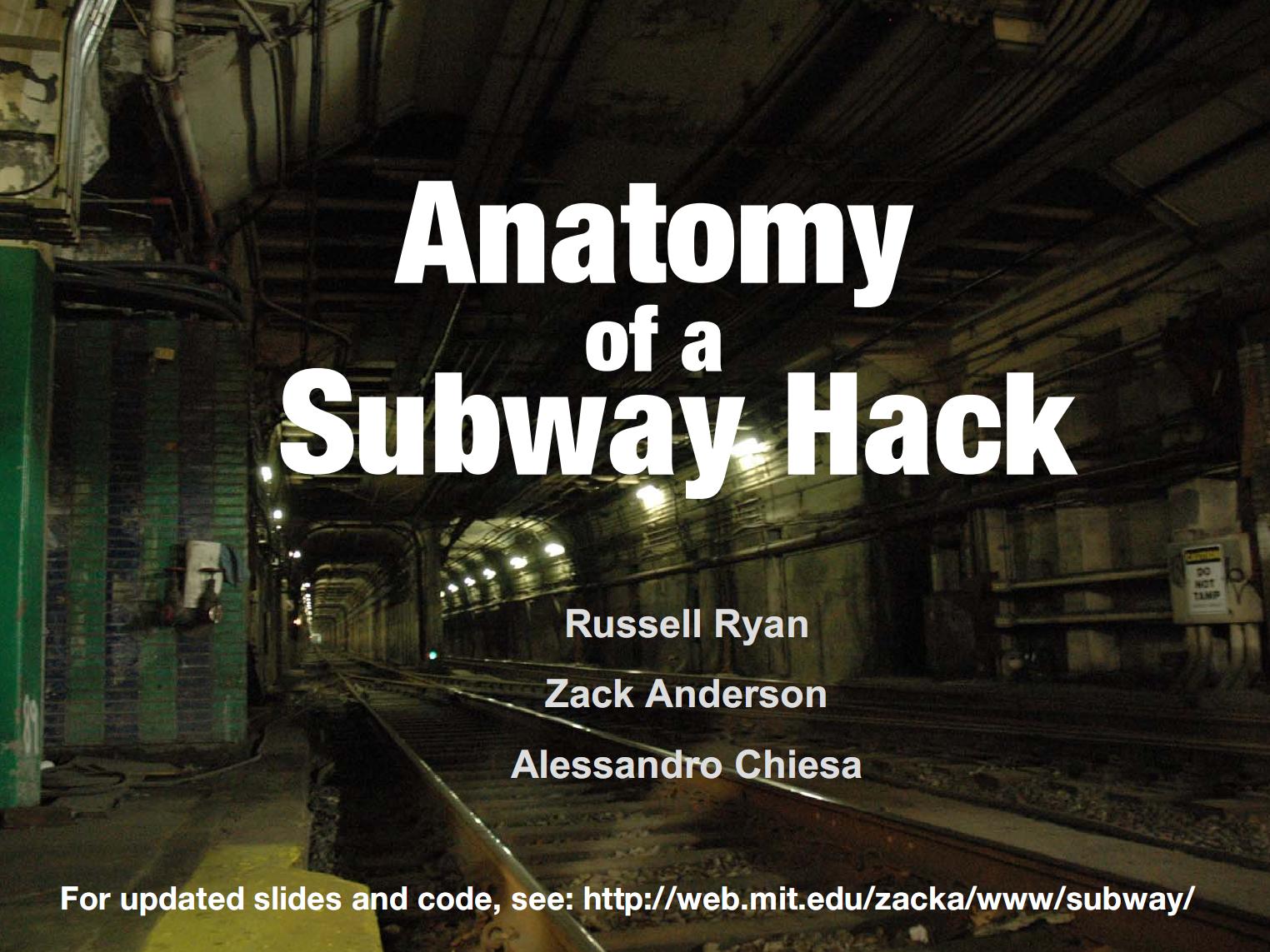
[Zack Anderson], [RJ Ryan], and [Alessandro Chiesa] were sued by the Massachusetts Bay Transit Authority for an alleged violation of the Computer Fraud and Abuse Act after copies of their presentation slides were circulated at Defcon 16. The slides give an eye widening glimpse into the massive security holes present in the Boston subway system. There are at least 4 major security flaws in the subway, which allowed them to get free subway rides by finding unlocked, back door routes into the subway, spoofing magnetic and RFID cards, and attacking the MTBA’s network. Judge Douglas P. Woodlock has issued a gag order, stopping the trio from giving the presentation at Defcon or disclosing sensitive information for ten days. However, the MIT school newspaper, The Tech, has published a PDF of the slides online. The research culminated in the trio warcarting the MTBA’s headquarters and being driven off by police.
Black Hat 2008: Pwnie Award Ceremony

The first night of Black Hat briefings concluded with the Pwnie Award Ceremony. The awards reward achievements in security… but mostly failures. Notably, this was the first year anyone accepted an award in person. Hack a Day took home an early victory by producing a MacBook mini-DVI to VGA adapter (pictured above). The ceremony was fairly straight forward after that. Best Server-Side Bug went to the Windows IGMP kernel vulnerability. It was a remote kernel code execution exploit in the default Windows firewall. The Best Client-Side Bug went to Multiple URL protocol handling flaws like this URI exploit. Mass 0wnage went to WordPress for many many vulnerabilities. Most Innovative Research went to the Cold Boot Attack team. Lamest Vendor Response was won by McAfee for saying XSS can’t be used to hack a server. The Most Overhyped Bug went to [Dan Kaminsky] for his DNS vulnerability. Most Epic FAIL was won by the team behind Debian for shipping the OpenSSL bug for two solid years. Lifetime Achievement Award was won by [Tim Newsham]. Finally, the Best Song was by Kaspersky Labs for Packin’ The K!, which you can find embedded below.
Black Hat 2008: FasTrak Toll System Completely Broken
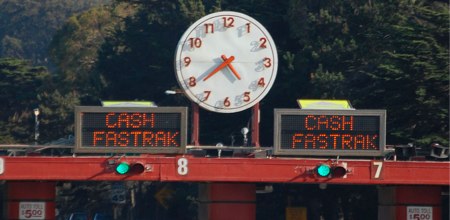
FasTrak is the electronic toll collection system used by the state of California. Motorists can purchase a toll transponder for ~$26 and link the serial number with a debit account to have their tolls deducted automatically. Today at Black Hat in Las Vegas, security researcher [Nate Lawson] presented not just the privacy problems with FasTrak, but why absolutely no transaction from the tag should be trusted.
Continue reading “Black Hat 2008: FasTrak Toll System Completely Broken”
Black Hat 2008: Dan Kaminsky Releases DNS Information

[Dan Kaminsky]’s much anticipated talk on his DNS findings finally happened at Black Hat 2008 in Las Vegas today. [Dan] has already uploaded the complete slides from his talk as well as posted a short summary to his site. New information in the slides since our previous coverage includes “Forgot My Password” attacks and new attacks on internal network vulnerabilities as a side of effect of DNS cache poisoning. [Dan]’s talk today was over capacity; our shot of the conference room overflow is shown above.
Defcon 16: Badge Details Released

Defcon will once again be one-upping the sophistication of the conference attendee badges. Wired has just published a preview of this year’s badge. The core is a Freescale Flexis MC9S08JM60 processor. The badge has an IR transmitter and receiver on the front plus eight status LEDs. On the back (pictured below), there is a mode select button, CR123A battery, Data Matrix barcode, and an SD card slot. You can add a USB port to the badge and upload code to it using the built in USB bootloader. All the dev tools needed will be included on the conference CD or you can download the IDE in advance. The low barrier to entry should lead to some interesting hacks. In previous years, you needed a special dongle to program the hardware. There is no indication as to what the badge does out of the box. Releasing the badge early is a first for Defcon and the one pictured isn’t the attendee color, but we’re sure someone will still come up with a clone.
Now comes the fun part: What do you think the best use of this badge will be? Would Defcon be so cavalier as to equip everyone in the conference with a TV-B-Gone? I think our favorite possibility is if someone finds a security hole and manages to write an IR based worm to take over all the badges.
Defcon 14 introduced the first electronic badge which blinked in different patterns. Defcon 15 had a 95 LED scrolling marquee. [Joe Grand] will be posting more specific Defcon 16 badge details to his site after the opening ceremony. Check out more high resolution photos on Wired.
The GIFAR Image Vulnerability

Researchers at NGS Software have come up with a method to embed malicious code into a picture. When viewed, the picture could send the attacker the credentials of the viewer. Social sites like Facebook and Myspace are particularly at risk, but the researchers say that any site which includes log ins and user uploaded pictures could be vulnerable. This even includes some bank sites.
The attack is simply a mashup of a GIF picture and a JAR (Java applet). The malicious JAR is compiled and then combined with information from a GIF. The GIF part fools the browser into opening it as a picture and trusting the content. The reality is, the Java VM recognizes the JAR part and automatically runs it.
The researchers claim that there are multiple ways to deal with this vulnerability. Sun could restrict their Virtual Machine or web applications could continually check and filter these hybrid files, but they say it really needs to be addressed as an issue of browser security. They think that it is not only pictures at risk, but nearly all browser content.
More details on how to create these GIFARs will be presented at this week’s Black Hat conference in Las Vegas.









