Sony Vaio Revived: How Does One Start?

A long-term project of mine is the the Sony Vaio new mainboard project. A year ago, I used it as an example to show you the cool new feature in KiCad 8, known as “background bitmaps”.

There are a heap of cool aspects to this specific Sony Vaio. It’s outrageously cute and purse-sized, the keyboard is nice enough for typing, motherboard schematics are available (very important!), and it’s not too terribly expensive. Of course, the most motivating aspect is that I happen to own one, its mainboard is not in the best state, and I’ve been itching to make it work.

It turned out to be a pretty complicated project, and, there was plenty to learn – way more than I expected in the beginning, too. I’m happy to announce that my v1 PCB design has been working wonders so far, and there are only a few small parts of it left untested.

I know that some of you might be looking to rebuild a lovely little computer of your choice. Hell, this particular laptop has had someone else rebuild it into a Pi-powered handheld years ago, as evidenced by this majestic “mess of wires” imgur build log! In honor of every hacker who has gotten their own almost-finished piece of hardware waiting for them half-assembled on the shelf, inside a KiCad file, or just inside your mind for now, let’s go through the tricks and decisions that helped make my board real.

Continue reading “Sony Vaio Revived: How Does One Start?”

It’s Critical: Don’t Pile Up Your Fissionable Material

Nuclear fission is a powerful phenomenon. When the conditions are right, atomic nuclei split, releasing neutrons that then split other nuclei in an ongoing chain reaction that releases enormous amounts of energy. This is how nuclear weapons work. In a more stable and controlled fashion, it’s how our nuclear reactors work too.

However, these chain reactions can also happen accidentally—with terrifying results. Though rare, criticality incidents – events where an accidental self-sustaining nuclear chain reaction occurs – serve as sobering reminders of the immense and unwieldy forces we attempt to harness when playing with nuclear materials.

Continue reading “It’s Critical: Don’t Pile Up Your Fissionable Material”

The Hovercraft Revolution And Finding The Right Niche For A Technology

In the world of transportation, some technologies may seem to make everything else appear obsolete, whether it concerns airplanes, magnetic levitation or propelling vehicles and craft over a cushion of air. This too seemed to be the case with hovercraft when they exploded onto the scene in the 1950s and 1960s, seemingly providing the ideal solution for both commercial and military applications. Freed from the hindrances of needing a solid surface to travel upon, or a deep enough body of water to rest in, hovercraft gave all the impressions of combining the advantages of aircraft, ships and wheeled vehicles.

Yet even though for decades massive passenger and car-carrying hovercraft roared across busy waterways like the Channel between England & mainland Europe, they would quietly vanish again, along with their main competition in the form of super fast passenger catamarans. Along the English Channel the construction of the Channel Tunnel was a major factor here, along with economical considerations that meant a return to conventional ferries. Yet even though one might think that the age of hovercraft has ended before it ever truly began, the truth may be that hovercraft merely had to find its right niches after a boisterous youth.

An example of this can be found in a recent BBC article, which covers the British Griffon Hoverwork company, which notes more interest in new hovercraft than ever, as well as the continued military interest, and from rescue workers.

Continue reading “The Hovercraft Revolution And Finding The Right Niche For A Technology”

Disc Film,When Kodak Pushed Convenience Too Far

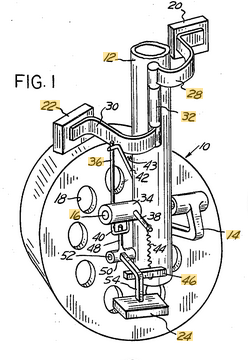
Having a penchant for cheap second-hand cameras can lead to all manner of interesting equipment. You never know what the next second-hand store will provide, and thus everything from good quality rangefinders an SLRs to handheld snapshot cameras can be yours for what is often a very acceptable price. Most old cameras can use modern film in some way, wither directly or through some manner of adapter, but there is one format that has no modern equivalent and for which refilling a cartridge might be difficult. I’m talking about Kodak’s Disc, the super-compact and convenient snapshot cameras which were their Next Big Thing in the early 1980s. In finding out its history and ultimate fate, I’m surprised to find that it introduced some photographic technologies we all still use today.

Easy Photography For The 1980s

Since their inception, Kodak specialised in easy-to-use consumer cameras and films. While almost all the film formats you can think of were created by the company, their quest was always for a super-convenient product which didn’t require any fiddling about to take photographs. By the 1960s this had given us all-in-one cartridge films and cameras such as the Instamatic series, but their enclosed rolls of conventional film made them bulkier than required. The new camera and film system for the 1980s would replace roll film entirely, replacing it with a disc of film that would be rotated between shots to line up the lens on an new unexposed part of its surface. Thus the film cartridge would be compact and thinner than any other, and the cameras could be smaller, thinner, and lighter too. The Disc format was launched in 1982, and the glossy TV adverts extolled both the svelteness of the cameras and the advanced technology they contained. Continue reading “Disc Film,When Kodak Pushed Convenience Too Far”

Finally Putting The RK1 Through Its Paces

The good folks at Turing Pi sent me a trio of RK1 modules to put through their paces, to go along with the single unit I bought myself. And the TLDR, if you need some real ARM processing power, and don’t want to spend an enterprise budget, a Turing Pi 2 filled with RK1s is a pretty compelling solution. And the catch? It’s sporting the Rockchip RK3588 processor, which means there are challenges with kernel support.

For those in the audience that haven’t been following the Turing Pi project, let’s recap. The Turing Pi 1 was a mini ITX carrier board for the original Raspberry Pi compute module, boasting 7 nodes connected with onboard Gigabit.

That obviously wasn’t enough power, and once Raspberry Pi released the CM4, the Turing Pi 2 was conceived, boasting 4 slots compatible with the Nvidia Jetson compute units, as well as the Raspberry Pi CM4 with a minimal adapter. We even covered it shortly after the Kickstarter. And now we have the RK1, which is an 8-core RK3588 slapped on a minimal board, pin compatible with the Nvidia Jetson boards. Continue reading “Finally Putting The RK1 Through Its Paces”

A Brief History Of Teleportation

OK, I know. We don’t have practical teleportation. But that hasn’t stopped generations of science fiction authors and movie makers from building stories around it. If you ask most ordinary people, they’d tell you the idea originated with the Star Trek transporter, but that’s far from the truth. So when did people start thinking about teleporting?

Ground Rules

Maybe it isn’t fair, but I will draw the line at magic or unexplained teleportation. So “The Tempest”, for example, doesn’t use technology but magic. To get to Barsoom, John Carter wished or slept to teleport to Mars. So, while technology might seem like magic, we’re focusing on stories where some kind of machine can send something — usually people — to somewhere else.

Of course, there’s a fine line between pure magic and pure technology where they overlap. For example, in the opera “Der Ring des Nibelungen”, a magic helmet gives people powers, including that of teleportation. While you could argue that Tarnhelm — the name of the magic helmet — was a technological artifact, it is still explained by magic, not science.

Some systems need a transmitter and a receiver. Sometimes, you only need the transmitter. Sometimes, you can only teleport within a limited range, but other make-believe systems can transport an entire starship across the galaxy.

Early Teleporters

The Man without a Body is a story from 1877 in which a scientist is able to transmit a cat via a telegraph wire. Encouraged, he attempts the same feat with himself, but the battery dies in the middle, leaving him with a disembodied head. The ending is decidedly devoid of science, but the story is possibly the earliest one with a machine sending matter across a distance.

Continue reading “A Brief History Of Teleportation”

The London Underground Is Too Hot, But It’s Not An Easy Fix

The London Underground is an iconic piece of Victorian era engineering. What started in 1863 quickly became a core piece of infrastructure that would define the modern character of the British capital. It’s grown and changed immensely in the many years that have passed. Sadly, increasing patronage and more trains have created problems that the original designers never envisaged.

Deep in those London tunnels lies an engineering challenge. The Tube is literally cooking itself. Every day, millions of commuters descend into a network of tunnels that have been absorbing heat since the reign of Queen Victoria. Those clay-lined tubes have been soaking up excess thermal energy like a giant underground radiator, and now they’re giving it back with interest. The tunnels are simply too hot, and cooling them down is inordinately difficult.

The Perfect Storm of Thermal Chaos

The Tube’s heat problem isn’t just about one thing gone wrong – it’s about everything gone wrong at once. When Victorian engineers designed these tunnels, cooling wasn’t a major consideration. The tight, compact tunnels were built deep, nestled in the clay beneath London. In the early days, temperatures in the Underground were considered comfortably low.

“The Underground’s the only spot for comfort when the days are hot; it is cooler below.” – London Underground poster, 1926

Originally, the clay surrounding the tunnels sat at around 14°C, acting as a heat sink for the network. However, over the years, with more trains coming and going and more heat pouring in, the temperature has risen. It now typically sits anywhere from 19° to 26 °C. That’s just the earth around the tunnels, though. Air temperatures are worse—hitting as high as 47°C during a 2006 heatwave. The problem has been a continual bugbear of the beloved Tube, with concerns that future heatwaves could see temperatures rise ever higher. Continue reading “The London Underground Is Too Hot, But It’s Not An Easy Fix”