Metallurgist working by the blast furnaces in Třinec Iron and Steel Works. (Credit: Třinecké železárny)

We Already Live In A Hydrogen Economy: Steel Production, Generator Cooling, And Welding Gas

Although generally hydrogen is only mentioned within the context of transportation and energy storage, by far the most useful applications are found in industrial applications, including for the chemical industry, the manufacturing of steel, as well as that of methanol and fertilizer. This is illustrated by how today most of all hydrogen produced today is used for these industrial applications, as well as for applications such as cooling turbo generators, with demand for hydrogen in these applications rapidly increasing.

Currently virtually all hydrogen produced today comes from natural gas, via steam methane reformation (SMR), with potentially methane pyrolysis making natural gas-derived hydrogen a low-carbon source. The remainder of hydrogen comes from coal gasification and a small fraction from electrolysis of water. The hydrogen is often produced on-site, especially at industrial plants and thermal power plants. So aside from any decarbonization efforts, there are many uses for hydrogen which the public appears to be generally unaware of.

This leads us to the somewhat controversial hydrogen ladder.

Continue reading “We Already Live In A Hydrogen Economy: Steel Production, Generator Cooling, And Welding Gas”

NASA’s Voyager Space Probe’s Reserve Power, And The Intricacies Of RTG-Based Power Systems

Launched in 1977, the Voyager 1 and 2 space probes have been operating non-stop for over 45 years, making their way from Earth to our solar system’s outer planets and beyond. Courtesy of the radioisotope thermoelectric generators (RTGs) which provided 470 W at launch, they are able to function in the darkness of Deep Space as well as they did within the confines of our Sun-lit solar system. Yet as nothing in the Universe is really infinite, so too do these RTGs wear out over time, both from natural decay of their radioactive source and from the degradation of the thermocouples.

Despite this gradual drop in power, NASA recently announced that Voyager 2 has a hitherto seemingly unknown source of reserve power that will postpone the shutdown of more science instruments for a few more years. The change essentially bypasses a voltage regulator circuit and associated backup power system, freeing up the power consumed by this for the scientific instruments which would otherwise have begun to shut down years sooner.

While this is good news in itself, it’s also noteworthy because the Voyager’s 45+ year old Multi-Hundred Watt (MHW) RTGs are the predecessor to the RTGs that are still powering the New Horizons probe after 17 years, and the Mars Science Laboratory (Curiosity) for over 10 years, showing the value of RTGs in long-term exploration missions.

Although the basic principle behind an RTG is quite simple, their design has changed significantly since the US put a SNAP-3 RTG on the Transit 4B satellite in 1961.

Continue reading “NASA’s Voyager Space Probe’s Reserve Power, And The Intricacies Of RTG-Based Power Systems”

Barcodes Enter The Matrix In 2027

Beep. We’ve come a long way since June 26, 1974 when the first bar code was scanned at a grocery store in Troy, Ohio. That legendary pack of Juicy Fruit proved that even the smallest of items could now carry numbers associated with inventory and price.

By now, we’re all too familiar with this sound as self-checkouts have become the norm. Whereas you yourself could at one time literally check out during the transaction, you must now be on your toes and play find the bar code on every item.

What does the consumer gain from the bar code today? Practically nothing, except the chance to purchase, and potentially return, the item without too much hassle. Well, the non-profit outfit that runs the bar code world — GS1 US — wants to change all that. By 2027, they are confident that all 1D bar codes will be replaced with 2D bar codes similar to QR codes. Why?

Continue reading “Barcodes Enter The Matrix In 2027”

FET: Fun Endeavors Together

Last time, we’ve looked over FET basics, details, nuances and caveats. Basics aren’t all there is to FETs, however – let’s go through real-world uses, in all their wonderful variety! I want to show you a bunch of cool circuits where a friendly FET, specifically a MOSFET, can help you – and, along the way, I’d also like to introduce you to a few FETs that I feel like you all could have a good long-term friendship with. If you don’t already know them, that is!

Driving Relays

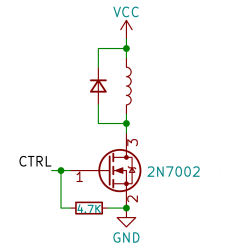
Perhaps, that’s the single most popular use for an NPN transistor – driving coils, like relays or solenoids. We are quite used to driving relays with BJTs, typically an NPN – but it doesn’t have to be a BJT, FETs often will do the job just as fine! Here’s an N-FET, used in the exact same configuration as a typical BJT is, except instead of a base current limiting resistor, we have a gate-source resistor – you can’t quite solder the BJT out and solder the FET in after you have designed the board, but it’s a pretty seamless replacement otherwise. The freewheel (back EMF protection) diode is still needed for when you switch the relay and the coil produces wacky voltages in protest, but hey, can’t have every single aspect be superior.


The reason you can drive it the same way is quite simple: in the usual NPN circuit, the relay is driven by a 3.3 V or a 5 V logic level GPIO, and for small signal FETs, that is well within Vgs. However, if your MCU has 1.8 V GPIOs and your FET’s Vgs doesn’t quite cut it, an NPN transistor is a more advantageous solution, since that one will work as long as you can source the whatever little current and the measly 0.7 V needed.

Continue reading “FET: Fun Endeavors Together”

Getting Ready For Act 2 Of The Great American Eclipse

It seems like only yesterday that the “Great American Eclipse” swept from coast to coast, and for those who were lucky enough to watch it from along the path of totality, it was a true life experience. No natural phenomenon can compete with the beauty of a total solar eclipse, and if there’s one thing I heard more than anything else in those golden moments after the Sun returned from behind the Moon, it was, “When’s the next one?” Everyone wanted to do it again, and for good reason.

Back in 2017, that question was kind of rhetorical; everyone knew the next eclipse to cross the United States was a mere seven years off. For me personally, the passage of time has not dampened my enthusiasm for eclipses one bit, and I suspect the feeling is mutual among the many people who gazed in wonder and childlike glee at the celestial proceedings of 2017. But except for the very lucky who live within the path of totality, mounting an expedition that optimizes the viewing experience takes preparation. Now that we’re a little less than a year away for the next one, it’s time to get geared up and make plans for the 2024 eclipse.

Where and When?

The 2017 eclipse’s “Great American Eclipse” moniker was well earned, as the continental United States was the sole beneficiary of the view. This time around, the US isn’t the only country along the path; Mexico and Canada will also get in on the fun. In fact, Mexico may well be the best place to watch the eclipse from, but more on that later. Continue reading “Getting Ready For Act 2 Of The Great American Eclipse”

My Great-Great-Grandad, The Engineer Who Invented A Coffee Pot

In the study of genealogy it’s common to find people who will go to great lengths involving tenuous cross-links to establish royalty or famous figures such as George Washington or William Shakespeare in their family tree. There’s no royal blood and little in the way of fame to be found in my family tree, but I do have someone I find extremely interesting. One of my great-great-grandfathers was a Scottish engineer called James R Napier, and though his Wikipedia entry hasn’t caught up with this contribution to 1840s technology, he was the inventor of the vacuum coffee pot.

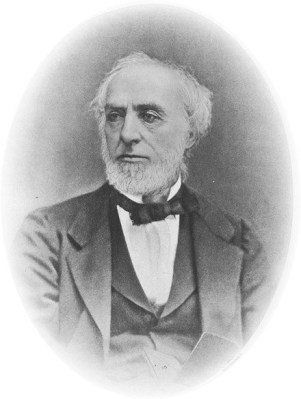
James R NapierHe was born in Glasgow in 1821 and was the son of a successful shipbuilder, Robert Napier, into whose business he followed once he’d received his education. He’s probably most well known today for his work in nautical engineering and for inventing Napier’s Diagram, a method for computing magnetic deviance on compass readings, but he was also a prolific engineer and author whose name crops up in fields as diverse as air engines, weights and measuresdrying timber, and even the analysis of some dodgy wine. The coffee percolator was something of a side project for him, and for us it’s one of those pieces of family lore that’s been passed down the generations. It seems he was pretty proud of it, though he never took the trouble to patent it and and thus it was left to others to profit from that particular invention.

Vacuum Coffee Pots: Impressive, But Slooow

Just what is a vacuum coffee pot, and what makes it special? The answer lies in the temperature at which it infuses the coffee. We take for granted our fancy coffee machinery here in the 21st century, but a century and a half ago the making of coffee was a much simpler and less exact process. Making coffee by simply boiling grounds in water can burn it, imparting bitter flavours, and thus at the time a machine that could make a better cup was seen as of some importance. Continue reading “My Great-Great-Grandad, The Engineer Who Invented A Coffee Pot”

Your Guide To Using Amazon’s Sidewalk Network For The Internet Of Things

As the Internet of Things became a mainstream reality, it raised an interesting point about connectivity. We quickly learned it wasn’t ideal to have every light bulb, toaster, and kettle buzzing away on our main WiFi networks. Nor was it practical to sign up for a cellular data plan for every tracker tag or remote sensor we wanted to use.

To solve this issue, various tech companies have developed their own low-power mesh networking solutions. Amazon’s Sidewalk network is one of the widest spread in the US. Now, it’s opening it up for wider use beyond its own products, and you can get in on the action.

Continue reading “Your Guide To Using Amazon’s Sidewalk Network For The Internet Of Things”