Ask Hackaday: Open Fire Suppression And Safety Standards

We posted about a 3D printer fire a while back. An attendee of the Midwest RepRap Fest had left his printer alone only to find its immolated remains on his return. In the spirit of open source, naturally, he shared his experience with the rest of us. It occurred to me that hackers are never powerless and there are active things to be done and avenues to explore.
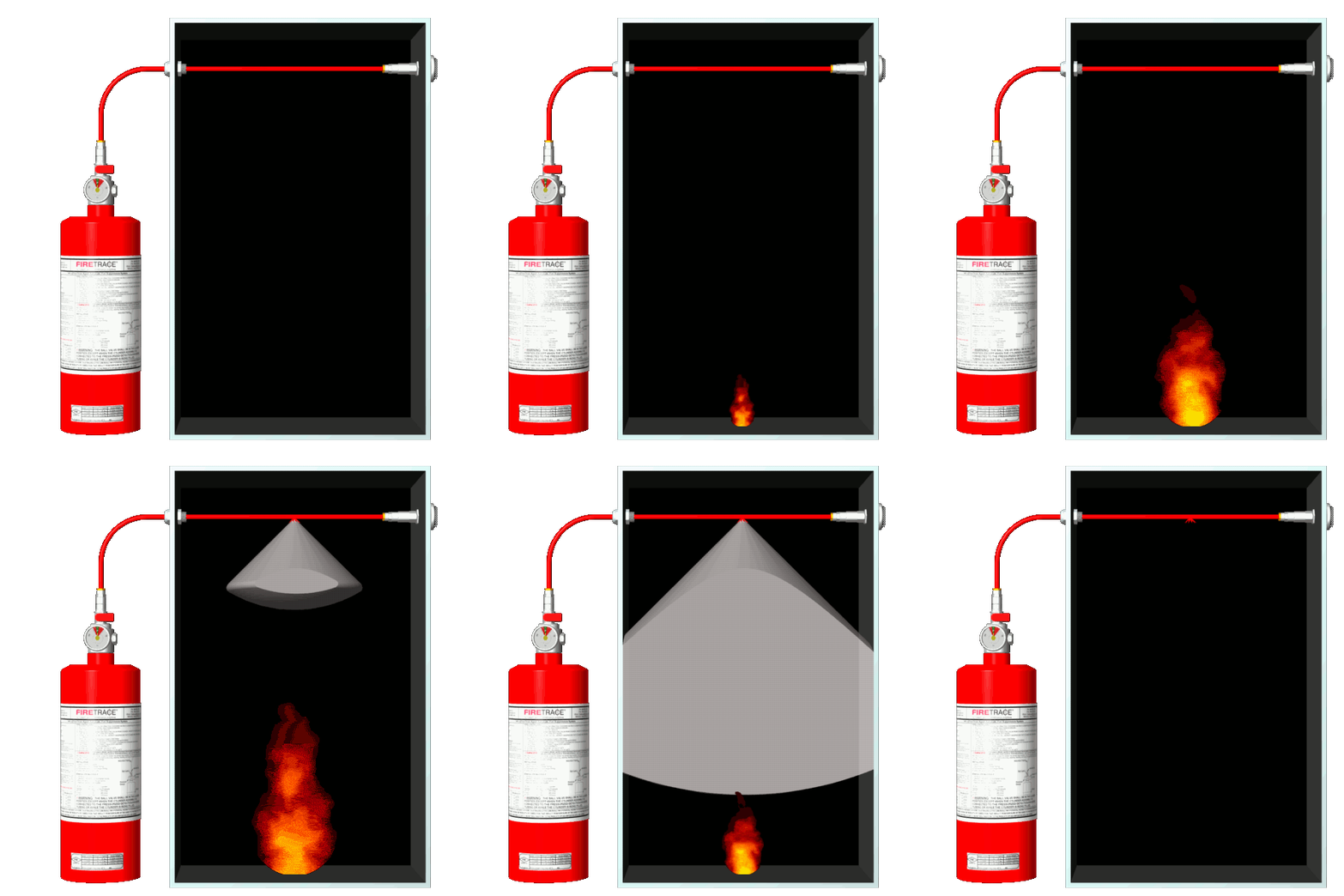
An animation of a commercial fires suppression system, fire trace's, operation. http://www.firetrace.com/fire-suppression-systems/direct-release-systems/
An animation of a commercial fires suppression system, fire trace’s, operation. Firetrace‘s website has more.

There are really fantastic commercial fire extinguishing systems out there. One implementation, which is commonly deployed in cabinets and machining centers, is a plastic tube pressurized with an extinguishing agent by a connected tank. When a fire breaks out the tube melts at the hottest locations, automatically spraying the area with a suppressant. Variations of this involve a metal nozzle filled with a wax or plastic blended to melt at a certain temperature, much like the overhead fire sprinklers.

This system is also used inside engine compartments with success. For example, this item on amazon, is nothing but a pressurized plastic tube with a gauge on one end. Since the inside of an engine compartment can be treated as an enclosed space, very little fire suppressant is needed to extinguish an unexpected flame. It is important to note that this system works in a high temperature environment like an engine compartment, which bodes well for enclosed build envelopes on 3D printers.

BlazeCut Automatic Fire Suppression System 6' TV200FA, Automotive Extinguisher
BlazeCut Automatic Fire Suppression System 6′ TV200FA, Automotive Extinguisher Installed under Car Hood.

Another option is to construct a suppressant mine. A Japanese and a Thai company have both come out with a throwable fire extinguisher. In the Japanese device, the outside of the extinguisher is a breakable glass vial which shatters upon impact; releasing the agent. The Thai device looks like a volley ball, and releases the agent upon the application of heat. This device seems like a better candidate for 3D printing or home projects. Imagine a small rectangular pack with adhesive on one side that sits near the possible fire points of the printer, such as under the bed or above the nozzle. In the event of a fire, the casing will melt and the system will automatically deploy a spray of extinguishing agent.

Most of the chemicals used in these constructions are benign and readily available. High pressure tubing and waxes can all be purchased and the desired melt points can be aligned with their datasheets by need. Plastic sheets are not hard to procure. These offer a nice solution due to their entirely passive nature. They don’t need power to operate and rely entirely on the properties of the materials they are constructed out of.

There are other options in active systems. Hackaday readers suggested things such as flame sensors for adding automatic cut-offs in case of a fire. Thermal fuses can also be considered in some cases. There are other tricks too, which are less kosher but will work nonetheless. For example, placing a critical wire, fuse, or component in the likely path of a fire so that it is destroyed first, stopping the operation of the device quickly. These avenues should be explored. At minimum there should be at least one project that uses a Raspberry Pi and an Arduino to tweet that fire suppression failed and the house is on fire.

fire-extinguishing-balls
The Thai invention is a volleyball that melts upon contact with flame and releases a pressurized extinguishing agent.

Some of the big questions to ask are on the legal and ethical side. If someone started selling kits for a DIY fire suppression system and a fire ends up destroying someone’s property despite the device, who is responsible? Is it even safe to post instructions? What if a kit prematurely sets off and injures someone. I imagine a big part of the cost of these professional systems is some sort of liability insurance and certification. Still, putting a six hundred dollar fire suppression system on a six hundred dollar printer seems silly, and something is better than nothing.

Lastly, the comments directed a ton of flak towards the certification systems. There should be no reason that open source projects can’t produce their own specification for safety. An open source specification without an agency naturally couldn’t provide a legal defense against property damage, but a thought-out test program would provide piece of mind. For example, in the case of 3D printers, one could have a set of basic fail-safe tests. One example would be bringing the printer up to temperature and rapidly disconnecting the thermistor, does the printer erupt into fire? No? Good, it meets the spec. I wouldn’t mind knowing that the latest version of Marlin was tested on the popular boards and still met the community specification for fire safety.

As far as I can tell, there’s been very little work in open sourcing safety systems or in providing a testing framework for ensuring open hardware meets basic safety conditions. Many of you have experience with these systems. Some of you have gone through the entirely un-enjoyable process of getting a UL certification. What does Hackaday think?

Hackaday Belgrade Was Hardware Center Of Universe On Saturday

One of my favorite conversation from Saturday’s Hackaday | Belgrade conference was about border crossing. This guy was saying the border station coming into Serbia needed a separate lane with the Skull and Wrenches on the digital sign since it was obvious the two cars in front of them were also packed with people coming to the con (and all the custom hardware that travels with the Hackaday crowd). The thought of caravans full of hardware hackers were on their way to this epic gathering.

We packed the place, selling at least 50 tickets past our limit in the last few weeks to people who just wanted to get in and didn’t mind not being able to get their hands on one of the sweet badges. I recall meeting people who came from Romania, Bulgaria, Greece, Slovenia, Spain, Italy, Switzerland, USA, Germany, France, UK, and of course Serbia. If you were there and I missed your country let us know in the comments.

Mike Harrison talking about the Eidophor

Obviously the main event is the incredible slate of talks that happen at our conferences. We had great presenters at last November’s SuperConference — our first every conference — so we’re delighted to say that our second was just as good. (We anticipate a third this fall.) Hackaday is so thankful for all of the speakers who donated their time and talent to share their knowledge and experience with our worldwide community.

Among my favorites were Seb Lee-Delisle’s talk on his many huge laser and projection mapping installations, Mike Harrison’s drilldown of the absolutely stunning engineering that went into Eidophor projector systems, Dejan Ristanovic’s fascinating talk about the on-again off-again history of Internet in Serbia, Sophi Kravitz’s collaborative work with polarizing materials, and Voja Antonic’s talk on the many trials of designing the conference badge which cleared out the world’s stock of more than one type of Kingbrite LED modules. If you missed the live stream of these talks don’t worry, we recorded all of them. It will take a bit of time to edit and post them so keep your eyes on the front page.

Continue reading “Hackaday Belgrade Was Hardware Center Of Universe On Saturday”

Hackaday Links: April 10, 2016

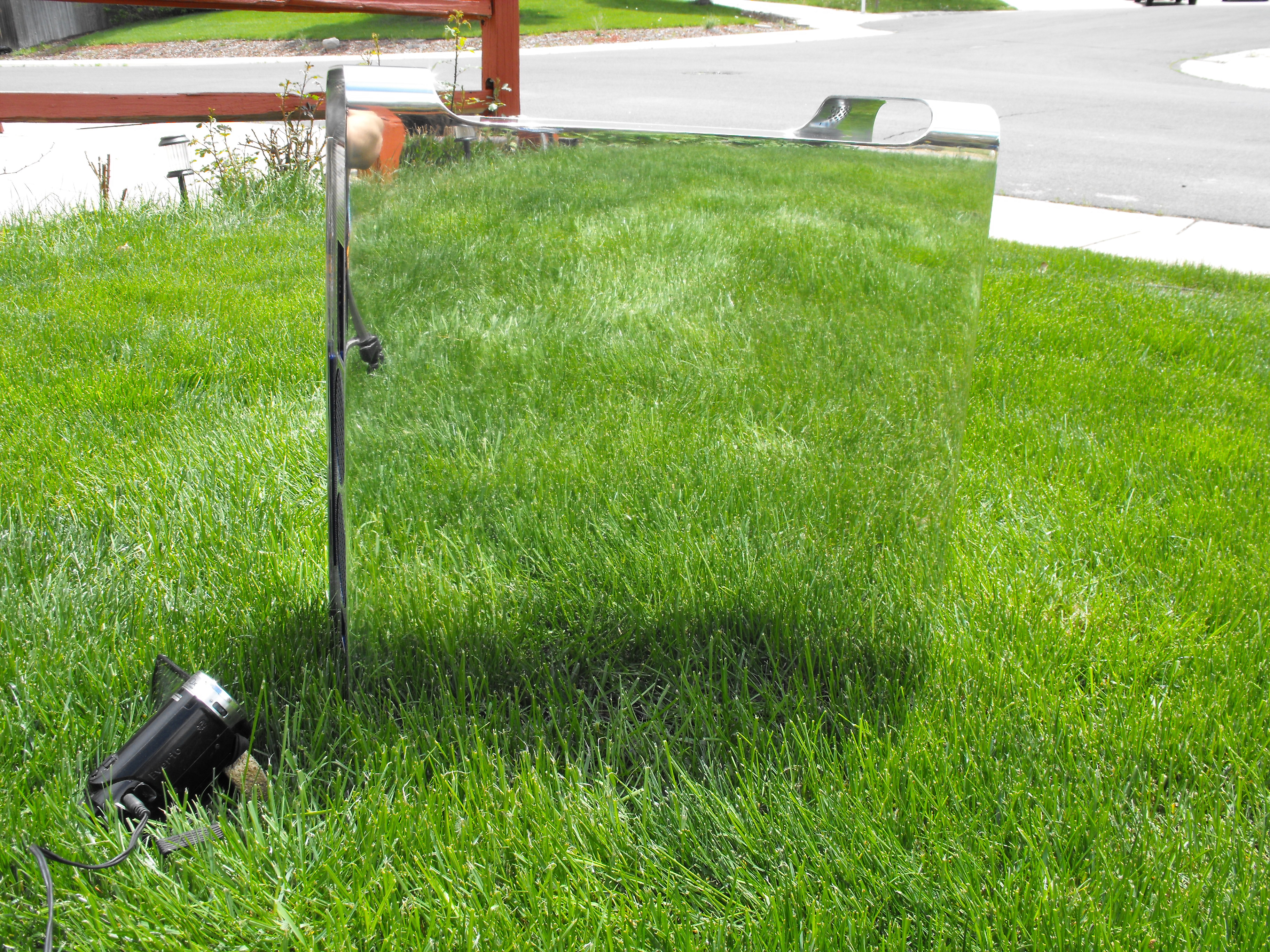
Spot the mirrored mac
Spot the mirrored Mac

Here is the best Mac mod we’ve ever seen. [Doogie] decided to take an Apple G5 Quad to the max. This means maintaining the liquid cooling setup, adding the max amount of RAM (16 GB), adding a Sonnet Tempo 6.0Gb PCI-e card and two Samsung 840 Pro SSDs, and an Nvidia Geforce 6600GT. The best part about this Mac? Instead of the classic anodized aluminum, [Doogie] polished the case to a mirror finish. Here’s a video of the entire build. The computer is currently serving up his webpage, and if you want to see how the server load test is going, you can check out the stats page here.

Hackaday links posts are where we put interesting kickstarters and crowdfunding projects, and this one is near the top. It’s a crowdfunding campaign for a glassblowing workshop in England. If this project is funded, people can come repair their scientific glassware, make new tubes, or take a glassblowing workshop. It’s not quite a crowdfunding campaign for a business (perhaps it should be?), but maybe someone out there has a glass lathe they can donate.

A few months ago, Microchip acquired Atmel for $3.56 Billion. There’s a lot of overlap in both company’s portfolios, leading many to wonder which products would be EOL’ed and removed from the market. This week, Microchip released a statement on the acquisition (PDF), and spelled out what to expect from the product line. It’s good news:

We know that stability and growth in manufacturing is an important consideration from a supply base, and it has been one of the key elements that Microchip has executed well throughout its 25+ year life. We will honor that concept in this integration activity as well. We also recognize that product End-of-Life may be one of your concerns in any acquisition, including this one. Microchip has a practice and track record of not putting products on End-of-Life, and it is our intent to continue to offer the complete portfolio of products from both companies.

On April 5th, Makerbot announced it has sold more than 100,000 3D printers worldwide. Sounds like quite an accomplishment, right? Wrong. From December 31, 2014 to April 5, 2016 – fifteen months – Makerbot has sold only 20,094 printers. Sales figures are hard to come by (I’m working on this), but Lulzbot is outselling Makerbot given one of their latest press releases and basic math. There will be more on this after Stratasys releases their 2015 yearly report (on May 9), but I’m calling this the beginning of the end for Makerbot.

Here’s a Kickstarter for a laser cutter. The first reward that will get you a laser cutter is €1.300, “a special 50% early bird Kickstarter discount off the estimated retail price.” That means this is a $3000 laser cutter. What does that get you? A five watt ‘shortwave’ laser, 20×16″ working area, and a software interface that actually looks rather good.

Hacklet 103 – Piezo Projects

The piezoelectric effect is simple in its rules: Apply mechanical stress to a material and you generate an electric charge. The inverse is also true: Apply a voltage to a material, and it changes shape. This doesn’t work for everything, though. Only certain materials like crystals, some ceramics, and bone have piezoelectric properties. The piezoelectric effect is used quite a bit in electronics, so it’s no surprise that plenty of hacker projects explore this physical phenomena. This week’s Hacklet is all about some of the best projects utilizing the piezoelectric effect on Hackaday.io!

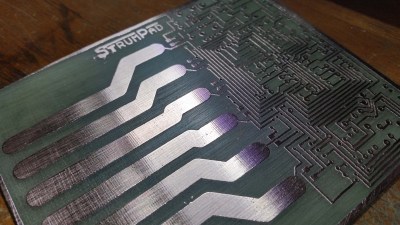
strumWe start with [miro2424] and StrumPad. Strumpad lets you play a MIDI instrument by strumming, just like a guitar. A music keyboard acts as the guitar fretboard here – keys can be pressed to choose notes, but no sound is generated. When the strumpad is strummed, six copper strips act as capacitive sensors. Touching the strips determines which notes will be played. A piezo disc hiding below the circuit board detects how hard the notes have been strummed or tapped. The ATmega328 running the strumpad then passes the velocity and note-on MIDI messages on to a synth.

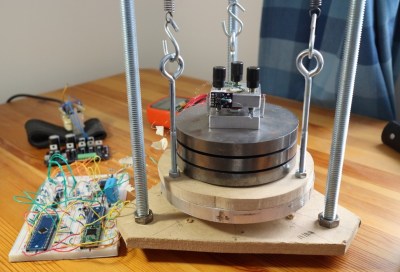
stmNext up is [Dan Berard] with Scanning Tunneling Microscope. Inspired by a project from [John Alexander], [Dan] created his own Scanning Tunneling Microscope (STM). The key to an instrument like this is precise movement. [Dan] achieves that by using a normal piezo disk. These disks are used as speakers and buzzers in everything from smoke detectors to greeting cards, so they’re common and cheap. [Dan] cut his piezo disk electrode into quadrants. Carefully controlling the voltage applied to the quadrants allows [Dan] to move his STM tip in X, Y, and Z. Incredibly, this microscope is able to create images at the atomic scale.

touchboard[Thatcher Chamberlin] is next with Low-Cost Touchscreen Anywhere. [Thatcher] used a trio of Piezo disks to make any flat surface touch sensitive. The three sensors are placed at 3 corners of a rectangle. Touches with the rectangle will create vibrations in the surface that are transmitted to the piezo sensors. By measuring the vibration time of arrival, it should be possible to determine where the surface was touched. This kind of measurement requires a decent processor, so [Thatcher] is using the ARM Cortex-M0 in NXP’s LPC1114FN28. Initial tests were promising, but we haven’t heard much from [Thatcher] on this project. If you see him online, tell him to hurry up! We’re hoping to turn our parking lot into a giant electronic chess board!

contFinally, we have [Jose Ignacio Romero] with Low Power Continuity Tester. [Jose] used a Piezo element in a slightly more mundane way – as a buzzer. Who needs a whole multimeter when you’re just trying to check continuity on a few circuits? This continuity tester uses a PIC12LF1571 processor to find open and short circuits. The 5 10 bit ADC in the PIC is plenty of resolution for this sort of tester. In fact, [Jose] even included a diode test, which emits a short beep if the leads are placed across a working diode. The PIC processor uses so little power that this tester should run for around 800 hours on a CR2032 watch battery.


If you want to see more piezo projects check out our brand new piezo projects list! If I missed your project, don’t get buzzed! Drop me a message on Hackaday.io, and I’ll add it to the list. That’s it for this week’s Hacklet. As always, see you next week. Same hack time, same hack channel, bringing you the best of Hackaday.io!

The Continuing Adventures Of A Project That Will Be Stolen

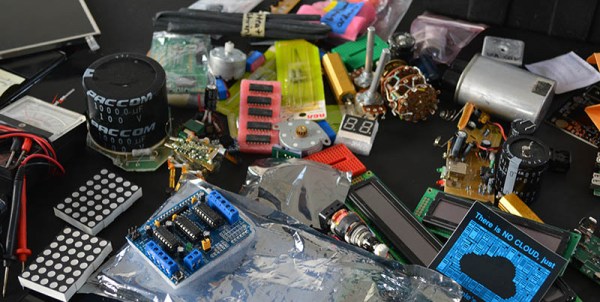
Imagine if the Snap-on tool truck wasn’t filled with hand tools. Imagine if that Snap-on truck was a mobile electronics surplus shop. That’s the idea behind the Travelling Hacker Box. It’s a box, shipped from hacker to hacker, filled with weird and esoteric components, enough parts to build a 3D printer, and enough capacitors to stop an elephant’s heart.

If this is the first time you’ve heard about the Travelling Hacker Box, here’s the quick FAQ to get you up to speed. Has this been done before? Yes, yes it has. The Great Internet Migratory Box of Electronics Junk was a ‘thing’ done by Evil Mad Scientist back in the ‘aughts. Hackaday (or rather the old commander in chief Eliot) received one of these boxes, and sent it off to [Bre Pettis]. Keep in mind, this was in 2008. Is there more than one Travelling Hacker Box actively travelling? No. Because I don’t want to organize a second. Either way, the Travelling Hacker Box has two goals: distance travelled and number of people visited. With just one box, we can maximize both objectives. What are the current travel plans? That’s the next paragraph.

US-Trips
The travels of the Travelling Hacker Box Mk. 2

As of right now, the second version of the Travelling Hacker Box – the first box was stolen by some waste of oxygen in Georgia – has travelled at least 21,838 miles around the United States, visiting 11 prolific hackaday.io contributors in Wyoming, New York, Alaska, Hawaii, New Hampshire, Florida, Wisconsin, Maine, and California. The goal for the first dozen or so trips across the United States was to put miles on the box. 25,000 miles would be equivalent to a trip around the world using only US Postal Service flat rate boxes. Thanks to [Lloyd T Cannon]’s reinforcement of a medium flat rate box with canvas, foam, Kevlar, and custard, this iteration of the Travelling Hacker Box has held up spectacularly.

The goal for the next two months is to make a trip around the United States to maximize the number of US hackers who contributed to the box. This trip will start in Pasadena, CA, go up the west coast to Seattle, loop around the Canadian border to New England, go down the Eastern seaboard, across to Texas, over the desert, and land back at Home Base in Pasadena. From there, the Travelling Hacker Box is off to England, the EU, Asia, India, maybe Africa, and Australia.

While there are already a few people scheduled for this last trip around the US, more are needed. If you’re interested, check out the project on hackaday.io, request to join the project, send a message on the team chat, and generally bug me on the hackaday.io chat. There are plenty of spaces to fill in this last trip around the US and the current inventory is quite a haul. Not bad for a project that will eventually be stolen.

Retrotechtacular: Rein-Operated Tractors

It’s not unusual for new technologies to preserve vestiges of those that preceded them. If an industry has an inertia of doing things in a particular way then it makes commercial sense for any upstarts to build upon those established practices rather than fail to be adopted. Thus for example some industrial PLCs with very modern internals can present interfaces that hark back to their relay-based ancestors, or deep within your mobile phone there may still be AT commands being issued that would be familiar from an early 1980s modem.

Just occasionally though an attempt to marry a new technology to an old one becomes an instant anachronism, something that probably made sense at the time but through the lens of history seems just a bit crazy. And so we come to the subject of this piece, the rein-operated agricultural tractor.

Continue reading “Retrotechtacular: Rein-Operated Tractors”

Hackaday World Create Day: April 23rd

It’s time to get out and have some fun with other Hackaday people in your area and we have the perfect opportunity. Be part of Hackaday World Create Day on Saturday, April 23rd. This is all about meeting others for an afternoon of creativity.  You might even find your engineering dream team! As part of World Create Day you’ll and brainstorm an amazing creation and connect with the people in your area that round out your own skills (electrical, mechanical, design, etc.).

This is the first ever worldwide event Hackaday has organized, and it’s made possible by all of the people who volunteered to organize a Hackaday Meetup in their area. We have heard from more than 100 of you so far and [Liz Krane] has done an amazing job following up with each organizer to get everything set up. You can still sign up to host (or co-host) and use the map to join a meetup already organized in your area.

We’re just getting started but the first added are in Ottawa Canada, Lagos Nigeria, Lynchburg, Virginia, and Puducherrry, India. We have more on the way in Malaysia, Greece, South Africa, India, Cyprus, New Zealand, France, Mexico, China, and many locations in the USA.

We’re sending out World Create Day sticker packs — created by [Joe Kim] and [Michael Guilfoil] — as fast as we can set up the Meetup pages. We will be on the lookout for Hackaday Meetups and World Create Day projects to feature right here on the Hackaday front page. Carve out 4/23 from your calendar and get excited, you don’t want to miss this!