Hacklet 51 – Crowdfunding Projects

Ah crowdfunding. You might say we have a love/hate relationship with it here at Hackaday. We’ve seen some great projects funded through sites like Kickstarter, IndieGoGo, and the like. We’ve also seen projects where the creators were promising more than they could deliver. While the missed deliveries and outright scams do get a lot of press, we believe that crowdfunding in general is a viable platform for getting a project funded.

Closer to home, Hackaday.io hosts thousands of projects. It’s no surprise that some of these have had crowdfunding campaigns. This week’s Hacklet focuses on those projects which have taken the leap into the crowdfunding arena.

matrixWe start with [Louis Beaudoin] and SmartMatrix. [Louis] has created an awesome Teensy 3.1 based system for displaying images, animated graphics, and random patterns on a 32×32 RGB LED panel. The LED panel is the same type used in commercial LED billboards. SmartMatrix is open source, and includes extra pins for hacking. Our own [Mike Szczys] hacked the SmartMatrix to create a 1-pixel PacMan clone. [Louis’] Kickstarter is almost over, and needs a huge boost for fully-assembled SmartMatrix to make its goal. Even if the campaign isn’t successful, we think its a great project and you can always get a solder-it-yourself kit from The Hackaday Store!
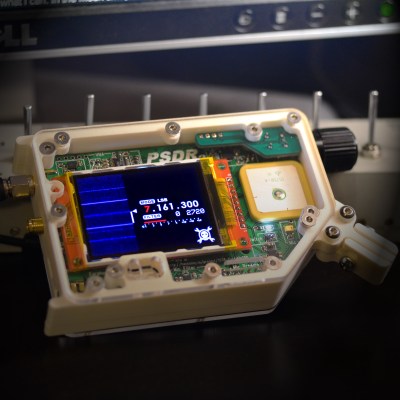
psdrNext up is [Michael R Colton] with PortableSDR. PortableSDR was one of the five finalists in The 2014 Hackaday Prize. This pocket-sized software defined radio transceiver started as a ham radio project: a radio system which would be easy for hams to take with them on backpacking trips. It’s grown into so much more now, with software defined radio reception and transmission, vector network analysis, antenna analysis, GPS, and a host of other features. [Michael] raised a whopping $66,197 in his Kickstarter campaign, and he’s already delivered the hand assembled prototypes to their respective backers! Even the lower level rewards are awesome – [Michael’s] PSDR key chains are actually PCBs which can be turned into maple compatible ARM devboards with just about $10 of additional parts.

chip whisperNext we have The ChipWhisperer, [Colin Flynn’s] embedded security testing system, which won second place in the 2014 Hackaday Prize. We’ve covered both [Colin] and the ChipWhisperer  several times on the Blog. You can always buy the full ChipWhisperer from [Colin’s] company, NewAE Technology Inc. At $1500 USD, the ChipWhisperer is incredibly affordable for a hardware security tool. That price is still a bit high for the average hacker though. [Colin] created a Kickstarter campaign for a light version of the ChipWhisperer. This version is a great platform for learning hardware security, as well as an instrument for testing embedded systems. The campaign was a huge success, raising $72,079.
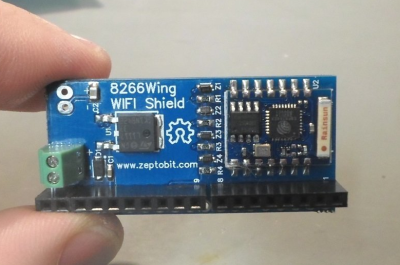
wingboardNot every crowdfunding project has to be a massive megabuck effort though. [ZeptoBit] just wanted to solve a problem, he needed a WiFi shield for Arduino using an ESP8266 module. ESP8266 WiFi modules have been all the rage for months now, but they can be a bit of a pain to wire up to an Arduino Uno. The dual row .100 headers are not bread board friendly. The ESP8266’s 3.3 V power and interface requirements mean that a regulator and level shifters are needed to get the two boards working together. [ZeptoBit] put all that and more on his wingboard. It worked so well that he launched a Kickstarter campaign for a small run of boards – his initial goal was kr3,500, or $425 USD. He ended up raising kr13,705, or $1665 USD. Not bad at all for a hobby project!

If this isn’t enough crowdfunding goodness for you, check out our Crowdfunding list! That’s it for this week’s Hacklet, As always, see you next week. Same hack time, same hack channel, bringing you the best of Hackaday.io!


Retro Edition: The LAN Before Time

Ethernet has been around since the mid-70s, but if you think it was always Cat5 and 10BaseT, you’d be sorely mistaken. The first ethernet was built with coaxial cable, vampire taps, AUI adapters, and a whole bunch of other network hardware that will make wizened networking veterans cringe. [Matt] had heard about these weird physical layers back when he started building networks in 1997, but he had never seen one. Now it’s an ancient and forgotten footnote in the history of computer networking. Is it possible to build a Thicknet in this modern era? It turns out, yes, it’s possible. It’s not easy, though.

The network [Matt] is building is a true 10Base5, or Thicknet, network. The backbone of this network is a coaxial cable 9.5mm in diameter. [Matt] discovered that while the common belief that Thicknet used RG-8/U cable. This appears to be incorrect, as the connectors for this cable – vampire taps that pierced the insulation and shield of the cable – are designed for cable manufactured by Belden, part number 9880.

[Matt] assembled the cable, vampire taps, AUI cables, and even found a few ISA NICs that would still work with a reasonably modern computer. He even went so far as to build a USB Ethernet adapter with an AUI interface. This impossibly retro device uses a standard USB to 10BaseT Ethernet adapter, with a chip designed to convert 10BaseT to AUI hacked onto a circuit board. That in itself is an incredible piece of engineering, with a handful of power supplies to get the correct 2.5, 3.3, 5, and 12 Volts to the right places.

As far as exercises in computing history go, [Matt] is at the top of his game. In the process of building it, he also figured out why no one uses Thicknet anymore; once it’s in place, you can’t change it, the cable is big, bulky, and the connectors are terrible. Still, it’s an amazing example of how far we’ve come.

Caption CERN Contest – Safe Science Is No Accident

Week 18 has faded into history, but not before you wrote some great captions! A hearty thanks to all the entrants. Astute reader [jlbrian7] has done it again! He’s uncovered the story behind this image. The woman in this photo is manually analyzing photographs of charged particles taken in a bubble chamber. He linked to an article from Fermilab, and to a 1971 film about Gargamelle, CERN’s largest bubble chamber at the time. The film is well worth a watch. It’s aimed at the layman, explaining the design, construction, and operation of bubble chambers. The photo scanning section starts at 14:40. The video has plenty of “1970’s-isms”, such as referring to the women analyzing the photographs as “scanning girls”. The filmmaker even bookend the section with an actual scanned girl – a possibly NSFW (by today’s standards) ASCII art printout of a nude pin-up model, as printed by a Control Data Corporation supercomputer.

The Funnies:

  • “Tabatha, the dungeon master, plots tonight’s dungeon and dragons game inside the exploded atom.”- [LloydTCannonIII]
  • “CERN, the only place you can watch Netflix on the same table that you eat lunch and plot global domination. Muwahahaha!” – [Joshua]
  • “They take Kerbal Space Program very serious at CERN. Here you can see the first interactive real time orbital view display.” – [haxtormoogle]

This week’s winner is [Jarrett] with “Friday night is Missile Command night in the lab. It’s a serious event”

We’re giving away two prizes this week – one to [jlbrian7] for his research on this and other CERN images, and one to [Jarrett] for his winning caption! Congrats to both of you. Enjoy your Logic Pirates From The Hackaday Store!

Week 19

cern-19-smJust about every workplace has to worry about safety. Many companies have a safety team that is trained to handle emergencies and help patients until proper medical technicians arrive. In a typical office environment this training is pretty easy, but what if you’re working on the bleeding edge of science? CERN’s safety team trains for everything, including badly burned hands and partially removed eyeballs. Don’t worry, these are just simulated injuries, which is probably why this CERN scientist is so calm, even smiling for the photo! CERN’s medical room also appears to be well stocked – with a full skeleton, and no less than four different types of fire extinguishers.

So, even though we already have a pretty good idea of what is going on in this photo (and the accompanying album), we’re sure you’ll come up with some great captions. Have at it!

This week’s prize is a Lightblue Bean from The Hackaday Store. Add your humorous caption as a comment to this project log. Make sure you’re commenting on the contest log, not on the contest itself (or on this post).

As always, if you actually have information about the image or the people in it, let CERN know on the original image discussion page.

Good Luck!

Hackerspace Happeninging: A Booc For C-Base

In the annals of hackerspace history, there’s one space that stands above the rest. It’s c-base, the crashed spaceship below Berlin that’s also one of the first hackerspaces in the world. Before NYC Resistor, Noisebridge, and every other building filled with tools and cool people, there was c-base.

Although the Hackerspace movement has only been around for a little less than a decade now, c-base itself is much, much older. It was founded way back in 1995, marking this year as the second decade of c-base’s existence. A few of the members of c-base are celebrating this occasion by publishing a book on the vast and storied history of their hackerspace.

The mythology of c-base includes a space station crashing in the middle of Berlin, with the giant, famous disco ball in Berlin being the station’s antenna. Yes, it’s weird, but all good hackerspaces have some sort of irreverent mythos surrounding them. The c-booc will document the twenty year long excavation of the space station, chronicling how this hackerspace came to be.

The booc is a Kickstarter project, and if funded, will be available for pickup at the Chaos Communication Camp this August

Retrotechtacular: Automatic For The People

Throughout their long history, American Machine and Foundry (AMF) have made forays into many areas of automation. And as the American cultural landscape of the 1950s and ’60s shifted toward fast, cheap, and convenient foodstuffs available for consumption inside of spacious, finned automobiles, AMF was there with AMFare, an (almost) completely automated system for taking orders, preparing food, and calculating bills.

AMF named the system “ORBIS” after its two main functions, ordering and billing. But ORBIS was not completely autonomous. A human operator received orders from a table-side telephones inside the restaurant and intercoms used by drive-in customers, and entered them on an enormous console. Orders were routed to several machines to prepare the food, cook it, and package it in various ways. We witness the odyssey of the burger in complete detail, from punching out perfect patties to their final, plastic-wrapped form.

Surprisingly, the AMFare selection wasn’t limited to delicious burgers, fries, and milkshakes. It could crank out sixteen different menu items, and do so pretty quickly. In the space of one hour, AMFare could produce more than 400 burgers, over 350 orders of fries, or about 700 milkshakes. Even so, collating the orders required human intervention. We imagine that the awful task of cleaning all that expensive Rube Goldberg-esque machinery did, too.

Continue reading “Retrotechtacular: Automatic For The People”

We Have A Problem: 3D Printers Are Too Expensive

Hackaday, we have a problem. 3D printing is changing the world but it’s still too expensive to be embraced as a truly transformative technology.

With each passing year, the 3D printing industry grows by leaps and bounds. Food safe PLA is now the norm, with dissolvable and other exotic filaments becoming more mainstream.  New filaments are making it possible to print objects that were not possible before. New CAD software is popping up like dandelions, with each iteration giving novice users a friendly and more intuitive interface to design 3D models. As time marches on, and we look into its future, a vision of the 3D printing world is evident – its only going to get bigger.

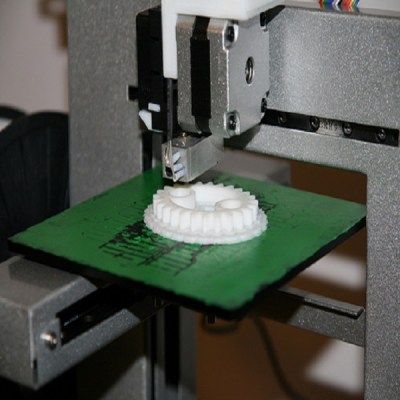
3d printerImagine a future where a 3D printer is as common as an ink jet printer in homes all across the world.  A future where you could buy filament from the supermarket down the street, and pick up a new printer from any hardware store. A future where dishwashers, refrigerators and bicycles come with .stl files that allow you to print upgrades or spare parts. A future where companies compete to give the market easy-to-use printers at the cheapest price.



Is this future possible? Not until the technology changes. It’s too expensive, and that’s the problem you’re going to solve. How can you make a 3D printer cheaper? A cheap printer could change the game and make our future a reality.

Where do we need cost savings?

To get you going, here are some parts of common 3D Printers which think need to find cost-saving solutions.

XYZ AND HOT END MOTORS

Stepper motors are going to run you about $15 each. Is it possible to use cheaper DC motors with some type of position tracking while keeping the cost down?

HARDWARE

Threaded rod is probably the cheapest way to move your XYZ axis. What about couplings and guide rods? Check out how this guy made a CNC out of parts from his local hardware store.

ELECTRONICS

No arduino with Easysteppers here – too expensive. We’ve just seen a super cheap controller a few days ago. If we use something other than NEMA steppers, it will radically change the typical electronic controller for our super cheap 3d printer.

EXTRUDER

What is the cheapest way to melt and extrude plastic? What about using thermistors in place of thermocouples? Let’s think out of the box with this, and see if we can get away from the typical stepper motor based extruder. Remember, everything is low cost. If we have to sacrifice some resolution, that is OK.

So there you go. Let’s hear your input on the issue. We need to make 3D printers a lot more affordable and we want to hear any ideas you have on the topic in the comments below. Do you think this is in our future and why?


The 2015 Hackaday Prize is sponsored by:

Hackaday Links Column Banner

Hackaday Links: June 7, 2015

I’ve said over and over again that Apple’s MagSafe port is the greatest advancement in laptop tech in the last 15 years. Those charger connectors break, though, so how do you fix it? With Lego, of course (Google translatrix). Use a light-colored 1×4 brick so the LED will shine through.

Want to learn Git commands? Here’s a great game that does just that. It’s a really well-designed game/tutorial that walks you through basic Git commands.

Lets say you’re just slightly paranoid about the Bad Guys™ getting into your computer with 0-days and roller blades. You’d like to connect this computer to the Internet, but you don’t want to leave it connected all the time. The solution? A timer for an Ethernet switch. It’s actually a better solution than doing the same thing with scripts: there’s a real, physical interface, and if the Bad Guys™ get in when you are connected, they could just enable the network adapter anyway. An extremely niche use case, but that’s 99% of the security hacks we see.

The DaVinci 3D printer is an okay printer if you’re cool with the Gilette model. The filament cartridges are chipped, and the software is proprietary. These problems have been solved, and now you can use a standard RepRap heated bed and glass with the DaVinci. At this point, people are buying the DaVinci just to tear it apart.