Mobile Chicken Coop Includes Wireless Sensors

mobile-chicken-coop-build

In and of itself this mobile chicken coop is a pretty nice build. There are some additional features lurking inside which you don’t find on most coops. [Neuromancer2701] built-in a set of sensors which can be accessed wirelessly. It makes it a snap to check up on the comfort of the hens without leaving the couch.

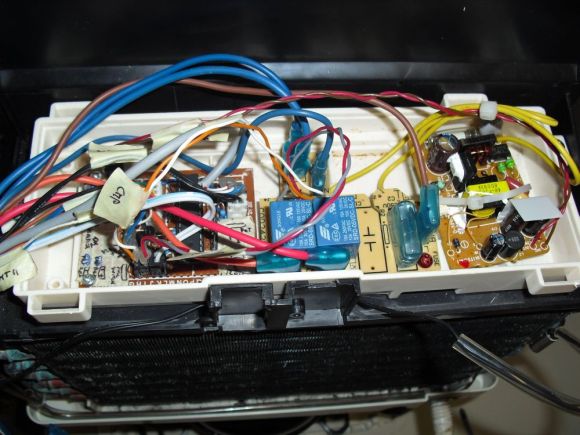
At the heart of the sensor system is an Arduino along with an Xbee module. The build isn’t quite finished yet, but so far three sensors have been implemented. A thermistor is used to read the temperature inside the coop. To make sure there’s enough water, two sheets of foil tape were applied to the water reservoir. The CapSense library measures the capacitance between these plates which correlates to the water lever (we’ve seen this type of water level sensor before). And finally, there’s a sensor that can tell if the door to the coop is open or shut.

He’s having trouble automating the door itself. This can be pretty tricky, especially if you go for a super complicated locking mechanism like this one.

Weather Station Graphs History On Webpage

weather-station

Kudos go out to [Jose] for his work getting so many different components to talk to each other in this Arduino weather station that using a Raspberry Pi to display the data online.

The components shown above make up the sensor package. There’s an Arduino with a custom shield that interfaces the barometric pressure sensor, real-time clock chip, a digital temperature sensor, and a humidity sensor. On top of that shield is an XBee shield that lets this push data back to the base station. [Jose] also rolled in an LCD character display and a few buttons so that the user may view weather data without heading to the web.

A Raspberry Pi board makes up the other half of the XBee pair. It harvests the incoming data from the radio module using a USB to Serial converter cable. You can see the data log on the webpage linked above. Just choose the “LIVE” menu option and click on “Daily” to get a better overview of humidity and pressure changes.

Garage Parking Monitor Guides You In Every Time

THEPARKINGSPOTTER2

The live Adafruit Show and Tell stream from last weekend featured this project put together by [Silent Jeff]. He’s called “Silent” because when it came time to present his project on the show his microphone wasn’t working. As you can see in the video after the break, [PT] and [Ladyada] worked together to explain the project (of which they had no prior knowledge) using a game of charades. This is one of the follow-up images he sent them which details his parking spotter project.

[Ladyada] compliments [Jeff] on the finished look of the device and we agree. Not only does this do a great job of letting a driver know if they have pulled far enough into the garage, but it’s finished appearance ensures it won’t ever look out-of-place. The two silver discs near the lower end of the box are the sensors of an ultrasonic rangefinder. You mount this box so that the sensor is measuring distance between itself and the bumper of your vehicle. As the distance decreases the LEDs change to let you know when to stop. Inside the case you’ll find a voltage regulator and single-chip running the Arduino bootloader. [Jeff] says this is just his second Arduino project and we hope that at this rate we’ll be looking for big things from him in the not too distant future!

This is basically the same idea as cars that use parking assist sensors in the bumper. It’s just attached to the building instead of to the vehicle itself.

Continue reading “Garage Parking Monitor Guides You In Every Time”

Google Talk Used For Home Automation Communications Via Android

home-automation-using-instant-messaging

To call [Carnivore’s] home automation project impressive would be an understatement. He’s pulled together a system that is fast, well presented, and easy to use. To interface with items in his home he’s using X10 modules, and this example simply switches some table lamps. But the underlying setup seems incredibly polished and should be a snap to extend for just about any purpose.

The guide linked above has all the gritty details, but the best overview is provided in the video after the break. [Carnivore] shows off the Windows 8 machine that acts as the server. It has am X10 transceiver connected to communicate with the appliances. He can control the system from the screen seen above, but everything can also be accessed from his Android phone. Communication between the two is handled by Google Talk, an instant messaging application — but the commands are home screen shortcuts and don’t need to be typed into the Google Talk app. He modified the source code of a program called TweetMyPC to use the Google Talk API which looks for keywords in received messages. The lag on an instant message is far lower compared to SMS or Email so commands are received very close to real-time. Feedback is sent from the server to the phone using a text message.

Continue reading “Google Talk Used For Home Automation Communications Via Android”

Sump Pump Monitor Emails And Raises Alarm If Water Rises

sump_pump_overview

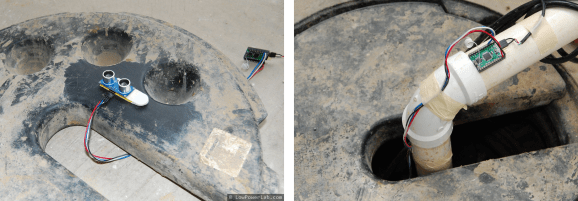
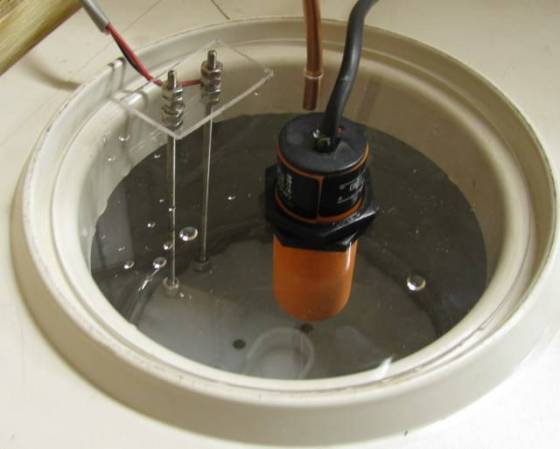
[Matt] literally finds himself in a sticky situation. There’s an oil slick in his sump well. These wells work in conjunction with drain tiles to pump water away from the foundation of a house. Unfortunately the tar that was used to waterproof the outside of his foundation is also washing into the sump and gumming up the works. The system he built will sound an audio alarm and send an email if something goes wrong with the sump pump.

He’s monitoring for two different issues. One technique uses a float valve to sense if the water is too high, signalling that the mechanism controlling the pump has malfunctioned. The other is a current monitor that senses if the sump pump has been running too long (caused by the sump’s water sensor getting stuck in the on position). The one thing he didn’t want to do is control the pump directly as a bug in his code will easily result in a flooded basement. We have the same concerns when considering building a DIY thermostat (an error there could mean frozen water pipes leading to flooding).

Magnets Keep The Shower Curtain From Groping You

stop-shower-curtain-groping

We guess we’re glad to hear that other also suffer from the phantom shower curtain liner. On occasion the shower curtain will start closing in on us around the bottom of the shower. We’re not certain of the phenomenon that causes it. Perhaps it’s static electricity like when a comb repels a stream of water. It could be an issue with rising air though… who know. But [Sk84life0129] has had enough of it. He figured out a magnet-based solution to stop the shower curtain from groping him.

You can buy curtain liners that have magnets in the bottom of them to help prevent this. But this is an acrylic tub — not one that’s porcelain-coated cast iron like they used to be — so that’s not going to do any good. Instead, a pair of magnets from an old hard drive were glued to the shower surround. A couple of galvanized bolts had their heads sawn off, and were sewn into pockets in the shower curtain. These hold it taught while you scrub your body, preventing it from reaching out for a close encounter.

[via Reddit]

Log Coasters Made With Just Two Tools

diy-log-coaster-set

Still looking for that perfect gift? [Joel Witwer] shows us how to make a log coaster set and holder on the cheap. He figures he spent just $5 on the project and from what we can tell that all went to some polyurethane which he used to finish the wood pieces.

It started with an interesting-looking and appropriately sized log which he found on the side of the road. We’re not sure about the ins and outs of drying stock to ensure it won’t crack, but we hope he took that into account. With raw material in hand he headed over to the band saw. The cutting starts by squaring up both ends of the log while cutting it to the final length. He then cut the bottom off of the holder. What was left was set upright so that he could cut the core out of the log. This is the raw material from which each coaster is cut. A spindle sander was used to clean up all of the pieces. The last step before applying finish is to glue the bottom and sides of the holder back together.

[Joel] gave some tips in his Reddit thread. He says you should hold on tight while cutting out the slices for coasters because the round stock will want to spin. He also mentions that some of the slices aren’t as flat as they should have been, something to think about if you’re cutting these for yourself.