Simple Tracking In 3D Space

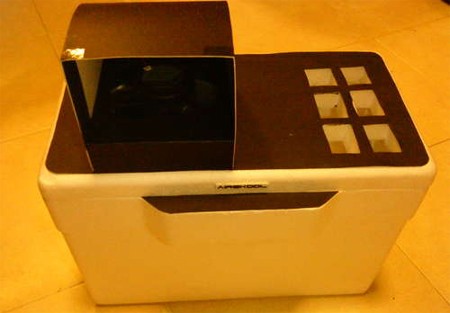
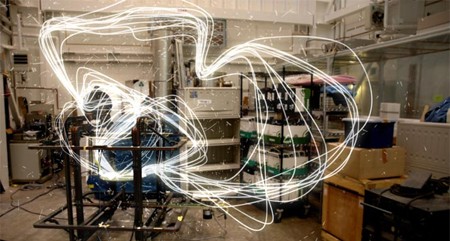
[kylemcdonald] has posted this how to build a simple 3D tracking interface. Using 6 resisters, some wire, aluminum foil, an Arduino, and a cardboard box, he was able to do 3D capacitive sensing. Coupling that with Processing, he was able to overlay an interface using augmented reality. The video above shows a 3D tic tac toe application. While it seems less than perfect, its pretty amazing for how simple it is.

Seen anything similar to this out there? What applications would be fun with this?

Name That Ware


Last month we mentioned [bunnie]’s Name that Ware competition where participants try to guess the functionality of a random bit of hardware. We thought you might want to see another example; pictured above is the June 2008 ware provided by [xobs]. You can see a high res version here and an image of the daughter card as well. Be forewarned that someone has already posted the solution in the comments. At first glance there are quite a few interesting bits: board is copyright 1991, the 8-bit ISA connector doesn’t have any data lines connected, just power, and it’s got a lot of analog circuitry. Take a guess and then check out the comments on [bunnie]’s site to see the solution.

Home Made PCB Drill Press


[yellowduck] took some fantastic initiative with this home made PCB drill press. Many people have a rotary tool already. Just add some scrap wood and four hinges. The drill press isn’t perfect; it pivots a little as it lowers. This shouldn’t be a problem for drilling printed circuit boards though. The PCB should be thin enough for the pivot to have little effect. After some test runs, he added a lamp for better lighting and intends to add a return spring and foot switch. It’s definitely a better solution than drilling multiple holes with a hand drill.

Annoy Your Friends With High Pitched Noise


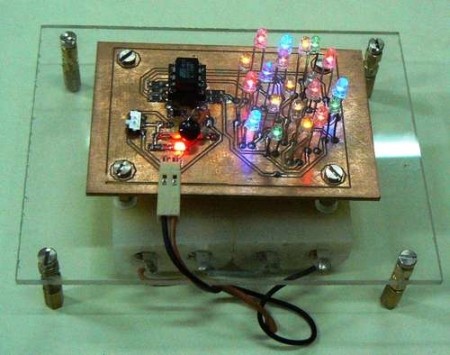
[Hungry_Myst] has put together this fantastic device to annoy your friends. It randomly emits high pitched sounds, then stops for a while to make it very hard to locate. He has added an extra level of annoyance by putting the noise in vicinity of 17KHz thus making it almost undetectable by people over the age of 30. The fact that not everyone in the room can hear it makes people go even crazier trying to find it.

The parts list is fairly short, and the directions concise. One thing that is fantastic about this article is that he encourages people to improve it. That alone is not a huge deal, but he mentions in several areas specific additions that would make it more user friendly: on/off, pitch control, and delay control.

Related: [jay]’s Picaxe based Brain Assailant

PIC Based Boiler Controller


We’re used to central A/C, so we were surprised by this PIC controller based heater controller. It’s based around a pump controlled boiler/radiator system. A PIC 16F84 is used to input the set point and control a pump to circulate the heated water as needed. You can grab full schematics on the project page.

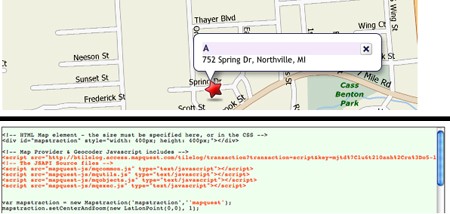
Update: We added a screen capture of the schematic after the break since the site keeled over.

Continue reading “PIC Based Boiler Controller”

HOPE 2008: Community Fabrication


Today at The Last HOPE, [Far McKon] from Philadelphia’s Hacktory presented on community fabrication. Over the last few years we’ve seen a lot of different accessible rapid prototyping machines created. There’s the RepRap, a fabrication machine that has achieved self replication; our friends at Metalab have gotten their own version of the machine running too. The Hacktory has recently acquired a Fab@home machine. Fab@home hopes to make manufacturing using multiple materials accessible to home users. Multiple materials means people have constructed objects that vary from embedded circuits to hors d’oeuvres. We can’t talk about edible prototyping without bringing up the CandyFab machine, which fuses sugar. The Hacktory has enjoyed their machine so far, but have found the learning curve fairly difficult. While it’s great to see the cost of rapid prototyping dropping, we’ll be much happier when the ease of use improves.