
Flickr user [firegroove] recently had to take apart his Roland TR-909 drum machine in order to fix it, and he photographed the entire teardown, offering detailed pictures of the TR-909’s internal parts. The TR-909 is legendary as one of the first fully programmable drum machines that could store entire songs, and its legend is only boosted by its scarcity: only 10,000 were ever made. If you can’t afford or simply refuse to tear yours apart, look after the break for a few more photos from inside.
Misc Hacks4130 Articles
Animatronic Stuffed Animals Stripped Bare

For those who have ever wondered what Chicken-Dancing Elmo’s mechanical parts look like without the fur and the chicken costume (and who among us hasn’t?), [Matt Kirkland] posted the photos above, along with several other animatronic, walking, talking and other mechanical stuffed toys stripped of all their fur and stuffing. These before and after shots were ostensibly taken for unspecified “research purposes,” but if you ask us, any research that takes a knife to Elmo is the most valid kind.
[via Kottke]
High Power LED Blinking Circuit
[youtube=http://www.youtube.com/watch?v=mNDu56oGNck]
Evil Mad Scientist Labs brings us this easy to make LED blinking circuit. The idea is to put a LED in series with a small blinking incandescent bulb from a string of Christmas lights. The bulb has an internal bimetallic strip that bends out of shape when it heats up, cutting the circuit. when it cools enough, it returns to its original shape and closes the circuit again, making the bulb and the LED turn on. Both lights have short period of sustained light when they are initially powered up since the bimetallic strip is still warming up.
The project uses a 5W blue LED, the aforementioned bulb, and a 6V battery pack loaded with 3 AAA batteries. The battery pack and the lights are all attached to a small section of perforated board. Duplicating this project should be easy and provide a very bright LED, but to make a 5W LED shine its brightest, a larger bulb and a heatsink will be necessary.
PIC Controller Cable Tracer
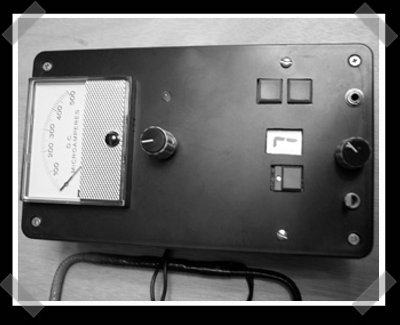
[Kevin Gorga] submitted this PIC controller based wire tracer to a project contest last year over at circuit cellar.A 125Khz signal is injected to the target cable and a pickup coil is used to detect the field and identify the wires location. You can grab the full project schematics and code here. The rest of the entries are pretty sweet, so be sure to check them out.
Hacking Firefox Menus

[Nick] sent in his quick hack for getting rid of extra menu options in Firefox 3, like the ever useless ‘Work Offline’ option. (OK, maybe modem lovers like it…) If you’re tired of seeing cluttered menu choices that you never use, [Nick]’s simple trick of editing the XML formatted XUL files in Firefox to clean things up. There’s some risk involved, but it’s nothing that a quick re-install can’t repair. The writeup includes a basic introduction to the XML tags, so you can probably do it. You can use a text editor right? (Just don’t forget to have the installer or a backup copy handy before you start playing around.)
Anonymizing Clothing

Though much of [citizenFinerran]’s intent in designing a suit that camouflages the wearer from security camera footage was philosophical, it is designed with a very tangible purpose in mind. The suit does not provide true camouflage (to say nothing of true invisibility), but it does create enough moving visual obstructions to make the wearer completely anonymous on film. More details on this and other invisibility cloaks after the break.
Hacking Sleep Part Deux

The Boston Globe recently posted some tips to help you get the most from your naps. The information comes in the form of a chart with numerous facts about naps, including the timeline of events in a typical nap, information about chronotypes, and ideas on how to fall asleep quickly and stay asleep. Since our post on polyphasic sleep, we’ve been interested in sleep techniques that essentially trick the body into feeling as rested as possible (the crudest form of biohacking, in our opinion). Many of these techniques are certainly applicable to polyphasic sleep, but one of the most interesting concepts, chronotypes, is not. Chronotypes are simply profiles of sleep habits that denote the times a person’s body is more readily disposed to fall asleep; since polyphasic sleep requires practitioners to sleep several times a day, it is always in conflict with the person’s chronotype at some point in the day. Nonetheless, the chart should help you stay alive if you ever have several back-to-back intercontinental flights.
[via Lifehacker]