Electronica 2016: Too Much Electronics

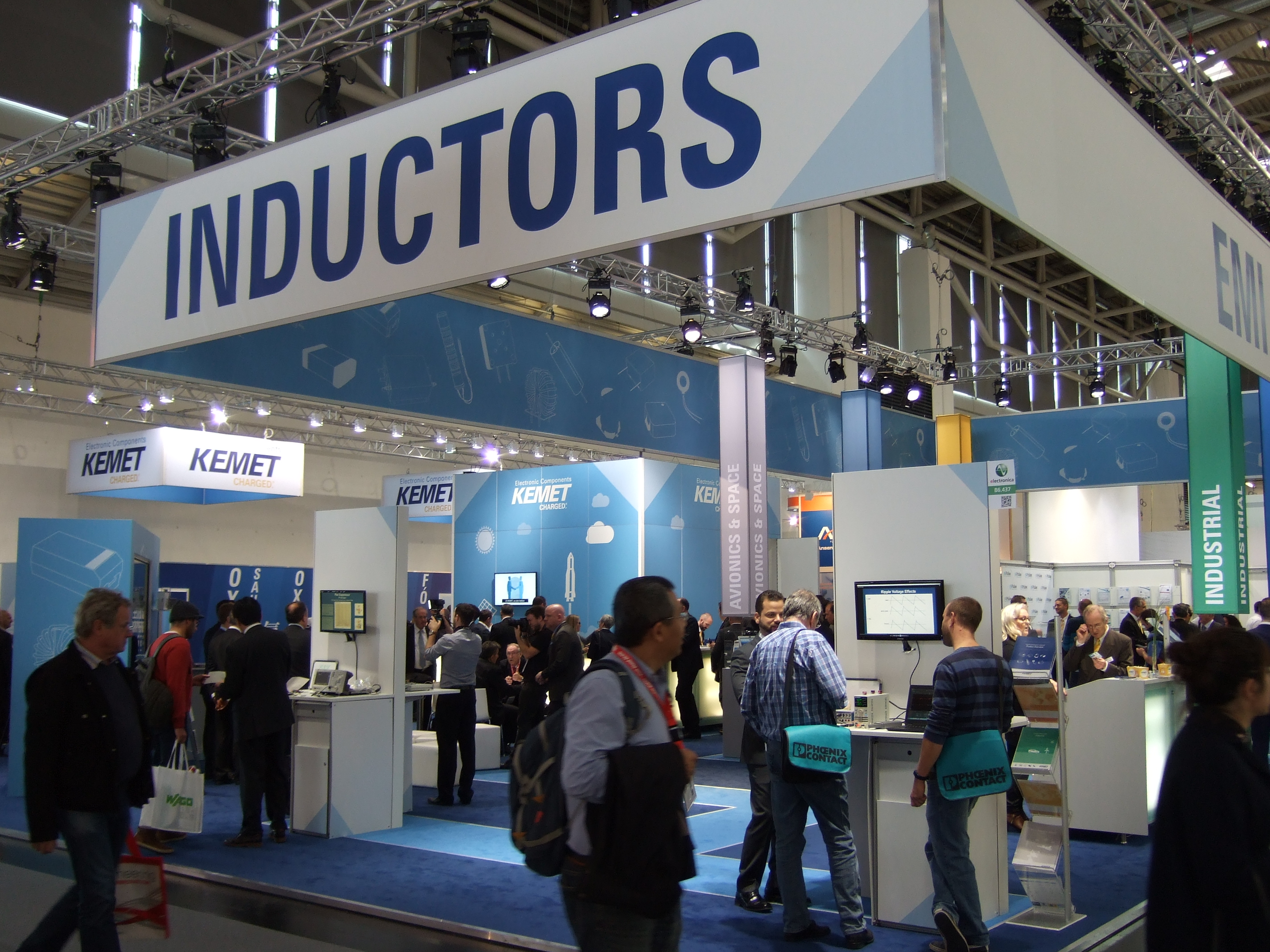
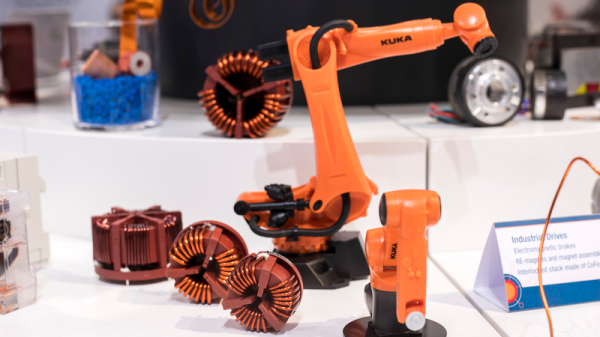
The Electronica trade show in Munich is so big that it only takes place once every two years. Every manufacturer, distributor, and maker of anything electronic is there. To get a feel for the scale of things, Electronica is spread out over twelve large exhibition halls and is served by two separate subway stations, one on either end. You wouldn’t think there would be so many inductor manufacturers in the world, but you’d be wrong.

dscf9020It’s a hardware geek’s paradise, even if it is aimed more at facilitating industry contacts than at serving the humble hacker. But it’s great to see what is out there, quiz reps of all our favorite chip manufacturers about what they’ve got going on, and just generally wander around. You might not get to play with the multi-gigahertz scopes on a day-to-day basis, but you can get hands-on with them at Electronica. And as cool as it is to talk directly to the representatives of our mega-manufacturers, it’s maybe more fun to check up on the creative fringe of companies that you’ve never heard of before, but who nonetheless have great ideas.
Continue reading “Electronica 2016: Too Much Electronics”

MicroLisp With Matching Parens

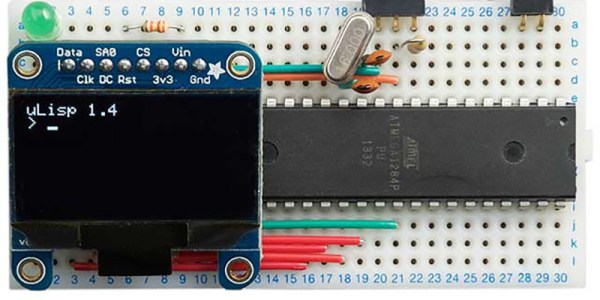
Lisp is a supremely elegant programming language, but you won’t find it around much today. That’s a shame; in the 80s and 90s, all the cool kids were using Lisp machines, computers dedicated to the creation and interpretation of Lisp. While the AI renaissance of the 80s is dead, replaced with the machine learning fad of today, Lisp machines have gotten much smaller. Now, they’ll fit in your pocket, and they have parenthesis matching, to boot.

If this build looks familiar, you’re not wrong. A while back, we saw a similar pocket Lisp computer based around the ATMega328 microcontroller with 32k of Flash and 2k of RAM. That’s not a lot by any measure, and a much more suitable processor for an AVR-based pocket Lisp machine would be the big boys of the ATMega family.

The new and improved version of the Tiny Lisp Computer is built around the ATMega1284. If it’s capable enough to run a 3D printer, it should run Lisp very well. With more program space and more RAM come more features including matching parens when entering code, a serial monitor interface, and a program editor – basically a text editor on the chip.

Apart from the larger chip, the circuit remains relatively unchanged. The display is still an OLED that can be had for a few dollars from the usual online retailers, and the other bits of circuitry are still just a handful of resistors, caps, and wire. An off-the-shelf FTDI module (or whatever serial chip you desire) can be added to connect to a serial terminal, and support for a PS/2 keyboard rounds out the board.

ESP Clock Needs More Power

[Victor-Chew] is tired of setting clocks. After all, here we are in the 21st century, why do we have to adjust clocks (something we just did for daylight savings time)? That’s why [Victor] came up with ESPClock.

Based on a $2 Ikea analog clock, [Victor] had a few design goals for the project:

  • Automatically set the time from the network
  • Automatically adjust for daylight savings time
  • Not cost much more than a regular clock
  • Run for a year on batteries

The last goal is the only one that remains unmet. Even with a large battery pack, [Victor’s] clock runs out of juice in a week or so. You can see some videos of the clock syncing with network time, below.

Continue reading “ESP Clock Needs More Power”

One Hundred Weeks Of Legal Car Hacking

There is a scene in the movie “Magic Mike” where the lead character — a male stripper — explains to a room of women the laws against having physical contact with a performer. Then he intones, “… but I see a lot of lawbreakers up in this house.”

We know if we could look out through the Web browser, we could say the same thing. There’s a lot of gray zone activities considered commonplace. Have you ever ripped a CD or DVD to take with your on your phone? Gray; we won’t judge. A lot of the legal issues involved are thorny (and I should point out, I’m not a lawyer, so take what I say with a grain of salt).

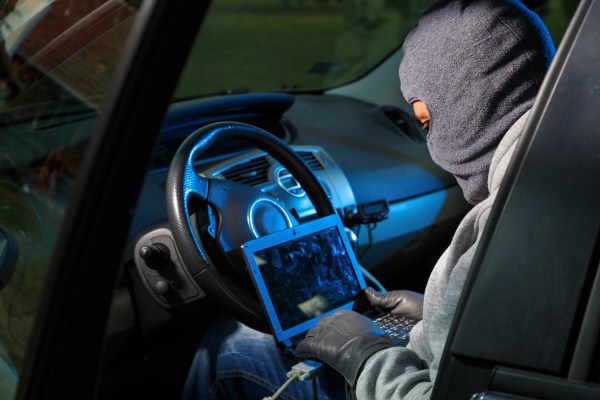
Do you own your car? Well, probably you and the bank, but certainly the deal you made involves the idea that you own the car. If it is paid off, you can do what you like with it, including — if you wanted to — stripping it bare for parts. Back in the day, your car was some wheels and some mechanical devices. These days, it is a computer (actually, a few computers) and some I/O devices that process gasoline into rotary motion. Computers have software. Do you own that software?

The answer has, legally, been no. However, a recent decision by the US Copyright office allows car owners to legally analyze and modify their vehicle software (with some limitations) for the next two years. After that? We’ll see.

Continue reading “One Hundred Weeks Of Legal Car Hacking”

Orange Pi Releases Two Boards

A few years ago, someone figured out small, cheap ARM Linux boards are really, really useful, extremely popular, sell very well, blink LEDs, and are able to open the doors of engineering and computer science to everyone. There is one giant manufacturer of these cheap ARM Linux boards whose mere mention guarantees us a few thousand extra clicks on this article. There are other manufacturers of these boards, though, and there is no benevolent monopoly; the smaller manufacturers of these boards should bring new features and better specs to the ARM Linux board ecosystem. A drop of water in a tide that lifts all boats. Something like that.

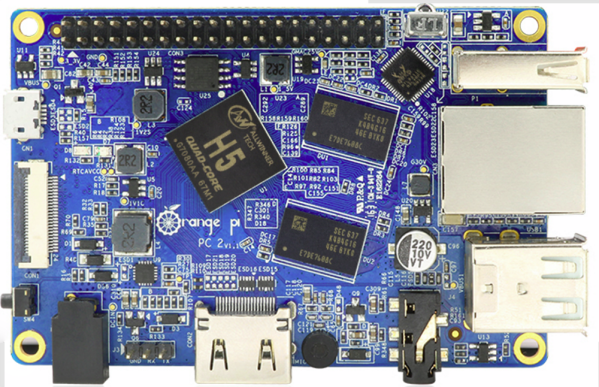
This week, Orange Pi, not the largest manufacturer of these small ARM Linux boards, has released two new boards. The Orange Pi Zero is an inexpensive, quad-core ARM Cortex A7 Linux board with 256 MB or 512 MB of RAM. The Orange Pi PC 2 is the slightly pricier quad-core ARM Cortex-A53 board with 1 GB of RAM and a layout that can only be described as cattywampus. We all know where the inspiration for these boards came from. The price for these boards, less shipping, is $6.99 USD and $19.98 USD, respectively.

The Orange Pi Zero uses the Allwinner H2 SoC, and courageously does not use the standard 40-pin header of another very popular line of single board computers, although the 26-pin bank of pins is compatible with the first version of the board you’re thinking about. Also on board the Orange Pi Zero is WiFi provided by an XR819 chipset, Ethernet, a Mali400MP2 GPU, USB 2.0, a microSD card slot, and a pin header for headphones, mic, TV out, and two more USB ports.

The significantly more powerful Orange Pi PC 2 sports a quad-core ARM Cortex-A53 SoC coupled to 1 GB of RAM. USB OTG, a trio of USB 2.0 ports, Ethernet, camera interface, and HDMI round out the rest of the board.

Both of Orange Pi’s recent offerings are Allwinner boards. This family of SoCs have famously terrible support in Linux, and the last Allwinner Cortex-A53, that we couldn’t really review, was terrible. Although the Orange Pi Zero and Orange Pi PC 2 are new boards and surely software is still being written, history indicates the patches written for this SoC will not be sent upstream, and these boards will be frozen in time.

If you’re looking for a cheap Linux board with a WiFi chipset that might work, The Orange Pi Zero is very interesting. The Orange Pi PC 2 does have slightly impressive specs for the price. When you buy a single board, though, you’re buying into a community dedicated to improving Linux support on the board. From what I’ve seen, that support probably won’t be coming but I will be happy to be proven wrong.

3D Printer Tragedy Claims A Life

Thankfully it’s rare that we report on something as tragic as the death of a 17-year old, but the fact that the proximate cause was a 3D printer makes it all the worse and important for us to discuss.

The BBC report tells of a recently concluded coroner’s inquest into the December death of a young man in a fire at his family’s magic shop in Lincolnshire. The building was gutted by the fire, and the victim died of smoke inhalation. The inquest found that he had been working with a 3D printer in the shop and using hairspray to prepare the bed, a tip he apparently picked up from forums and blogs.

Unfortunately for this young man and his family, the online material didn’t mention that hairspray propellant contains volatile hydrocarbons like propane, cyclopropane, n-butane and isobutane — all highly flammable. Apparently the victim used enough hairspray in a small enough space to create an explosive mixture of fuel and air. Neighbors reported a gigantic fireball that consumed the shop, which took 50 firefighters to control.

While the inquest doesn’t directly blame the 3D printer as the source of ignition — which could just as easily have been a spark from a light switch, or a pilot light on a water heater — it does mention that the hot end can reach 300C. And the fact remains that were it not for the 3D printer and the online tips, it’s unlikely that a 17-year old boy would be using enough hairspray in an enclosed space to create what amounted to a bomb.

By all accounts, the victim was a bright and thoughtful kid, and for this to have happened is an unmitigated tragedy for his family and friends. This young man probably had a bright future and stood to contribute to the hacker community but for a brief lapse of judgment. Before anyone starts slinging around the blame in the comments section, think about it — how many time haves you done something like this and gotten away with it? This kid got badly unlucky and paid the ultimate price. Maybe we should make his death worth something by looking at what we do that skates a little too close to the thin edge of the ice.

Continue reading “3D Printer Tragedy Claims A Life”

New Lithium Battery Technology Takes Guts

Researchers have built a prototype lithium-sulphur battery that — when perfected — could have up to five times the energy density of current lithium-ion devices. Researchers in the UK and China drew inspiration from intestines to overcome problems in the battery construction.

In your intestine, small hair-like structures called villi increase the surface area that your body uses to absorb nutrients from food. In the new lithium-sulphur battery, researchers used tiny zinc oxide wires to form a layer of material with a villi-like structure. These villi cover one electrode and can trap fragments of the active material when they break off, allowing them to continue participating in the electrochemical reaction that produces electricity.

Lithium-sulphur batteries aren’t new (in fact, they were used in 2008 in a solar-powered plane that broke several records), but this new technique may make them more practical. You can see a video about ordinary lithium-sulphur batteries below along with more on how this research improves the state of the art.

Continue reading “New Lithium Battery Technology Takes Guts”