Skarp Laser Razor Kickstarter Suspended, Jumps To Indiegogo

An irritation-free razor that gives a close shave has been a dream for thousands of years. [Gillette] came close, and with multiple blades came even closer, but all razors today are still just sharpened steel dragged across the skin. This is the 21st century, and of course there’s a concept for a laser razor pandering for your moola. We recently covered the Skarp laser razor and its Kickstarter campaign, and today the campaign has been shut down.

The email sent out to all contributors to the Skarp campaign follows:

Hello,

This is a message from Kickstarter’s Integrity team. We’re writing to notify you that the Skarp Laser Razor project has been suspended, and your pledge has been canceled.

After requesting and reviewing additional material from the creator of the project, we’ve concluded that it is in violation of our rule requiring working prototypes of physical products that are offered as rewards. Accordingly, all funding has been stopped and backers will not be charged for their pledges. No further action is required on your part. Suspensions cannot be undone.

We take the integrity of the Kickstarter system very seriously. We only suspend projects when we find evidence that our rules are being violated.

Regards, Kickstarter Integrity Team

It only took eight hours for the Skarp team to relaunch their crowdfunding campaign on Indiegogo. As of this writing, over 900 people (ostensibly from the 20,000 backers of the original Kickstarter campaign) have pledged to the new campaign.

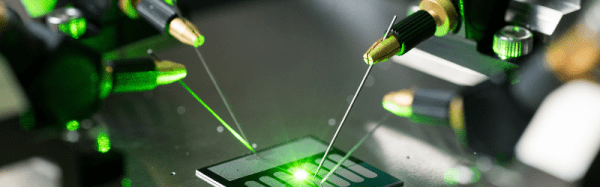
Although we will never know exactly why Kickstarter suspended the original Skarp campaign, the reason given by the Kickstarter Integrity Team points to the lack of a working prototype, one of the requirements for technology campaigns on Kickstarter. Interestingly, Skarp did post a few videos of their razor working. These videos were white balanced poorly enough to look like they were filmed through green cellophane, a technique some have claimed was used to hide the actual mechanism behind the prototype’s method of cutting hair. A few commenters on the Skarp Kickstarter campaign – and here on Hackaday – have guessed the Skarp prototype does not use lasers, but instead a heated length of nichrome wire. While this would burn hair off, the color of the wire would be a dull red when filmed in any normal lighting conditions. It is assumed the poor quality of the Skarp prototype videos is an attempt to hide the fact they do not have a working prototype.
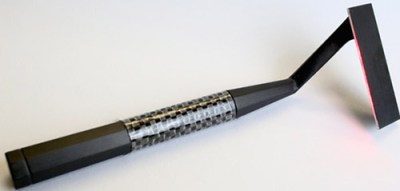
The Skarp laser razor. Source

Skarp’s move to Indiegogo has been lauded by some – mostly in the comments section of the Indiegogo campaign – and has been derided on every other forum on the Internet. Indiegogo is commonly seen as the last refuge of crowdfunding scam artist, but there are a few legitimate reasons why a campaign would choose to go to Indiegogo. Kickstarter is not available for campaign founders in all countries, and for some, debiting a card immediately, instead of after the campaign end like Kickstarter does, is a legitimate crowdfunding strategy.

But for a crowdfunding campaign to be suspended on Kickstarter and immediately move to Indiegogo? This almost never ends well. One of the most famous examples, the Anonabox, had its Kickstarter campaign suspended after it was found the creator was simply rebadging an off-the-shelf router. The Anonabox then moved over to Indiegogo where it raised over $80,000. Already the campaign for the Skarp Laser Razor has raised $135,000 USD from Indiegogo, after having its Kickstarter campaign raised over $4 Million. No, Skarp won’t be one of the most successful technology Kickstarter campaigns of all time. We can only hope it won’t be one of Indiegogo’s most successful campaigns.

Makerbot Has Now Cut 36% Of Staff In Last 6 Months

The CEO of Makerbot, [Jonathan Jaglom] announced this week a massive reorganization. Twenty percent of the staff will be laid off, management will be changed, an office will be closed, and perhaps most interestingly, the production of 4th generation of Makerbots will be outsourced to contract manufacturers.

This news comes just months after Makerbot announced its first 20% reduction in staff, and follows on the heels of a class action suit from investors. These are troubling times for Makerbot.

So Goes Makerbot, So Goes The Industry

In the last six months, Makerbot has closed all three of its retail locations in Manhattan, Boston, and Greenwich, CT. It has moved out of one of its office buildings in Industry City, Brooklyn as the company faces a class action suit from investors for possible securities violations. These are by any measure troubling times for anyone at Makerbot.

The 3D printing industry has been forced through the rollercoaster of the hype cycle in the last few years, and where Makerbot goes, media coverage and public perception of 3D printing goes with it. According to pundits, we are now deep in the doldrums of the trough of disillusionment. No one wants to make their own parts for their washing machine, it is said, and 3D printers are finicky devices with limited utility.

Despite these pundits’ projections, the 3D printing industry doubled in 2015. Multiple manufacturers of sub $5000 machines are going gangbusters, and seeing the biggest revenues in the history of their respective companies. By any measure except the one provided by Makerbot, we are still in an era of a vast proliferation of 3D printing.

Makerbot, for better or worse, is a bellweather, and public perception and media attention is highly dependant on the success of Makerbot. The Verge writes – incorrectly – “…The consumer 3D-printing market’s rise has slowed”, and Business Insider writes ‘consumers are beginning to lose interest.’ These are not statements backed up by facts or statistics or even hearsay; they are merely a reflection of the consumer’s disinterest in Makerbot and not of the 3D printing industry of the whole.

Unfortunately, we will not know the extent of how bad it is at Makerbot until Stratasys releases its 2015 financial report sometime in early March next year. Wohlers Report 2016, the definitive guide to the 3D printing industry, will be released sometime around May of next year. Keep one thing in mind: Makerbot did not build the 3D printing industry, and the public perception of Makerbot does not necessarily translate to the public perception of 3D printing.

Optical Rectenna Converts Light To DC

Using multiwall carbon nanotubes, researchers at Georgia Institute of Technology have created what they say are the first optical rectennas–antennas with rectifiers that produce DC current. The work could lead to new technology for advanced photodetectors, new ways to convert waste heat to electricity and, possibly, more efficient ways to capture solar energy.

A paper in Nature Nanotechnology describes how light striking the nanotube antennas create a charge that moves through attached rectifiers. Challenges included making the antennas small enough for optical wavelengths, and creating  diodes small enough and fast enough to work at the extremely short wavelengths. The rectifiers switch on and off at petahertz speeds (something the Institute says is a record).  Continue reading “Optical Rectenna Converts Light To DC”

Latest Raspberry Pi Images Have Improved Scratch

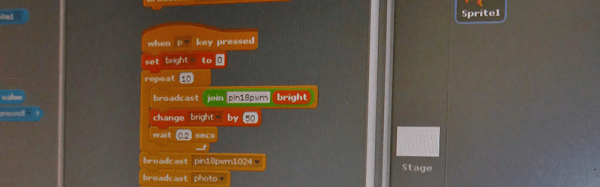
Not everyone likes Scratch — the block-oriented programming language that MIT developed to help kids program. While dyed-in-the-wool programmers probably find it limiting, it can be an effective way to teach basic programming to newcomers and there are some people who enjoy the graphical style of programming.

The latest Raspbian release (the operating system image for Raspberry Pi) has a new and improved version of Scratch for those who want to use it on the Pi. According to the Raspberry Pi blog, the new version is up to ten times faster than previous versions and also includes an improved method for Scratch programs to access the board’s general purpose I/O and other I/O devices.

Continue reading “Latest Raspberry Pi Images Have Improved Scratch”

Heathkit: Live, Die, Repeat

There is no company that has earned more goodwill from electronic tinkering hobbyists than Heathkit. For more than fifty years, Heathkit has been the measure all other electronic kit manufacturers have been compared to. Kits for everything – from televisions to radios to computer terminals – were all sold by Heathkit, and even now, nearly a quarter century since the last kit left the warehouse, there is still a desire for this manufacturer to rise like a phoenix from the ashes. Heathkit lives once more, and this time it might be for real.

In recent years, Heathkit has had a confusing, if not troubled business plan. The company started manufacturing its signature products – electronic kits of every kind – in 1947. Production of these kits ended in 1992, and the company went on for another few years manufacturing educational materials and lighting controls. In 2011, Heathkit said they were back in the kit business, before shutting down a year later.

In 2013, an official Heathkit Facebook page was launched, a reddit AMA was held, and a mysterious stranger in the Hackaday comments section found a geocache placed by someone at Heathkit in a Brooklyn park. Absolutely nothing happened in 2014, or at least no one cared enough to hire a PI, which brings us to today’s announcement: Heathkit lives yet again.

This morning, the president of Heathkit sent a message to the ‘Heathkit Insiders’ email group explaining the goings on and new happenings:

We’ve designed and developed a wide range of entirely new kit products. We authored the manuals for these kits, complete with the beautiful line art you rely on, preserving and respecting our iconic historic Heathkit style. We developed many new inventions and filed patents on them. We relocated Heathkit, and set up a factory, and a warehouse, and offices, in Santa Cruz, California, near Silicon Valley. We built the back office infrastructure, vendor and supply chain relationships, systems, procedures, operations methods, and well-thought-out corporate structure that a manufacturing company needs to support its customers, to allow us to scale instantly the day we resume major kit sales. All this effort enables us to introduce a fleet of new kits and helps ensure Heathkit can grow, prosper, and continue to bring you great new products for a very long time.

The new Heathkit shop features their newest product, the Explorer Jr. AM Radio Receiver kit, a small kit radio available for $150. It’s actually a rather interesting kit with a nice design and an air variable cap for tuning, just like radios from a century ago. Whether anyone will pay $150 for an AM receiver in this century is another question entirely. The 21st century rebirth of Heathkit doesn’t just mean kits; they’re making apps now, with the first release being a crystal design tool for Android.

Virtually everyone in this little corner of the Internet, from Adafruit to Sparkfun, to Make magazine to everyone with a 3D printer owes a debt to Heathkit. This is the company that first turned DIY electronics into a successful business. Heathkit was the first, and they deserve to be recognized as the pioneers of the field.

The Donner Party were pioneers, too; just because you’re breaking new ground doesn’t mean you’re successful. The Heathkit of the 90s shuttered its doors for a reason. The factors behind the 1992 closing – cheap stuff from China, and the fact that not many people want to build their own electronics – are still with us. Still, the market for DIY electronics may be big enough, and Heathkit’s back catalog may be diverse enough that I won’t have to write another ‘Heathkit dies yet again’ post in a year or so. We can only hope.

The World’s First Android Smartphone

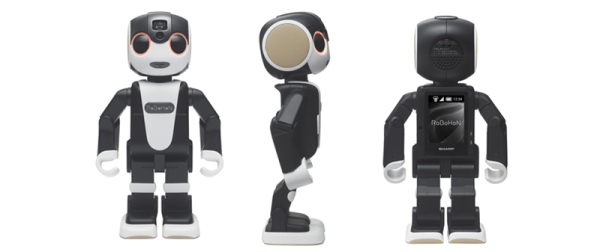
For one reason or another, someone decided smartphones should have personalities. iPhones have Siri, Windows phones have Cortana, but these are just pieces of software, and not a physical representation of a personality. This may soon change with Sharp, with help from famous Japanese roboticist [Tomotaka Takahashi], releasing RoBoHoN, the first robotic smartphone.

RoBoHoN is by any measure a miniature humanoid robot; it can walk on two legs, it can wave its arms, and it can fit into excessively large pockets. This robot is also a phone, and inside its cold soulless chassis is a 2.0″ LCD, camera, pico projector to display movies and pictures on flat surfaces, and the electronics to turn this into a modern, mid-range smartphone.

In the video for RoBoHoN, this friendly little phone can do everything from hail a cab, add stuff to a shopping list, and be the life of the party. According to Akihabara News, Sharp should be releasing this tiny robot sometime in early 2016 but no word yet on price.

Continue reading “The World’s First Android Smartphone”

Password Haters Can Now Use Parts.io

You can’t be bothered to sign up for a free parts.io account? Fine. You also don’t want to sign in each time you need to look up a component? Got it. You’ve made your point and the folks over at parts.io have made it so.

When the parts.io electronic component search engine was opened up for public use we covered it and gave you the rundown. Some of our readers left comments about things they were unhappy with regarding the parts.io system. Surprisingly, signing in was the most frequently voiced concern. It looks like your complaints were not taken lightly and you no longer have to register with the site to unlock all the parametric search data. There is still some added value to having an account like saving parts to a list for later use or you could get involved by joining the parts.io community on the forum.

Now we just need a parts search that knows what we want without having to actually choose parameters.


Full Disclosure: Parts.io is produced by Supplyframe Inc. Hackaday is an Editorially Independent part of Supplyframe.