Black Hat 2008: FasTrak Toll System Completely Broken


FasTrak is the electronic toll collection system used by the state of California. Motorists can purchase a toll transponder for ~$26 and link the serial number with a debit account to have their tolls deducted automatically. Today at Black Hat in Las Vegas, security researcher [Nate Lawson] presented not just the privacy problems with FasTrak, but why absolutely no transaction from the tag should be trusted.

Continue reading “Black Hat 2008: FasTrak Toll System Completely Broken”

Black Hat 2008: EFF Coders’ Rights Project Announced

The EFF has just announce the creation of the Coders’ Rights Project website at the Black Hat conference. The sites’ main goal is to centralize legal information for coders, and to help protect important security work from legal actions that may be taken against them with the DMCA and other legal black holes. While this is in no way a fully comprehensive list of everything you need to know, it looks like a good place to start, and provides a few FAQs for suggestions on how to stay in the legal clear as much as possible. At numerous points the documents suggest you speak with a lawyer, if you have any deeper questions, which you absolutely should. This can be very helpful if a person or group finds a security risk, and wants to publish it, or just wants to start looking into possible security risks.

More On GIFAR


[pdp] provides some perspective on the news regarding the GIFAR attack developed by researchers at NGS Software. As he explains, the idea behind the attack, which basically relies on combining a JAR with other files is not new. Combining JAR/ZIP files with GIF/JPG files will create hybrid files with headers at both the top and bottom of the file and allow them to bypass any image manipulation library as valid files. While tightened security and more stringent file validation practices are advisable, the problem is larger than just a vulnerability in browser security. ZIP is an incredibly generic packing technology used everywhere, from Microsoft files to Open Office documents, and of course, in JAR files. He closes with, “any file format that is based on ZIP, you allow your users to upload on your server, can be used in an attack”

[photo: Jon Jacobsen]

Laptop Containing 33,000 Clear Users Information Stolen

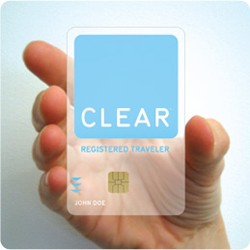
Security 101: Never put unencrypted sensitive information on a laptop and expect that it’s safe. Especially if you are the TSA. Recently, the TSA announced that a laptop was stolen from San Francisco International Airport containing “pre-enrollment records of approximately 33,000 customers” for the Clear Trusted Traveler Program. For $100 per year, the Clear Program enables travelers to get through airport security faster by showing TSA officers their Clear Registered Traveler Card and going through a special security line. While this program has no doubt saved many people valuable time getting through security, there are about 33,000 people who are now asking the question “Who has my personal information?”

[via schneier on security]

Edit: It looks like the laptop was found, however it is still unclear if the information on the laptop was compromised. In addition to basic personal information (Name, Address, Birthday, etc.), the laptop also contained drivers license, passport, green card information about clear users. You can check out the story here. Credits to [AudioCraz-Z] for the link.


Defcon 16: Badge Details Released


Defcon will once again be one-upping the sophistication of the conference attendee badges. Wired has just published a preview of this year’s badge. The core is a Freescale Flexis MC9S08JM60 processor. The badge has an IR transmitter and receiver on the front plus eight status LEDs. On the back (pictured below), there is a mode select button, CR123A battery, Data Matrix barcode, and an SD card slot. You can add a USB port to the badge and upload code to it using the built in USB bootloader. All the dev tools needed will be included on the conference CD or you can download the IDE in advance. The low barrier to entry should lead to some interesting hacks. In previous years, you needed a special dongle to program the hardware. There is no indication as to what the badge does out of the box. Releasing the badge early is a first for Defcon and the one pictured isn’t the attendee color, but we’re sure someone will still come up with a clone.

Now comes the fun part: What do you think the best use of this badge will be? Would Defcon be so cavalier as to equip everyone in the conference with a TV-B-Gone? I think our favorite possibility is if someone finds a security hole and manages to write an IR based worm to take over all the badges.

Defcon 14 introduced the first electronic badge which blinked in different patterns. Defcon 15 had a 95 LED scrolling marquee. [Joe Grand] will be posting more specific Defcon 16 badge details to his site after the opening ceremony. Check out more high resolution photos on Wired.

Continue reading “Defcon 16: Badge Details Released”

Magnetic Stripe Card Spoofer

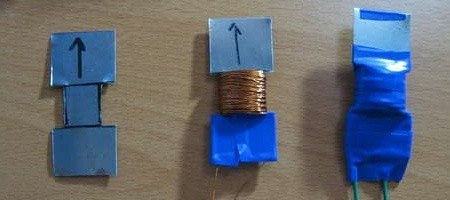
After building a USB magnetic stripe reader, [David Cranor] has found a way to fool a magnetic stripe reader using a hand-wound electromagnet and an iPod. The data on a card is read and stored on a computer, then encoded as a WAV file using a C++ program. The iPod plays the WAV file with the data through a single-stage opamp amplifier connected to the headphone jack. The amplifier is used to drive the electromagnet. Video embedded after the jump.

By no means is this a new idea. There have been a lot of mangetic stripe projects and software. This project in particular references the 1992 Phrack article “A Day in the Life of a Flux reversal” by [Count Zero].

Don’t get your hopes up just yet on strolling through high security installations using this little device. It can only replay the data from a card that has been recorded. If you don’t have a known working card, it won’t get you very far.

Continue reading “Magnetic Stripe Card Spoofer”

The GIFAR Image Vulnerability


Researchers at NGS Software have come up with a method to embed malicious code into a picture. When viewed, the picture could send the attacker the credentials of the viewer. Social sites like Facebook and Myspace are particularly at risk, but the researchers say that any site which includes log ins and user uploaded pictures could be vulnerable. This even includes some bank sites.

The attack is simply a mashup of a GIF picture and a JAR (Java applet). The malicious JAR is compiled and then combined with information from a GIF. The GIF part fools the browser into opening it as a picture and trusting the content. The reality is, the Java VM recognizes the JAR part and automatically runs it.

The researchers claim that there are multiple ways to deal with this vulnerability. Sun could restrict their Virtual Machine or web applications could continually check and filter these hybrid files, but they say it really needs to be addressed as an issue of browser security. They think that it is not only pictures at risk, but nearly all browser content.
More details on how to create these GIFARs will be presented at this week’s Black Hat conference in Las Vegas.