Nixie Tachometer

[youtube=http://www.youtube.com/watch?v=nHiYCZkAq5o]

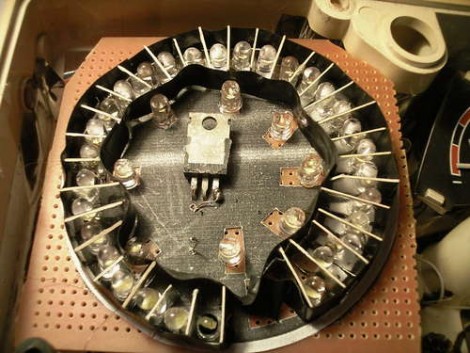
A Nixie tachometer is new to us. We’ve seen tons of various displays, but not a tachometer. After having extensive annoyances with the factory ignition timing system in his totally awesome Holden Gemini, [Brett] installed a MegaJolt electronic ignition system. To top things off and add that extra bit of flair, he built a nixie tachometer to sit on his dash. Not only does it have the numeric read out, you can see a nixie “bar graph” on top as well. Skip to about 2:30 if you want to go right to the action. You can download the Arduino code from the forum post.

Fan-powered Skateboard

[Chris Neal] is starting his hacking career young. He built this fan-powered skateboard for his fourth grade ‘Invention Convention’. The ideas were his own but he had some help with the construction from his uncle who owns a repair garage. On the back of the board there’s a motorcycle battery that powers the fan. We’re not sure where that fan came from, but apparently it can push a rider at about 3-5 MPH. [Chris] scored a free MacBook pro from this hack after being featured on the Ellen DeGeneres Show.

For some reason this sparks the memory of the drill powered minibike.

[via Gizmo Watch]

$500 Craigslist Car Competes Against $400,000 Race Car…

…and wins. Well, 3rd in class, but still surprisingly well for such a cheap entry. This is truly a show that with enough elbow grease and headlight fluid anything can be accomplished money just makes it a ton easier.

Everything from the roll cage to the 5 minute gas tank fix was fabricated by [Bill Caswell]. Well — fabricated is a rough term for duct tape at that point, but this is still an awe-inspiring and truly motivational story for any hacker and car enthusiast alike.

[Thanks TJ Walker]

Balancing Skateboard/segway

[youtube=http://www.youtube.com/watch?v=7UKxuVliaIA]

[XenonJon] got a lot of attention for a skateboard/segway style balancing platform he took to the Makerfaire in Newcastle. He decided to try to build it the cheapest and easiest possible way in an attempt to help others build their own. The build is documented very well, however you have to email him to request the code for the Arduino. Maybe after enough requests, he’ll just pop it online. We thought this looked familiar, so we searched the archive and found this very similar setup from back in 2005. Unfortunately, that project page appears to be gone now.

Tim “The Tool Man” Taylor’s Dream Ride

While surfing one of our favorite websites, we came upon this little jewel. We can’t really tell if this is hack-worthy, or just a deathtrap, so to help decide…

Mechanics crawler + 80cc motor – safety concerns = deathtrap

It’s really that final “Brakes? Why would I need to stop?” that puts this project over the edge. Regardless, check out a video after the break. And please, do not try this at home.

Continue reading “Tim “The Tool Man” Taylor’s Dream Ride”

Adding An Automotive Cold Air Intake

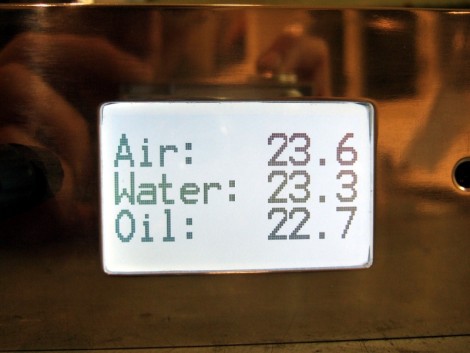
[Thomas] and a buddy were sucking down a few brews when they decided to hack their 2001 Chevy Cavalier for a bit better performance. If they could find a way to bring cooler air to the engine they speculated that they’d see an increase in efficiency. Instead of routing the air intake to a hood scoop, they took off the factory air filter and mounted a cold air filter in its place. PVC pipes were then used to create a delivery path from the front of the vehicle with the output in close proximity to the new filter. They tested their work and discovered a drop in intake temperature from 101 to 48 degrees Fahrenheit at 60 mph, and from 109 to 54 degrees Fahrenheit at 45 mph. Now the sedan runs better and generates more horsepower, all for around $35 in parts.

Electric-assist Bicycle Uses LiFePO4 Batteries

This bicycle add-on uses an electric motor to help you out. This way the motor takes advantage of the gearing normally available to the cyclist. What interests us most about the system is the DIY battery work they’re doing. The cells are using Lithium Iron Phosphate technology. The li-ion cells you’re used to seeing in consumer electronics are actually Lithium Cobalt Oxide. The Iron Phosphate flavor offers longer overall lifespan, better operation between charges over that life, and improved cold-weather performance.  The drawbacks include a 20-cycle break-in period and an affinity for trickle-charging versus faster charging methods.

The 48V cell seen above will provide 30-40 miles of travel between charges. We feel that getting the power plant out of our vehicles is an important step toward energy overhaul but it can only happen if the battery technology makes it possible. Then again, perhaps we’re barking up the wrong tree and should have placed our bets on compressed air.

[Thanks Tom]