Hackaday Prize Finalist: A Network Of Satellite Ground Stations

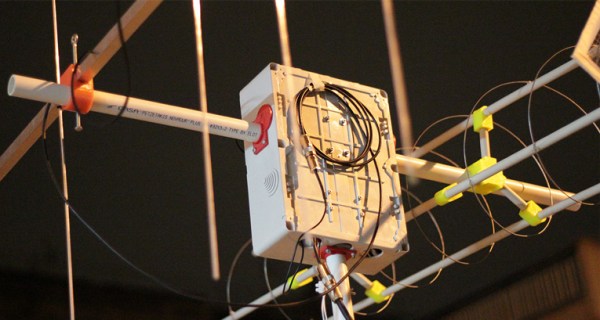
There are astonishing things you can do with a network of sensors spread across the globe, all connected to the Internet. Thousands of people have already installed hardware to detect lightning and flightaware gives out subscriptions to their premium service to anyone who will listen in to airplane transponders and send data back to their servers. The folks behind SatNOGS, one of the five finalists for The Hackaday Prize are using this same crowdsourced data collection for something that is literally out of this world: listening to the ever-increasing number of amateur satellites orbiting the planet.

There are dozens of cubesats and other amateur satellites flying every year, and they have become an extremely popular way of experimenting in a space environment, giving some budding engineers an awesome project in school, and testing out some technologies that are just too weird for national space agencies. The problem with sending one of these birds up is getting the data back down; a satellite will pass above the horizon of a single location only a few times a day, and even then for only minutes at a time. The SatNOGS team hopes to change that by planting receivers all around the globe, connecting them to the Internet, and hopefully providing real-time telemetry from dozens of orbiting satellites.

[Pierros] from the SatNOGS team was kind enough to sit down and answer a few questions for us about his entry to The Hackaday Prize. That’s below, right after their finalist video. Some of the SatNOGS team will also be at our Munich event where we announce the winner of the Prize.

Continue reading “Hackaday Prize Finalist: A Network Of Satellite Ground Stations”
Hackaday Prize Finalist: A Portable SDR

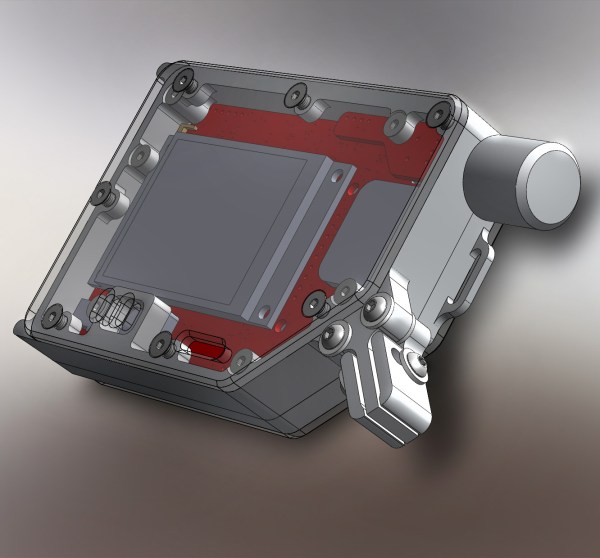
No other project to make it to The Hackaday Prize has people throwing money at their computer screen hoping something would happen than [Michael Colton]’s PortableSDR. It’s a software defined radio designed for coverage up to 30MHz. Amateur radio operators across the world are interested in this project, going so far as to call this the first Baofeng UV-5R killer. That’s extremely high praise.

[Michael] was kind enough to sit down and answer a few questions about how his entry to The Hackaday Prize has gone. You can check that out below, along with the final round video of the project. Anyone who wants their own PortableSDR could really help [Michael] out by taking this survey.

Continue reading “Hackaday Prize Finalist: A Portable SDR”

The Hackaday Prize: The Hacker Behind The First Tricorder

Smartphones are the most common expression of [Gene Roddneberry]’s dream of a small device packed with sensors, but so far, the suite of sensors in the latest and greatest smartphone are only used to tell Uber where to pick you up, or upload pics to an Instagram account. It’s not an ideal situation, but keep in mind the Federation of the 24th century was still transitioning to a post-scarcity economy; we still have about 400 years until angel investors, startups, and accelerators are rendered obsolete.

Until then, [Peter Jansen] has dedicated a few years of his life to making the Tricorder of the Star Trek universe a reality. It’s his entry for The Hackaday Prize, and made it to the finals selection, giving [Peter] a one in five chance of winning a trip to space.

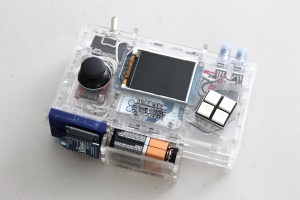
[Peter]’s entry, the Open Source Science Tricorder or the Arducorder Mini, is loaded down with sensors. With the right software, it’s able to tell [Peter] the health of leaves, how good the shielding is on [Peter]’s CT scanner, push all the data to the web, and provide a way to sense just about anything happening in the environment. You can check out [Peter]’s video for The Hackaday Prize finals below, and an interview after that.

Continue reading “The Hackaday Prize: The Hacker Behind The First Tricorder”

Global Radiation Monitoring Network Update

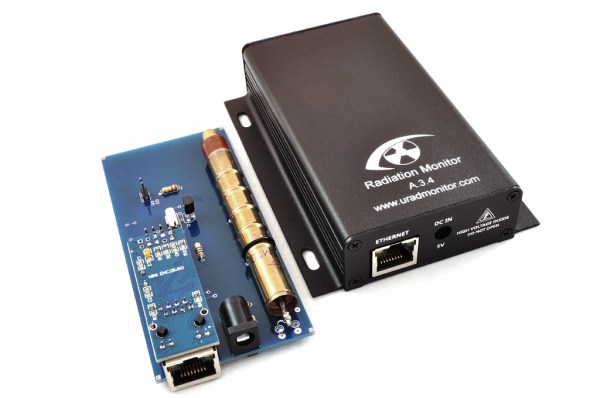
Things have been busy at Global Radiation Monitoring Network Central Command. As a semifinalist in the Hackaday Prize, project creator [Radu Motisan] has quite a bit of work to do. He’s not slacking off either. With 33 project logs (and counting), [Radu] has been keeping us up to date with his monitoring network and progress on uRADMonitor , the actual monitoring hardware.

[Radu’s] latest news is that he’s ready to go into production with model A of the uRADMonitor. Moving from project to production can be an incredible amount of work due to sourcing parts, setting up assembly houses, and dealing with any snags that come up along the way. We’re sure [Radu] can handle it, though.

The network of uRADMonitors is also growing. A new monitor was just installed in Prescott, Arizona. This is the 10th unit in the USA.  You can view the map, data, and graphs of global radiation live on the uRADMonitor website.


SpaceWrencherThe project featured in this post is a semifinalist in The Hackaday Prize.
Thumbnail that say The Hacklet

Hacklet #12 – Last Minute Hackaday Prize Submissions

12

If hackers and engineers are notorious for anything, it’s for procrastinating. Many of us wait until the absolute last-minute to get things done. The Hackaday Prize has proved to be no exception to that. Anyone watching the newest projects could see the entries fly in the last few days. Let’s take a quick look at a few.

handuino

[Cyrus Tabrizi] submitted Handuino just a few short hours before the deadline. Handuino is an Arduino based human interface device. You can use it to control anything from R/C cars to 3D printers, to robots to Drones. Input is through the joystick, switches, and buttons, and output through the on-board 2.2″ LCD. Projects can interface to the Handuino via a USB port, or an XBEE radio. Nice Work [Cyrus].

bionicYoSelf

[txyz.info] wants to make us more human than human with Bionic Yourself, an implantable device to make you a bionic superhero. [txyz] plans to use sensors such as an electromagnetic field sensor, accelerometers, and Electromyography (EMG) muscle activity detectors. The idea is to not only sense the implanted wearer, but the world around them. The wearer can then use an embedded Bluetooth radio to send commands. The entire system runs on the Arduino platform, so updating your firmware will be easy. Not everyone has a charging port, so [txyz] has included wireless battery charging in the system.

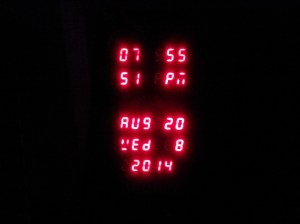
HAD-alarm-clock[Laurens Weyn] wants to wake us all up with Overtime: the internet connected alarm clock. Overtime is a Raspberry PI powered clock with a tower of 7 segment displays. The prototype displays were sourced from an old exchange rate sign. Overtime does all the normal clock things, such as display the time, and date. It even allows you to set and clear alarms. The display is incredible – there are enough pixels there to play Tetris. Overtime is currently running on an Arduino Mega, but [Laurens] plans to move to a Raspberry PI and hook into the internet for information such as Google calender events.

We’re going to cut things a bit short this week. Your work is done (for now) but for the Hackaday staff, the work is just beginning. We’re already on task, reviewing the entries, and picking which submissions will move on to the next round. Good luck to everyone who entered.

As always, See you in next week’s Hacklet. Same hack time, same hack channel, bringing you the best of Hackaday.io!

Astronaut Or Astronot: Totally Giving Away A Power Supply

Hey! It’s time for another round of Astronaut or Astronot, where we try to give away a jumbo power supply to someone on hackaday.io if they have voted in the most recent community voting round.

Before I get around to telling you who won, we need to go over the criticism of the current voting scheme. There’s a lot of valid criticism out there about how the algorithm that presents projects to the voting page is broken. Yes, it weights projects so some are seen more often than others. And yes, it can be frustrating. However, the results of the voting have no bearing on The Hackaday Prize (the space thing), and the purpose of the entire community voting is to get people looking at the projects, give away t-shirts to the project creators and 3D printers, o-scopes, and power supplies to random people who have voted. We listened to your suggestions and we’re tweaking the algorithm that presents projects for the next round of voting. That starts Monday, we’re doing the drawing on Wednesday, and votes don’t carry over from round to round.

With that out of the way, it’s time to do the whole ‘pick a random person on hackaday.io and see if they voted’ thing. For this week’s lottery, I chose five random people on the site, hoping I wouldn’t go through all of them before giving away a nice bench power supply. The first person, [in3rtial], didn’t vote. You just lost out on a really cool prize there, man.

The second person randomly selected was [tyler]. He voted a total of six times this round. I voted fifty times, but we’re not picky. That means he wins a nice power supply. Everyone go congratulate him for living somewhere that’s cheap to ship a power supply to.

That’s it for this round of Astronaut or Astronot. We’ll have a new round of voting up on Monday. For a change of pace (and because we’re going to be at DEFCON at this time next week), we’re going to do the drawing on Wednesday nevermind, we’re totally doing the drawing from DEFCON. Oh, and if you haven’t, you might want to submit a project to The Hackaday Prize. There’s still time, and your odds of winning something are really, really good.

THP Entry: The Improved Open Source Tricorder

Since [Gene Roddenberry] traveled back in time from the 23rd century, the idea of a small, portable device has wound its way through the social consciousness, eventually turning into things like smartphones, PDAs, and all the other technological gadgetry of modern life. A few years ago, [Peter Jansen] started The Tricorder Project, the start of the ultimate expression of [Mr. Roddneberry]’s electronic swiss army knife. Now [Peter] is building a better, smaller version for The Hackaday Prize.

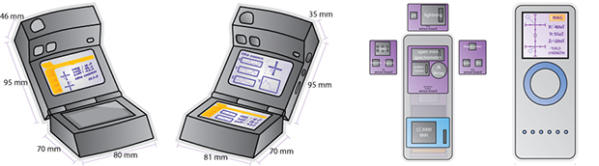
[Peter]’s first tricorders borrowed their design heavily from The Next Generation props with a fold-out section, two displays, and a bulky front packed to the gills with sensors and detectors. Accurate if you’re cosplaying, but not the most practical in terms of interface and human factors consideration. These constraints led [Peter] to completely redesign his tricorder, disregarding the painted wooden blocks found on Enterprise and putting all the electronics in a more usable form factor.

A muse of sorts was found in the Radiation Watch, a tiny, handheld Geiger counter meant as an add-on to smartphones. [Peter] envisions a small ~1.5″ OLED display on top, a capacitive sensing wheel in the middle, and a swipe bar at the bottom. Basically, it looks like a 1st gen iPod nano, but much, much more useful.

Plans for what to put in this improved tricorder include temperature, humidity, pressure, and gas sensors, a 3-axis magnetometer, x-ray and gamma ray detectors, a polarimeter, colorimeter, spectrometer, 9-axis IMU, a microphone, a lightning sensor, and WiFi courtesy of TI’s CC3000 module. Also included is something akin to a nuclear event detector; if it still exists, there has been no nuclear event.

It’s an astonishing array of technology packed into an extremely small enclosure – impressive for something that is essentially a homebrew device.Even if it doesn’t win the Hackaday Prize, it’s still an ambitious attempt at putting data collection and science in everyone’s pocket – just like in Star Trek.


SpaceWrencherThe project featured in this post is an entry in The Hackaday Prize. Build something awesome and win a trip to space or hundreds of other prizes.