Triple Frequency VFO On A Bamboo Breadboard

Historically when hams built low power (QRP) transmitters, they’d use a crystal to set the frequency. Years ago, it was common to find crystals in all sorts of radios, including scanners and handheld transceivers. Crystals are very stable and precise and it is relatively easy to make a high quality oscillator with a crystal and a few parts.

The big problem is you can’t change the frequency much without changing crystals. Making a high quality variable frequency oscillator (VFO) out of traditional components is quite a challenge. However, today you have many alternatives ranging from digital synthesis to all-in-one IC solutions that can generate stable signals in a wide range of frequencies.

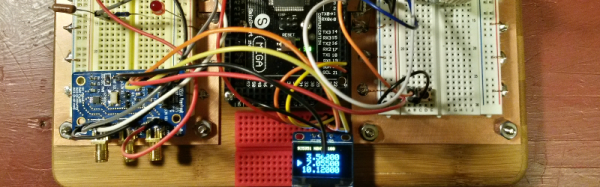
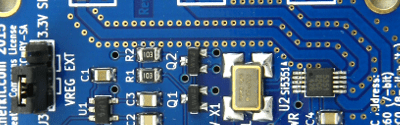
[N2HTT] likes to build radio projects and he decided to take an Si5351 clock generator and turn it into a three frequency VFO for his projects. The Si5351 uses a crystal, so it is very stable. However, you can digitally convert that crystal frequency into multiple frequencies over a range of about 8kHz to 160MHz.

Continue reading “Triple Frequency VFO On A Bamboo Breadboard”

Mid-Priced Hardware Gets Serious About Software Defined Radio

Regular Hackaday readers are used to seeing the hacks that use a cheap USB TV dongle as a software defined radio (SDR). There’s plenty of software that will work with them including the excellent GNU Radio software. However, the hardware is pretty bare-bones. Without modifications, the USB dongle won’t get lower frequencies.

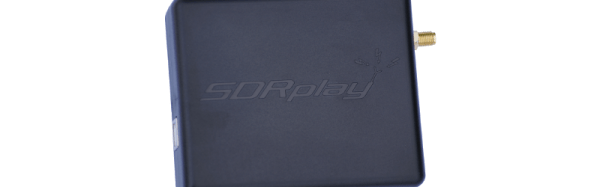
There’s been plenty of other SDR radios available but they’ve had a much heftier price tag. But we recently noticed the SDRPlay RSP, and they now have US distribution. The manufacturer says it will receive signals with 12-bits of resolution over the range of 100 kHz to 2 GHz with an 8MHz bandwidth. The USB cable supplies power and a connection to the PC. The best part? An open API that supports Windows, Linux, Mac, Android, and will even work on a Raspberry Pi (and has GNU Radio support, too).

Continue reading “Mid-Priced Hardware Gets Serious About Software Defined Radio”

Arduino Teaches Morse Code

You may wonder why anyone would want to learn Morse code. You don’t need it for a ham license anymore. There are, however, at least three reasons you might want to learn it anyway. First, some people actually enjoy it either for the nostalgia or the challenge of it. Another reason is that Morse code can often get through when other human-readable schemes fail. Morse code can be sent using low power, equipment built from simple materials or even using mirrors or flashlights. Finally, Morse code is a very simple way to do covert communications. If you know Morse code, you could privately talk to a concealed computer on just two I/O lines. We’ll let you imagine the uses for that.

In the old days, you usually learned Morse code from an experienced sender, by listening to the radio, or from an audio tape. The state of the art today employs a computer to randomly generate practice text. [M0TGN] wanted a device to generate practice code, so he built it around an Arduino. The device acts like an old commercial model, the Datong D70, although it can optionally accept an LCD screen, something the D70 didn’t have.

You can see the project in operation in the video below. Once you learn how to read Morse code, you might want to teach your Arduino to understand it, too. Or, you can check out some other Morse-based projects.

Continue reading “Arduino Teaches Morse Code”

Radio Receiver Or Art? Why Not Both?

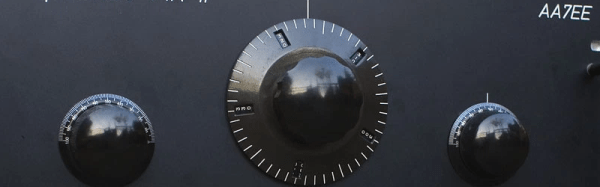
We’ve heard it said before that you should build things twice. Once to learn how to build it and the second time to build it right. [AA7EE] must agree. He was happy with his homebrew regenerative receiver that he called Sproutie. But he also wanted to build one more and use what he learned to make an even better receiver. The Sproutie Mark II was born.

This isn’t some rip off of an old P-Box kit either. [AA7EE] used a four-device RF stage with FET isolation back to the antenna and a regulated power supply. Plug in coils allow reception on multiple bands ranging from about 3 to 13 MHz. There’s an audio stage with multiple selectable audio filters, and–the best part–a National HRO tuning dial that is a work of art all by itself.

Continue reading “Radio Receiver Or Art? Why Not Both?”

Arduino Masters Ham Radio Digital Mode

[jmilldrum] really gets a lot of use out of his Si5351A breakout board. He’s a ham [NT7S], and the Si5351A can generate multiple square waves ranging from 8 kHz to 160 MHz, so it only stands to reason that it is going to be a useful tool for any RF hacker. His most recent exploit is to use the I2C-controllable chip to implement a Fast Simple QSO (FSQ) beacon with an Arduino.

FSQ is a relatively new digital mode that uses a form of low rate FSK to send text and images in a way that is robust under difficult RF propagation. There are 32 different tones used for symbols so common characters only require a single tone. No character takes more than two tones.

Continue reading “Arduino Masters Ham Radio Digital Mode”

Steal This Ham Radio (Technology)

Although I see a lot of wireless projects, I’m always surprised at the lack of diversity in the radio portions of them. I’m a ham radio operator (WD5GNR; I was licensed in 1977) and hams use a variety of radio techniques. If you think hams just use Morse code and voice communications, you are thinking of your grandfather’s ham radio. Modern hams have gone digital and communicate via satellites, video, and many different digital techniques that could easily have applicability to different wireless projects.

Of course, Morse code may have been one of the first digital modes. But hams have used teletype, FAX, and other digital modes for years. Now with PCs and soundcards in common use, hams have been on the forefront of devising sophisticated digital radio techniques.

Continue reading “Steal This Ham Radio (Technology)”

Hams Talk Digital

Morse code qualifies as a digital mode, although organic brains are somewhat better at copying it than electronic ones. Ham radio operators that did “phone” (ham-talk for voice) started out with AM modulation. Sometime after World War II, there was widespread adoption of single side band or SSB. SSB takes up less bandwidth and is more reliable than AM modulation. On the digital side, hams turned to different and more sophisticated digital transmission types with computers pushing bandwidth down and reliability up. However, a recent trend has been to encode voice over ham radio–sort of VoIP with radio instead of Ethernet–using an open source program called freedv.

[AA6E] made a very informative video where he carries on a QSO (a conversation) with a distant station using freedv. What makes it interesting, is towards the end when the two stations switch to regular SSB. The difference is dramatic and really points out how even with less bandwidth (roughly 3 kHz for SSB vs 1.25 kHz), the digital mode is superior. The freedv software (available for Windows or Linux) compresses audio to 700-1600 bits per second and spreads it over 16 QPSK signals.

Continue reading “Hams Talk Digital”