TI Adds Some Linux Support For Evalbot – We’ve Got Hardware Coupon Codes For You!

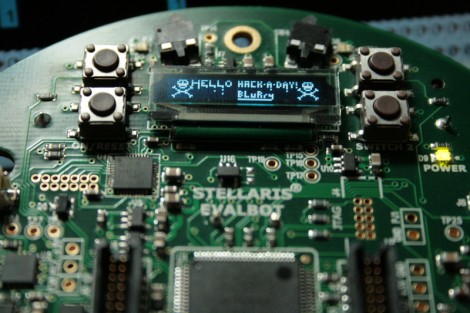
In case you missed it, Texas Instruments sells a little robot called the Evalbot as a development platform for ARM Cortex-M3 microcontrollers. Since its release we’ve seen a few hacks on the hardware; the image above is a proof of concept for developing for the device under Linux. We have criticized TI in the past for not natively supporting Linux with their IDEs. We’re not sure how it will play out, but they have added new software package options to go along with the hardware. You’ll notice on their PR page that there is now an option to use CodeSourcery. It is a trial of the full version, but at least it is a step in the GNU direction from their previous offering.

The Hackaday team has been talking off and on with TI about the hardware. We’re happy to say that they’ve been listening to the Internet community about their likes and dislikes; following various online groups that have sprouted up to talk about Evalbot projects. It sounds like they’re thinking about hosting a contest using the hardware. So maybe you want to get your hands on one so that you can familiarize yourself and hit the ground running if/when that contest starts. You’re in luck, we can help save you a few bucks.

The first time that Texas Instruments tried out a $125-off coupon code the deal got away from them. It had been meant for attendees of the ESC Boston conference. They honored the deals that went through before the proverbial run-on-the-bank got shut down. This time around they’re using serialized deal codes to limit the number of give-aways. We’ve got 200 of them just waiting for our loyal readers to use. One code will let you purchase one Evalbot for just $25 (instead of $150).

Please take a moment to decide if you actually want (and will use) one of these robots, and decide if you are willing to shell out the $25 to order it. You see, we don’t want this deal going to waste. If you decide this is for you, send an email requesting a code to:We’re all out! We’ll dish out the deal on a first-emailed-first-served basis. We will update this post when all 200 have been claimed.

We will not tolerate anyone gaming the system and so we reserve the right to disqualify any email submission for any reason in an attempt to maintain some semblance of fairness. Also… if you’re planning to pick this up just to resell it for cash you’re a loser.

[update: Those who emailed us requesting a code should begin receiving replies this evening or tomorrow.]

[Update 2: here is the specific bot you should be trying to buy. ]
Free Home Phone Method Uses Parts We’re Familiar With

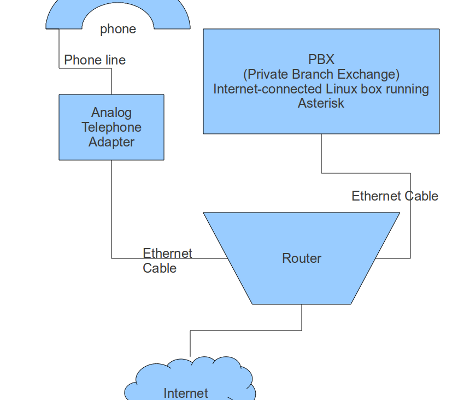
[Headsheez] found a way to get his home phone service for free. He’s using a set of tools that we’re familiar with to route service from a typical analog phone system (which involves the extensions wired into your home) through a server to the Internet. On the hardware side of things this starts out with an Analog Telephone Adapter which translates the analog signal for use in a PBX system. He uses a copy of the open source PBX project called Asterisk which we’ve also seen used on devices like routers and the SheevaPlug. The actual telephone number comes from a Google voice account which for now is a free service but there’s no guarantee that it will remain that way in the future.

This should provide seamless service just like you’re used to with a traditional home phone line. There’s even caller ID for the number – but not the name – for incoming calls. The one big feature that is missing from this setup is the ability to call 911 for emergencies.

[via Reddit]

RF Control From Just About Any Device

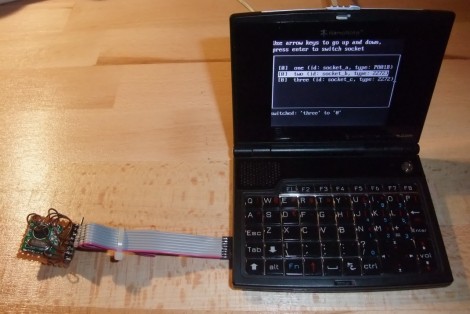
[Mirko] is working on a library that will allow you to add RF control to just about any device. The only requirement is that the device be capable of running a Linux kernel, and that it have a few GPIO pins available. One example is fairly straight forward, a Netgear router. Many, if not most routers run a Linux kernel natively and most have solder points on the board for unused IO pins so patching into the hardware is very straight forward. Less obvious and much more impressive is the hack seen in the image above. [Mirko] built an SD card adapter cable and uses the contacts in the card reader to bit bang four-wire SPI to communicate with that RF module.

Plug-in Module Lies About News At Coffee Shops. Real Or Fake?

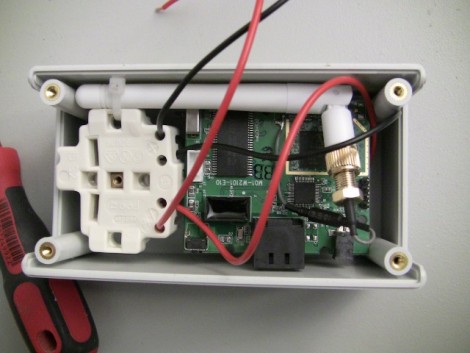
[Mike] sent in a tip about Newstweek, and we’re turning to our readers to tell us if this is real or if we’re being trolled. The link he sent us points to a well-written news-ish article about a device that plugs into the wall near an open WiFi hotspot and performs something of a man-in-the-middle attack on devices connected to the access point. The article describes the device above as it observes, then spoofs the ARP table of the wireless network in order to inject fake news stories in pages you are reading. Apparently once it boots, the small box phones home for commands from its maker over a TOR connection.

The box reminds us of the Sheevaplug so it’s not the hardware that makes us question the possibility of the device. But look at the Linux terminal screen readout. It shows a prompt with the word ‘newstweek’ in it. That’s the address of the site the article is hosted on, giving us a strong sense of being trolled.

What do you think, real or fake? Let us know (and why you think that) in the comments.

What Development Board To Use? (Part Two)

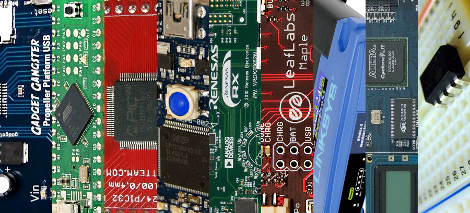
We asked for responses to our last Development Board post, and you all followed through. We got comments, forum posts, and emails filled with your opinions. Like last time, there is no way we could cover every board, so here are a few more that seemed to be popular crowd choices. Feel free to keep sending us your favorite boards, we may end up featuring them at a later date!

Continue reading “What Development Board To Use? (Part Two)”

TI Evalbot Development Under Linux

We have some beefs about how Texas Instruments does things, the biggest of which is their lack of support for development under Linux operating systems. But if they build it, someone will try to get Linux involved in one form or another. This time around, [BLuRry] put together a guide to developing for the Evalbot under Linux. He got a shove in the right direction from the code package that went along with that nunchuck-controlled Evalbot. Picking apart that example to the bare essentials he wrote up the process of setting up the cross-compiling toolchain in a virtual machine so as not to clutter your system. From there he details how to set up and use Eclipse when starting a new project. What what did he choose for a Hello World experience? Well a plain “Hello World” was first but right on its heels is the “Hello Hack-A-Day” seen above. So if you’ve got one of these on hand get out there and start coding for it.

Open Source Your Rave With OpenLase

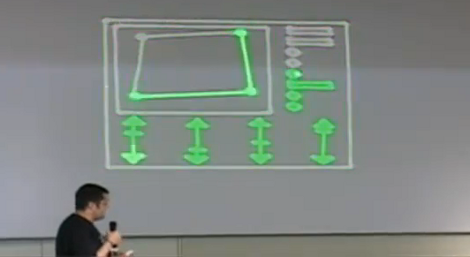
Without a doubt, Laser Projectors are a great way to project large, bright images on any surface you can imagine. With a high enough quality projector and software package, excellent images and visualizations can be displayed in real time. [marcan], of the openkinect project, decided that there were not any open source laser projection packages out there that suited his wants or needs, so logically he decided to write his own. Because home-made laser projectors often use the audio out port of a PC, building the framework on top of the JACK unix sound software to control the hardware made perfect sense. OpenLase includes plugins for audio visualizations, 2D and 3D gaming, as well as converting video streams into laser format in real time.

Be sure to check out the Chaos Communication Congress presentation [marcan] gave after the break, as well as all the extra demo videos on his website.

Continue reading “Open Source Your Rave With OpenLase”