The United States is going back to the moon, and it’s happening sooner than you would think. NASA is going back to the moon in 2024, and they might just have the support of Congress to do so.
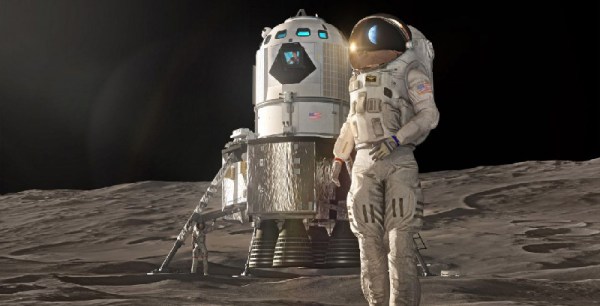
Getting to the moon is one thing, and since SpaceX launched a car to the asteroid belt, this future of boots on the moon after Apollo seems closer than ever before. But what about landing on the moon? There’s only ever been one Lunar Lander that has taken people down to the moon and brought them back again, and it’s doubtful that design will be used again. Now, Lockheed has their own plan for landing people on the moon, and they might be able to do it by 2024.
Some bittersweet news today as we get word that Israel’s Beresheet spacecraft unfortunately crashed shortly before touchdown on the Moon. According to telemetry received from the spacecraft right up until the final moments, the main engine failed to start during a critical braking burn which would have slowed the craft to the intended landing velocity. Despite attempts to restart the engine before impact with the surface, the craft hit the Moon too hard and is presumably destroyed. It’s likely that high resolution images from the Lunar Reconnaissance Orbiter will eventually be able to give us a better idea of the craft’s condition on the surface, but at this point the mission is now officially concluded.
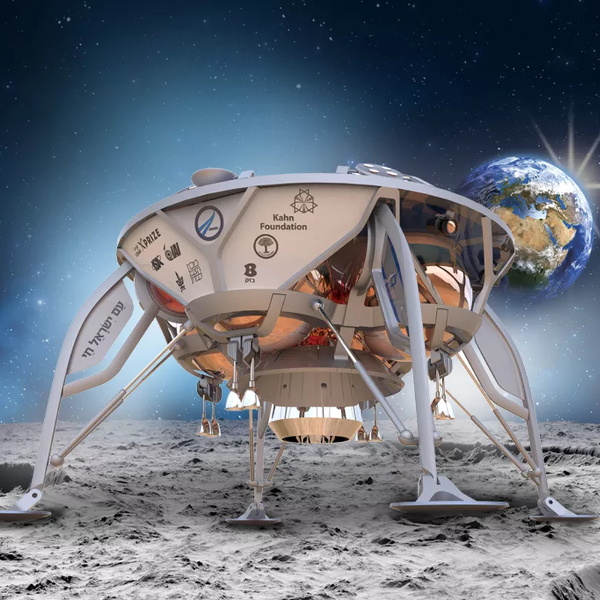
The Beresheet Lander
It’s easy to see this as a failure. Originally conceived as an entry into the Google Lunar X Prize, the intended goal for the $100 million mission was to become the first privately funded spacecraft to not only touch down on the lunar surface, but navigate laterally through a series of powered “hops”. While the mission certainly fell short of those lofty goals, it’s important to remember that Beresheet did land on the Moon.
It didn’t make the intended soft landing, a feat accomplished thus far only by the United States, Russia, and China; but the fact of the matter is that a spacecraft from Israel is now resting on the lunar surface. Even though Beresheet didn’t survive the attempt, history must recognize Israel as the fourth country to put a lander on the surface of our nearest celestial neighbor.
It’s also very likely this won’t be the last time Israel reaches for the Moon. During the live broadcast of the mission, after it was clear Beresheet had been lost, Prime Minister Benjamin Netanyahu vowed his country would try again within the next two years. The lessons learned today will undoubtedly help refine their next mission, and with no competition from other nations in the foreseeable future, there’s still an excellent chance Israel will be able to secure their place in history as the fourth country to make a successful soft landing.
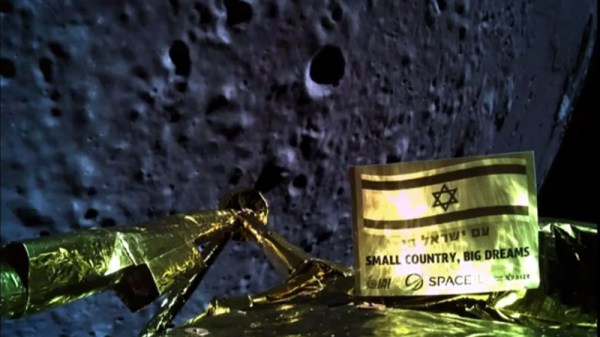
Beresheet’s view during descent
Of course you’ve got to get to the Moon before you can land on it, and in this respect, Beresheet was an unmitigated success. We previously covered the complex maneuvers required to put the craft into lunar orbit after riding to space as a secondary payload on the Falcon 9 rocket; a technique which we’ll likely see more of thanks to the NASA’s recent commitment to return to the Moon. Even if Beresheet never attempted to land on the surface, the fact that it was able to enter into a stable lunar orbit and deliver dramatic up-close images of the Moon’s surface will be a well deserved point of pride for Israel.
This won’t be the last time that hundreds of millions of dollars worth of high-tech equipment will be lost while pushing the absolute edge of the envelope, and that’s nothing to be upset over. Humans have an insatiable need to see what’s over the horizon and that means we must take on a certain level of risk. The alternative is stagnation, and in the long run that will cost us a lot more than a few crashed probes.
One of the smash hits of the 1970s arcade was Atari’s Lunar Lander. A landing craft in orbit around a moon would descend slowly towards the surface, and through attitude and thrust controls the player had the aim of bringing it safely in to land. Many a quarter would have been poured into the slot by eager gamers wanting to demonstrate their suitability for astronaut service.
It was to this game that [Chris Fenton] turned when he was looking for inspiration for the 2016 NYCResistor Interactive show, and the result was a Lunar Lander game with a difference, one in which the gameplay was enacted through a physical lander and lunar surface. In this case the moon in question is a papier-mâché-covered inflatable ball, and the lander is a 3D-printed model on the end of a lead screw. Control is provided by an Arduino, with a rough facsimile of the original control panel and a set of microswitches on the model to detect a crash or a safe landing.
The result is a surprisingly playable game, as can be seen from the video below the break.
Hardware details are a bit hard to come by but we hear that there will me more on the build posted soon. For now the Flickr set is the best source of information. From reading the captions we know that a set of three Mac minis run everything. There are also a few close-ups and a video overview of the drive hardware which you can see mounted on the upper left of the image above. We can tell you that this is a string plotter similar to builds we’ve seen in the past. The telemetry data from the Lunar Lander game is converted to instructions and fed directly to that device. See it in action in the clip after the break.
For those that are lucky enough to remember it, Lunar Lander was a fantastic game. Though it had simple vector graphics and highly repetitive game play, it kept us captivated. We probably lost entire weeks of our lives competing with friends to be the best. Well, now we can relive that experience with a physical version of the game. [Lain] built this fantastic arcade style game to replicate Lunar Lander’s game play exactly. The style of the project is fantastic with giant analog meters and dials giving real time feedback. You even get a prize if you complete all 3 levels. You can get plenty of build details by going through his blog. Maybe he should hook up with the folks that built the Apollo landing computer replica to build the ultimate simulator.