
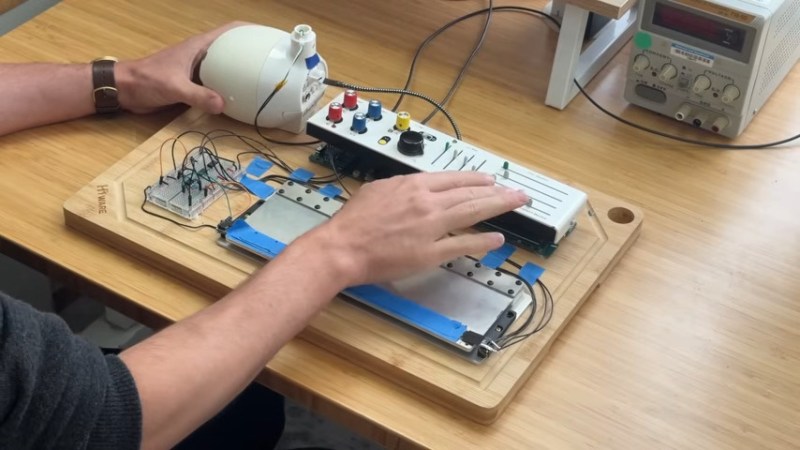
The omatraumatone. Or something. It's a synth.

Otamatone Hacked Into Different, Cooler Synth: Trautonium

Analog synths are fun because they combine music, which all humans seem hard-wired to enjoy in one form or another, and electronics, which… uh, this is Hackaday. If you don’t like electronics, we’re not sure what to tell you. This hack from [Sound Workshop] takes the cheap, toy-like Otamatone and turns it into an older and more capable type of synthesizer: a Trautonium. The video below also includes a dive into the different types of early synthesizers, with examples of them playing, so it’s worth watching for that alone — if you know the history, skip the first five minutes or so.

For those of you more into the electronics than the music side of things, the Otamatone is kind of like an electronic slide whistle, but adorable. Shaped like an eighth note or a tadpole, you control pitch by sliding your fingers up and down the ‘tail’ and activate the voice by squeezing the ‘head’ to open the mouth. It is one of the newest electronic instruments on the market, having debuted as a Japanese toy in 2009.

Continue reading “Otamatone Hacked Into Different, Cooler Synth: Trautonium”

Don’t Forget Your Mints When Using This Synthesizer

While synthesizers in the music world are incredibly common, they’re not all keyboard-based instruments as you might be imagining. Especially if you’re trying to get a specific feel or sound from a synthesizer in order to mimic a real instrument, there might be a better style synth that you can use. One of these types is the breath controller, a synthesizer specifically built to mimic the sound of wind instruments using the actual breath from a physical person. Available breath controllers can be pricey, though, so [Andrey] built his own.

To build the synthesizer, [Andrey] used a melodica hose and mouthpiece connected to a pressure sensor. He then built a condenser circuit on a custom Arduino shield and plugged it all into an Arduino Mega (although he notes that this is a bit of overkill). From there, the Arduino needed to be programmed to act as a MIDI device and to interact with the pressure sensor, and he was well on his way to a wind instrument synthesizer.

The beauty of synthesizers is not just in their ability to match the look and sound of existing instruments but to do things beyond the realm of traditional instruments as well, sometimes for a greatly reduced price point.

Continue reading “Don’t Forget Your Mints When Using This Synthesizer”









