A Simple Route To A Plug Top Pi

There are a host of tiny plug-top computers available for the experimenter who requires an all-in-one mains-powered computing platform without the annoyance of a full-sized PC or similar. But among the various models there has always been something missing, a plug-top Raspberry Pi. To address that gap in the market, [N-O-D-E] has created a fusion of Pi and plug using the official Raspberry Pi PSU accessory and a Raspberry Pi Zero, with a UUGear Zero4U USB hub sandwiched between the two.

It’s a pretty straightforward and simple build, the back of the PSU is formed into a flat surface with a bit of Sugru, then the power cable is stripped back to its wires which are then connected to the power pins on the USB hub. The hub is then attached to the Sugru — he doesn’t say how, but we suspect double-sided tape — and the Pi is mounted on top of the hub. Pogo pins make the required connections to the pads on the underside of the computer, so it can be removed and replaced at will.

The result is a useful addition to your Pi arsenal, one that could be used for a host of little stand-alone devices. It could use a cover, however we suspect a 3D printer owner could create themselves one with relative ease. The full description is shown in the video below the break.

Continue reading “A Simple Route To A Plug Top Pi”

Pi Keeps Cool At 1.5 GHz

Hackers have a long history of overclocking CPUs ranging from desktop computers to Arduinos. [Jacken] wanted a little more oomph for his Pi Zero-Raspberry Pi-based media center, so he naturally wanted to boost the clock frequency. Like most overclocking though, the biggest limit is how much heat you can dump off the chip.

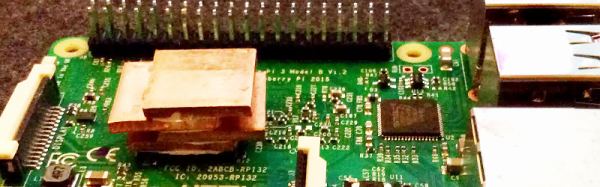
[Jacken] removed the normal heat sink and built a new one out of inexpensive copper shim, thermal compound, and super glue. The result isn’t very pretty, but it does let him run the Zero Pi at 1.5 GHz reliably. The heat sink is very low profile and doesn’t interfere with plugging other things into the board. Naturally, your results may vary on clock frequency and stability.

Continue reading “Pi Keeps Cool At 1.5 GHz”

Pi Zero Transforms To Game Boy

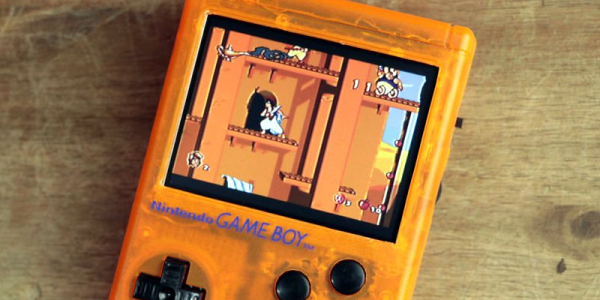
[GreatScott] bought a Game Boy case. Normally, you’d assume you wanted this to repair a damaged Game Boy, but in this case [GreatScott] used a Pi Zero and some 3D printing to build a game system into the tiny box. You can see some videos, below.

Two interesting parts of the project are the source of the LCD display (a rearview camera screen) and the selection of batteries. Lithium ion batteries are all the rage. But if you watch the news, you know there are some safety issues with using the batteries, especially if you use them improperly. [GreatScott] decided to go with nickel metal hydride cells which still need a protection circuit, but are typically less of a danger than the newer technology cells.

Continue reading “Pi Zero Transforms To Game Boy”

3.3V Is Not Enough For This Raspberry Pi Zero

A Raspberry Pi Zero is down to a price and size where it’s just begging to be integrated into your projects. Unless, that is, if your project involves a lot of 5 V equipment. Then it’s just begging to be fried.

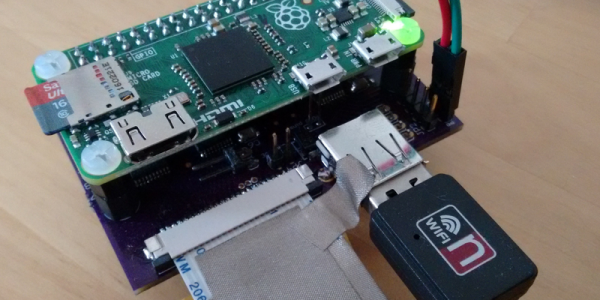
[David Brown] solved this problem by breaking out pins with level converters. He used flat-flex cable and some pin-headers. While he was at it, he added a full-sized USB port and power headers. (Extra hack points are awarded for connecting the USB to the board through pogo pins.)

Continue reading “3.3V Is Not Enough For This Raspberry Pi Zero”

Hackaday Links: May 22, 2016

Lulzbot’s TAZ 6 has been released. Lulzbot’s printers consistently place in the top three of any 3D printing list, and the TAZ 6 will likely be no exception. [James Bruton] was one of the lucky ones who got a review unit, and first looks are promising. The TAZ 6 has the auto bed leveling found in the Lulzbot Mini, and a ‘power tower’ for all the electronics. There are completely unconfirmed rumors (or someone told me and I forgot who) that the power tower will be available separately at some point.

The most impressive circuit we’ve seen this week month year is the dis-integrated 6502. It’s a discrete 6502 CPU, about a square foot in size. It’s slow, but it works. RAM and ROM is easy to make embiggened, which means someone needs to build a dis-integrated 6522 VIA. Who’s game?

[Jeremy Cook] wanted to learn another CAD package, in this case Onshape. Onshape is the ‘first cloud-only CAD package’, which has one huge bonus – you can run it anywhere, on anything – and one huge minus – it’s in the cloud. He designed a bicycle cupholder.

Last week, several thousand Raspberry Pi Zeros shipped out to retailers in the US and UK. For a time, Pi Zeros were in stock in some online stores. Now? Not so much. Where did they all go? eBay, apparently. It’s called arbitrage, and it’s the only risk-free form of investment.

Remember those ‘bed of nails’ toys, that were basically two sheets of plastic, with hundreds of small pins able to make 3D impressions of your face and hands. No, there is no official name for these devices, but here’s a Kickstarter for a very clever application of these toys. You can use them to hold through hole parts while soldering. Brilliant.

You should not pay attention to 3D printers on Kickstarter. Repeat after me: you should not give money to 3D printers on Kickstarter. Here’s a 3D printer on Kickstarter, promising a 3D printer for $74. I own several hats, and will eat one if this ships by next year.

Remember bash.org? It’s being reimplemented on hackaday.io.

Hackaday Links: May Day, 2016

Humble Bundle is a great way to fill up your Steam library – just pay what you want, and get some indie video games. The Humble Bundle is much more than video games, because No Starch Press just put up a bundle of books on hacking. No, there are no books about wearing balaclavas and using laptops with one hand. I haven’t written that book yet. There’s some choice books in this bundle, including [Bunnie]’s Hacking the XboxAutomate the Boring Stuff with Python, and Practical Malware Analysis.

The Raspberry Pi camera – the $25 add-on webcam that plugs directly into the Pi – is getting an upgrade. The original camera was a five Megapixel sensor that was EOL’d at the end of 2014. The Raspberry Pi foundation bought up a lot of stock, but eventually there would be a replacement. The new sensor is a Sony IMX219 eight Megapixel deal, available at the same price. We assume a NoIR version without the IR filter will be released shortly.

Here’s a little hardware review that doesn’t quite merit a full post. The Raspberry Pi Zero is great, and will be even better once production ramps up again and stock lands in warehouses. One problem with the Zero is the lack of USB ports, leading to at least two Hackaday posts with the exact same headline, ‘Yet Another Pi Zero USB Hub‘. Obviously, there’s a market for an easy to use USB hub for the Zero, and this company is stepping up to fill the need. The killer feature here is the use of pogo pins to tap into the USB differential lines, power and ground pads on the bottom of the Pi Zero. The USB hub is based on the popular FE 1.1 4-port USB hub controller, giving the Pi Zero four USB 2.0 ports. Does it work? Yeah, and it’s only $10. A pretty neat little device that will be very useful when Pi Zeros flood workbenches the world over.

It was announced in 2014, released in 2015, but the STM32F7 hasn’t seen a lot of action around these parts. A shame, because this is the upgrade to the famously powerful STM32F4 microcontroller that’s already capable of driving high-resolution displays through VGA, being an engine control unit for a 96 Ford Aspire, and being a very complex brushless motor driver. The STM32F7 can do all of these and more, and now ST is cutting prices on the F7’s Discovery Board. If you’re looking for a high-power ARM micro and don’t need to run Linux, you won’t do better elsewhere.

Need to reflow a board, but don’t have a toaster oven? Use a blowtorch! By holding a MAPP blowtorch a foot away from a board, [whitequark] was able to successfully reflow a large buck converter. There’s a lot of water vapor that will condense on the board, so a good cleaning afterward is a good idea.

A few weeks ago, [Mr. LeMieux] built a 360 degree, all-metal hinge. He’s been up to something a little more dangerous since then: building piles of mini table saws. Small table saws are useful for miniatures, models, and the like. [Mr. LeMieux]’s table saw is a piece of CNC’d aluminum, with a bearing and saw arbor that attaches to an electric drill. Dangerous, you say? Not compared to the competition. Behold the worst forty dollars I’ve ever spent. This Horror Freight mini table saw is by far the worst tool I’ve ever used. The bed was caked with streaky layers of paint, uneven, the blade wasn’t set at 90 degrees, and the whole thing was horrifically underpowered. Trust me when I say the CNC electric drill version is safer.

Gameboy Case Lives On With A Pi Zero

After scoring a non-functioning Gameboy in mint condition for $10, [Chad] decided it was time for a fun electronics project, so he ordered an LCD and bought a Pi Zero.

He started with a 3.5″ LCD off eBay for about $25, and got it running with the Pi Zero. It’s only 320×240 resolution, but hey, we’re recreating a Gameboy — not a smartphone. The next step was rather finicky: cutting up the case to fit the new components in.

Using a collection of files he whittled down the screen opening in the case to make room for the LCD, a few hours later and it looked surprisingly good.

From there he started laying out the components inside of the case, trying to figure out the best layout for everything to fit nicely. To power the unit he’s using a lithium ion battery from a Samsung Note which should give him some serious play-time. It fits right in where the game card is suppose to go.

To add some extra control functionality he’s added the game-pad buttons from a SNES onto the back where the battery door is, he’s also got a USB port on the side, a MicroSD card slot, and even a new audio pre-amp with potentiometer for controlling the speaker volume.

In case you can’t find a mint condition Gameboy case like [Chad] did, you could just print one from scratch

Continue reading “Gameboy Case Lives On With A Pi Zero”