This Week In Security: Perplexity V Cloudflare, GreedyBear, And HashiCorp

The Internet is fighting over whether robots.txt applies to AI agents. It all started when Cloudflare published a blog post, detailing what the company was seeing from Perplexity crawlers. Of course, automated web crawling is part of how the modern Internet works, and almost immediately after the first web crawler was written, one managed to DoS (Denial of Service) a web site back in 1994. And the robots.txt file was first designed.

Make no mistake, robots.txt on its own is nothing more than a polite request for someone else on the Internet to not index your site. The more aggressive approach is to add rules to a Web Application Firewall (WAF) that detects and blocks a web crawler based on the user-agent string and source IP address. Cloudflare makes the case that Perplexity is not only intentionally ignoring robots.txt, but also actively disguising their webcrawling traffic by using IP addresses outside their normal range for these requests.

This isn’t the first time Perplexity has landed in hot water over their web scraping, AI learning endeavors. But Perplexity has published a blog post, explaining that this is different!

And there’s genuinely an interesting argument to be made,that robots.txt is aimed at indexing and AI training traffic, and that agentic AI requests are a different category. Put simply, perplexity bots ignore robots.txt when a live user asks them to. Is that bad behavior, or what we should expect? This question will have to be settled as AI agents become more common.

Continue reading “This Week In Security: Perplexity V Cloudflare, GreedyBear, And HashiCorp”
Is It Time To Retire The TP4056?

The TP4056 is the default charge-controller chip for any maker or hacker working with lithium batteries. And why not? You can get perfectly-functional knockoffs on handy breakout boards from the usual online sources for pennies. Betteridge’s Law aside, [Lefty Maker] thinks that it may well be time to move on from the TP4056 and spends his latest video telling us why, along with promoting an alternative.

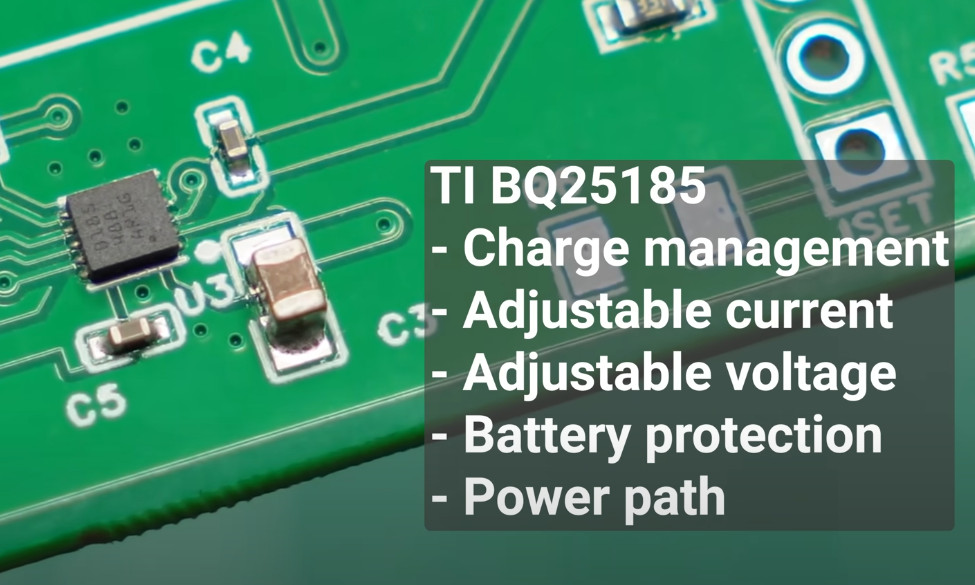
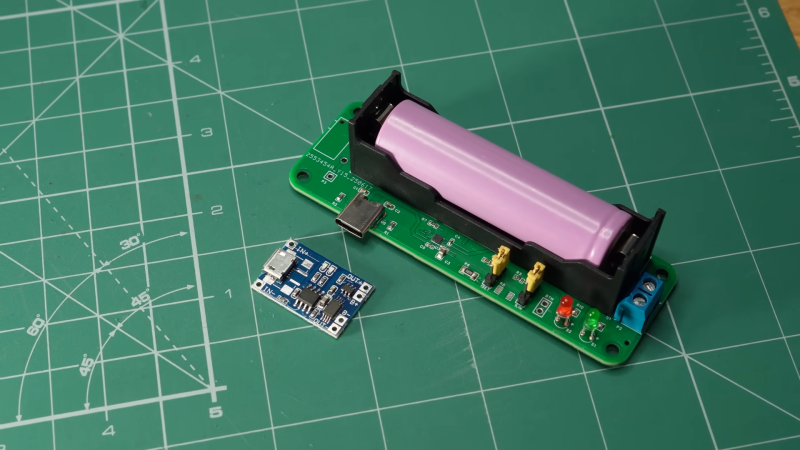
His part of choice is another TI chip, the BQ25185. [Lefty] put together his own charge controller board to show off the capabilities of this chip — including variable under- and over-charge protection voltages. Much of his beef with the TP4056 has less to do with that chip than with the cheap charge modules it comes on: when he crows about the lack of mounting holes and proper USB-PD on the knock-off modules, it occurs to us he could have had those features on his board even if he’d used a TP4056.

On the other hand, the flexibility offered by the BQ25185 is great to future-proof projects in case the dominant battery chemistry changes, or you just change your mind about what sort of battery you want to use. Sure, you’d need to swap a few resistors to set new trigger voltages and charging current, but that beats starting from scratch.

[Lefty Maker] also points out some of the advantages to making your own boards rather than relying on cheap modules. Namely, you can make them however you want. From a longer USB port to indicator LEDs and a built-in battery compartment, this charging board is exactly what [Lefty Maker] wants. Given how cheap custom PCBs are these days, it’s not hard to justify rolling your own.

The same cannot be said of genuine TI silicon, however. While the BQ25185 has a few good features that [Lefty Maker] points out in the video, we’re not sure the added price is worth it. Sure, it’s only a couple bucks, but that’s more than a 300% increase!

We’ve seen other projects pushing alternative charge controllers, but for now the TP4056 reigns as the easy option.

Continue reading “Is It Time To Retire The TP4056?”

Exploring The TRS-80’s Color BASIC’s Random Number Function

Although these days we get to tap into many sources of entropy to give a pretty good illusion of randomness, home computers back in the 1980s weren’t so lucky. Despite this, their random number generators were good enough for games and such, as demonstrated by the [CoCo Town] YouTube channel.

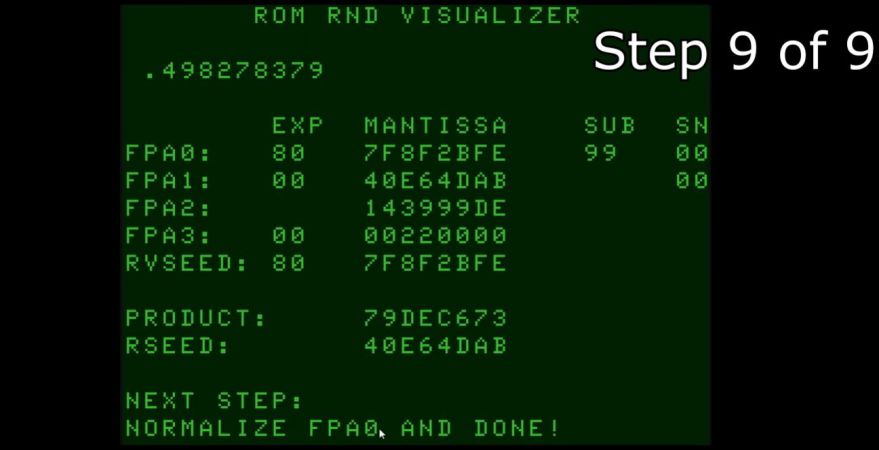
The CoCo is the nickname for the TRS-80 Color Computer, which despite its name, shares absolutely nothing with the TRS-80. Its BASIC version is called Color BASIC, which like many others was based on Microsoft BASIC, so the video’s description should be valid for many other BASIC versions as well. In the video we’re first taken through a basic summary of what the floating point format is all about, before running through an example of the algorithm used by Color BASIC for its RND function, using a test program written in Color BASIC.

As described in the video, the used algorithm appears to be the linear congruential generator, which is a pseudo-random generator that requires minimal resources from the hardware it runs on. Of course, its main disadvantage is that it will fairly rapidly begin to repeat itself, especially with a limited number of output bits. This makes it a decent choice even today for something like simple game logic where you just want to get some variation without aiming for cryptographically secure levels of randomness.

Continue reading “Exploring The TRS-80’s Color BASIC’s Random Number Function”