This Week In Security: Android Malware, VOIP Hijack, Signal Contact Discovery, And TeamPCP Arrests

On GitHub, [AyaanB] details buying a cheap Android TV streaming device, looking for, and finding, baked-in malware.

Multiple warnings have been issued by the FBI and CISA regarding malware on media box Android devices. Many devices have been caught participating in botnets providing residential proxies, ad-click fraud, and DDOS services. [AyaanB] sets out to discover if a $30 set-top streaming box is pre-infected with malware, and extracting it – without ever letting the device talk to the Internet or access other devices on the local network.

Picking a device named in the advisories, [AyaanB] discovered that it was, indeed, preloaded with multiple app stores and applications that wouldn’t typically make sense on a set-top TV box. After identifying the serial port test pads and obtaining a low-voltage serial adapter, they were able to gain access to the bootloader and from there dump the contents of the MMC over TFTP.

With the entire filesystem accessible out-of-body, proving it was infected with malware at the factory becomes simple: the malware is signed as a system application, baked onto the system partition of the MMC, granted SELinux exceptions to mark it as a system binary with shell privileges, and has multiple launch scripts to make sure it is executed even if partially removed. With the malware identified, [AyaanB] continues to dig through to uncover the capabilities.

By installing hooks into the low-level Android process spawning system, the malware installs hooks into every application as it is launched: even if an application isn’t trojaned already, by the time it finishes executing, it’s definitely been subverted. The functions patched and the methods used match the Vo1d botnet, which is used for account takeovers, residential proxies, free “VPN” services, and other unfriendly behavior.

Further digging into the system showed hooks for ad-click fraud, where hidden browser windows are allowed to run unthrottled and display overlays are configured to obscure ads below where the user may click. Other included tools bid in real-time ad auctions, claiming to directly publish ads to the user which may or may not be visible. To cap it all off, a root level backdoor allows botnet operators to access the systems directly and install additional tools.

Be sure to check out [AyaanB]’s writeup for more details on exfiltration methods and other malware found on the devices. Continue reading “This Week In Security: Android Malware, VOIP Hijack, Signal Contact Discovery, And TeamPCP Arrests”
RAM And EMMC Prices Are So High, Pine64 Has Stopped Linux Device Production

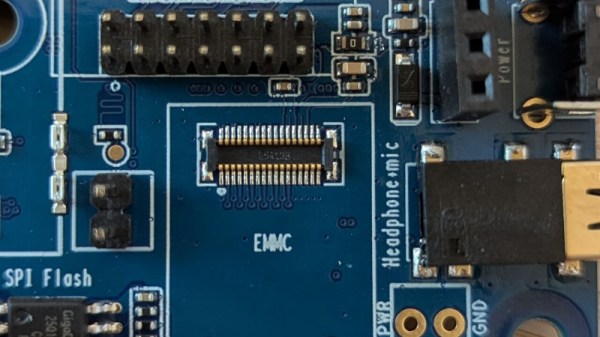
We all know that the price of RAM and storage has shot up due to demand from the AI industry and other factors. In most cases that means we grumble about the price, but if we really need the part we can fork out for it. [CNX Software] are reporting that rather than continue to push up their prices, Pine64 are responding to the crisis by halting production of their Linux boards for the time being.

We’ve seen online comment over the now-exorbitant cost of other boards such as a fully-loaded Raspberry Pi, and this follows in that vein. If we had to guess we’d speculate that the high prices have resulted in too little in the way of sales, which considering the knock-on impact on our community if other vendors follow suit, could be concerning.

If there’s one bright spot in the current situation, it’s that for many applications where a single-board computer might be used, a microcontroller might now be a better choice for the job than something running Linux. We’re in a very different situation from that we were in when cheap Linux boards appeared, the current generation of high-power microcontrollers have significantly closed the gap between the two. Given that microcontrollers have onboard memory and storage, their immunity from the price hikes makes them even more attractive. As to Pine64, we hope that sales of their other products make up for it.


Header image: BasilicumTree, CC0.

Panoramic Photography With A Linear Scanner

Although digital photography took a big bite of the film industry’s lunch, it wasn’t able to completely eliminate the need — or desire — for photographers to use film in some situations. But digital information from a camera sensor can be manipulated to augment the natural physical capabilities of a camera in ways not really feasible for film. High dynamic range images, focus and exposure stacking, and automatic panoramic stitching. This camera takes the latter example to the extreme.

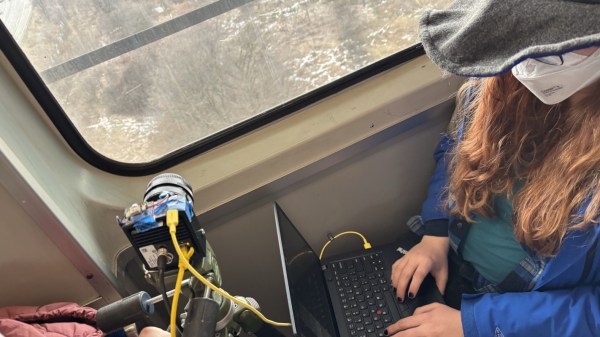
[Philo]’s proof of concept was a smartphone camera set on a chair and rotated around a room. Some software grabbed a single column of pixels as it moved and stitched them all together to form an image. This came out well enough that the idea was refined a few times, but it wasn’t until a single-line digital camera meant for imaging assembly lines was found that this really took off. Using the camera and some custom software, [Philo] was eventually able to take some of the longest panoramic images we’ve seen, using things like railways and boats as the track the camera rides on, with accelerometer data to help stabilize the image.

The results speak for themselves. There’s a bit of wobble from the movement of the various vehicles despite the accelerometer data, but given that the image is coming from a sensor meant for examining conveyor belts, it’s hard to complain. Of course, if you want to stick to film, there are panoramic film cameras available too even if they don’t quite have the reach of this digital one.