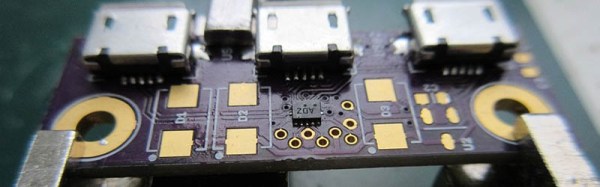
Hackaday Prize Entry: Low Cost KVM

Back in the old days, when handing someone a DB serial cable when they asked for a DE serial cable would get you killed, KVM switchers were a thing. These devices were simple boxes with a few VGA ports, a few PS/2 ports, and a button or dial that allowed your input (keyboard and mouse) and output (video) to be used with multiple computers. Early KVMs were really just a big ‘ol rotary switch with far, far too many poles. Do you remember that PS/2 wasn’t able to be hot plugged? The designers of these KVMs never knew that.

Today, KVM switchers are a bit more complicated than a simple rotary switch. We’re not dealing with VGA anymore — we have HDMI muxes. We’re also not dealing with PS/2 anymore, and USB requires a bit of microelectronics to switch from one computer to another. For one of his many Hackaday Prize entries, [KC Lee] is designing a low-cost HDMI switch and USB mux. It works, it’s cheap, and if you need to switch a keyboard, mouse, and monitor between boxes, it’s exactly what you need.

First off, the HDMI switching. Designing a switch for HDMI would usually take some obscure parts, intricate routing, and a lot of prototyping time. [KC] found a way around this: just hack up a $5 HDMI switch. This cheap HDMI switch is as simple as it gets, with an HDMI mux doing the heavy lifting and an 8-pin microcontroller to handle the buttons and a selector LED.

For the USB, there are a few more design choices. For USB 1.x switching, [KC] figures he can get away with a 74HC4052 dual 4:1 analog mux. Yes, he’s doing digital with analog chips, the heathen. There are drawbacks to this: everything could break, and it’s only USB 1.x, anyway. For a USB 2.0 KVM, there are a few more professional options. The OnSemi NCN9252 is a proper USB 2.0 mux, and in the current design.


Pogo Pin Serial Adapter Thing

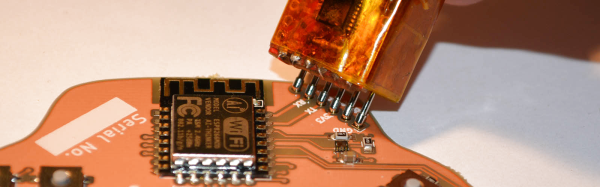
A few weeks ago, I was working on a small project of mine, and I faced a rather large problem. I had to program nearly five hundred badges in a week. I needed a small programming adapter that would allow me to stab a few pads on a badge with six pogo pins, press a button, and move onto the next badge.

While not true for all things in life, sometimes you need to trade quality for expediency. This is how I built a terrible but completely functional USB to serial adapter to program hundreds of badges in just a few hours.

Continue reading “Pogo Pin Serial Adapter Thing”

Superconference Interview: SpriteTM

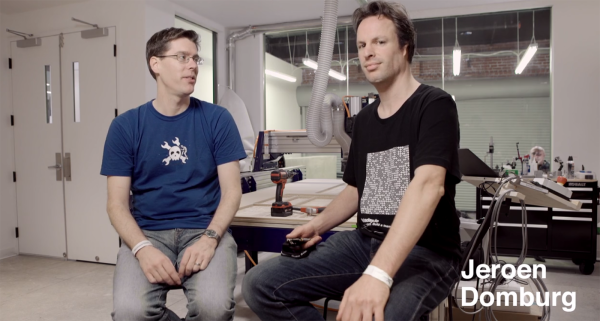
SpriteTM, or [Jeroen Domburg], has a bit of a following around these parts. He’s installed Linux on a hard drive the hard way. He can play Snake on his keyboard. He’s cared for several generations of Tamagotchis. In short, there are very few people who have both the technical ability and sense of humor to pull off what [Sprite] does.

At last year’s Supercon, we pulled Sprite aside to talk about his work and his latest hack, the tiniest Game Boy ever. He talked about his Supercon keynote, and how to hack the crypto challenge in last year’s Superconference badge in an hour without solving any of the puzzles. Now, we’re happy to present that interview today, available below.

While we very much doubt many people could — or would — take four conference badges and rick roll the entire Superconference for the badge hacking session, we’re still looking for eager and capable presenters. The Call for Proposals is now open for the 2017 Hackaday Superconference. If you have a story of hardware heroics, creativity in CPLDs, a passion for prototyping, or an ambition for technological art, we want you to share your story. Even if you don’t, that’s fine, too: tickets are still available for the Superconference in Pasadena, California on November 11th and 12th.

Friday Hack Chat: PCB Manufacturing

There’s a world of difference between building one of something and building multiples of something. The effort that goes into manufacturing does not scale linearly, and manufacturing is a skill in itself. This Friday, we’re going to be talking all about PCB manufacturing and assembly over on Hackaday.io

On deck for this Hack Chat will be [Jonathan Hirschman], the brains behind PCB:NG, a turnkey electronics manufacturing startup based around NYC. Jonathan is a self-taught hardware guy, proficient in PCB layout, 3D CAD, and manufacturing tech. PCB:NG is, essentially, taking oldskool manufacturing and making it into more of a digital process. PCB:NG makes it easy for anyone to get their designs manufactured, and to do it in the most cost-effective manner.

What is this Hack Chat going to be about? We’re going to talk about how to get started in PCB creation. What is the the best tool for the job? What is the best tool that doesn’t cost as much as a car? What are the pros and cons of each tool, and what should you know about RF before designing a board that blinks a LED?

This isn’t a Hack Chat that’s just about PCBs, though. We’re also going to be talking about manufacturing. Specifically, design for manufacturing, how to panelize boards, what happens when you forget fiducials, how to keep your designs cheap to manufacture, what happens when you put SMD components on both sides of a board.

We’re taking questions from everyone, so feel free to add something to the question sheet for the discussion.

We’re Looking For Hack Chat Hosts!

If PCB manufacturing and design isn’t your thing — or even if it is — we’re on the lookout for Hack Chat hosts. If you have some expertise in an area, give us a ring. We’ve already had a few chats with Raspberry Pi engineers, one of the brilliant people behind the ESP32, a talk on ASIC design for mixed signal oscilloscopes, and high-end audio amplifiers. We’re taking all callers, and if you have something you’d like to share with the community, send us an email. I would like to mention that it’s Burner season, and a few chats with the artists on the playa would be great, especially if they can tell us how to move the fuselage of a 747 a few hundred miles.

Here’s How To Take Part:

join-hack-chatOur Hack Chats are live community events on the Hackaday.io Hack Chat group messaging. This Hack Chat will take place at noon Pacific time on Friday, August 4th. Confused about where and when ‘noon’ is? Here’s a time and date converter!

Log into Hackaday.io, visit that page, and look for the ‘Join this Project’ Button. Once you’re part of the project, the button will change to ‘Team Messaging’, which takes you directly to the Hack Chat.

You don’t have to wait until Friday; join whenever you want and you can see what the community is talking about.

These Are The Twenty Finalists For The Hackaday Prize Best Product

Hackaday is hosting the greatest hardware competition on Earth, and we’re giving away thousands of dollars to hardware creators to build the next generation of electronics. This is the Hackaday Prize, and already we’ve selected dozens of projects, one of which will win $50,000 USD.

Like last year, this year’s Hackaday Prize is very special. We’re supporting entrepreneurs building the Next Big Thing. This is the Best Product competition of The Hackaday Prize, and these are the products that will shake up an industry.

Now, it’s finally time to pick the finalists. These twenty projects will move onto the final round of the Best Product competition for a chance to win $30,000 USD, and an opportunity to work in the Supplyframe Design Lab, perfecting their prototype and turning it into a product.

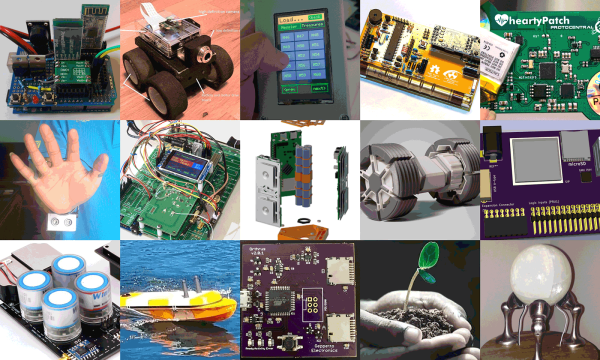
The Hackaday Prize Best Product finalists are, in no particular order:

Continue reading “These Are The Twenty Finalists For The Hackaday Prize Best Product”

These Twenty Wheels, Wings, And Walkers Won $1000 In The Hackaday Prize

Today, we’re excited to announce the winners of the Wheels, Wings, and Walkers portion of The Hackaday Prize. We were looking for the next generation of robots, drones, machines that make machines move, and hackers who now know far too much about inverse kinematics. The results were spectacular.

Hackaday is currently hosting the greatest hardware competition on Earth. We’re giving away thousands of dollars to hardware creators to build the next great thing. Last week, we wrapped up the third of five challenges. It was all about showing a design to Build Something That Matters. Hundreds entered and began their quest to build a device to change the world.

There are still two more challenges in The Hackaday Prize. If you’re working on Assistive Technologies, the time is now, with this portion of the Prize ending September 4th. After that, Anything Goes. The Anything Goes challenge is the catch-all, and we’re looking for the best projects, full stop.

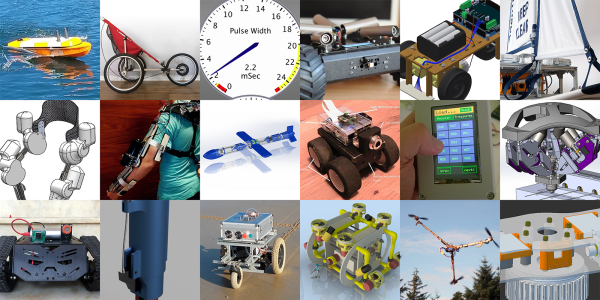
The winners of the Wheels, Wings, and Walkers challenge are, in no particular order:

Wheels, Wings, and Walkers Hackaday Prize Finalists:

Continue reading “These Twenty Wheels, Wings, And Walkers Won $1000 In The Hackaday Prize”

Hackaday Links Column Banner

Hackaday Links: July 30, 2017

What are you doing next weekend? How about going to the Vintage Computer Festival West at the Computer History Museum in Mountain View. Hackaday is sponsoring, and there are always a ton of awesome builds. Last year, someone played Tron on a Commodore PET. Not a video game — the movie.

In case anyone forgot, I created the most desirable independent hardware badge this year at Def Con. It’s a hilarious joke, I got three from OSH Park, thirty more in different colors from Seeed, and something, somewhere, jumped a shark. [Drew Fustini] also shared these PCBs on OSH Park. There were four orders. This is hilarious.

‘Member Minecraft? Redstone was awesome, and people built computers out of red dust and torches. Now it’s not as cool with all the fancy redstone components, and simpler is always better. Here’s bitmap logic, or a complete computer made with pixels. There’s already an 8-bit computer for this thing.

Frag somebody and own their computer. [Justin] recently found an exploit in Valve’s Source engine (TF2, CSGO, Portal 2…) that allows for remote code execution on clients and servers by loading a custom ragdoll model.

High bandwith, low-power, and long range. If you’re doing RF, you may pick two. LoRa is the RF solution that picked low power and long range. There are quite a few companies behind it, but we really haven’t seen many products using LoRa here in the states yet (then again, products that would use LoRa shouldn’t be very visible…). Now there’s an Open Source LoRa backend server. This is somewhat significant; LoRa isn’t a completely Open protocol, and all licensing goes through Semtech and the LoRa Alliance.