Top Ten Reasons Not To Buy A Fake MacBook Charger. Number Eight Will Shock You.

Yesterday, Apple showed the world how courageous they are by abandoning their entire PC market. It’s not time for a eulogy quite yet, but needless to say, Apple hardware was great, and the charger was even better. It had Magsafe, and didn’t start fires. What more could you ask for?

When it comes to fake MacBook chargers, you can ask for a lot more. [Ken Shirriff] has torn apart a number of these chargers, and his investigations allowed for an obvious pun in this post. The fake ones will make sparks thanks to the cost-saving design, and shouldn’t be used by anyone.

A genuine Apple MacBook charger is a phenomenal piece of engineering, but the fake one is not. In fact, it’s almost the simplest possible AC to DC converter. The mains power comes in, it’s chopped up into pulses, and these pulses are turned into a high-current, low-voltage output in a flyback transformer. This output is converted into DC with a few diodes, filtered, and wired into a MagSafe adapter.

The genuine MacBook charger is much more complicated. Like the cheap copy, it’s a switching power supply, but has a few features that make it much better. The genuine charger does power factor correction, uses quality caps, has real isolation on the PCB, and uses a microcontroller that’s almost as powerful (and a direct architectural descendant) as the CPU in the original Macintosh. It’s this microcontroller that kept you safe that one time you decided to lick a Magsafe connector not allowing the full 20 Volts to go through until the connector has connected. Until then, the Magsafe connector only outputs 0.6 Volts. The fake charger doesn’t do this, and when you poke the connector with a paper clip, sparks fly.

This isn’t [Ken]’s first teardown of genuine and not Apple products. He’s done iPad chargers, iPhone chargers, and other small, square, white switching power supplies. The takeaway from these teardowns is that cheap chargers are a false economy, and you probably should pony up the cash for the real version.


Hackaday Prize Entry: An Electric Bike And A Dashboard

Over the last few years, powerful brushless motors have become very cheap, batteries have become very powerful, and the world of quadcopters has brought us very capable electronic speed controls. Sounds like the perfect storm for a bunch of electric bike hacks, right? That’s what [bosko] is doing for his Hackaday Prize Entry. He’s building an e-bike with a big motor and an electronic dashboard, because a simple throttle switch would never do.

There are two parts to [bosko]’s bike, with the front brain box consisting of GPS, an OLED display, analog throttle, and a few wireless modules to connect to the other half of the system under the seat.

The drive section of this e-bike is as simple as it gets. It’s just a big brushless outrunner motor suspended directly above the rear tire, without any other connection. [bosko] has gone with the simplest power transmission system here, and is slightly wearing out the rear tire in the process. It works, though, and a few of the commentors over on Hackaday.io say it reminds them of the French Solex bike. We’re thinking this bike is more of what a riquimbili would be if Hobby King had a Cuban warehouse, but it seems to work well for [bosko] and is a great entry to the Hackaday Prize.

Hackaday Prize Entry: Adblock For TV

Contact, the 1985 book by Carl Sagan, was significantly better than the movie. Five people went through the wormhole, three machines were made (in Russia, Wyoming, and a third on Hokkaido), Erbium did something, and the novelization provided much better worldbuilding. One of the more interesting characters in the book was H.R. Haddon, the megalomaniacal business man, made his first million designing a chip that would block advertisements on TV. The book strongly suggests this commercial-blocking chip was a purely analog device, a concept that would have been an amazing abuse of NTSC produced by a damn fine engineer.

Now, even though cord cutting is commonplace and streaming is taking over, there’s still commercials on Hulu. In a few months, I’ll have to pay $5 a month to watch Star Trek with commercials. There is obviously a market for ‘adblock for TV’, and that’s what [PixJuan] is doing for his Hackaday Prize entry.

[Juan]’s device is a basically an HDMI switch with a remote that’s pressed every time the ads start to show on a broadcast. This switch will change the input of the HDMI switch from a cable box to a Raspberry Pi and play a short video clip or something else that isn’t selling you crap. When the Raspi is done, the switch goes back over to the original input.

With a bit of computation in this adblock-for-TV device, there are a few more options for ad detection. The Raspberry Pi could build a database of when ads play and for how long, depending on the channel. This is a great project that has a lot of potential to use some interesting techniques like computer vision and machine learning for the goal of removing commercials before they start.

New Part Day: The ESP32 Has Been Released

A few years ago, a strange little chip showed up on Seeed Studio one day. It was the ESP8266, originally sold as a serial to WiFi adapter. Since then, the microcontroller in this wee WiFi module was discovered, and the ESP8266 has been the breakout module for hundreds of Internet of Thing modules, and other wireless baubles.

The company behind the ESP8266, Espressif, wasn’t sitting on their laurels for the last few years. They’ve been working on a followup to the ESP8266. It’s the ESP32, and it’s faster, has more peripherals, better WiFi, and Bluetooth LE. Since Christmas, we’ve been ogling this chip. Now, it’s finally out. You can buy an ESP32 right now. Consider the ESP32 released.

Almost exactly two years ago, the forerunner of the ESP32 was released, allowing anyone to blink a LED from the Internet for five dollars. There was a catch with the release of the ESP8266, and that was documentation. Documentation in English did not exist, and it took Espressif a while to realize the hit they had on their hands. Even now, with a proper English datasheet from Espressif, we don’t know if the ESP8266 has 5V tolerant pins. Documentation was an issue for the ESP8266, but it didn’t really matter because someone on the Internet figured it out.

History doesn’t repeat itself, but it is the franchise with the most reboots. There’s some documentation for the ESP32, but it’s far from complete. There’s a CAN bus peripheral in the ESP32, but no one knows what pins it’s attached to. There are some secrets hidden away, but no one is at liberty to discuss them. No one outside Espressif has any idea if the specs are real. This will, of course, change in the next month or so, but only due to the tireless work of electronics enthusiasts the world over.

Right now, there are several listings on the usual online outlets including Espressif’s Taobao shop and Seeed Studio offering either bare ESP32 chips or modules based on this WiFi Bluetooth wonder. These modules include the ESP-Wroom-32 (PDF) that is seemingly based on the ESP31 test modules released late last year and the ESP3212, a module based on the popular ESP8266-12. There are also bare chips floating about.

As far as any new information regarding the ESP32 is concerned, don’t expect much. It’s released, though, and in a month or so the work of documenting this supposed wonderchip will begin.

Although they’re not available to everyone quite yet, we have two ESP-32 modules in hand, and [Elliot] is currently slogging through installing the toolchain and getting everything working. Watch this space, because we’re going to have an Introduction to the ESP-32 post up shortly.

Hackaday Prize Entry: A One Hand Bottle Opener

For the next month, the Hackaday Prize is all about Assistive Technologies. You would think this means exoskeletons, 3D printed prosthetics, and better wheelchairs, and you’d be right. This project in the running for the Assistive Technologies portion of the prize isn’t what you would expect. It’s a brilliantly simple way to open a water bottle with one hand. Think of it as the minimum viable project for assistive technologies, and a brilliant use of a few 3D printed parts and some metric bolts.

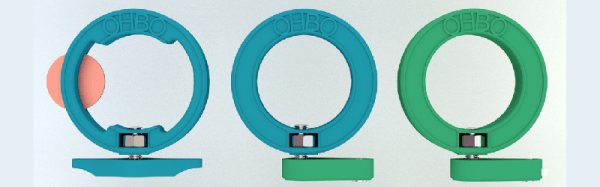
The OHBO – the One Hand Bottle Opener – is just a simple 3D printed ring that fits over a water bottle. There’s a small arm attached with a few bolts that lock this ring onto the bottle. With this bottle opener attached, it only requires a simple twist of the wrist to open a screw-top bottle.

As you can see in the video below, this would be a fantastic device for anyone with one hand to keep around the fridge. Of course, like all good Hackaday Prize entries, all the files to recreate this build are available, with just a few bits of hardware required to complete the build.

Continue reading “Hackaday Prize Entry: A One Hand Bottle Opener”

Hackaday Prize Entry: Lucid Dreaming Research

Lucid dreaming is one of the rare psychological phenomenon terrible sci-fi frequently gets right. Yes, lucid dreaming does exist, and one of the best ways to turn a normal dream into a lucid dream is to fixate on a particular object, sound, or smell. For their Hackaday Prize entry, [Jae] is building a device to turn the electronic enthusiast community on to lucid dreaming. It’s a research platform that allows anyone to study their own dreams and access a world where you can do anything.

The core of this project is an 8-channel EEG used to measure the electrical activity in the brain during sleep. These EEG electrodes are fed into a 24-bit ADC which is sampled 250 times per second by an ARM Cortex M4F microcontroller. The captured data is recorded or sent to a PC or smartphone over a Bluetooth connection where a familiar sound can be played (think of the briefcase in Inception), or some other signal that will tell the dreamer they’re dreaming.

We’ve seen a few similar builds in the past, most famously a NeuroSky MindWave headset turned into a comfortable single-channel EEG-type device. The NeuroSky hardware is limited, though, and a setup with proper amplifiers and ADCs will be significantly more helpful in debugging the meatspace between [Jae]’s ears.

Hackaday Links Column Banner

Hackaday Links: September 4, 2016

Nozzle socks! Just keep saying, ‘nozzle socks’ until the semantic satiation undoes any semblance of sanity. E3D, makers of the world’s finest 3D printer hotends have released silicone nozzle covers that prevent caramelized plastic gunking up your hot end. Nozzle socks.

Let’s talk guitar pedals. If you’ve ever built your own guitar pedal, you probably stuffed it inside a Hammond enclosure. There’s more to guitar pedal enclosures than custom-painted electronic boxes, and arguably the best enclosures are the ‘Boss’ style – a metal cover over the switch that can be removed to access the battery independently of the circuit. Now you can buy this type of enclosure. [Rixen] is producing blank die-cast aluminum pedals that look so much better than the standard Hammond enclosure.

The Antonov AN-225 is the largest and heaviest airplane in the world. Only one was built. For the last thirty years, a second airframe, about 70% complete, has sat in a field or hangar in the Ukraine, waiting for someone to put it into service. After numerous false starts over the past decade or so, the second AN-225 is finally being built.

The Hackaday Retro edition is our version of Hackaday optimized for embedded devices. When someone gets some old hardware on that vast World Wide Web and manages to pull up the retro edition, we like to celebrate. [Michael] recently got his old Amiga 1200 online and managed to find the software and hardware to get this machine on the net. Inside the A1200 is a 4GB CompactFlash, an ACA 1232 accelerator card with 128MB of RAM and a 33MHz 030. The network is handled by a Linksys EC2T card, and the software is KS3.0, WB3.1, MiamiDX IP stack IBrowse 2.4, and a bunch of 3rd party libs he can’t remember. Here’s a pic.

On a related note, I haven’t touched the Hackaday Retro Edition in years. Right now, it’s just a script running every five minutes that assembles five random posts from the first 15,000 Hackaday posts since the beginning of time. The retro edition does what I want it to do, but I’m wondering if it can be better. If you have an idea of how to improve the Retro Edition, leave a note in the comments.