How To Cobble A Wobble Disk Roaster Together

As with anything else, once your knowledge of coffee expands, the more attractive it becomes to control as much of the process as possible. Buying whole beans and grinding them at home is one thing, but you’re not a real coffee geek unless you’re buying big bags of green beans and roasting them yourself in small batches.

[Larry Cotton] has made an even more portable version of the wobble disk roaster we saw last summer. Beneath the housing made of aluminium flashing is the guts of a $15 Harbor Freight heat gun pointing upward at a metal strainer. A large metal disk mounted at a 45-degree angle to the spinning axis tosses and turns the beans as they get blasted with heat from below. [Larry] used a 12 VDC motor to run the wobble disk, and an an adapter to change the heat gun from 120 VAC to 12 VDC. This baby roasts 1½ cups of beans to city plus (medium) level in 12-15 minutes. Grab a cup of coffee and check it out after the break.

Roasting beans isn’t rocket science. Even so, there are some things you would benefit from knowing first, so here’s our own [Elliot Williams] on the subject of building DIY roasters.

Continue reading “How To Cobble A Wobble Disk Roaster Together”
One Ring Light To Fool Them All Into Thinking You’re Well-Rested

We know you’re beautiful, but maybe that cheap web camera from 2007 doesn’t always project your best image. Although web cameras are starting to come back down from the pandemic price gouging days, you could just build yourself a ring light and go from there, because better light may be all you need to look great.

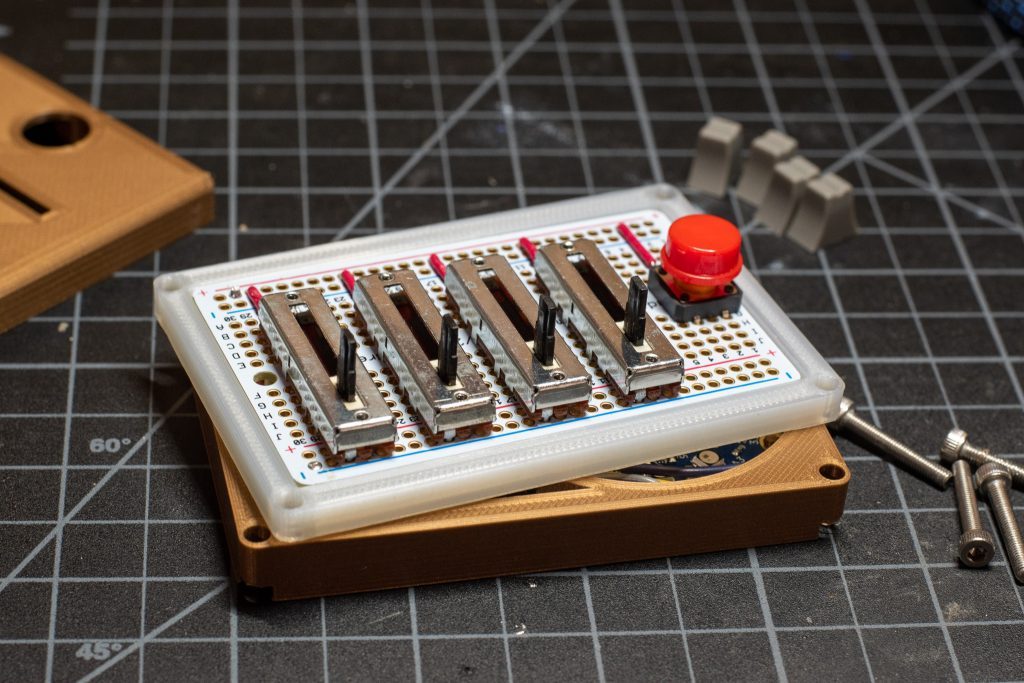
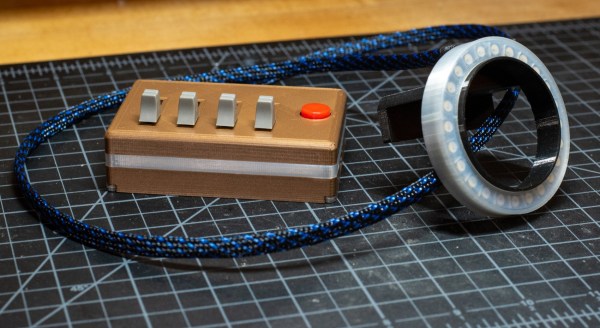
Of course, this isn’t going to be cheaper than just buying a ring light, but if you already have a Circuit Playground and 3D printer lying around, you’re about halfway to owning one that’s much cooler than anything you can buy. The only other major hardware is the RGBW LED ring, the slide pots that adjust the light color, and the clicky little button that exits out of Zoom calls.

The business part is made to mount right over the camera, so the only part that has a footprint is the control box. No need to make space for a tripod or another boom. If you’re worried about staring into a bunch of lights, there’s a diffusing ring among the print files. We think this setup looks great, especially since [Southern Fried Science] built a light guide into the enclosure so those LED on the Circuit Playground don’t go to waste.

Do you just wish you had a more satisfying way to leave Zoom calls? If there’s a stud near your desk, it doesn’t get much more satisfying than a pull chain. If the only stud around is you, then use a giant mushroom button.

Via adafruit

Framed PONG Is Picture Perfect

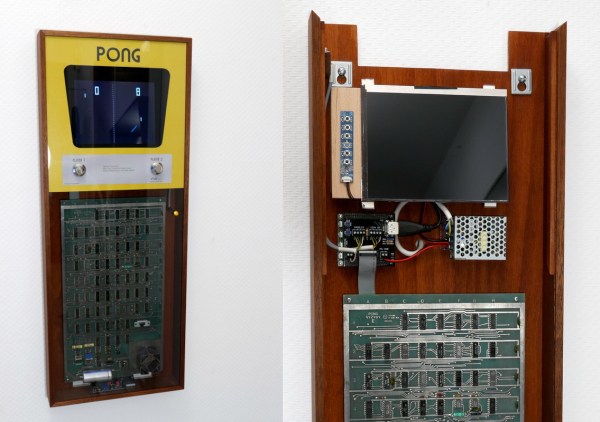
How cool would it have been if arcade cabinets had acrylic panels all along that let you gaze upon the field of TTL chips within? When [Jürgen Müller] scored the innards of an original 1972 PONG machine, that’s exactly what the plan was: build a suitable cabinet that re-imagines PONG as a sleek and stunning work of art.

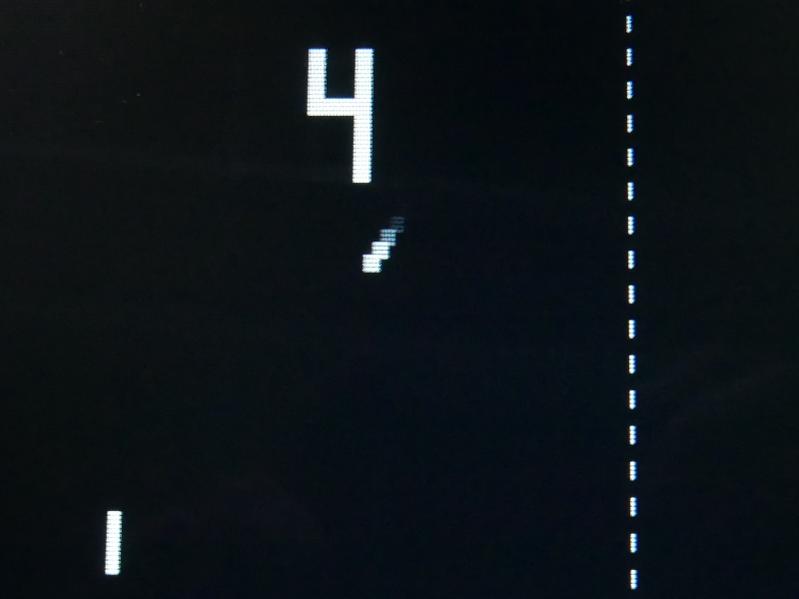
Instead of trying to cram a CRT in that nice mahogany cabinet, [Jürgen] opted to use an 8″ TFT screen. But get this: [Jürgen] built a Spartan 6 FPGA-based upscaler to adds the scan lines, blur, and afterglow that make it look like the classic PONG experience.

[Jürgen] also built an interface board that amplifies the sound, splits the video out into sync and brightness for the upscaler, and provides 5 V to the PONG circuit board. [Jürgen] decided to circumvent the board’s native voltage regulator in the name of keeping things cool.

[Jürgen] says the project’s web page is in a preliminary stage right now with more information to come. We sure hope that includes a video of it in action. For now, you can check out the files for the interface PCB, the FPGA board, and a list of the fonts.

Should you ever get tired of classic PONG, try playing it in one dimension.

Thanks for the tip, [Anonymous].

Head Lamp Gives Glowing Creature Comforts

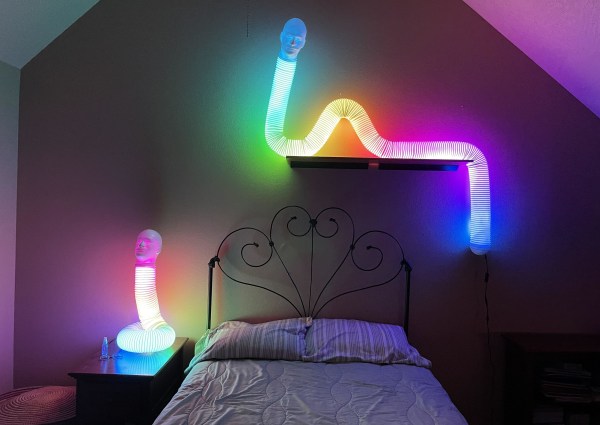
What can we say? It’s 2021, and we could probably all use a psychotic glow worm lamp in our lives about now to lighten the mood and/or provide a new focal point for sitting and staring. Tired of dragging out that creepy little Elf on the Shelf every holiday season? [LiabilityLabs]’ Head Lamp is slightly less terrifying and far more functional. Really, the options are limitless.

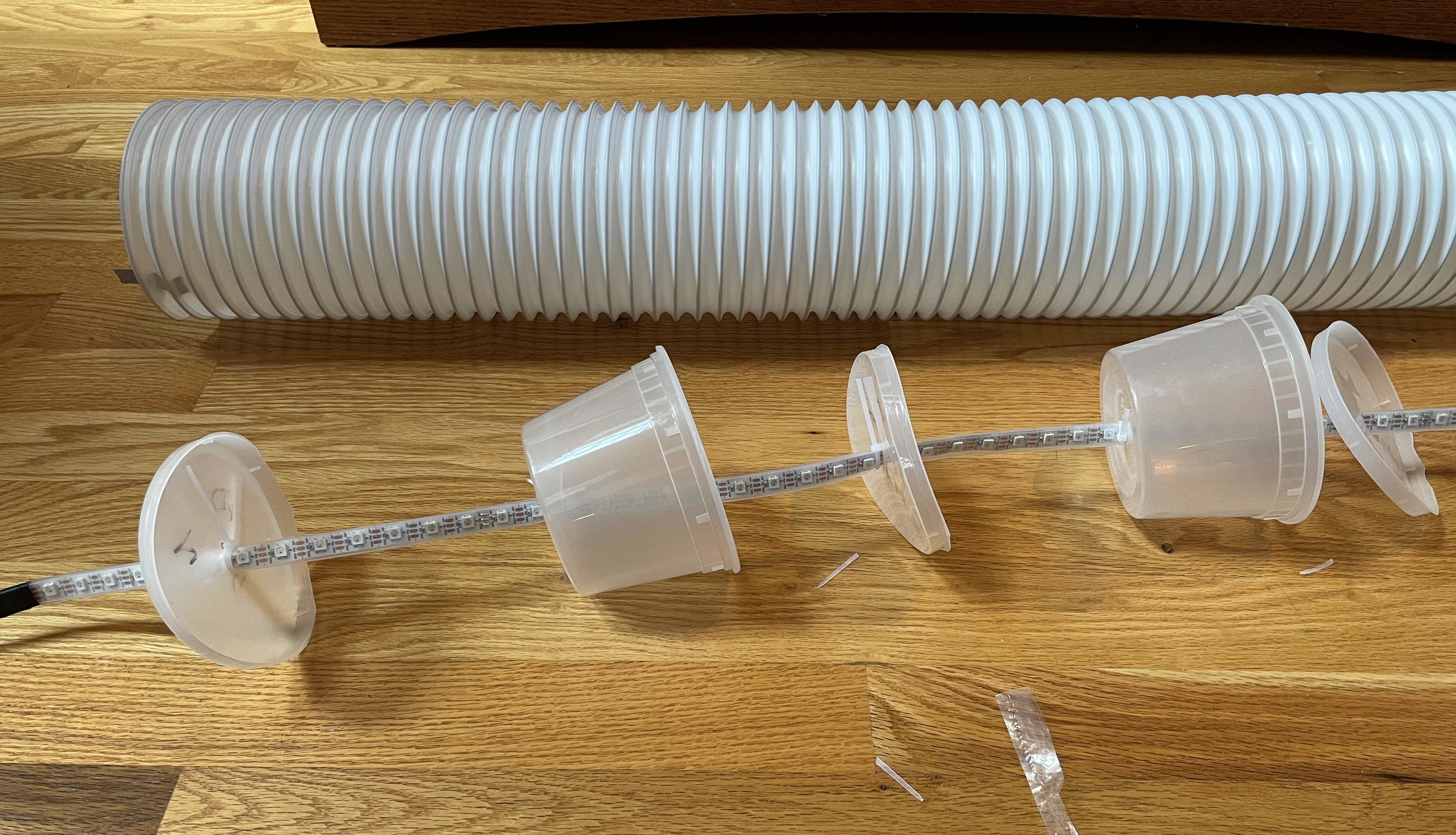
The brain of this scare snake is an Electromage Pixelblaze LED controller, a powerful Wi-Fi enabled little board with a live web editor. [LiabilityLabs] recycled 20 milky plastic containers and their lids to help diffuse the light and avoid hot spots by holding the LED strip in the center of the tube. There’s a momentary button on the glowy guy’s tail that lets [LiabilityLabs] cycle through different color patterns with ease.

Whether you need a mascot for your stream channel, a confidant, or a refreshing rainbow rubber ducky of problem solving, Head Lamp is flexible. Feast your eyes on some brief animations after the break.

Want the glowies without the willies? This mesmerizing fiber optic lamp is an easy build.

Continue reading “Head Lamp Gives Glowing Creature Comforts”

Tetris On Split-Flap Go Brrr

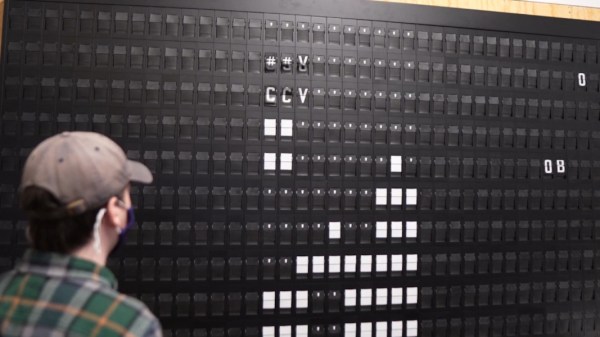
It hardly seems possible, but engineer collective and split-flap display purveyors [Oat Foundry] were able to build a working implementation of Tetris on a 10 x 40 split-flap display in the span of a single day. Check it out in the video after the break.

This project is a bit understaffed in the details department, but we do know that [Oat Foundry] started with [Timur Bakibayev]’s open-source implementation of Tetris in Python and modified the draw function to work on a split-flap display. As you may have guessed, the biggest obstacle is the refresh rate and how it affects playability — particularly during those tense moments when a player rotates a piece before dropping it. Split-flaps flip quickly from on to off, but flipping back to on requires a full trip around through all the other characters.

We think this is nice work for a one-day build. Should they go further, we’d like to see the same things implemented as [Oat Foundry] does: a high score tracker and a preview of the next piece.

Don’t have a split-flap display? Yeah, us either, but we do have televisions. Turn on the tube and check out this Nano-scale Tetris.

Continue reading “Tetris On Split-Flap Go Brrr”

Eyesight Guardian Polices Your Poor Pupils

Don’t know about you, but over the last year or so, we have gone from spending ten or twelve hours a day at this computer to upwards of sixteen or eighteen. Fortunately there’s a window behind the monitor for taking those 20/20/20 breaks that are supposed to prevent eye strain, but it’s so hard to remember (and boring) to do it. And nobody needs yet another thing to remember in the name of self-care.

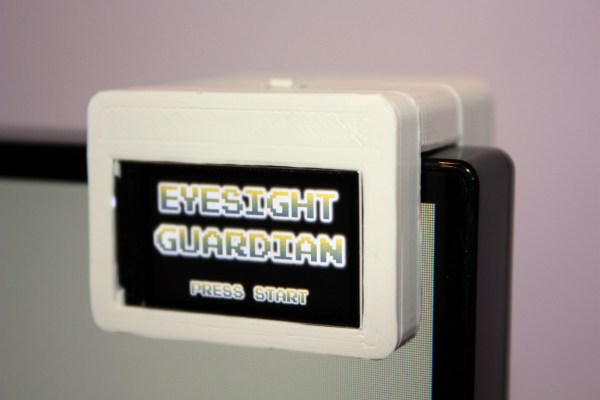
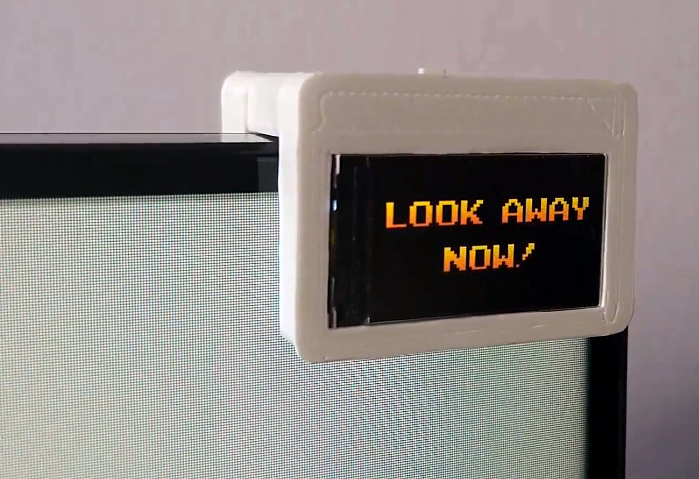
[Daniel Hingston] certainly agrees. As you’ll see in the delightful video after the break, [Daniel] has made a game out of the whole process of stopping every twenty minutes to spend twenty seconds looking at a point that’s at least twenty feet away. Once the break is over, [Daniel] uses the dual-purpose start button to acknowledge having looked away for 20 seconds. The device is meant to clip onto the corner of any monitor, and [Daniel] has provided several sizes of the bridge piece so that everyone can find their fit.

The Guardian’s guts are pretty simple — an Arduino Pro Mini runs the stop watch and a TFT display to show the graphics that live on an SD card. This is a great way to preserve your eyesight by gamifying something we all know we should be doing. It might be nice to add a break timer that counts up to 25 or thereabouts so you have time to stand up and come back. If you press the button too soon, it scolds you and you have to start your eye break over.

Need some more self-care lately? Our own [Jenny List] has your back in these interesting times.

Continue reading “Eyesight Guardian Polices Your Poor Pupils”

Elegant And Portable DIY Nightlight Becomes A Fixture For Hacker’s Kids

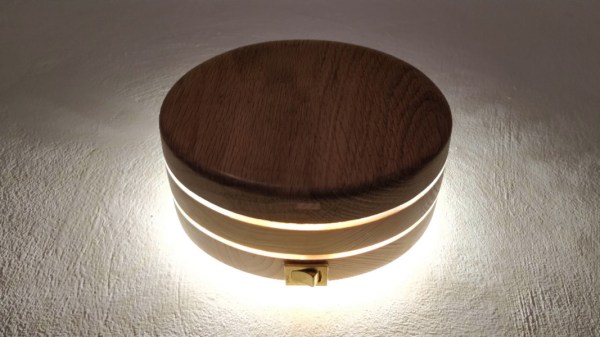
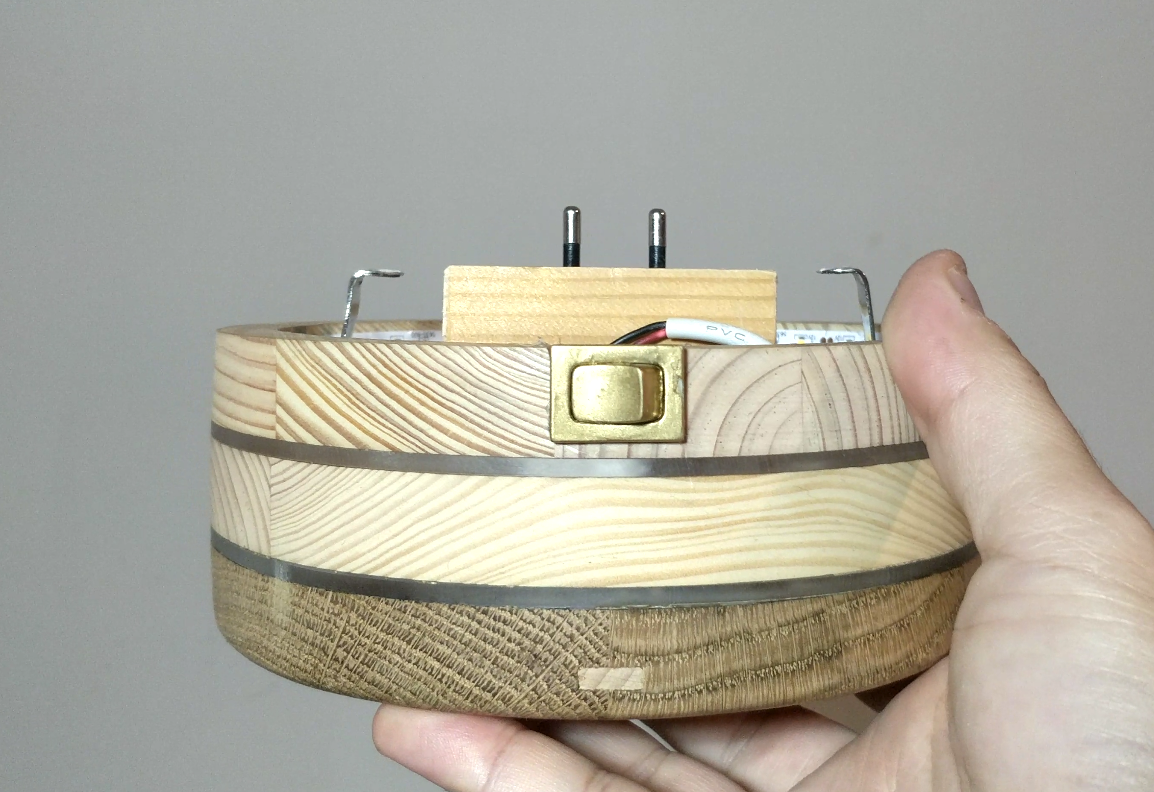
When [itzikdiy]’s kids asked for a night light for their room, he got the bright idea to build something that straddles the line between portable and permanent. This fixture-less fixture plugs directly into a wall socket and is turned on and off with a handsome rocker switch on the bottom.

This lovely little lamp is mostly made from scrap — the oak on the front appears to have come from an old cabinet door, and the other two ring-shaped pieces are made from pine. [itzikdiy] even took the acrylic from broken panel lamps. Everything was cut with a Dremel and a circle-cutter attachment except the oak, which required a jigsaw. We think it looks great, especially with the different grain directions — call it art deco woodworking.

When it was all said and done, [itzikdiy] found it was too heavy to hang by the plug alone, so he added an L-shaped support beneath the power supply that holds it more evenly against the wall. [itzikdiy] also made a pair of hooks that snap into a pair of slots on the sides of the outlet itself. The solution is simple, sturdy, and effective without disrupting the lines of the lamp at all. Carve out a little bit of time to watch the build video after the break.

We know that someone of your hulking intelligence has no fear of the dark. But if you think you could use a nightlight in the bathroom for those 2 AM trips, look no further.

Continue reading “Elegant And Portable DIY Nightlight Becomes A Fixture For Hacker’s Kids”