Simple Tricks To Make Your Python Code Faster

Python has become one of the most popular programming languages out there, particularly for beginners and those new to the hacker/maker world. Unfortunately, while it’s easy to  get something up and running in Python, it’s performance compared to other languages is generally lacking. Often, when starting out, we’re just happy to have our code run successfully. Eventually, though, performance always becomes a priority. When that happens for you, you might like to check out the nifty tips from [Evgenia Verbina] on how to make your Python code faster.

Many of the tricks are simple common sense. For example, it’s useful to avoid creating duplicates of large objects in memory, so altering an object instead of copying it can save a lot of processing time. Another easy win is using the Python math module instead of using the exponent (**) operator since math calls some C code that runs super fast. Others may be unfamiliar to new coders—like the benefits of using sets instead of lists for faster lookups, particularly when it comes to working with larger datasets. These sorts of efficiency gains might be merely useful, or they might be a critical part of making sure your project is actually practical and fit for purpose.

It’s worth looking over the whole list, even if you’re an intermediate coder. You might find some easy wins that drastically improve your code for minimal effort. We’ve explored similar tricks for speeding up code on embedded platforms like Arduino, too. If you’ve got your own nifty Python speed hacks, don’t hesitate to notify the tipsline!

The AirPort Express Still Works In 2025 Thanks To Apple’s Ongoing Support

Apple was all-in on WiFi from the beginning, launching the AirPort line of products to much fanfare in 1999. In 2004, along came the AirPort Express—a fully-functional router the size of a laptop charger, that offered audio streaming to boot. As [schvabek] found out that while a lot of older Apple gear has long ago been deprecated, the AirPort Express is still very much supported and functional to this day!

Generally, you wouldn’t expect to plug in a 20-year-old Apple accessory and have it work with the company’s modern hardware. However, upon slotting the AirPort Express into a wall socket and starting the initialization process, [schvabek] noted that it was detected perfectly well by his post-2020 Macs. Only, there was a small problem—the configuration process would always stall out before completion.

Thankfully, there was a simple remedy. [schvabek] found that he could connect to the AirPort Express with his classic white plastic MacBook and complete the process. From there, he was astonished that Apple’s servers let him pull down a firmware update for a device from 2004. After that upgrade, the AirPort Express was fully functional with all his modern Apple gear. He could readily stream audio from his iPhone and MacBooks with no compatibility issues whatsoever.

It’s nice to see Apple still supporting this ancient hardware to this day. It’s a nice contrast when companies like Sonos are more than happy to brick thousands of old devices just for the sake of progress. Continue reading “The AirPort Express Still Works In 2025 Thanks To Apple’s Ongoing Support”

Build Yourself A Medium-Format Camera

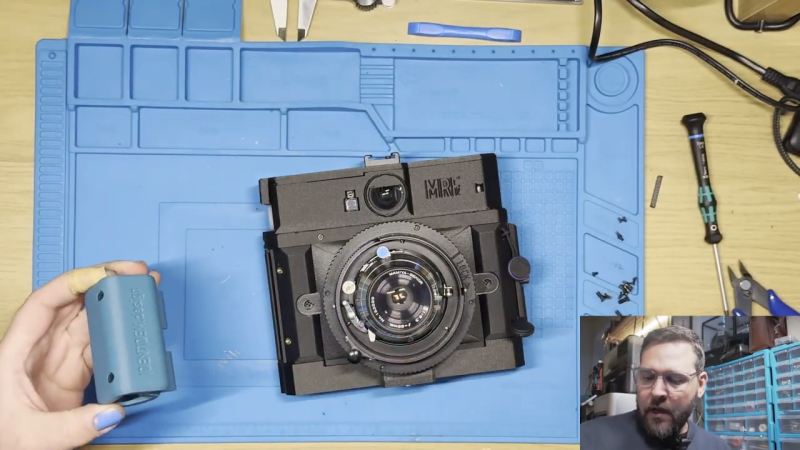
Medium format cameras have always been a step up from those built in the 35 mm format. By virtue of using a much larger film, they offer improved resolution and performance. If you want a medium format film camera, you can always hunt for some nice vintage gear. Or, you could build one from scratch — like the MRF2 from [IDENTIDEM.design.]

The MRF2 might be a film camera, but in every other way, it’s a thoroughly modern machine. It’s a rangefinder design, relying on a DTS6012M LIDAR time-of-flight sensor to help ensure your shots are always in sharp focus. An ESP32 is responsible for running the show, and it’s hooked up to OLED displays in the viewfinder and on the body to show status info. The lens is coupled with a linear position sensor for capturing accurate shots, there’s a horizon indicator in the viewfinder, and there’s also a nice little frame counter using a rotary encoder to track the film.

Shots from a prototype on Instagram show that this camera can certainly pull off some beautiful shots. We love a good camera build around these parts. You can even make one out of a mouse if you’re so inclined.

Continue reading “Build Yourself A Medium-Format Camera”

Build A Stranger Things Wall You Can Freak Out At In Your Own Home

When Stranger Things premiered in 2016, it was a cultural force. Foreign DJs gushed over the lush 80s soundtrack, fashionistas loved the clothing, and the world became obsessed with the idea of using Christmas lights to communicate across material planes. [kyjohnso] has recreated that experience with the technology of today.

If you haven’t watched the show — Joyce Byers is trying to communicate with her son Will, who just so happens to be stuck in another plane of existence called the Upside Down. She screams questions at her living room wall, upon which hangs a series of Christmas lights, marked with the letters A to Z. Will is able to communicate back by causing the lights to flash, one letter at a time.

This build works a little differently. You basically type a message into a terminal on a Raspberry Pi, and it gets sent to a large language model—namely, the Claude API. The response from Claude (or Will Byers, if you’re imagining) is then flashed out on a WS2812B set of LED Christmas lights on the wall. [kyjohnso] added dramatic pauses whenever there’s a space in the output, somewhat replicating the dramatic elements of the show itself. Files are on GitHub for the spooky and curious.

It’s a neat build that would be a hit at any Halloween party. We can’t imagine how much more immersive it would be if paired with a speech-to-text engine so you could actually scream at the thing like a distraught Midwestern parent who has just lost her youngest child. It’s all about committing to the bit; if you build such a thing, don’t hesitate to notify the tipsline!

Why Samsung Phones Are Failing Emergency Calls In Australia

We’re taught how to call emergency numbers from a young age; whether it be 911 in the US, 999 in the UK, or 000 in Australia. The concept is simple—if you need aid from police, fire, or ambulance, you pick up a phone and dial and help will be sent in short order.

It’s a service many of us have come to rely on; indeed, it’s function can swing the very balance between life or death. Sadly, in Australia, that has come to pass, with a person dying when their Samsung phone failed to reach the Triple Zero (000) emergency line. It has laid bare an obscure technical issue that potentially leaves thousands of lives at risk. Continue reading “Why Samsung Phones Are Failing Emergency Calls In Australia”

Smart Bandage Leverages AI Model For Healing Purposes

If you get a small cut, you might throw a plastic bandage on it to help it heal faster. However, there are fancier options on the horizon, like this advanced AI-powered smart bandage.

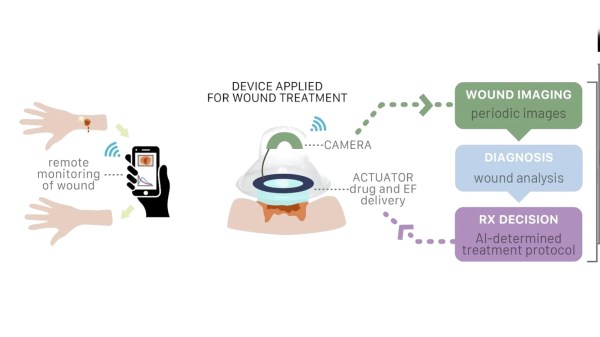
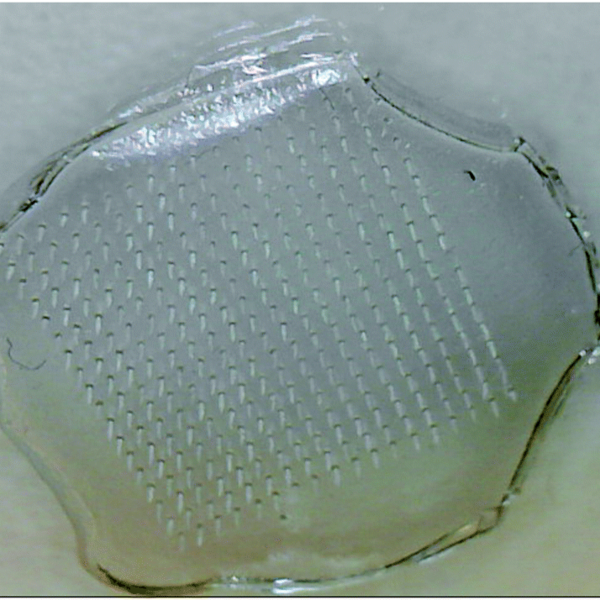
Researchers at UC Santa Cruz have developed a proof-of-concept device called a-Heal, intended for use inside existing commercial bandages for colostomy use. The device is fitted with a small camera, which images the wound site every two hours. The images are then uploaded via a wireless connection, and processed with a machine learning model that has been trained to make suggestions on how to better stimulate the healing process based on the image input. The device can then follow these recommendations, either using electrical stimulation to reduce inflammation in the wound, or supplying fluoxetine to stimulate the growth of healthy tissue. In testing, the device was able to improve the rate of skin coverage over an existing wound compared to a control.

The long-term goal is to apply the technology in a broader sense to help better treat things like chronic or infected wounds that may have difficulty healing. It’s still at an early stage for now, but it could one day be routine for medical treatment to involve the use of small smart devices to gain a better rolling insight on the treatment of wounds. It’s not the first time we’ve explored innovative methods of wound care; we’ve previously looked at how treatments from the past could better inform how we treat in future.

Hacking A Pill Camera

A gastroscopy is a procedure that, in simple terms, involves sticking a long, flexible tube down a patient’s throat to inspect the oesophagus and adjacent structures with a camera fitted to the tip. However, modern technology has developed an alternative, in the form of a camera fitted inside a pill. [Aaron Christophel] recently came across one of these devices, and decided to investigate its functionality.

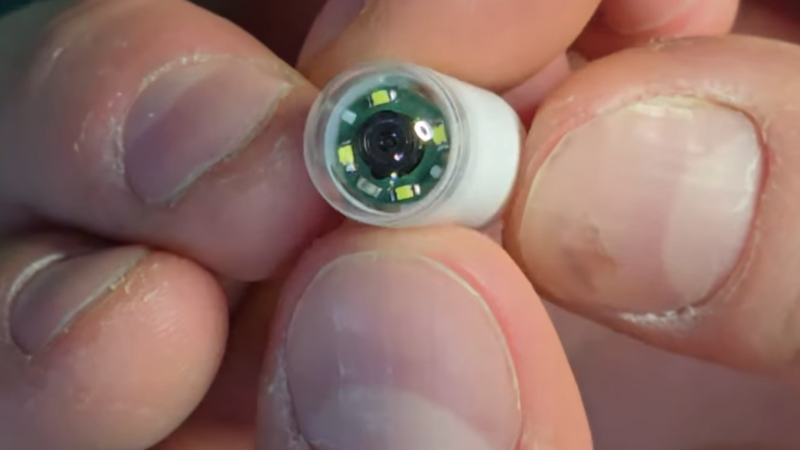
[Aaron’s] first video involves a simple teardown of the camera. The small plastic pill is a marvel of miniaturization. Through the hemispherical transparent lens, we can see a tiny camera and LEDs to provide light in the depths of the human body. Slicing the camera open reveals the hardware inside, however, like the miniature battery, the microcontroller, and the radio hardware that transmits signals outside the body. Unsurprisingly, it’s difficult to get into, since it’s heavily sealed to ensure the human body doesn’t accidentally digest the electronics inside.

Unwilling to stop there, [Aaron] pushed onward—with his second video focusing on reverse engineering. With a little glitching, he was able to dump the firmware from the TI CC1310 microcontroller. From there, he was able to get to the point where he could pull a shaky video feed transmitted from the camera itself. Artists are already making music videos on Ring doorbells; perhaps this is just the the next step.

Smart pills were once the realm of science fiction, but they’re an increasingly common tool in modern medicine. Video after the break.

Continue reading “Hacking A Pill Camera”