Double-Slit Time Diffraction At Optical Frequencies

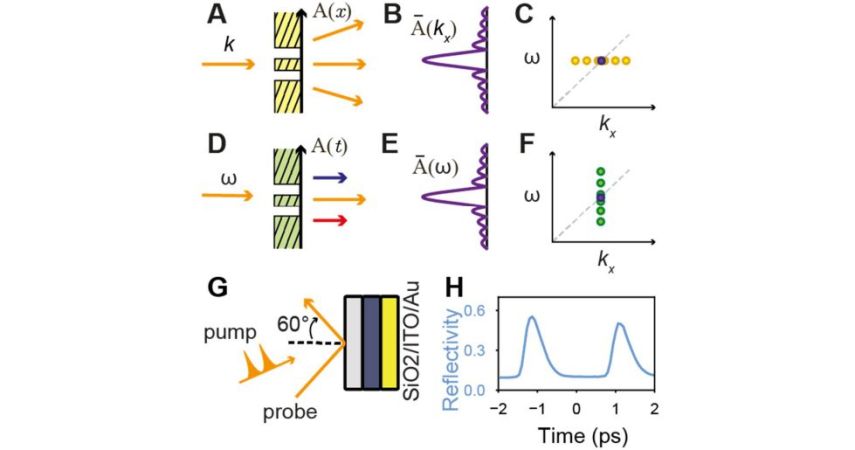
The double-slit experiment, first performed by [Thomas Young] in 1801 provided the first definitive proof of the dual wave-particle nature of photons. A similar experiment can be performed that shows diffraction at optical frequencies by changing the reflectivity of a film of indium-tin-oxide (ITO), as demonstrated in an April 2024 paper (preprint) by [Romain Tirole] et al. as published in Nature Physics. The reflectivity of a 40 nm thick film of ITO deposited on a glass surface is altered with 225 femtosecond pulses from a 230.2 THz (1300 nm) laser, creating temporal ‘slits’.

Interferogram of the time diffracted light as a function of slit separation (ps) and frequency (THz). (Credit: Tirole et al., Nature Physics, 2024)

The diffraction in this case occurs in the temporal domain, creating frequencies in the frequency spectrum when a separate laser applies a brief probing pulse. The effect of this can be seen most clearly in an interferogram (see excerpt at the right). Perhaps the most interesting finding during the experiment was how quickly and easily the ITO layer’s reflectivity could be altered. With ITO being a very commonly used composition material that provides properties such as electrical conductivity and optical transparency which are incredibly useful for windows, displays and touch panels.

Although practical applications for temporal diffraction in the optical or other domains aren’t immediately obvious, much like [Young]’s original experiment the implications are likely to be felt (much) later.

Featured image: the conventional and temporal double-slit experiments, with experimental setup (G). (Credit: Tirole et al., Nature Physics, 2024)

What Would It Take To Recreate Bell Labs?

It’s been said that the best way to stifle creativity by researchers is to demand that they produce immediately marketable technologies and products. This is also effectively the story of Bell Labs, originally founded as Bell Telephone Laboratories, Inc. in January 1925. As an integral part of AT&T and Western Electric, it enjoyed immense funding and owing to the stable financial situation of AT&T very little pressure to produce results. This led to the development of a wide range of technologies like the transistor, laser, photovoltaic cell, charge-coupled cell (CCD), Unix operating system and so on. After the break-up of AT&T, however, funding dried up and with it the discoveries that had once made Bell Labs such a famous entity. Which raises the question of what it would take to create a new Bell Labs?

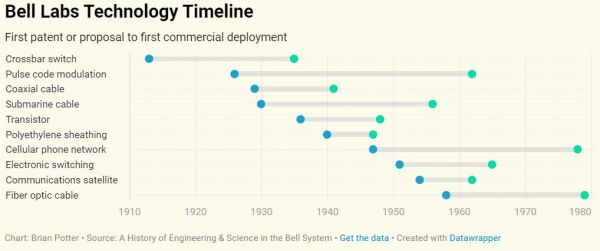
As described in the article by [Brian Potter], one aspect of Bell Labs that made it so successful was that the researchers employed there could easily spend a few years tinkering on something that tickled their fancy, whether in the field of semiconductors, optics, metallurgy or something else entirely. There was some pressure to keep research focused on topics that might benefit the larger company, but that was about it, as the leadership knew that sometimes new technologies can take a few years or decades to come to fruition.

Continue reading “What Would It Take To Recreate Bell Labs?”

Assessing Developer Productivity When Using AI Coding Assistants

We have all seen the advertisements and glossy flyers for coding assistants like GitHub Copilot, which promised to use ‘AI’ to make you write code and complete programming tasks faster than ever, yet how much of that has worked out since Copilot’s introduction in 2021? According to a recent report by code analysis firm Uplevel there are no significant benefits, while GitHub Copilot also introduced 41% more bugs. Commentary from development teams suggests that while the coding assistant makes for faster writing of code, debugging or maintaining the code is often not realistic.

None of this should be a surprise, of course, as this mirrors what we already found when covering this topic back in 2021. With GitHub Copilot and kin being effectively Large Language Models (LLMs) that are trained on codebases, they are best considered to be massive autocomplete systems targeting code. Much like with autocomplete on e.g. a smartphone, the experience is often jarring and full of errors. Perhaps the most fair assessment of GitHub Copilot is that it can be helpful when writing repetitive, braindead code that requires very little understanding of the code to get right, while it’s bound to helpfully carry in a bundle of sticks and a dead rodent like an overly enthusiastic dog when all you wanted was for it to grab that spanner.

Until Copilot and kin develop actual intelligence, it would seem that software developer jobs are still perfectly safe from being taken over by our robotic overlords.

Mapping A Fruit Fly’s Brain With Crowdsourced Research

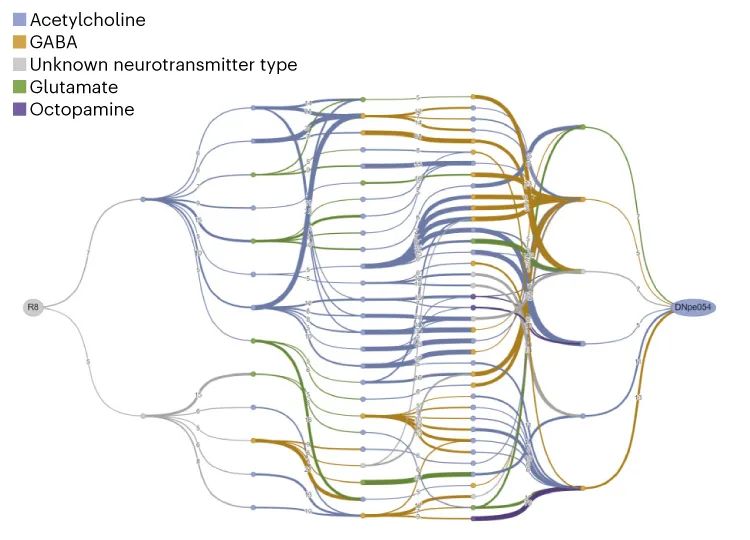
Example of a graph representation of one identified network with connections coded by neurotransmitter types. (Credit: Amy Sterling, Murthy and Seung Labs, Princeton University)

Compared to the human brain, a fruit fly (Drosophila melanogaster) brain is positively miniscule, not only in sheer volume, but also with a mere 140,000 or so neurons and 50 million synapses. Despite this relative simplicity, figuring out how the brain of such a tiny fly works is still an ongoing process. Recently a big leap forward was made thanks to crowdsourced research, resulting in the FlyWire connectome map. Starting with high-resolution electron microscope data, the connections between the individual neurons (the connectome) was painstakingly pieced together, also using computer algorithms, but with validation by a large group of human volunteers using a game-like platform called EyeWire to perform said validation.

This work also includes identifying cell types, with over 8,000 different cell types identified. Within the full connectome subcircuits were identified, as part of an effort to create an ‘effectome’, i.e. a functional model of the physical circuits. With the finished adult female fruit fly connectome in hand, groups of researchers can now use it to make predictions and put these circuits alongside experimental contexts to connect activity in specific parts of the connectome to specific behavior of these flies.

Perhaps most interesting is how creating a game-like environment made the tedious work of reverse-engineering the brain wiring into something that the average person could help with, drastically cutting back the time required to create this connectome. Perhaps that crowdsourced research can also help with the ongoing process to map the human brain, even if that ups the scale of the dataset by many factors. Until we learn more, at this point even comprehending a fruit fly’s brain may conceivably give us many hints which could speed up understanding the human brain.

Featured image: “Drosophila Melanogaster Proboscis” by [Sanjay Acharya]

Calculating The True Per Part Cost For Injection Molding Vs 3D Printing

At what point does it make sense to 3D print a part compared to opting for injection molding? The short answer is “it depends.” The medium-sized answer is, “it depends on some back-of-the-envelope calculations specific to your project.” That is what [Slant 3D} proposes in a recent video that you can view below.  The executive summary is that injection molding is great for when you want to churn out lots of the same parts, but you have to amortize the mold(s), cover shipping and storage, and find a way to deal with unsold inventory. In a hypothetical scenario in the video, a simple plastic widget may appear to cost just 10 cents vs 70 cents for the 3D printed part, but with all intermediate steps added in, the injection molded widget is suddenly over twice as expensive.

In the even longer answer to the question, you would have to account for the flexibility of the 3D printing pipeline, as it can be used on-demand and in print farms across the globe, which opens up the possibility of reducing shipping and storage costs to almost nothing. On the other hand, once you have enough demand for an item (e.g., millions of copies), it becomes potentially significantly cheaper than 3D printing again. Ultimately, it really depends on what the customer’s needs are, what kind of volumes they are looking at, the type of product, and a thousand other questions.

For low-volume prototyping and production, 3D printing is generally the winner, but at what point in ramping up production does switching to an injection molded plastic part start making sense? This does obviously not even account for the physical differences between IM and FDM (or SLA) printed parts, which may also have repercussions when switching. Clearly, this is not a question you want to flunk when it concerns a business that you are running. And of course, you should bear in mind that these numbers are put forth by a 3D printing company, so at the scale where molding becomes a reasonabe option, you’ll also want to do your own research.

While people make entire careers out of injection molding, you can do it yourself in small batches. You can even use your 3D printer in the process. If you try injection molding on your own, or with a professional service, be sure to do your homework and learn what you can to avoid making costly mistakes.

Continue reading “Calculating The True Per Part Cost For Injection Molding Vs 3D Printing”

The Biological Motors That Power Our Bodies

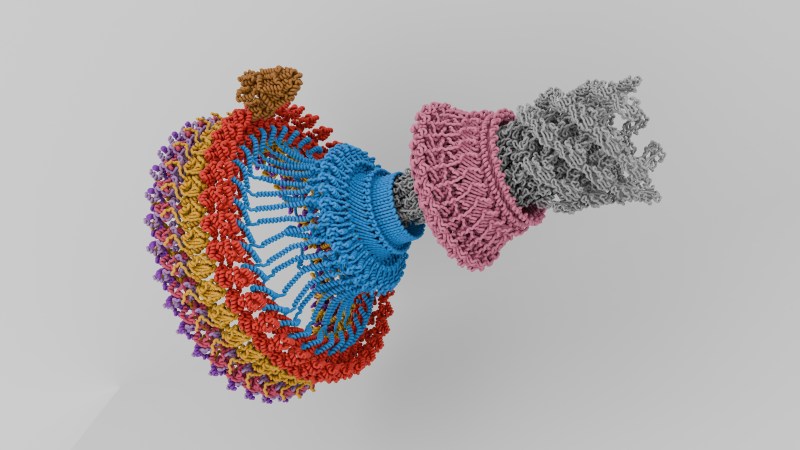
Most of us will probably be able to recall at least vaguely that a molecule called ATP is essential for making our bodies move, but this molecule is only a small part of a much larger system. Although we usually aren’t aware of it, our bodies consist of a massive collection of biological motors and related structures, which enable our muscles to contract, nutrients and fluids to move around, and our cells to divide and prosper. Within the biochemical soup that makes up single- and multi-cellular lifeforms, it are these mechanisms that turn a gooey soup into something that can do much more than just gently slosh around in primordial puddles.

There are many similarities between a single-cell organism like a bacteria and eukaryotic multi-cellular organisms like us humans, but the transition to the latter requires significantly more complicated structures. An example for this are cilia, which together with motor proteins like myosin and kinesin form the foundations of our body’s basic functioning. Quite literally supporting all this is the cytoskeleton, which is a feature that our eukaryotic cells have in common with bacteria and archaea, except that eukaryotic cytoskeletons are significantly more complex.

Continue reading “The Biological Motors That Power Our Bodies”

Cockroaches In Space: Waste Processing And A Healthy Protein Source Combined

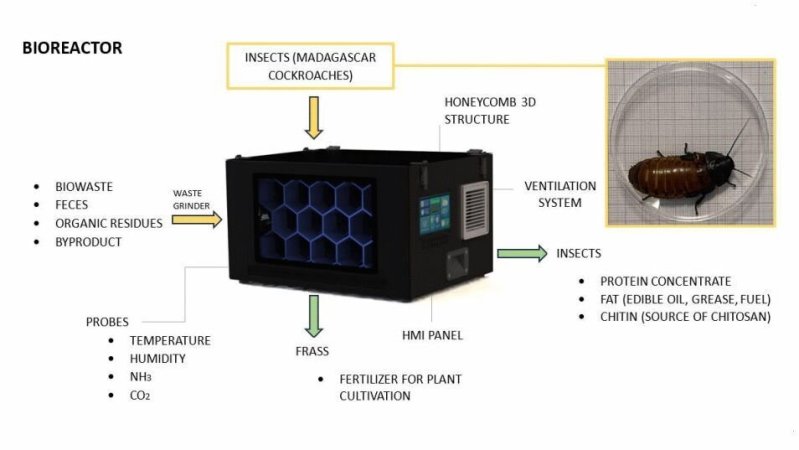
As the current frontier of humanity in space, the International Space Station is heavily reliant on Earth not only for fresh supplies but also as a garbage disposal service for the various types of waste produced on the ISS by its human occupants. As future manned missions take humans further away from Earth, finding ways to reprocess this waste rather than chucking it out of the nearest airlock becomes a priority. One suggested solution comes from a Polish company, Astronika, with their insect bioreactor that can process organic material into useful biomass.

Interestingly, the cockroach species picked was the Madagascar hissing cockroach, one of the largest (5 – 7.5 cm) species. This is also a cockroach species which is often kept as a pet. In this closed-loop bioreactor that Astronika has developed, these cockroaches would chew their way through up to 3.6 kg of waste per week in the large version, with the adult cockroaches presumably getting turned into fresh chow and various materials at some point. Beyond the irrational ‘yuck’ factor that comes with eating insect protein, one of the biggest issues we can see with this system is that the long-duration mission crew may get attached to the cockroaches, as they are rather cute.

Continue reading “Cockroaches In Space: Waste Processing And A Healthy Protein Source Combined”