Compact Ultrasonic Holographs For Single Step Assembly Of Matter In 3D

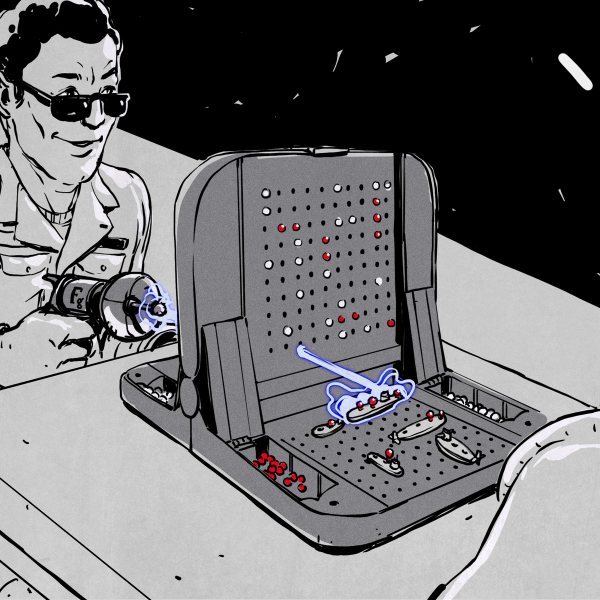
Creating three-dimensional shapes from basic elements or even cells is an important research topic, with potentially many applications in the fields of medicine and general research. Although physical molds and scaffolding can be used, the use of ultrasonic holographs is in many ways preferable. Using ultrasonic sound waves into a liquid from two or more transducers shaped to interact in a predetermined manner, any particulates suspended in this liquid will be pushed into and remain in a specific location. Recent research by [Kai Melde] and colleagues has produced some fascinating results here, achieving recognizable 3D shapes in a liquid medium.

These are some of the most concrete results produced, following years of research. What distinguishes ultrasonic holography from light-based xolography is that the latter uses photon interference between two light sources in order to rapidly 3D print an object within the print medium, whereas ultrasonic holography acts more as a ultrasonic pressure-based mold. Here xolography is also more limited in its applications, whereas ultrasonic holography can be used with for example biological tissue engineering, due to the gentle pressure exerted on the suspended matter.

For ongoing medical research such as the growing of organs (e.g. for transplantation purposes), scaffolding is required, which could be assembled using such a technique, as well as the manipulation and assembly of biological tissues directly.
The Forgotten Commodore 900: A Look At A Rare Prototype

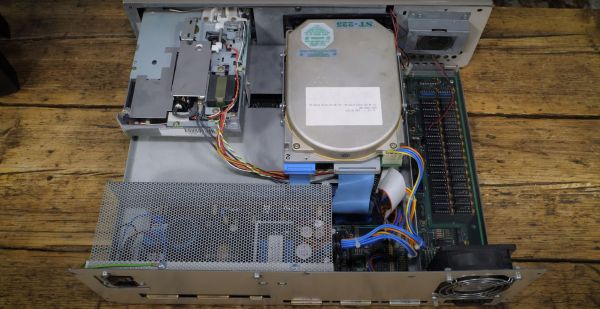
Of the computers produced and prototyped by Commodore, most people are likely well-acquainted with the PET, VIC-20, C64 and C128, as well as the never released Commodore 65. Of these systems many examples and plentiful of documentation exist, but probably among the most rare is the Commodore 900, as recently covered by [Neil] over at RMC – The Cave on YouTube. The Commodore 900, conceived in 1983, was intended to become a microcomputer based on the 16-bit Zilog Z8001 CPU that targeted businesses as a UNIX workstation.

Only fifty prototypes were ever built of the C900 and no hardware was ever sold, even though the intended UNIX-based OS (MWC’s Coherent) had already been ported to the Z8000 and the rumor mill suggested a release in 1984. Although UNIX workstations were rather popular during the 1980s — with HP and Sun featuring prominently in this market segment — Commodore was more known for its home computers, which probably played a major role in C900 development being cancelled. At the time Commodore was also in the process of acquiring Amiga, with the C900 perhaps unsurprisingly featuring similar design language as the Amiga 2000.

Perhaps ironically, the Z8000 CPU that features in the C900 had a bit of a tragic history as well. Although featuring a range of interesting features, such as the ability to use its registers as 8-, 16-, 32- or even 64-bit registers by combining them as needed. Although this and the general performance of the Z8000 made it a solid CPU, it could not compete against the Motorola 68000 and Intel 8086/8088 CPUs when those appeared on the market.

In the video, [Neil] takes us through a detailed history of the C900, its feature list and the hardware inside the C900 prototype he got his hands on. It’s a fascinating glimpse at a part of Commodore history where this company almost went toe to toe with Sun, HP and other workstation giants.

Continue reading “The Forgotten Commodore 900: A Look At A Rare Prototype”

Fixing A Reflow Oven’s Conveyer Belt With An NE555 And Stepper Motors

Some design choices on manufacturing equipment really leave you scratching your head for a while, as recently happened to [Chris Cecil] when the belt on a reflow oven’s conveyer snapped. Although the solution seems simple enough, getting a new belt on the thing would involve essentially taking the entire machine apart, before reassembling it again. Thus the frayed belt went through the oven over and over until during a recent production run of Smoothieboard controller boards until [Chris] heard a funny noise and the conveyer ground to a halt.

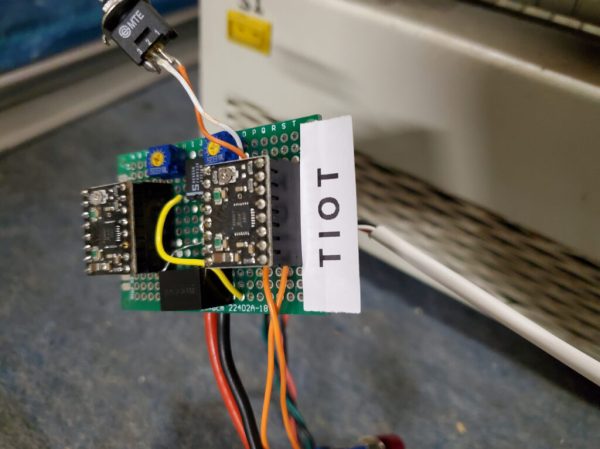
Moving the conveyer by hand kind of worked, but with a more permanent fix urgently needed to finish the production run, two stepper motors took the place of the belt, which just left driving these steppers to keep the conveyer moving in sync. Lacking a simple Arduino board to toss at it, and with a Smoothieboard being absolute overkill, [Chris] figured that a humble NE555 timer IC ought to do the job just as well.

Using a project on Hackaday.io by [KushagraK7] as the starting point, and a 1992-vintage NE555 IC harvested from an old project, [Chris] managed to put together a basic stepper driver that uses the NE555 to provide the timing signal. In addition to restoring basic functionality like starting and stopping the conveyer belt, [Chris] added a new feature with the reversing of the conveyer direction. Along with some cobbled together components to physically rotate the conveyer’s two rollers, it restored the reflow oven to working condition.

And one day the prototyped driver board will be updated to a proper PCB. It’s only temporary, after all :)

Continue reading “Fixing A Reflow Oven’s Conveyer Belt With An NE555 And Stepper Motors”

Drawing Knots On An Oscilloscope Using Analog Means

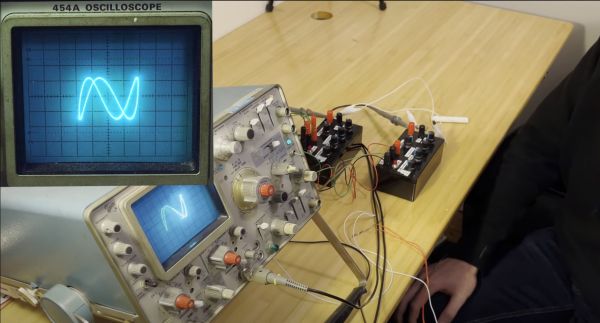
Generating interesting imagery on an analog oscilloscope is a fun activity enjoyed by many, with an excellent demonstration by [Henry Segerman] provided in a recent video which covers [Matthias Goerner]’s demonstration. Using the electron beam, shapes can be drawn onto the phosphor of the oscilloscope’s CRT — all without touching any digital circuitry. At the core are analog components like an operational amplifier integrator, multipliers and other elements.

With just a number of these simple components in a circuit, it’s possible to draw a wide variety of shapes, all by applying the appropriate trigonometric parameters. In addition to the drawing of shapes, it is also demonstrated how these analog signals can be used for an analog audio synthesizer, and finally the image displayed on the oscilloscope is captured on Kodak (Polaroid) instant film, making the entire generating, processing and capturing chain fully analog.

While we’d be the last to campaign against digital electronics, it is fascinating to consider just how much can be done with analog electronics and a bit of mathematics. We assume that everyone did pay attention during math classes, making this a perfect chance to use all that knowledge of trigonometry.

Continue reading “Drawing Knots On An Oscilloscope Using Analog Means”

Puya PY32: The Cheapest Flash Microcontroller You Can Buy Is Actually An ARM Cortex-M0+

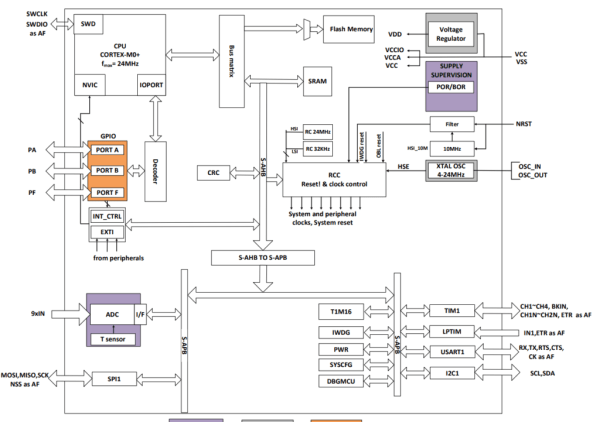
There’s a bit of a contest going on when it comes to which is the cheapest microcontroller, yet most of the really cheap ones have one big trade-off in that they have one-time programmable (OTP) memory, generally requiring the use of an (expensive) device emulator during development. This raises the question of what the cheapest reprogrammable MCU is, which [Jay Carlson] postulates is found in the Puya PY32 ARM Cortex-M0+ based series.

Although [Jay] has previously mentioned that these cheap OTP (like the 3-cent Padauk PMS150) MCUs make sense for large volume production) it’s also easy to see that for small volumes and for hobbyists it’s much easier and cheaper to just reflash the firmware in the same cheap MCU rather than using an expensive in-circuit emulator. This is where the Puya PY32 comes into play, with parts ranging from 8 cents a pop (basic PY32F002A) to $0.74 for the more full-featured models on LCSC, and packages ranging from a miniscule DFN, to LQFP and hand soldering friendly SOIC. Continue reading “Puya PY32: The Cheapest Flash Microcontroller You Can Buy Is Actually An ARM Cortex-M0+”

ArcaOS: OS/2 Updated For The Modern World

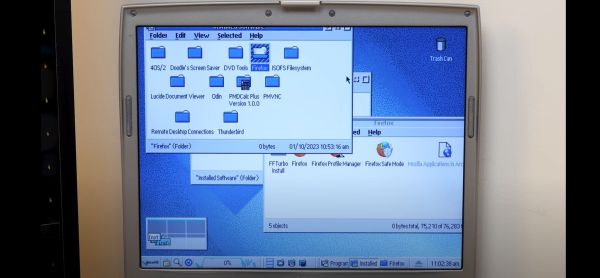
For a certain subset of our readers, mentioning IBM’s OS/2 is likely to bring forth a pang of nostalgia, while for others it’s more likely to bring to mind meme images of rebooting ATM displays. Although OS/2 didn’t become the desktop giant that IBM had intended it to become, reports of its demise are very much premature. As [Michael MJD] covers in a recent video, ArcaOS is essentially the latest version of OS/2, under official license from IBM.

The initial release of ArcaOS was in 2017, and the most recent release was version 5.0.7 in December of 2021. What this gets you is an evolution of OS/2 Warp 4.52 that updates the operating system for modern day hardware, although [Michael]’s experiences with using USB and installing WordPerfect 5.2 end up being rather mixed. With IBM not intending to open source the OS any time soon, ArcaOS appears to be mostly aimed at companies and individuals who wish to keep running their old (OS/2) software on newer hardware, per the FAQ.

This is also reflected in the license cost should you wish to obtain a copy of ArcaOS, with a personal edition license costing $129. What this does get one over OS/2 Warp is SMP support, improved USB, audio and video support, along with an actual package manager (ANPM, based on RPM & Yum).

Would you splurge on an updated OS/2 OS like this, or is tinkering with a fully open source OS like Haiku (BeOS reborn) more your thing?

Continue reading “ArcaOS: OS/2 Updated For The Modern World”

Curve Tracer Design For Power Vacuum Tubes Testing

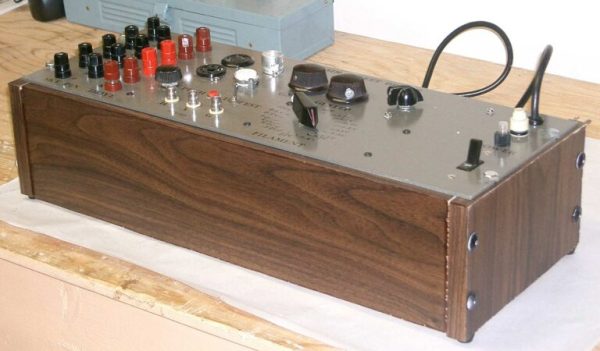
Regardless of the mythical qualities that are all too often attributed to vacuum tubes, they are still components that can be damaged and wear out over time. Much like with transistors and kin, they come with a stack of datasheets, containing various curves detailing their properties and performance. These curves will change as a part ages, and validating these curves can help with debugging a vacuum tube-based circuit. This is where one can either spend an enormous sum on a commercial curve tracer like the Tektronix 570, or build your own, as [Basin Street Design] has done.

A semi-retired electronics design engineer by trade, he has previously covered the development of the curve tracer on Instructables for the version 1 and version 1.1. What this device essentially allows you to do is sweep the connected tube through its input parameter ranges, while observing the resulting curves on an attached (external) oscilloscope. Here a storage oscilloscope (or DSO) is immensely helpful to capture the curves.

In the project pages, the in-depth theory and functioning of the circuitry is explained, along with the schematics and a number of builds. The project has been around since before the VBA tracer which we covered last year, both of which are infinitely more affordable than a genuine Tektronix 570.

Thanks to [Fernando] for the tip.